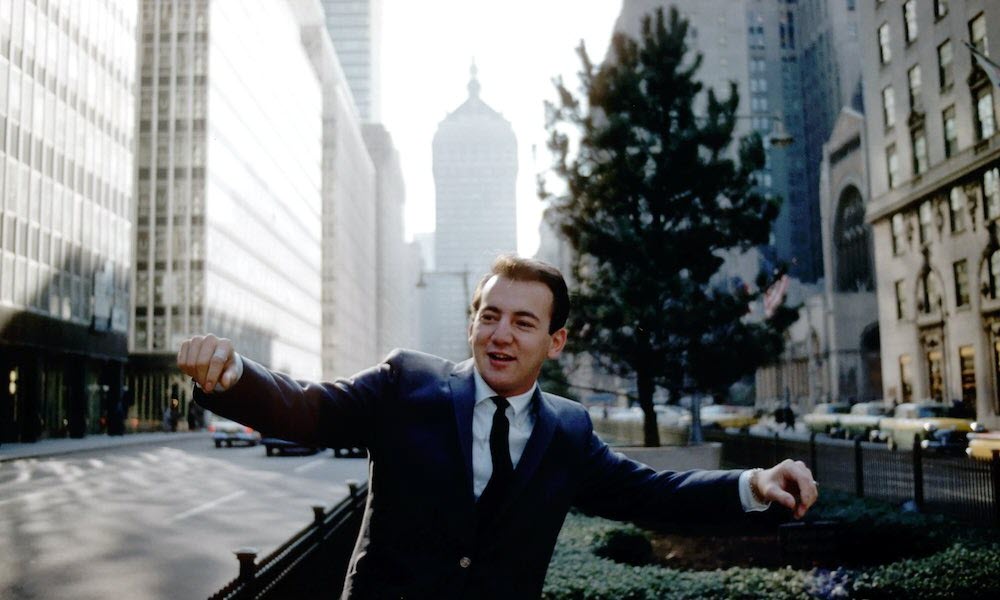
Few artists in the history of American music have matched the charisma, talent, and sheer versatility of Bobby Darin. From swinging jazz standards to heartfelt ballads and rock & roll hits, Darin’s music captured the spirit of an era while transcending genres and generations. Born with a fragile heart but an unstoppable drive, he lived as if every note could be his last — and he made each one count. Whether he was crooning in a tuxedo or belting out a rock anthem, Darin brought electrifying energy and emotion to everything he touched.
In this article, we’re counting down the Top 10 Most Popular Bobby Darin Songs of All Time — a journey through the unforgettable melodies that made him a legend. These are the songs that topped the charts, won awards, and earned him a permanent place in the pantheon of American music. Whether you’re a lifelong fan or discovering his magic for the first time, this list is your ticket to the golden age of pop, swing, and soul — Bobby Darin style.
So crank up the volume, snap your fingers, and get ready to rediscover the music of a man who did it all — and did it with style.
1. Mack the Knife (1959)
When Bobby Darin released “Mack the Knife” in 1959, he defied all expectations—and made history in the process. The song, originally from Kurt Weill and Bertolt Brecht’s The Threepenny Opera, was a dark, satirical murder ballad—hardly the stuff of pop chart domination. But Darin, with his effortless charm and swagger, turned it into a brassy, irresistible hit. With a swing-era arrangement that danced around his devil-may-care vocals, he transformed a sinister tale into a showstopping performance that felt both playful and commanding. It stayed at No. 1 on the Billboard Hot 100 for nine weeks and earned Darin the Grammy for Record of the Year in 1960. More importantly, it marked a turning point in his career—catapulting him from teen idol to sophisticated interpreter of standards. What makes “Mack the Knife” so enduring isn’t just its catchy melody or clever lyrics, but the way Darin completely owns it. He winks through the verses, making menace sound like mischief. This wasn’t just a cover—it was a reimagination that became a cultural touchstone. Decades later, it remains one of the most iconic vocal performances in pop history, cementing Darin as a true showman with serious artistic depth.
2. Beyond the Sea (1960)
“Beyond the Sea,” released in 1960, is perhaps Bobby Darin’s most sweeping and romantic recording. Based on Charles Trenet’s French classic “La Mer,” the song was transformed by Darin into a lush, cinematic love ballad with jazz and big band flair. His version glides with elegance and emotional weight, backed by rich orchestration that evokes visions of moonlit oceans and distant shores. Darin’s voice—smooth, confident, and full of yearning—brings the lyrics to life with remarkable ease. While many artists covered standards, Darin didn’t just sing them; he inhabited them. “Beyond the Sea” became an immediate hit and has since remained one of his most enduring songs, regularly appearing in films, commercials, and tributes to classic love. It was a showcase not only of his vocal control but of his ability to take international material and make it uniquely American—uniquely his. The song’s nostalgic quality, paired with Darin’s impeccable phrasing, made it feel timeless the moment it was released. More than just a pretty melody, “Beyond the Sea” is a masterclass in musical storytelling—dreamy, romantic, and perfectly tailored to Darin’s ever-expanding artistry.
3. Dream Lover (1959)
With “Dream Lover,” Bobby Darin proved he wasn’t just a flashy performer—he was a songwriter with heart. Released in 1959, this self-penned ballad marked a shift from the novelty charm of “Splish Splash” to a more mature and introspective side. The lyrics speak to a universal desire: the hope of finding someone to love and be loved by in return. It’s that simple, earnest yearning that made the song instantly relatable. Built around a tender melody and subtle doo-wop harmonies, “Dream Lover” glows with gentle optimism. Darin’s vocal delivery is both smooth and sincere, walking a fine line between youthful innocence and confident romanticism. The song climbed to No. 2 on the Billboard Hot 100 and further solidified Darin’s versatility as a pop artist. Unlike many hits of the era, “Dream Lover” has a timeless quality—it doesn’t scream of a specific moment, but rather captures a universal emotion. It’s soft, sweet, and genuine, the kind of song that sneaks up on you and stays with you. With “Dream Lover,” Darin gave the world a piece of his heart—and it resonated in the hearts of millions.
4. Splish Splash (1958)
“Splish Splash” was the moment Bobby Darin truly cannonballed into the music scene. Released in 1958, this playful, rock-and-roll novelty tune was his first big hit, written with legendary DJ Murray the K as part of a lighthearted bet. It tells the whimsical tale of a guy who hops in the tub only to discover a wild party breaking out elsewhere in the house. It was silly, fun, and catchy—and that’s exactly what made it such a smash. With its rollicking piano, snappy beat, and Darin’s vibrant, animated vocals, “Splish Splash” felt like a burst of teenage energy bottled into two minutes of pure joy. It peaked at No. 3 on the Billboard Hot 100 and sold over a million copies, immediately launching Darin into stardom. But what really sells the song is Darin himself—he sounds like he’s having a blast, grinning through every line. It may not be his most sophisticated number, but it’s full of charisma and charm. “Splish Splash” announced Bobby Darin to the world not just as a singer, but as a dynamic entertainer with a sense of humor and a knack for connecting with an audience.
5. Things (1962)
“Things,” released in 1962, showcases Bobby Darin at his most bittersweet. Written by Darin himself, the song walks the line between pop and country, with a catchy beat masking a heart full of regret. It’s a clever contrast—upbeat, almost breezy instrumentation paired with lyrics about the painful reminders of lost love. Each line is a list of small “things” that trigger memories, giving the song a conversational, almost confessional tone. Darin’s delivery is relaxed yet tinged with melancholy, making the emotion behind the song feel authentic and relatable. Reaching No. 3 on the Billboard Hot 100, it became one of his major crossover hits and helped further establish him as a singer who couldn’t be boxed into one genre. There’s a simplicity to “Things” that makes it linger—it doesn’t need a dramatic chorus or lush orchestration to leave a mark. The melody sticks, the sentiment hits home, and Darin’s voice wraps around the listener like an old friend telling a story. Often overlooked among his bigger hits, “Things” remains a shining example of Darin’s songwriting prowess and his ability to say a lot with just a few heartfelt words.
6. Clementine (1960)
With “Clementine,” released in 1960, Bobby Darin took a dusty piece of American folk tradition and flipped it completely on its head. The original “Oh My Darling, Clementine” was a slow, mournful ballad—one you might expect to hear around a campfire. But Darin had something very different in mind. His version is a jazzy, tongue-in-cheek romp, full of clever lyrics, upbeat rhythms, and satirical flair. From the first few bars, you know this isn’t your grandfather’s folk song—it’s been reimagined with a wink and a swing. Darin treats the tragic tale with playful irreverence, poking fun at the melodrama while still honoring the musical bones of the classic. The result is wildly entertaining. Though it didn’t climb as high on the charts as some of his other hits, “Clementine” stands as a testament to Darin’s boundless creativity and fearlessness as a performer. He wasn’t content to just sing songs—he wanted to reinvent them, challenge expectations, and show audiences something new. With “Clementine,” he did just that, turning a simple folk tune into a jazzy spectacle filled with charm and wit. It’s a hidden gem in his catalog, and a perfect example of his genre-blending brilliance.
7. You’re the Reason I’m Living (1963)
“You’re the Reason I’m Living,” released in 1963, captures Bobby Darin at his most heartfelt and sincere. Stepping into a country-soul style that was a departure from his earlier pop and jazz material, Darin delivered this sweeping ballad with a raw emotional honesty that struck a chord with listeners. The song, with its dramatic strings, gentle twang, and gospel-tinged background vocals, tells the story of a man whose very existence is anchored in love. It’s a powerful, straightforward declaration—no frills, no irony, just open-hearted devotion. Darin’s vocal performance is restrained but rich, letting the lyrics shine through with genuine feeling. He doesn’t oversell the sentiment; instead, he trusts the melody and message to carry the weight. The song reached No. 3 on the Billboard Hot 100 and became one of his most commercially successful ballads. It also marked another moment of reinvention for Darin—proof that he could move seamlessly between musical styles and still maintain his emotional core. “You’re the Reason I’m Living” is more than just a love song; it’s a portrait of vulnerability, painted by a singer who knew how to make every note count.
8. If I Were a Carpenter (1966)
In 1966, Bobby Darin once again surprised fans by shifting directions with his cover of Tim Hardin’s folk classic, “If I Were a Carpenter.” Stripped of the big band glamour and polished pop sheen that had defined so much of his earlier work, this recording revealed a more introspective and earnest Darin. His version is intimate, raw, and deeply human—just an acoustic guitar, his voice, and a quiet question about love’s resilience. Gone was the showman; in his place stood a thoughtful storyteller exploring what it means to be worthy of love. The simplicity of the arrangement allows Darin’s emotion to rise to the surface, unfiltered and affecting. The song reached No. 8 on the Billboard Hot 100, introducing Darin to a new generation of fans attuned to the emerging folk-rock scene of the 1960s. More than a cover, it was a reinvention—one that helped realign his artistic identity during a time of cultural and musical transformation. “If I Were a Carpenter” is not just a highlight of Darin’s discography; it’s a reminder of his depth, his vulnerability, and his willingness to evolve in search of something real.
9. Lazy River (1961)
“Lazy River,” Bobby Darin’s 1961 take on the Hoagy Carmichael and Sidney Arodin standard, is pure laid-back elegance. Infused with big band flair and Darin’s signature swing, this version of the classic tune flows effortlessly, capturing the easygoing feel of drifting down a slow-moving river. From the start, the brassy arrangement sets the tone—relaxed, polished, and full of charm. Darin’s vocal phrasing is a masterclass in restraint and rhythm. He doesn’t rush or overpower the melody; instead, he lets the words breathe, riding the groove like a seasoned jazz pro. While “Lazy River” wasn’t one of his biggest chart hits, it became a staple in his live performances and a fan favorite. The song highlights Darin’s ability to reinterpret older material in a way that felt fresh, contemporary, and completely his own. He wasn’t just singing a song—he was creating a mood, painting a sonic picture of sun-soaked afternoons and carefree moments. “Lazy River” may be understated compared to his more bombastic numbers, but it’s every bit as compelling. It showcases a different kind of power: the quiet confidence of an artist completely in control of his craft.
10. 18 Yellow Roses (1963)
Released in 1963, “18 Yellow Roses” reveals Bobby Darin as a masterful storyteller. Unlike the showstopping bravado of his swing numbers or the pop polish of his earlier hits, this track is stripped down and personal. It tells the poignant story of a father who discovers his daughter is in love—with someone he’s not sure he approves of—and the complex emotions that come with watching a child grow up and away. The title refers to the bouquet he sees sent to her, a symbol of affection that tugs at his heart. With its gentle country influence and restrained instrumentation, “18 Yellow Roses” is both touching and relatable. Darin’s vocal delivery is soft and contemplative, avoiding theatrics in favor of sincerity. The song reached No. 10 on the Billboard Hot 100, proving that Darin didn’t need to belt out a tune to connect with listeners. This ballad stands as a quiet triumph—a moment of emotional clarity in a career filled with stylistic experimentation. “18 Yellow Roses” reminds us that sometimes the most powerful stories are the simplest ones, especially when told with as much heart and honesty as Darin brings here.

Samuel Moore is a frequent contributor to Singers Room. Since 2005, Singersroom has been the voice of R&B around the world. Connect with us via social media below.









