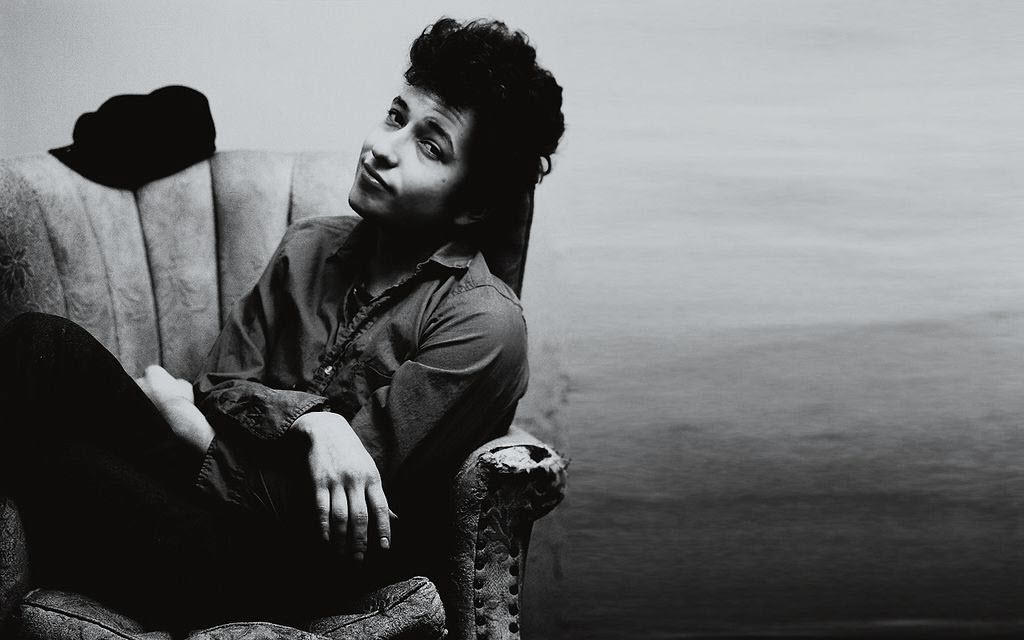
Few artists have shaped the landscape of modern music like Bob Dylan. With a career spanning over six decades, Dylan has redefined songwriting, blended poetry with protest, and inspired generations with his raw honesty and lyrical genius. From the folk cafes of Greenwich Village to stadiums packed with fans across the globe, his songs have become the soundtrack to revolutions, heartbreaks, and personal awakenings. Whether he’s wielding an acoustic guitar or leading an electric band into uncharted territory, Dylan has always stayed ahead of the curve—often creating it.
In this article, we dive into the Top 10 Most Popular Bob Dylan Songs of All Time—tracks that not only defined his legacy but also left an indelible mark on music history. These aren’t just hits; they’re cultural milestones, each one a window into the mind of a man who never stopped evolving. From anthems of change to surrealist dreamscapes, each song tells a story that still resonates today. Whether you’re a lifelong Dylan devotee or just getting started, this list is your essential guide to the songs that made Bob Dylan a legend. Plug in, press play, and prepare to rediscover the voice that changed everything.
1. Like a Rolling Stone (1965)
When Bob Dylan released “Like a Rolling Stone” in July 1965, it didn’t just make waves—it tore through the music world like a lightning bolt. Clocking in at over six minutes, the song broke all the established rules of radio play and popular songwriting. With its iconic opening snare shot and Al Kooper’s swirling organ riff, the track announced Dylan’s full-fledged embrace of electric rock. Gone was the solo acoustic troubadour—this was a new Dylan, loud, confrontational, and unshackled. The lyrics, biting and poetic, take aim at a woman who’s fallen from privilege, now left to wander without direction. Dylan’s repeated challenge—“How does it feel?”—drips with both mockery and revelation. It was a song that didn’t just chronicle change—it was the change. Critics didn’t know what to make of it, folk purists were outraged, and rock fans were electrified. Over time, “Like a Rolling Stone” became more than just a hit; it became a cornerstone in the foundation of modern rock music. It didn’t just ask questions—it forced a cultural reckoning. This song didn’t knock on the door of the future. It kicked it down.
2. Blowin’ in the Wind (1963)
“Blowin’ in the Wind,” released in 1963 on The Freewheelin’ Bob Dylan, quickly became a defining anthem of the civil rights movement and a timeless folk classic. Just 21 years old when he wrote it, Dylan posed a series of haunting, rhetorical questions that struck at the heart of injustice, inequality, and the human condition. “How many roads must a man walk down before you call him a man?” became more than just a lyric—it became a mantra of protest and a cry for dignity. With a simple acoustic arrangement and Dylan’s plaintive, earnest voice, the song carried a profound emotional weight far beyond its minimal structure. Its strength lies in its universality; it doesn’t preach, it probes. The answers, Dylan famously claimed, were “blowin’ in the wind”—ambiguous, elusive, yet always present if we chose to seek them. The song was famously popularized by Peter, Paul and Mary, helping it reach a broader audience, but Dylan’s original remains deeply moving in its unadorned sincerity. “Blowin’ in the Wind” isn’t just a protest song—it’s a quiet revolution wrapped in three chords, still asking questions we haven’t fully answered.
3. The Times They Are A-Changin’ (1964)
By the time Bob Dylan unveiled “The Times They Are A-Changin’” in 1964, he had already become a prophetic voice for a restless generation. But this song cemented his status as a cultural bellwether—a call to action that captured the social upheaval of the era with uncanny precision. Built around a sparse folk melody and delivered with stark clarity, the song reads like scripture for a society on the brink. Dylan wasn’t merely reflecting change; he was demanding it. He directly addresses lawmakers, parents, and critics, warning that resistance to progress will only lead to obsolescence. “You better start swimmin’ or you’ll sink like a stone,” he warns, in one of his most chillingly prescient lines. The song became an anthem of the 1960s, adopted by activists, protesters, and anyone feeling the tremors of transformation. Its message is both timeless and urgent, resonating in every era of political and cultural transition. Dylan doesn’t offer comfort—he offers inevitability. “The Times They Are A-Changin’” is less a folk song and more a historical document in motion, one that reminds us that progress doesn’t wait for permission. It simply arrives—and you’d better be ready.
4. Tangled Up in Blue (1975)
“Tangled Up in Blue,” the opening track on Dylan’s Blood on the Tracks (1975), stands as one of his most emotionally rich and narratively layered songs. It’s a kaleidoscopic tale of love, loss, memory, and the shifting nature of identity, told through a series of fragmented scenes and changing perspectives. Dylan paints a vivid emotional landscape, where time folds in on itself and the past feels as close as the present. With every verse, the listener is invited into a new memory, a new moment, often without a clear sense of chronology—just like real life. His lyrics are filled with imagery that’s both grounded and dreamlike, evoking dusty roads, barroom conversations, and fleeting glances. The song’s acoustic foundation is paired with Dylan’s raw, weathered vocals, giving it an immediacy that feels deeply personal. “Tangled Up in Blue” isn’t just about a breakup; it’s about the ache of time passing and the people we can never quite leave behind. This isn’t just storytelling—it’s soul-baring. It remains one of Dylan’s greatest achievements, a song that you can listen to a hundred times and still discover something new each time.
5. Mr. Tambourine Man (1965)
“Mr. Tambourine Man,” released in 1965 on Bringing It All Back Home, signaled a turning point for Bob Dylan—a poetic leap into surrealism and lyrical abstraction. Unlike his earlier protest songs, this one floats in a dreamlike haze, carried by vivid imagery and a hypnotic melody. Dylan’s narrator isn’t addressing society or injustice here—he’s speaking to a mysterious figure who offers escape, inspiration, or perhaps both. With lines like “Take me disappearing through the smoke rings of my mind,” Dylan creates a world untethered from time and place. While some listeners interpreted the song as a veiled reference to drug use, its deeper meaning lies in artistic longing and spiritual release. It’s a plea to be transported away from the mundane, to follow creativity wherever it may lead. The Byrds’ jangly electric cover turned it into a folk-rock smash, but Dylan’s original acoustic version remains hauntingly intimate. His delivery is earnest, almost reverent, as if invoking the muse itself. “Mr. Tambourine Man” marked Dylan’s transition from protest singer to poet of the subconscious, and in doing so, he opened the door to an entirely new kind of songwriting—one where meaning dances just out of reach.
6. All Along the Watchtower (1967)
Bob Dylan’s “All Along the Watchtower,” from 1967’s John Wesley Harding, is a masterclass in lyrical compression and atmospheric tension. In just 12 cryptic lines, Dylan evokes an entire world teetering on the edge of chaos. The song opens with a conversation between a joker and a thief, two figures who seem both ancient and modern, cynical and wise. Their dialogue unfolds like a riddle, layered with biblical imagery and existential dread. Dylan’s original recording is stark and brooding, with acoustic guitar and harmonica creating an eerie mood of impending doom. Then came Jimi Hendrix’s 1968 cover—a blazing reinterpretation that turned the song into a rock epic and, in many ways, redefined it. Dylan himself was so taken by Hendrix’s version that he began performing it in that fiery style during live shows. Still, Dylan’s own version holds a haunting power, a quiet urgency that’s hard to shake. “All Along the Watchtower” feels like a scene from an unfinished novel or a warning etched into stone. Its mysterious aura and apocalyptic tone ensure its place as one of Dylan’s most enduring and intriguing works—open-ended, unforgettable, and perpetually resonant.
7. Knockin’ on Heaven’s Door (1973)
“Knockin’ on Heaven’s Door,” released in 1973 as part of the soundtrack for Pat Garrett & Billy the Kid, is one of Bob Dylan’s most quietly powerful songs. Written to accompany a film scene where a dying sheriff reflects on his final moments, the song transcends its cinematic origins to become a universal meditation on mortality. With just a few verses and a haunting, repetitive chorus, Dylan captures the weariness and acceptance that comes with facing the end. His voice—soft, tired, and almost resigned—carries the emotional weight of someone ready to let go. The sparse arrangement of acoustic guitar and gentle harmonies gives the song a fragile, hymnal quality. Its simplicity is what makes it so devastatingly effective. Over the years, “Knockin’ on Heaven’s Door” has been covered by a wide range of artists, from Eric Clapton to Guns N’ Roses, each adding their own twist. But Dylan’s original remains unmatched in its quiet dignity. It doesn’t scream or plead—it simply knocks, softly and steadily, on the threshold between life and death. It’s a song that reminds us that saying goodbye doesn’t always require grand gestures—sometimes, just a few words are enough.
8. Don’t Think Twice, It’s All Right (1963)
“Don’t Think Twice, It’s All Right,” released in 1963 on The Freewheelin’ Bob Dylan, is Dylan at his wittiest and most emotionally incisive. A breakup song dressed in folk tradition, it’s equal parts tenderness and sarcasm, capturing the conflicted emotions of leaving someone behind. With its fingerpicked guitar—borrowed from traditional folk stylings—the tune feels deceptively gentle, even as Dylan delivers lyrical jabs with a poet’s precision. “You just kinda wasted my precious time,” he sings, smiling through the sting. It’s a masterclass in emotional restraint, refusing to wallow while still acknowledging the ache of parting. Dylan’s tone walks a fine line between acceptance and bitterness, creating a portrait of someone trying to move on, even if the wounds haven’t fully healed. The song has become one of Dylan’s most covered tracks, a staple for folk singers and songwriters alike who admire its graceful balance of melody and message. At its heart, “Don’t Think Twice” isn’t just about heartbreak—it’s about the human need to make peace with the past. Dylan’s parting words aren’t cold—they’re liberating, reminding us that sometimes, the best way forward is to let go without looking back.
9. Rainy Day Women #12 & 35 (1966)
“Rainy Day Women #12 & 35,” the rowdy opener to 1966’s Blonde on Blonde, is one of Bob Dylan’s most chaotic and joyfully confusing tracks. Right out of the gate, it sounds like a boozy marching band stumbled into a recording studio—trombones blaring, laughter in the background, and Dylan practically shouting the infamous refrain: “Everybody must get stoned!” Instantly controversial, the line was interpreted by many as a drug reference, earning the song radio bans and counterculture cred. But Dylan, ever the trickster, loaded the song with double meanings. Is it about getting high? Maybe. Is it about being metaphorically stoned—judged, attacked, condemned? Probably. With its carnival energy and biblical undertones, the song works on multiple levels: satire, rebellion, and absurdist performance. Dylan keeps the listener guessing with every verse, using the party-like atmosphere to disguise sharp commentary on persecution and hypocrisy. It’s raucous, unpolished, and completely unforgettable. “Rainy Day Women” is proof that Dylan didn’t need a protest sign to make a statement—sometimes all he needed was a brass band, a good buzz, and a wild sense of humor. In a catalog full of seriousness, this one stands as a joyful, rebellious outlier.
10. Subterranean Homesick Blues (1965)
“Subterranean Homesick Blues,” released in 1965 as the opening track on Bringing It All Back Home, is a sonic firecracker—fast, furious, and unapologetically rebellious. With its rapid-fire lyrics and rock-driven beat, the song explodes from the speakers, channeling the energy of Beat poetry, early rock ‘n’ roll, and the cultural turbulence of the 1960s. The lyrics are a whirlwind of observations, warnings, and coded messages, delivered in a breathless, stream-of-consciousness style. “Johnny’s in the basement mixing up the medicine,” Dylan begins, immediately setting a scene of paranoia and underground movement. It’s a song about systems—social, political, cultural—and how to navigate them (or dodge them). Every line bristles with urgency, as if Dylan is racing against time to say everything he knows before the world catches up. The song’s promotional video—featuring Dylan flipping cue cards in a back alley—was one of the first true music videos and helped cement the song’s place in pop culture. “Subterranean Homesick Blues” doesn’t just reflect the spirit of rebellion—it is that spirit, compressed into two minutes of brilliance. It’s a dizzying, exhilarating ride through a mind on fire, and it still sounds revolutionary today.

Samuel Moore is a frequent contributor to Singers Room. Since 2005, Singersroom has been the voice of R&B around the world. Connect with us via social media below.









