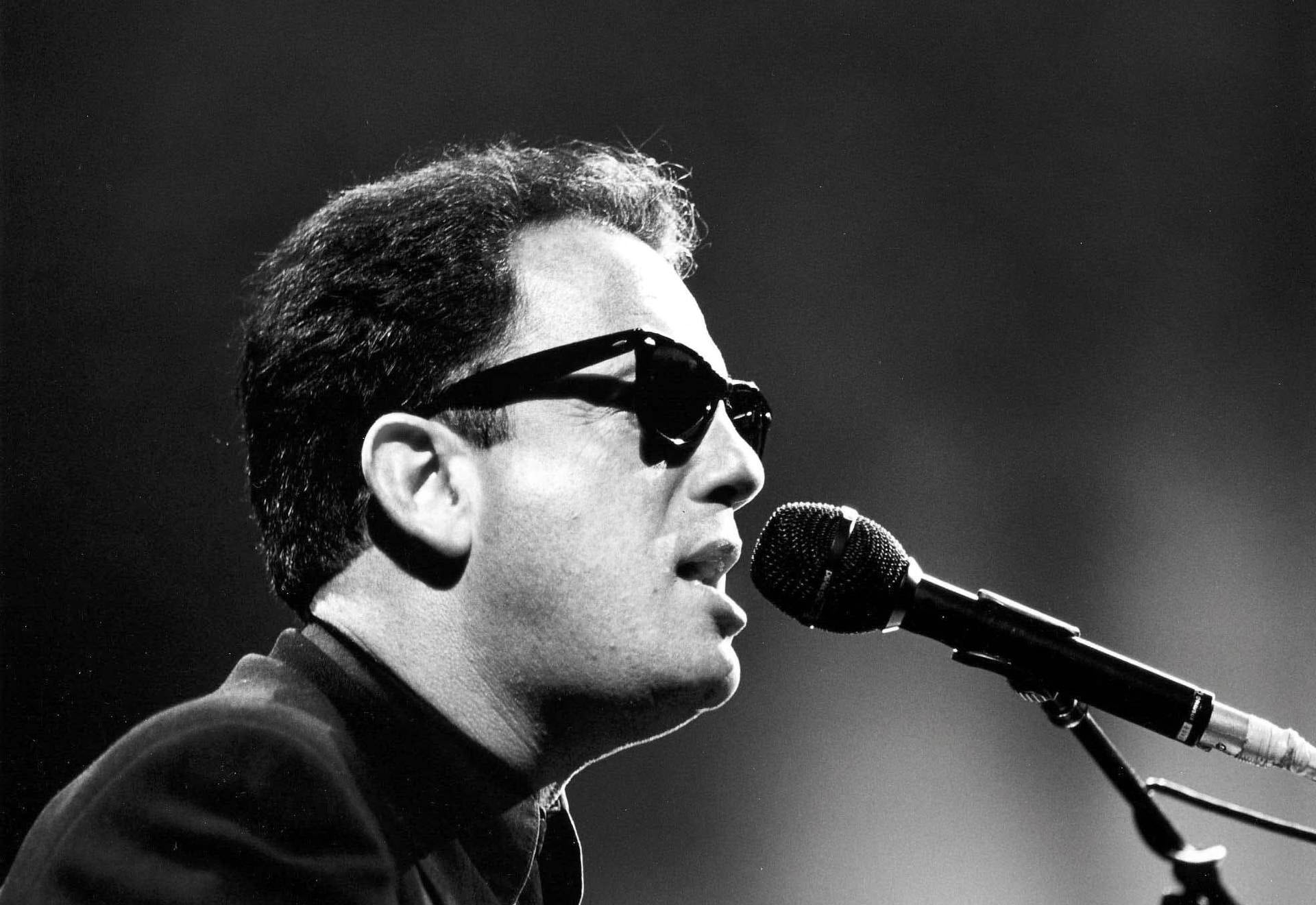
Few artists have captured the heart of America quite like Billy Joel. With a career spanning over five decades, the Piano Man has become more than just a singer-songwriter—he’s a storyteller, a historian, a romantic, and a rock ‘n’ roll legend. From smoky bar ballads to arena anthems, Joel’s music has soundtracked countless lives, weaving tales of love, rebellion, nostalgia, and the human experience with unforgettable melodies and razor-sharp lyrics. His songs transcend generations, striking chords with fans young and old across the globe.
But which of his tracks rise above the rest? Which songs have stood the test of time, dominated the charts, and lived on in our hearts and playlists? Whether you’re a lifelong fan or just discovering the magic of Billy Joel, this list dives into the top 10 most popular Billy Joel songs of all time—the ones that defined his legacy, shaped pop culture, and continue to resonate decades after their release.
So pour yourself a glass of red or white, settle in, and take a trip through musical history as we celebrate the greatest hits from one of America’s most iconic voices. These are the songs that made Billy Joel a legend.
1. Piano Man (1973)
Released in November 1973, “Piano Man” wasn’t just Billy Joel’s breakthrough—it became his signature song, a poignant ballad that introduced the world to his gift for storytelling. Inspired by his time performing in a piano bar in Los Angeles under the alias “Bill Martin,” the track paints a vivid, almost cinematic scene of lonely bar patrons clinging to music as their nightly escape. Joel introduces us to a cast of characters—the bartender John, the struggling novelist Paul, the waitress caught between dreams and reality—all etched with warmth and melancholy. Set in a waltzing 3/4 time and framed by Joel’s expressive piano and a wistful harmonica, the song moves like a gentle tide of emotion. While it only reached No. 25 on the Billboard Hot 100, its impact has endured for decades. “Piano Man” became an anthem not just for the lonely, but for anyone who’s ever found solace in music. It’s more than autobiographical; it taps into something universal—the quiet dreams and disappointments that play out nightly in dimly lit rooms. Today, it remains one of the most beloved songs in American music, still sung loudly by bar crowds around the world.
2. Uptown Girl (1983)
With “Uptown Girl,” Billy Joel traded ballads for bounce, releasing one of the most joyful and instantly recognizable songs of his career in September 1983. Drawing heavily on the doo-wop sound of the late ’50s and early ’60s, the track channels the vibe of Frankie Valli and the Four Seasons, complete with falsetto harmonies, clapping rhythms, and irresistible charm. Joel tells the story of a working-class guy smitten with a high-society beauty—his “uptown girl”—and throws himself headlong into the chase. It’s widely believed that the song was inspired by Joel’s real-life romance with supermodel Christie Brinkley, who later became his wife and appeared in the song’s equally retro, high-energy music video. The single climbed to No. 3 on the U.S. charts and hit No. 1 in several countries, including the UK, where it became one of Joel’s biggest international hits. Beyond the catchy melody and nostalgic production, “Uptown Girl” endures because it feels timeless—equal parts fun, flirty, and romantic. It’s a reminder of how love can bridge worlds, and how sometimes, a pop song can capture that feeling in just under four minutes.
3. Just the Way You Are (1977)
“Just the Way You Are,” released in 1977 as the lead single from The Stranger, is a heartfelt love ballad that became one of Billy Joel’s earliest smash hits. Written as a birthday gift for his then-wife Elizabeth Weber, the song expresses a message of unconditional love and acceptance. With its lush electric piano intro, soft jazz influence, and a memorable saxophone solo by Phil Woods, the track wraps listeners in a sophisticated, romantic atmosphere. Joel’s delivery is tender and intimate, offering reassurances like “Don’t go changing to try and please me,” sentiments that resonated deeply with audiences. Interestingly, Joel was initially unsure about including the song on the album, but producer Phil Ramone persuaded him otherwise—a decision that proved wise when the song won both Record and Song of the Year at the 1979 Grammy Awards. Over the years, “Just the Way You Are” has become a classic in wedding playlists and soft rock compilations alike. It’s a shining example of Joel’s ability to write simple yet deeply emotional lyrics that speak to universal experiences in love and relationships.
4. We Didn’t Start the Fire (1989)
“We Didn’t Start the Fire” is one of Billy Joel’s most ambitious and unconventional hits—a rapid-fire cultural time capsule packed into four intense minutes. Released in 1989 on the Storm Front album, the song rattles off more than 100 historical names, events, and pop culture references from 1949 (the year of Joel’s birth) through 1989. With a choppy rhythm and staccato vocal style, Joel runs through a whirlwind of post-war headlines, touching on everything from Joe DiMaggio and Marilyn Monroe to Vietnam, AIDS, and the Space Race. At its core, the song responds to younger generations who blame older ones for the world’s problems—Joel flips the script, suggesting each generation inherits its chaos. Though critics were split on its musical merits, the song resonated with audiences and soared to No. 1 on the Billboard Hot 100. Over time, it’s become a pop culture staple, referenced in classrooms, parodies, and political debates alike. Whether loved for its lyrical density or critiqued for its breathless delivery, “We Didn’t Start the Fire” stands as a testament to Joel’s creative risk-taking and his desire to chronicle the complexity of modern history through music.
5. New York State of Mind (1976)
Few songs capture the spirit of a place quite like “New York State of Mind.” Released in 1976 on Turnstiles, Billy Joel’s ode to the city that shaped him is rich with emotion and jazz-infused sophistication. Written after a stint in Los Angeles, the song reflects his yearning to return to the raw energy and soul of New York. With its smooth piano intro, smoky saxophone lines, and evocative lyrics, the track feels like riding through the city at dusk—romantic, gritty, and endlessly alive. Joel never released it as a single, but that hasn’t stopped it from becoming one of his most cherished works, often cited by fans as a personal favorite. It’s been covered by greats like Tony Bennett and Barbra Streisand, each lending their own take on the song’s reflective tone. But no version quite matches the sincerity in Joel’s original vocals. “New York State of Mind” isn’t about tourist snapshots—it’s about the connection one feels to a place that’s both home and muse. In a discography full of hits, this song remains one of Joel’s most poetic and heartfelt creations.
6. Scenes from an Italian Restaurant (1977)
“Scenes from an Italian Restaurant,” from Billy Joel’s 1977 masterpiece The Stranger, is less a song and more a short story set to music. Spanning over seven minutes, the track is a genre-blending epic that unfolds in three distinct movements: a nostalgic piano ballad, a breezy reminiscence of school days, and the energetic saga of Brenda and Eddie, a couple whose high school romance unravels in adulthood. Inspired by conversations Joel had in actual New York restaurants, the song blends personal memory with broader themes of love, change, and disillusionment. Despite never being released as a single, it has become one of Joel’s most beloved deep cuts, often performed live with all its theatrical flair intact. The seamless transitions between musical styles—classical piano, jazz, rock ‘n’ roll—demonstrate Joel’s remarkable versatility and compositional skill. “Scenes from an Italian Restaurant” captures the emotional ups and downs of looking back at youth with both fondness and regret. It’s a mini-musical in itself, packed with vivid storytelling and musical complexity, and for many fans, it stands as the crown jewel of Joel’s songwriting catalog.
7. Movin’ Out (Anthony’s Song) (1977)
“Movin’ Out (Anthony’s Song),” released in 1977 from The Stranger, tackles the American Dream head-on—and tears it apart with rock-and-roll bravado. The track centers on Anthony, a blue-collar worker chasing a life of material success, only to find the cost isn’t worth it. Inspired by the lives of Joel’s own working-class friends, the song critiques a culture obsessed with status symbols like Cadillacs and white-collar jobs. Opening with the growl of a motorcycle engine and featuring sharp, punchy piano chords, “Movin’ Out” is musically aggressive and lyrically sardonic. Joel’s delivery walks a line between sarcastic and sincere, especially in the biting refrain, “It seems such a waste of time / If that’s what it’s all about.” The song’s dramatic pauses and sudden bursts give it a theatrical edge that translates powerfully in live performances. It’s not just a critique—it’s a declaration of independence from societal pressure. “Movin’ Out” has since become a fan favorite and a staple of Joel’s concerts, showing that his music could be as socially aware as it was musically catchy.
8. Only the Good Die Young (1978)
“Only the Good Die Young,” released in 1978 as part of The Stranger, is one of Billy Joel’s most controversial and enduring tracks. With a bouncy, upbeat rhythm and catchy melody, the song masks a rebellious message that challenged religious and moral conventions. Its lyrics portray a young man urging a Catholic girl to break free from the constraints of her faith and live a little, sparking backlash from religious groups at the time. Ironically, the controversy helped boost the song’s popularity, with radio bans only fueling demand. Musically, it’s a rollicking mix of piano-driven rock and pop, showcasing Joel’s talent for crafting infectious tunes with deeper undercurrents. The song walks a fine line between playful and provocative, which is part of what makes it so compelling. Over the years, “Only the Good Die Young” has become a symbol of youthful defiance, remembered for both its hook-laden sound and its daring subject matter. It’s a classic example of how Joel could combine radio-friendly appeal with thought-provoking themes, sparking conversation as much as sing-alongs.
9. My Life (1978)
“My Life,” released in 1978 as the lead single from 52nd Street, is a bold, catchy anthem of self-empowerment and personal freedom. From its opening piano riff to its fist-pumping chorus, the song is pure pop-rock energy, underscored by a spirit of defiance. Joel sings from the perspective of someone who’s had enough of outside opinions and is finally taking control of their own path: “I don’t care what you say anymore, this is my life.” It’s an empowering message wrapped in a slick, radio-ready production. Peter Cetera and Donnie Dacus from Chicago lend their voices to the backing harmonies, adding depth to the track’s polished sound. “My Life” soared to No. 3 on the Billboard Hot 100 and became one of Joel’s most recognizable hits. Whether you hear it as a personal manifesto or just a great driving song, it continues to resonate with anyone who’s ever decided to stop explaining themselves. Sharp, confident, and filled with attitude, “My Life” stands as a defining moment in Billy Joel’s catalog, reminding listeners that the most powerful choice is sometimes simply living on your own terms.
10. The Longest Time (1984)
With “The Longest Time,” Billy Joel didn’t just revisit the past—he recreated it. Released in 1984 as part of An Innocent Man, this doo-wop homage stands out not only for its nostalgic charm but for the fact that every vocal harmony was performed by Joel himself. Using multitrack layering, he built an entire vocal group sound, crafting a rich, a cappella arrangement filled with handclaps, finger snaps, and sweet harmonies. The lyrics tell the story of someone cautiously returning to love after a long period of emotional solitude. There’s a vulnerability and quiet hope woven into the melody, reflecting the hesitance and thrill of falling in love again. The song’s simplicity—no drums, no guitars, just vocals and rhythm—gives it a timeless, almost magical quality. “The Longest Time” reached the Top 20 on the charts and quickly became a fan favorite. It’s a masterclass in both vocal arrangement and emotional storytelling, proof that Joel could turn even the simplest musical forms into something deeply resonant. Full of warmth, innocence, and sincerity, “The Longest Time” remains one of the most endearing songs in his entire body of work.

Samuel Moore is a frequent contributor to Singers Room. Since 2005, Singersroom has been the voice of R&B around the world. Connect with us via social media below.









