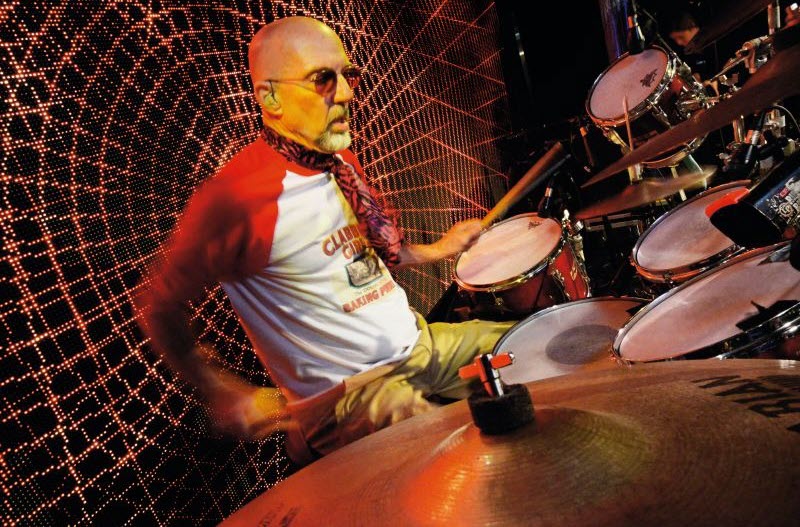
Drumming is more than just keeping time; it’s an art form that drives the heartbeat of music across genres. From the thunderous rolls of rock anthems to the intricate rhythms of jazz, the best drummers have shaped the soundscape of generations. This article celebrates the top 15 drummers who have not only mastered their craft but have also left an indelible mark on music history.
Imagine the explosive energy of Led Zeppelin’s John Bonham, whose iconic beats still reverberate today, or the dazzling technical prowess of Buddy Rich, a jazz legend who could command a crowd with every stroke. Each drummer on our list has pushed boundaries, innovated techniques, and inspired countless musicians with their unique styles.
Join us as we explore the lives, techniques, and legendary performances of these rhythmic titans. Whether you’re a seasoned musician or a casual listener, their stories will resonate with anyone who appreciates the power of percussion. Get ready to dive into a world of passion, creativity, and unforgettable grooves as we count down the best drummers of all time!
1. John Bonham
John Bonham, the legendary drummer of Led Zeppelin, is often considered one of the greatest rock drummers of all time. What set Bonham apart wasn’t just his raw power—it was his ability to make that power groove. He combined jaw-dropping strength with an impeccable sense of timing, giving Led Zeppelin a thunderous, driving pulse that felt both primal and precise. Tracks like “When the Levee Breaks” are prime examples of his dynamic range; the iconic drum intro alone has become one of the most sampled beats in modern music. Bonham’s famous footwork, especially his rapid-fire bass drum technique, redefined what was possible behind a kit. But he wasn’t all aggression—he also had a deep sense of swing, often borrowing from jazz and funk. Songs like “Good Times Bad Times” and “Fool in the Rain” showcase his finesse and musical instincts. Bonham didn’t just play drums—he commanded them, turning them into a lead instrument rather than a background component. His untimely death in 1980 was a massive blow to the rock world, but his influence lives on. For many, John Bonham remains the gold standard of what rock drumming can—and should—sound like.
2. Buddy Rich
Buddy Rich was a once-in-a-generation talent whose drumming skills defied belief. Widely regarded as the greatest drummer in the history of jazz, Rich possessed a level of technical mastery that left audiences and fellow musicians speechless. From a very young age, he showed a supernatural command of the drums, with blazing speed, precise control, and mind-bending solos that made every performance unforgettable. But Rich was more than just a technician—he was a musical storyteller. His performances, especially pieces like the explosive “West Side Story” medley, were full of drama, excitement, and flair. He knew how to play to the crowd without ever compromising the music. His snare rolls were so fast and clean they sounded like one continuous tone, and his big band arrangements showcased his ability to lead as well as support. Rich also had a famously fiery personality, which often matched the intensity of his playing. But above all, his contributions to jazz drumming elevated the role of the drummer from accompanist to centerpiece. For drummers everywhere, Buddy Rich is the ultimate benchmark—a reminder that behind the kit, there are no limits, only possibilities.
3. Neil Peart
Neil Peart was much more than the drummer for Rush—he was a creative force who brought intellect, complexity, and emotion to everything he touched. Known for his elaborate drum kits and impossibly tight playing, Peart became a legend in the world of progressive rock. His precision and innovation were unmatched, and his rhythms often featured odd time signatures and intricate polyrhythms that challenged listeners and inspired fellow musicians. Tracks like “Tom Sawyer,” “YYZ,” and “La Villa Strangiato” are showcases of his technical prowess and imaginative compositions. But Peart wasn’t just about technique—he was also Rush’s chief lyricist, weaving philosophical, literary, and deeply personal themes into the band’s songs. His lyrics gave the music weight and meaning, while his drumming provided its fire and backbone. A lifelong learner, Peart famously re-taught himself how to drum mid-career under the guidance of jazz great Freddie Gruber, showing his commitment to growth and mastery. Despite his quiet, private nature, Neil Peart left a massive imprint on the drumming world. His legacy is one of passion, discipline, and intellectual curiosity—a drummer who played with both his heart and his head.
4. Ginger Baker
Ginger Baker was a true original—a drummer who broke every mold and rewrote the rules of rock and jazz drumming. As the powerhouse behind Cream, Baker brought a ferocious intensity and an experimental spirit that helped redefine what a rock drummer could be. Drawing heavily from his jazz background, as well as his love of African rhythms, Baker’s playing was intricate, layered, and deeply rhythmic. His legendary solo on “Toad” wasn’t just a display of technique—it was a statement of creative freedom, lasting over five minutes and proving that the drums could be a lead instrument. Baker’s use of polyrhythms and odd time signatures brought a sophistication to rock music that was groundbreaking at the time. He was brash, volatile, and unapologetically bold—traits that were both his strength and his challenge. But no one could deny the brilliance he brought to every project, from Cream and Blind Faith to his collaborations with Afrobeat pioneer Fela Kuti. Ginger Baker’s drumming was wild yet controlled, aggressive yet musical. He didn’t just keep time—he expanded it, filled it, and reshaped it. His influence is still felt in drummers who dare to think outside the box.
5. Ringo Starr
Ringo Starr may not have been the flashiest drummer of his era, but he was one of the most musical—and one of the most influential. As the rhythmic foundation of The Beatles, Ringo brought a subtlety and feel to his playing that perfectly supported the band’s constantly evolving sound. His drumming was never about showing off; instead, it was about serving the song. Tracks like “Come Together,” “A Day in the Life,” and “Rain” reveal his genius for crafting grooves that feel effortless but are deceptively clever. Ringo had a distinctive feel—slightly behind the beat, with a warm, rounded tone—that gave the Beatles’ music its laid-back swing. His creativity shone in unexpected places, such as the tom-heavy fills in “She Said She Said” or the odd time signatures in “Here Comes the Sun.” More than anything, Ringo proved that technical flash isn’t everything. His humility, musical instincts, and consistent groove helped The Beatles become the most influential band in history. Today, countless drummers cite Ringo as an influence—not because he played the fastest, but because he played what was right. In a band full of geniuses, Ringo was the steady, soulful heart.
6. Dave Grohl
Dave Grohl is one of rock’s most versatile figures, and his drumming with Nirvana cemented his place as a legend. When Grohl joined Nirvana in 1990, the band’s sound exploded with power, thanks to his heavy-hitting, energetic style. On tracks like “Smells Like Teen Spirit,” his drumming wasn’t just background—it was front and center, driving the song with explosive force and unmistakable groove. Grohl’s sense of rhythm was raw, aggressive, and perfectly suited for the grunge era, capturing the angst and intensity of a generation. But what’s truly remarkable is how he transitioned from behind the kit to lead vocalist and guitarist of Foo Fighters—an evolution few have achieved with such success. Despite becoming a frontman, Grohl has always honored his roots as a drummer, often returning to the kit for side projects like Them Crooked Vultures and studio collaborations with artists like Queens of the Stone Age. His drumming is marked by passion, instinct, and an unrelenting sense of drive. Whether he’s pounding out a gritty rhythm or building a thunderous crescendo, Grohl makes every hit count. He’s proof that great drumming is about more than just technique—it’s about presence, energy, and heart.
7. Elvin Jones
Elvin Jones brought a revolutionary voice to jazz drumming. Best known for his work with the John Coltrane Quartet during the 1960s, Jones developed a style that was equal parts chaos and control. His drumming on *A Love Supreme* is nothing short of spiritual—fierce yet sensitive, intricate yet organic. He had a gift for layering rhythms, creating waves of sound that seemed to ebb and flow beneath Coltrane’s saxophone like a storm-tossed sea. What made Jones so unique was his use of polyrhythms and his deep emotional connection to the music. He could make a snare drum whisper or roar, and his cymbal work was as expressive as a soloist’s melody. Unlike the more restrained styles of earlier jazz drummers, Jones brought a kinetic energy that felt almost primal. He wasn’t just keeping time—he was painting with it. His influence rippled far beyond jazz, inspiring generations of drummers in all genres. Elvin Jones didn’t just accompany great musicians—he challenged them, lifted them, and helped them transcend the ordinary. He redefined the role of the drummer as a co-creator in the emotional and sonic journey of a song.
8. Keith Moon
Keith Moon was rock’s wild child—an unpredictable, electrifying presence behind the drum kit who helped shape the explosive sound of The Who. Unlike traditional drummers who played to support the band, Moon approached the drums like a lead instrument, filling every moment with frenzied energy. His playing on songs like “My Generation” and “Baba O’Riley” feels like a storm barely contained—cymbals crashing, toms rolling, fills flying in all directions. Yet, somehow, it all works. Moon’s style was chaotic, yes, but deeply musical. He instinctively knew how to inject tension, release, and excitement into a song, creating an adrenaline-fueled atmosphere that was uniquely his own. Offstage, Moon’s antics were just as legendary—he lived fast, played hard, and embodied the spirit of rock excess. But beyond the hotel-smashing stories was a drummer of rare instinct and originality. His lack of formal technique was made up for by sheer intuition and showmanship. Moon wasn’t trying to be perfect; he was trying to be unforgettable—and he succeeded. To this day, no one quite plays like him, and his influence can still be heard in the most energetic corners of rock music.
9. Stewart Copeland
Stewart Copeland brought a fresh and inventive sound to drumming with The Police, blending punk, reggae, and world music influences into something entirely his own. With his sharp, syncopated rhythms and precise hi-hat work, Copeland gave hits like “Roxanne” and “Walking on the Moon” their distinctive feel. He often played around the beat, adding a sense of tension and groove that made even the simplest songs sound complex and compelling. Copeland wasn’t afraid to break convention—he’d incorporate unconventional percussion, offbeat fills, and dynamic shifts that gave each song a unique character. Beyond his work with The Police, Copeland is also an accomplished composer, scoring films, video games, and orchestral pieces, which speaks to his broad musical intelligence. His drumming feels alive, constantly moving and evolving within the song rather than sitting on top of it. He brought an almost cinematic quality to his playing, adding depth and emotion through rhythm. Stewart Copeland didn’t just play drums—he colored songs with them, giving them mood, motion, and meaning. His influence spans far beyond rock, impacting musicians in genres as diverse as jazz, pop, and electronic music.
10. Phil Collins
Phil Collins is one of the rare musicians who excelled both as a drummer and as a vocalist, often doing both at the same time with stunning ease. As a member of Genesis, his drumming stood out for its crisp execution, tasteful fills, and clever use of dynamics. Songs like “Turn It On Again” and “Firth of Fifth” showcase his tight, progressive style. But it was his solo career that made him a household name—and still, it’s the drums that many remember first. The drum break in “In the Air Tonight” is one of the most iconic moments in pop music history. That massive, echo-drenched fill crashing in after nearly three minutes of tension is unforgettable. Collins’ ability to use space and silence as part of his rhythmic storytelling shows a deep understanding of emotional timing. He wasn’t just laying down beats—he was crafting moments. Even while fronting a band, Collins never lost his connection to the drums, often returning to them on tour or in studio sessions. He brought drama, sensitivity, and structure to every piece he played, and his signature sound remains one of the most recognizable in modern music.
11. Tony Williams
Tony Williams was a drumming prodigy whose influence on modern jazz is immeasurable. At just 17, he joined Miles Davis’s Second Great Quintet and immediately turned heads with his explosive technique, rhythmic daring, and innovative sense of time. Williams didn’t just keep the beat—he reimagined what a drummer could do in a jazz ensemble. His work on albums like *Miles Smiles* and *Nefertiti* showcased a new approach to swing, full of fire, freedom, and interaction. Williams pushed boundaries by playing around the beat, shifting accents, and injecting unexpected bursts of intensity that kept the music alive and evolving. His drumming wasn’t just fast or flashy—it was deeply musical, always responding to the moment. Later, with his band The Tony Williams Lifetime, he helped lay the groundwork for jazz fusion, blending rock energy with jazz sophistication. Even when surrounded by virtuoso musicians, Tony Williams stood out as a force of nature. His legacy is one of constant exploration and fearless artistry. He changed the drummer’s role from a background player to a frontline innovator. To this day, drummers across genres look to Tony Williams as a model of brilliance, creativity, and bold musical expression.
12. Charlie Watts
Charlie Watts wasn’t the loudest or flashiest drummer, but he was one of the most reliable, tasteful, and beloved in rock history. As the steady hand behind The Rolling Stones for nearly six decades, Watts brought an understated elegance to a band known for its swagger and chaos. His drumming on songs like “Paint It Black,” “Jumpin’ Jack Flash,” and “Honky Tonk Women” wasn’t about showing off—it was about making the groove feel just right. Watts had a jazz background, which gave his playing a sense of swing and subtlety that perfectly complemented the Stones’ bluesy rock style. He was a master of restraint, knowing exactly when to sit back and when to give a song just the push it needed. Offstage, Watts was the quiet gentleman of the group, more interested in fine tailoring than rock star antics. His presence anchored the band not only musically but personally. While others chased attention, Watts simply played the song. And that’s why musicians across genres admired him so much—he made drumming about feel, timing, and soul. Charlie Watts proved that sometimes, the greatest power lies in holding back, not in showing off.
13. Max Roach
Max Roach was more than just a drummer—he was a visionary artist and social commentator who used rhythm as a means of expression and activism. One of the founding fathers of bebop drumming, Roach played with legends like Charlie Parker, Dizzy Gillespie, and Clifford Brown. But what made Roach truly revolutionary was his ability to elevate the drums from a supportive role to a lead voice. On recordings like *We Insist! Freedom Now Suite*, Roach tackled themes of civil rights and racial justice, proving that jazz could be both musically daring and politically powerful. His drumming was sharp, articulate, and deeply rooted in both tradition and innovation. Roach pioneered the use of the drum kit as a melodic instrument, crafting solos that spoke with clarity and purpose. His compositions, often involving unusual time signatures and intricate interplay, opened up new possibilities for rhythm in jazz. Roach was also a tireless educator and advocate for the arts, mentoring younger musicians and pushing the boundaries of genre. His legacy is a blend of technical brilliance and moral courage. Max Roach didn’t just change how people played the drums—he changed what the drums could say.
14. Chad Smith
Chad Smith is the rhythmic powerhouse behind the Red Hot Chili Peppers, known for his high-energy playing, rock-solid grooves, and funky feel. From the moment he joined the band in 1988, Smith brought a new level of intensity and precision to their sound. His drumming on tracks like “Give It Away,” “Can’t Stop,” and “Dani California” is instantly recognizable—hard-hitting, tight, and always in the pocket. Drawing from influences like John Bonham and funk greats like Clyde Stubblefield, Smith fuses rock and funk into a unique style that drives the Chili Peppers’ music with relentless energy. He’s known for his muscular playing and explosive fills, but he also understands groove and space, making his parts both powerful and danceable. Offstage, Chad is a larger-than-life personality, known for his humor and uncanny resemblance to actor Will Ferrell (which even led to a few drum-off battles!). But underneath the laughs is a seriously skilled musician with decades of experience. Smith’s contributions to the band have helped them evolve while staying true to their core sound. He’s not just the heartbeat of the Chili Peppers—he’s their backbone, pushing every song forward with style and strength.
15. Omar Hakim
Omar Hakim is one of the most versatile and sought-after drummers of the last four decades. His ability to adapt seamlessly across genres—jazz, rock, pop, funk, fusion—has made him a go-to collaborator for legends like Weather Report, David Bowie, Sting, and Madonna. What sets Hakim apart is his fluid technique, impeccable timing, and the way he infuses every groove with feel and finesse. On tracks like Bowie’s “Let’s Dance,” his drumming is crisp, infectious, and perfectly balanced between subtlety and power. His jazz fusion work, particularly with Weather Report and Miles Davis, shows his ability to navigate complex rhythms with ease while keeping the music deeply human. Hakim’s drumming is both cerebral and soulful—he can dazzle with his chops, but he never loses the groove. Beyond performance, he’s also a producer and composer, bringing his wide musical knowledge into every project. Omar Hakim isn’t a drummer who fits into one box—he’s a musical chameleon who elevates any track he touches. Whether in the studio or on stage, he plays with a blend of precision, creativity, and passion that few can match. He’s a true master of rhythm in all its forms.

Edward Tomlin is a frequent contributor to Singers Room. Since 2005, Singersroom has been the voice of R&B around the world. Connect with us via social media below.