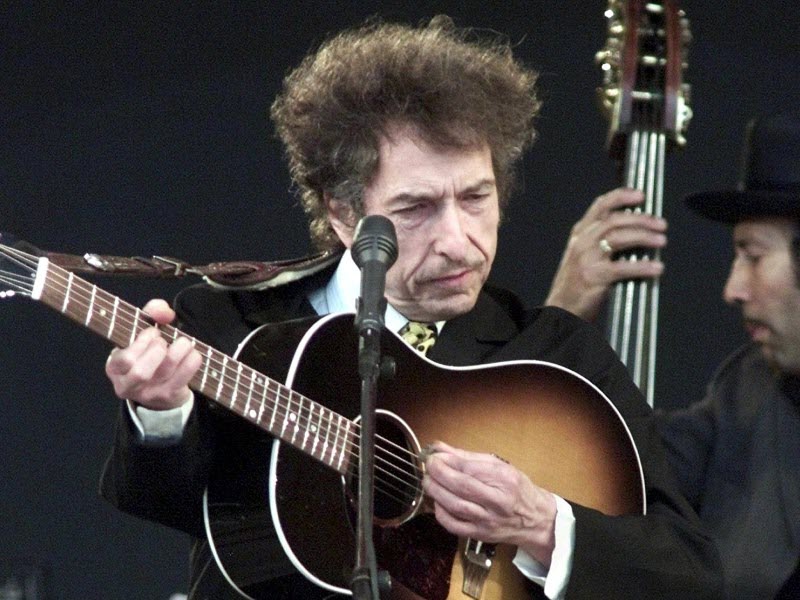
Few artists have reshaped the landscape of music like Bob Dylan. From his early days as a folk troubadour in Greenwich Village to his groundbreaking turn toward electric rock, Dylan has remained a fearless innovator, a poetic prophet, and a voice for generations. His songs are more than melodies—they’re movements. With lyrics that challenge authority, question morality, and explore the deepest corners of the human experience, Dylan has built a catalog that is as influential as it is unforgettable.
In this article, we dive into the top 10 most popular Bob Dylan songs of all time—tracks that not only defined his career but also altered the course of music history. These songs have sparked revolutions, inspired countless artists, and stood the test of time. Whether you’re a lifelong Dylan fan or just beginning to explore his vast discography, each of these songs offers a glimpse into the genius of an artist who never stopped evolving.
From the biting brilliance of Like a Rolling Stone to the haunting beauty of Knockin’ on Heaven’s Door, get ready to revisit the iconic moments that made Dylan a legend—and maybe discover a few new favorites along the way.
1. Like a Rolling Stone (1965)
When Bob Dylan released “Like a Rolling Stone” in 1965, he didn’t just drop a single—he detonated a cultural bomb. Spanning over six minutes, the track defied the radio-friendly limits of the time and tore apart traditional song structure. With Al Kooper’s unforgettable organ riff setting the tone, the song kicks off with Dylan’s venom-laced opener: “Once upon a time, you dressed so fine…”—a line that instantly sets the stage for a poetic reckoning. It’s a brutal, unflinching portrait of a woman who’s lost her social footing, but it also speaks to something larger: the emptiness behind privilege and pretense. Dylan’s vocal sneer feels both personal and universal, as if he’s holding a mirror to a crumbling illusion. This was a turning point—not just for Dylan, who was veering away from folk into electric rock—but for popular music itself. Released on Highway 61 Revisited, the track initially puzzled some critics, but its daring complexity and emotional rawness quickly earned it legendary status. Today, “Like a Rolling Stone” is not just one of Dylan’s greatest songs—it’s one of the most groundbreaking records in rock history, forever changing how lyrics, length, and authenticity could shape a song’s power.
2. Blowin’ in the Wind (1963)
“Blowin’ in the Wind,” released in 1963 on The Freewheelin’ Bob Dylan, became an instant anthem for a restless generation. With nothing more than a gentle melody and three simple chords, Dylan managed to capture the heart of a nation asking difficult questions. “How many roads must a man walk down before you call him a man?”—it’s more than a lyric; it’s a challenge to moral complacency. Written in just minutes, the song feels timeless, as if it had always existed in the collective consciousness. Rather than prescribing answers, Dylan poses pointed, poetic questions that confront war, inequality, and human suffering. That open-ended quality gave the song a broad reach—from civil rights protests to anti-war rallies. Covered famously by Peter, Paul and Mary, “Blowin’ in the Wind” became a rallying cry for those demanding justice and change. Despite its understated delivery, the track’s impact is seismic. It doesn’t shout, but it doesn’t have to—the truth in its verses lingers long after the final chord. Dylan transformed folk music into a vehicle for social conscience, and this song stands as one of the clearest expressions of his ability to give voice to both sorrow and hope.
3. The Times They Are a-Changin’ (1964)
When Bob Dylan penned “The Times They Are a-Changin’,” he wasn’t just writing another folk tune—he was writing a generational decree. Released in 1964, the song arrived like a lightning bolt in the middle of a country grappling with civil rights struggles, generational divides, and a volatile political climate. Its structure is hymn-like: repetitive, anthemic, and easily chanted at rallies. Dylan warns the “senators and congressmen” to take heed, urging them to recognize that the world was transforming rapidly—and resistance would leave them behind. His tone is calm, yet imbued with an unmistakable urgency, like a prophet issuing final notice. Each verse offers a mirror to societal change, addressing parents, critics, and leaders in turn. The message isn’t veiled—it’s a direct call to action. Over time, the song has taken on a mythic quality, often quoted in times of upheaval. Dylan, still in his early twenties when he wrote it, managed to encapsulate the essence of the 1960s’ turbulence and promise in a few concise stanzas. Today, “The Times They Are a-Changin’” still speaks with force, a timeless reminder that change, once set in motion, waits for no one.
4. Tangled Up in Blue (1975)
“Tangled Up in Blue,” the opening track from Dylan’s 1975 album Blood on the Tracks, is a masterclass in emotional storytelling. Often considered one of his most personal songs, it draws heavily from the dissolution of his marriage, though it weaves its pain through fragmented memories and shifting perspectives. The narrative jumps through time and location, like flipping through the pages of a novel written in nonlinear chapters. There’s no clear chronology—but that’s the point. Each verse paints a new scene: some wistful, some bitter, all tinged with longing. The title itself reflects the song’s tone—a tangle of emotions wrapped in melancholy. Dylan’s voice, rugged and knowing, carries the weight of experience, heartbreak, and reflection. The song marked a return to acoustic-based storytelling, but with the added maturity of lived pain and wisdom. Musically spare yet emotionally rich, “Tangled Up in Blue” is one of Dylan’s most enduring songs because it feels so human. Love is rarely simple, memory rarely clear, and this track embraces that ambiguity. It’s a song to return to again and again, finding new meaning in each tangled verse.
5. Mr. Tambourine Man (1965)
“Mr. Tambourine Man,” released in 1965 on Bringing It All Back Home, is Dylan at his most poetic and psychedelic. The song feels like stepping into a lucid dream—rich with imagery, surreal in tone, and unbound by narrative logic. Its mysterious central figure—the Tambourine Man—could be a muse, a drug, a spirit, or simply Dylan’s imagination personified. “Take me on a trip upon your magic swirling ship,” he sings, and it feels like a portal opening to a new world. The Byrds turned it into a jangly folk-rock radio hit, but Dylan’s original version is longer, quieter, and far more introspective. It’s not just about escapism—it’s about surrendering to the subconscious, trusting the power of art, or music, to transcend the mundane. With just voice, guitar, and harmonica, Dylan crafts a soundscape that’s as ethereal as it is intimate. In many ways, “Mr. Tambourine Man” was a precursor to the lyrical freedom that would define the psychedelic era. It’s a song that resists definition, yet leaves a lasting impression—an invitation to dream, to wander, and to seek meaning in the abstract.
6. All Along the Watchtower (1967)
Released in 1967 on John Wesley Harding, “All Along the Watchtower” is one of Dylan’s most cryptic and compact masterpieces. In just three verses, he conjures a world teetering on the edge—filled with tension, deception, and existential uncertainty. The dialogue between the joker and the thief feels like a riddle pulled from ancient scripture, its meaning endlessly open to interpretation. There’s a sense that something ominous is coming, a reckoning that remains just out of frame. Musically, Dylan’s original version is stark and bluesy, letting the words do most of the work. But it was Jimi Hendrix’s electrifying 1968 cover that truly cemented the song’s place in rock history—transforming it into a searing, apocalyptic anthem. Dylan himself was so moved by Hendrix’s take that he began performing it in Hendrix’s style. Still, the original holds a haunting power of its own—quiet, restrained, but no less intense. With biblical overtones and unsettling ambiguity, “All Along the Watchtower” stands as one of Dylan’s most fascinating songs. It’s not a puzzle to be solved, but a mood to be felt—otherworldly, prophetic, and endlessly replayable.
7. Knockin’ on Heaven’s Door (1973)
“Knockin’ on Heaven’s Door,” written for the 1973 film Pat Garrett & Billy the Kid, is a masterclass in emotional minimalism. With just a few verses and a gently repeating chorus, Dylan evokes the quiet sorrow of a man facing his final moments. “Mama, take this badge off of me / I can’t use it anymore”—it’s a simple line, yet it carries the gravity of resignation and peace. The song’s slow, almost gospel-like rhythm adds to its solemn, spiritual feel. It’s not just about death—it’s about letting go, about finding stillness in the face of the inevitable. Over the years, it’s been reinterpreted in countless ways—from Guns N’ Roses’ rock ballad to Eric Clapton’s soulful version—but Dylan’s original remains the most emotionally direct. There’s no embellishment, no vocal showboating—just raw honesty. The song’s universality is part of its power; it speaks to anyone who’s stood at a metaphorical threshold, ready to say goodbye. With remarkable simplicity, Dylan taps into something eternal. “Knockin’ on Heaven’s Door” is both elegy and lullaby, one of his most affecting compositions.
8. Desolation Row (1965)
“Desolation Row,” the epic closing track from Highway 61 Revisited, is one of Bob Dylan’s most ambitious and enigmatic works. Spanning over 11 surreal minutes, the song unfolds like a dream—or perhaps a nightmare—filled with strange, iconic figures and twisted reflections of society. From Cinderella and Einstein to the Phantom of the Opera and T.S. Eliot, the characters parade through a dystopian streetscape where meaning is fluid and order has collapsed. Dylan’s acoustic guitar and melancholy tone serve as the backdrop to this poetic fever dream. Each verse reads like a standalone poem, packed with biting satire, vivid imagery, and apocalyptic overtones. There’s no traditional storyline—just a kaleidoscopic vision of a world unraveling at the seams. And yet, there’s beauty in the chaos, dark humor in the despair. “Desolation Row” is Dylan as a surrealist, a literary alchemist turning pop culture and politics into allegory. It’s a song that demands attention, interpretation, and multiple listens. Decades later, it remains unmatched in its scope and density—a sprawling, poetic masterpiece that resists explanation while offering endless rewards for those willing to wander its winding path.
9. A Hard Rain’s A-Gonna Fall (1963)
“A Hard Rain’s A-Gonna Fall,” written in the shadow of the Cuban Missile Crisis and released on The Freewheelin’ Bob Dylan in 1963, is one of Dylan’s most powerful statements on fear, loss, and hope. Structured as a series of questions and answers between a parent and child, the song reads like a grim prophecy. Each verse bursts with vivid, symbolic imagery—“I saw a newborn baby with wild wolves all around it”—evoking a world on the brink of destruction. Yet amid the darkness, there’s resilience. Dylan isn’t simply forecasting doom; he’s bearing witness. The repetition in the song’s structure adds gravity, making each revelation feel like a thunderclap. Despite its poetic abstraction, the message is clear: a storm is coming, and we’d better be ready. Dylan once said every line could be its own song, and it shows—each stanza is rich enough to stand alone. With “A Hard Rain’s A-Gonna Fall,” Dylan established himself not just as a songwriter, but as a prophetic voice in an uncertain age. It remains one of his most urgent and resonant works—a cry from the heart of a troubled world.
10. Don’t Think Twice, It’s All Right (1963)
“Don’t Think Twice, It’s All Right,” from The Freewheelin’ Bob Dylan (1963), is Dylan at his most intimate and bittersweet. It’s a song about leaving—not with anger, but with weary acceptance. Built around a simple fingerpicked melody and delivered in a conversational tone, the track feels like an unsent letter to a former lover. Dylan doesn’t rage; he reflects. His lyrics mix quiet sadness with sharp wit: “I gave her my heart, but she wanted my soul.” That one line alone captures a world of emotional complexity. The song strikes a delicate balance between resignation and freedom—it hurts to walk away, but staying would hurt more. Dylan’s vocal performance is unadorned and deeply human, making the message feel personal and real. It’s no wonder the song has been covered by countless artists; its universality lies in how gracefully it handles heartbreak. “Don’t Think Twice, It’s All Right” is not just a breakup song—it’s a meditation on moving on, one that soothes even as it stings. Timeless and emotionally astute, it remains one of Dylan’s most beloved and relatable compositions.

Samuel Moore is a frequent contributor to Singers Room. Since 2005, Singersroom has been the voice of R&B around the world. Connect with us via social media below.









