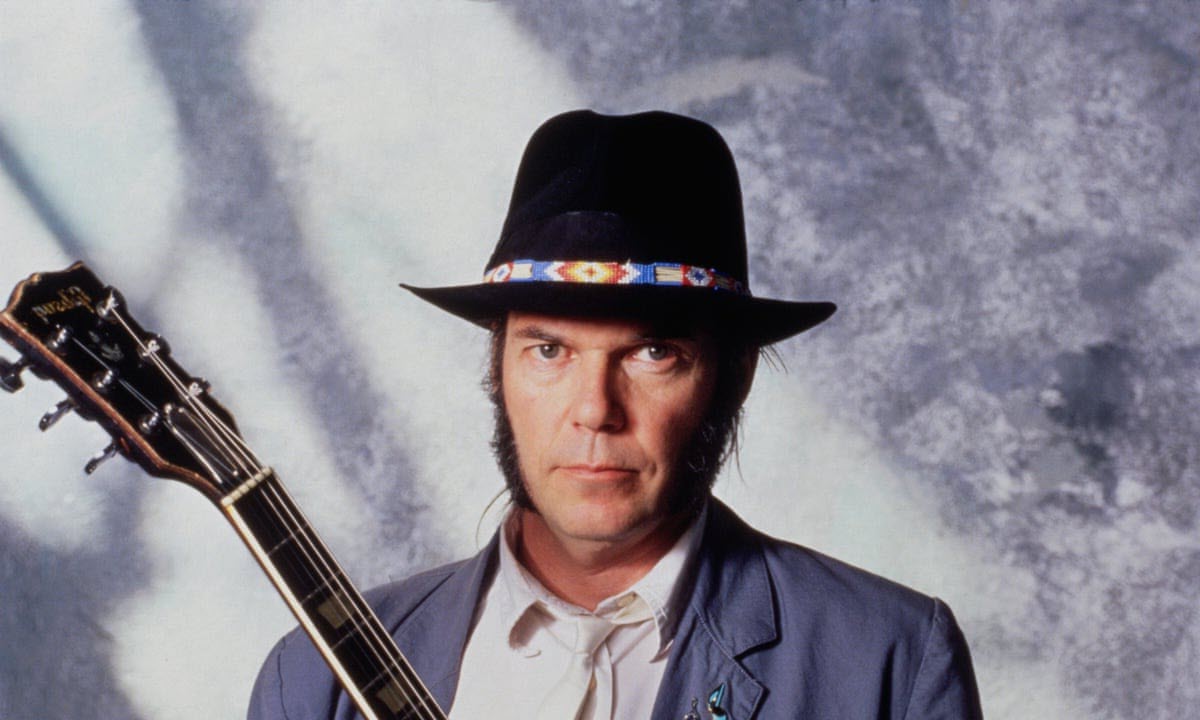
Few artists have shaped the sound of modern rock and folk like Neil Young. With a career spanning over five decades, Young has remained a restless innovator—always evolving, always authentic. Whether he’s strumming a gentle acoustic ballad or tearing through a fuzz-drenched electric solo, his music carries a raw emotional honesty that resonates across generations. From anthems of protest to intimate reflections on love, loss, and identity, Young’s songwriting taps into the soul of a changing world.
What makes Neil Young truly legendary isn’t just his prolific output or his unmistakable voice—it’s his fearless ability to follow his muse, no matter where it leads. He’s inspired countless artists, pioneered new sounds, and never shied away from speaking truth to power. Over the years, his songs have become cultural touchstones—soundtracks to revolutions, road trips, heartbreaks, and hope.
In this article, we’re counting down the Top 10 Most Popular Neil Young Songs of All Time—the tracks that defined his legacy, moved millions, and continue to echo through the halls of rock history. Whether you’re a lifelong fan or just beginning your journey into Young’s discography, these songs are essential listening. Plug in, press play, and rediscover the timeless magic of Neil Young.
1. Heart of Gold (1972)
Released in 1972 on his landmark album Harvest, “Heart of Gold” stands as Neil Young’s only song to top the Billboard Hot 100—and its enduring popularity speaks volumes. Stripped down to its essentials, the track blends folk, country, and rock into something deeply personal yet universally felt. Anchored by Young’s unmistakable harmonica and gentle acoustic guitar, the song explores the ache for something real in a world full of pretense. Its lyrics—“I’ve been a miner for a heart of gold”—express a quiet but relentless quest for authenticity, love, and emotional truth. What makes it so moving is Young’s delivery: fragile, almost weary, yet unwavering. The song’s subtle depth is enriched by the background harmonies of James Taylor and Linda Ronstadt, recorded during sessions in Nashville that helped give the album its country-tinged warmth. “Heart of Gold” isn’t flashy or grandiose. It’s heartfelt, honest, and speaks directly to the soul without dressing anything up. Its simplicity is its strength, making it one of the most quietly powerful songs of its era. Even decades later, it continues to resonate as a timeless reminder of the beauty in vulnerability and the human search for meaning.
2. Old Man (1972)
“Old Man,” another standout from Neil Young’s Harvest, is one of his most introspective and emotionally nuanced songs. Inspired by the elderly caretaker of the Broken Arrow Ranch, which Young had recently purchased, the song draws an intimate parallel between two very different lives. The central message—“Old man, look at my life, I’m a lot like you were”—reflects a recognition that age and youth share more in common than they might seem. Musically, the song pairs Young’s soft acoustic strumming with delicate banjo played by James Taylor, while Linda Ronstadt’s backing vocals lend a gentle harmony that deepens the song’s emotional resonance. The arrangement is sparse, pastoral, and perfectly tailored to its contemplative tone. Released in 1972, “Old Man” became a bridge between generations, touching on loneliness, longing, and the universal need for love and connection. It’s personal without being exclusionary, poetic without being obscure. Young’s vocals carry a blend of innocence and knowing—his youthful timbre laced with a sense of wisdom beyond his years. In under four minutes, “Old Man” distills the human condition with remarkable clarity and grace, making it a defining track not just of Young’s career, but of early ’70s folk-rock.
3. Cinnamon Girl (1969)
“Cinnamon Girl” exploded onto the scene in 1969 as the opener of Neil Young’s Everybody Knows This Is Nowhere, and it remains one of his most iconic rock tracks. With a gritty, fuzz-laden guitar riff that hits like a sledgehammer, the song marked a bold turn toward the raw, unfiltered sound that would define much of Young’s later work. Built on a foundation of distorted rhythm guitar and propelled by the chemistry between Young and guitarist Danny Whitten of Crazy Horse, “Cinnamon Girl” blends garage rock with a dreamy, almost psychedelic mood. The lyrics are cryptic and sparse—Young pines for an idealized woman, a muse who’s both tangible and out of reach. But it’s the infamous one-note guitar solo that truly defines the song: minimalist, rebellious, and strangely perfect. It’s a statement that power doesn’t always lie in complexity. “Cinnamon Girl” was a precursor to grunge, influencing generations of rockers with its DIY ethos and emotional grit. It’s direct, unpolished, and all the more powerful for it. In many ways, this song kicked open the door to Neil Young’s electric side and proved he could be as visceral as he was vulnerable.
4. Rockin’ in the Free World (1989)
Released in 1989 during a period of political unrest and artistic renewal, “Rockin’ in the Free World” reignited Neil Young’s fire. The song’s structure—quiet, acoustic verses juxtaposed with thunderous electric choruses—mirrors the duality at its heart: hope and disillusionment, freedom and failure. On the surface, its chorus sounds like a patriotic rallying cry, but dig deeper and you’ll find a scathing critique of American society. Young confronts homelessness, consumerism, drug addiction, and political hypocrisy with biting clarity. The line “There’s one more kid that’ll never go to school / Never get to fall in love, never get to be cool” is a gut punch that lands hard. Backed by Crazy Horse, the distorted guitars growl with urgency, and Young’s voice drips with frustration and resolve. The track helped solidify his reputation as a socially conscious rocker unafraid to speak truth to power. It was—and remains—a protest anthem disguised as a rock song. “Rockin’ in the Free World” is more than just a late-career triumph; it’s a testament to Young’s enduring relevance and his unwavering belief that music can still make a difference.
5. Down by the River (1969)
“Down by the River” is a towering, slow-burning epic that clocks in at over nine minutes, yet never feels a second too long. Released in 1969 on Everybody Knows This Is Nowhere, the song tells a dark, cryptic tale of jealousy and violence—possibly even murder—but it’s the music that tells the deeper story. Built on a simmering groove, the track allows space for Young’s guitar to breathe, seethe, and smolder. His solos are raw and expressive, prioritizing feel over flash. Instead of rapid-fire technical wizardry, Young plays as if he’s having a conversation—each note charged with tension and emotion. The interplay between him and Crazy Horse adds to the song’s haunting, hypnotic quality. Lyrically, the song remains enigmatic, but that mystery only adds to its allure. Is it a metaphor? A confession? An allegory for love gone wrong? Whatever the interpretation, the atmosphere is undeniably intense. “Down by the River” doesn’t just tell a story—it creates a mood, an environment. It invites you in, then holds you in its grip, unrelenting and unforgettable. It’s one of Young’s finest moments as a guitarist and storyteller.
6. Southern Man (1970)
With “Southern Man,” Neil Young didn’t just write a song—he ignited a firestorm. Released in 1970 on After the Gold Rush, the track is an unflinching indictment of racism and the legacy of slavery in the American South. Opening with a deceptively gentle piano line, the song quickly erupts into blazing guitar work and impassioned vocals that leave no room for ambiguity. Young’s lyrics pull no punches: “I saw cotton and I saw black, tall white mansions and little shacks.” It’s a call-out, a protest, and a demand for accountability. The song was controversial from the start, drawing both praise and backlash—including a famous rebuttal from Lynyrd Skynyrd in “Sweet Home Alabama.” But Young stood by it, and decades later, the message still hits hard. Musically, “Southern Man” is fierce and relentless. The guitar solos burn with righteous fury, and Young’s voice wavers between sadness and outrage. It’s not a comfortable listen—and that’s the point. “Southern Man” is a prime example of protest rock done right: loud, confrontational, and impossible to ignore. It’s Young at his boldest, using his platform to challenge a nation’s conscience.
7. Ohio (1970)
Written in direct response to the tragic Kent State shootings, “Ohio” is one of the most powerful protest songs in American music history. Neil Young penned it in 1970, just days after National Guardsmen opened fire on unarmed college students protesting the Vietnam War, killing four. Recorded and released almost immediately by Crosby, Stills, Nash & Young, the song carries the raw weight of fresh grief and outrage. From its eerie, echoing guitar intro to the chilling refrain of “Four dead in Ohio,” every moment of the track pulses with urgency. Young’s lyrics are pointed and direct—calling out President Nixon and capturing the fear and fury of a generation pushed too far. The vocals, especially David Crosby’s anguished harmonies, add to the song’s emotional intensity. “Ohio” wasn’t just a hit; it was a wake-up call, an audio document of a nation in crisis. Unlike many protest songs that fade with time, “Ohio” retains its relevance and power. It’s a reminder that music can be immediate, visceral, and politically potent. Few songs have ever responded to tragedy so quickly—or with such lasting impact.
8. After the Gold Rush (1970)
“After the Gold Rush” is one of Neil Young’s most poetic and mysterious works, released in 1970 as the title track of his third solo album. Dreamlike in both sound and content, the song feels less like a narrative and more like a series of visions. Built around a stark piano line and colored with a plaintive French horn, it’s hauntingly beautiful. The lyrics are elliptical—evoking images of knights, natural decay, and space travel—suggesting a future where humanity has abandoned a broken Earth. Young’s high, fragile voice floats above the sparse arrangement, giving the track an otherworldly quality. It’s a song that refuses to be pinned down, open to countless interpretations yet anchored by a deep sense of loss. “Look at Mother Nature on the run in the 1970s” is one of its most quoted lines—a subtle environmental warning decades ahead of its time. Despite its ambiguity, “After the Gold Rush” resonates on a visceral level. It’s a meditation on the past, present, and uncertain future. Quietly powerful, it captures the feeling of waking from a dream you can’t quite remember, but can’t shake either.
9. Like a Hurricane (1977)
“Like a Hurricane,” released in 1977 on American Stars ‘n Bars, is Neil Young at his most explosive and romantic. From the opening notes, it builds like a storm on the horizon—slowly gathering force until it crashes over the listener in a wave of guitar distortion and unfiltered emotion. The song is a love letter to a feeling more than a person—infatuation, longing, and the chaos of desire. Young’s voice strains with intensity as he sings of being swept away by someone he can’t quite hold onto. But it’s the guitar solos that elevate the song into the stratosphere: long, searing, and drenched in reverb. These solos aren’t just musical breaks—they’re emotional outbursts, communicating everything words can’t. “Like a Hurricane” is as much about mood as melody, and it’s this combination that makes it one of his most enduring tracks. It’s the kind of song that fills a room, then blows the walls off. Whether played solo or with Crazy Horse, it stands as a towering example of Young’s ability to channel raw feeling through six strings and sheer sonic force.
10. Hey Hey, My My (Into the Black) (1979)
“Hey Hey, My My (Into the Black)” closed out Rust Never Sleeps in 1979 with a thunderous bang. Gritty, distorted, and uncompromising, the track serves as Neil Young’s declaration that rock and roll is alive—and perhaps most vital when it’s on the edge of collapse. With lyrics like “It’s better to burn out than to fade away,” Young confronts mortality, artistic relevance, and the burden of fame. The track is a grunge prototype, its dirty guitar tone and brooding mood foreshadowing what bands like Nirvana and Pearl Jam would later embrace. Every note feels intentional, every lyric etched in stone. It’s not polished; it’s raw and elemental. Young’s voice is ragged, the guitars snarling, and the message clear: rock may evolve, but its spirit endures. The song’s stark contrast to its acoustic twin, “My My, Hey Hey (Out of the Blue),” underscores its power. “Hey Hey, My My (Into the Black)” isn’t just a song—it’s a statement, a mission, a line in the sand. With it, Young reminded the world that even as he aged, he was still capable of shaking the foundations of rock music. And shake them he did.

Samuel Moore is a frequent contributor to Singers Room. Since 2005, Singersroom has been the voice of R&B around the world. Connect with us via social media below.







