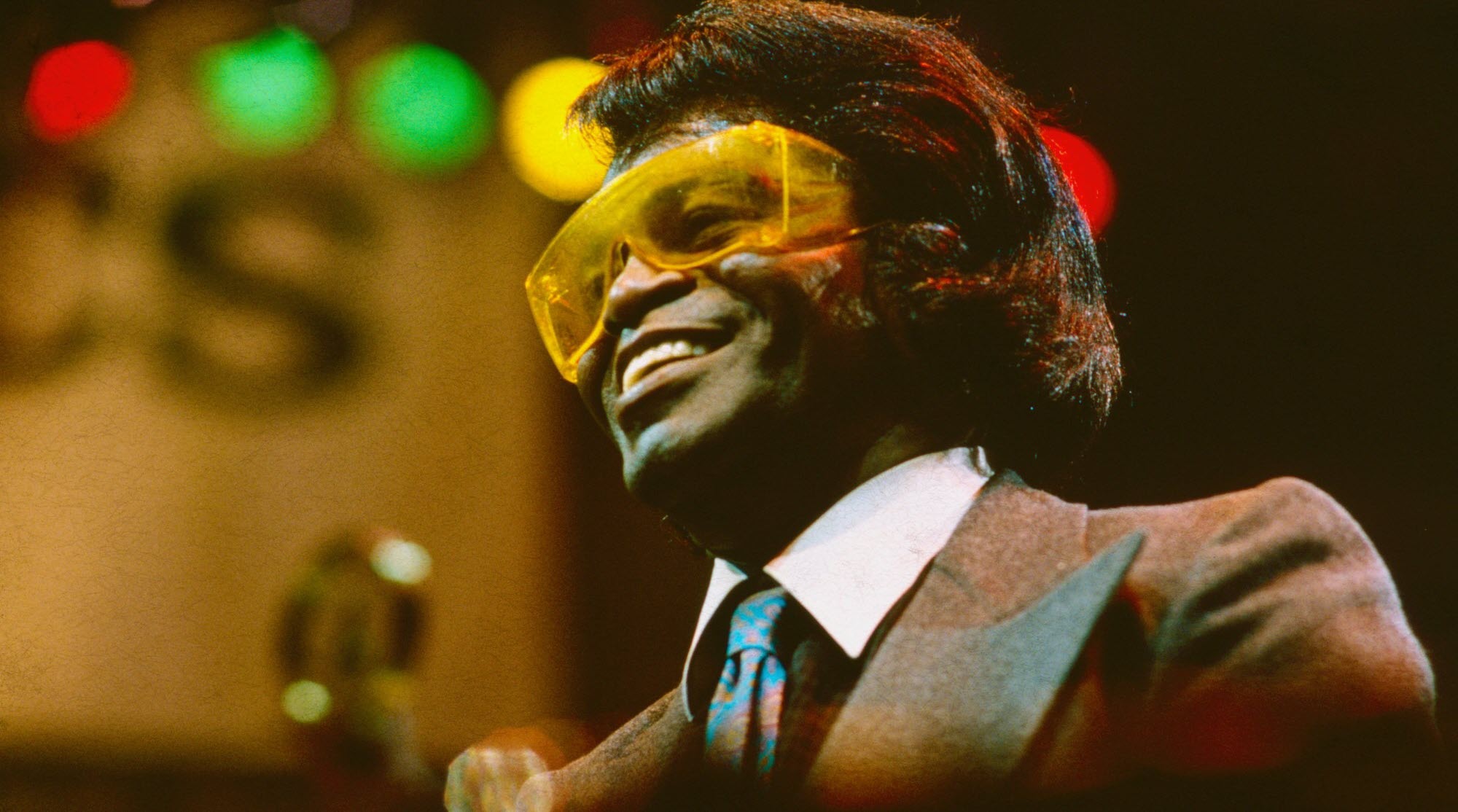
When you talk about the architects of modern music, James Brown isn’t just a name—he’s a revolution. Known as the Godfather of Soul, Brown didn’t just change the game; he invented new rules. His explosive energy, electrifying performances, and unmatched command of rhythm laid the foundation for soul, funk, and hip-hop. From the raw emotion of his early ballads to the razor-sharp grooves that defined funk, James Brown built a legacy with sweat, swagger, and a relentless beat that still pulses through speakers today.
But with a catalog as vast and influential as his, where do you start? That’s where we come in. We’ve compiled the Top 10 Most Popular James Brown Songs of All Time—not just the biggest chart-toppers, but the tracks that shaped music history, inspired generations, and still make you want to move. These songs are more than hits—they’re cultural milestones, each one a masterclass in rhythm, soul, and raw power.
Get ready to dive into the sound of a man who turned every stage into a battleground, every mic into a weapon, and every beat into a revolution. This is James Brown at his absolute best. Let’s get funky.
1. “I Got You (I Feel Good)” – 1965
Few songs burst out of the speakers with as much uncontainable energy as James Brown’s “I Got You (I Feel Good).” Released in 1965, the track kicks off with a blast of horns and Brown’s ecstatic “Whoa! I feel good!”—a declaration that instantly sets the tone. This was more than a hit song; it was a lightning bolt of joy. Crafted with snappy rhythms, brassy flair, and a groove that’s impossible to resist, it became Brown’s highest-charting single on the Billboard Hot 100, peaking at No. 3. What makes it timeless is not just the catchiness of the hook, but the precision of the musicianship behind it. Every note feels perfectly placed, driving home a feeling of pure celebration. Beyond its chart success, the song became embedded in popular culture, used in countless films, commercials, and TV shows. More importantly, “I Got You” captures the soul of James Brown—the boundless energy, the fierce charisma, and the ability to turn a simple phrase into an anthem. It helped solidify his role not just as a performer, but as a cultural force. It’s not just that Brown feels good—it’s that he makes you feel it too.
2. “Papa’s Got a Brand New Bag” – 1965
With “Papa’s Got a Brand New Bag,” released in 1965, James Brown didn’t just update his sound—he revolutionized music. This track marked a clear shift toward what would become funk, with Brown placing groove and rhythm at the center of everything. The horns hit sharp and fast, the rhythm section locks into a tight, infectious pulse, and Brown delivers his vocals with magnetic urgency. “Papa’s got a brand new bag” wasn’t just a cool phrase—it was a declaration of artistic reinvention. Brown was shedding the conventions of soul and paving the way for a sound that emphasized feeling over form. The song climbed into the Billboard Top 10 and earned him his first Grammy Award, showing that his new direction wasn’t just bold—it was wildly successful. What truly set this track apart was Brown’s masterful control over the band, orchestrating every beat and break with pinpoint precision. This was the blueprint for funk, and future genres like hip-hop, dance, and R&B would all draw from its DNA. “Papa’s Got a Brand New Bag” is more than a classic—it’s the moment James Brown began shaping the future of music.
3. “It’s a Man’s Man’s Man’s World” – 1966
Released in 1966, “It’s a Man’s Man’s Man’s World” is perhaps James Brown’s most soul-stirring and emotionally raw recording. Unlike his high-energy funk tracks, this is a slow-burning ballad that allows Brown to strip away bravado and reveal the emotional weight behind his voice. Accompanied by a lush orchestral arrangement conducted by Sammy Lowe, Brown delivers a deeply reflective performance, acknowledging men’s achievements while underscoring that life would be meaningless “without a woman or a girl.” The song’s deliberate pacing gives every line gravity, and Brown’s voice trembles with sincerity and ache. It’s not just a love song—it’s a meditation on human relationships, gender, and purpose. Peaking at No. 1 on the R&B charts, the track became a cornerstone of Brown’s legacy, proving he could be just as powerful with vulnerability as he was with swagger. It’s a rare moment of quiet introspection from an artist known for explosive energy, and it showed the world that James Brown was more than a performer—he was a profound storyteller, capable of plumbing the emotional depths of the human experience.
4. “Get Up (I Feel Like Being a) Sex Machine” – 1970
“Get Up (I Feel Like Being a) Sex Machine,” released in 1970, is funk in its most distilled and powerful form. This track marked a turning point for James Brown, introducing his revamped rhythm section featuring Bootsy and Catfish Collins, who would become central to the evolution of funk. Built around a hypnotic groove, the song pulses with syncopated bass lines, choppy guitar riffs, and Brown’s spirited call-and-response shouts: “Get on up!” Rather than layering on complex melodies, Brown strips the sound down to its rhythmic essence. This minimalist approach creates space for every instrument to breathe and for every beat to land with weight. The result is magnetic—music that’s as much about the gaps between the notes as the notes themselves. More than just a song, it’s a command to move, a funky manifesto that challenged the boundaries of pop music. “Sex Machine” didn’t just shape funk; it laid the groundwork for everything from hip-hop to dance and electronic music. It’s a relentless groove, a kinetic force, and one of the clearest examples of James Brown’s genius as both a bandleader and musical visionary.
5. “Say It Loud – I’m Black and I’m Proud” – 1968
In 1968, amid the height of the civil rights movement, James Brown released “Say It Loud – I’m Black and I’m Proud,” a song that wasn’t just bold—it was revolutionary. With this anthem, Brown used his platform to empower and uplift, becoming a voice for racial pride and social justice. The track pairs a tight, rolling funk groove with a rousing chorus sung by a group of children, making its message both immediate and unforgettable. The lyrics are simple but powerful, asserting Black identity with unflinching confidence. It shot to No. 1 on the R&B chart and became a rallying cry for the Black Power movement. For many, it was the first time they heard such unapologetic affirmation of Black pride on mainstream radio. Brown’s delivery is fiery and unapologetic, and the message hit home—not just as a political statement, but as a cultural milestone. “Say It Loud” marked a shift in Brown’s career, transforming him from entertainer to activist. It wasn’t just music; it was a declaration. Even decades later, the song continues to resonate, reminding listeners of the power of pride, unity, and speaking truth to power.
6. “Please, Please, Please” – 1956
“Please, Please, Please” is the song that launched James Brown’s remarkable career, released in 1956 as his debut single with The Famous Flames. At just under three minutes, the track is an outpouring of raw, emotional desperation—Brown begging for love with a voice that trembles, cracks, and pleads. It’s pure, unfiltered soul. While it only reached No. 6 on the R&B charts, the song’s impact went far beyond its initial chart position. Brown’s passionate performance became a blueprint for soul music, inspiring generations of singers with its sincerity and intensity. Live, the song became a ritual: Brown would drop to his knees, sweat pouring, only to be draped in a cape and dragged offstage—only to dramatically return and do it all again. It wasn’t just a performance—it was theater, emotion, and music colliding. “Please, Please, Please” showcased everything that would define Brown’s legacy: the showmanship, the soul, the voice, and the emotional fire that burned through every note. This was the moment the world first felt the full power of James Brown, and he never looked back.
7. “Cold Sweat” – 1967
“Cold Sweat,” released in 1967, is widely considered one of the first true funk songs—a genre-defining moment that changed the course of music. James Brown, always ahead of the curve, stripped away the melodic flourishes of soul and turned the spotlight squarely onto rhythm. The track’s two-part structure is sparse yet explosive, built around Clyde Stubblefield’s now-legendary drumbeat, one of the most sampled rhythms in music history. The horns don’t sing; they stab. The guitar doesn’t strum; it chops. Brown’s voice becomes percussive, delivering commands and punctuating the beat like another instrument in the mix. The emphasis on syncopation, groove, and negative space created a blueprint for funk and influenced everything from jazz to hip-hop. “Cold Sweat” hit No. 1 on the R&B charts and solidified Brown’s status as an innovator. He wasn’t following trends—he was setting them. This song didn’t just make you move; it changed how you heard rhythm itself. “Cold Sweat” is where the future of music began to take shape, and James Brown was the architect.
8. “Super Bad” – 1970
“Super Bad,” released in 1970, is James Brown at his most swaggering and unfiltered. The track oozes confidence, driven by a thunderous groove and tight, interlocking instrumentation. It’s a sonic workout—sprawling over multiple parts, it gives Brown and his band plenty of room to stretch out and jam. From the moment he declares, “I got soul, and I’m super bad,” the energy never lets up. The rhythm section is tight as ever, with a throbbing bassline and cutting guitar that form the backbone of the track. Meanwhile, the horn section slashes through with staccato bursts, accentuating Brown’s vocal flourishes. His delivery is playful and commanding, riffing and shouting like a preacher over a funk congregation. “Super Bad” became a dancefloor favorite and a DJ staple, its infectious beat begging to be looped, sampled, and celebrated. It captures Brown not just as a singer, but as a conductor of rhythm, pushing his band to the edge and riding every groove like a wave. This song is more than just braggadocio—it’s a full-on funk statement of power, pride, and precision.
9. “The Payback” – 1973
Released in 1973, “The Payback” is James Brown at his grittiest and most cinematic. Clocking in at over seven minutes, the song slowly unfolds like a funk noir tale of betrayal and vengeance. With a deep, laid-back groove and wah-wah guitars bubbling beneath the surface, it simmers rather than explodes. Brown’s vocals are cool and calculated, filled with wounded pride as he delivers the now-iconic line, “I don’t know karate, but I know ka-razy!” Initially rejected by his label for being “too slow,” the track defied expectations, soaring to No. 1 on the R&B charts and becoming one of his most influential works. It was also a favorite among hip-hop producers and artists, with its brooding vibe and minimal groove lending itself perfectly to sampling. “The Payback” showed that funk could be raw, emotional, and rebellious. It wasn’t just a breakup song—it was a mission statement. Brown proved he could still innovate, still dominate, and still say something powerful without shouting. It remains one of the darkest, funkiest, and most unforgettable entries in his massive catalog.
10. “Night Train” – 1962
Originally a jazz instrumental, “Night Train” became something entirely new when James Brown got his hands on it in 1962. His version is high-octane and full of attitude, transforming a modest tune into a powerhouse showpiece for his live act. The horn section is on fire, the rhythm section drives like a freight train, and Brown plays the part of conductor, shouting out city names as if he’s powering through a soul-fueled tour across America. Though largely instrumental, “Night Train” puts Brown’s showmanship on full display—his timing, flair, and ability to whip a crowd into a frenzy were unmatched. It became a staple of his live performances and frequently served as a closing number, sending audiences home in a sweat-drenched, euphoric daze. “Night Train” also highlighted Brown’s roots in jazz and his mastery of musical arrangement. It’s proof that he didn’t need vocals to command a stage; all he needed was rhythm, brass, and a vision. The track is a celebration of movement—on the road, on the stage, and in the soul of American music. It’s James Brown in motion, and there’s no stopping that train.

Samuel Moore is a frequent contributor to Singers Room. Since 2005, Singersroom has been the voice of R&B around the world. Connect with us via social media below.









