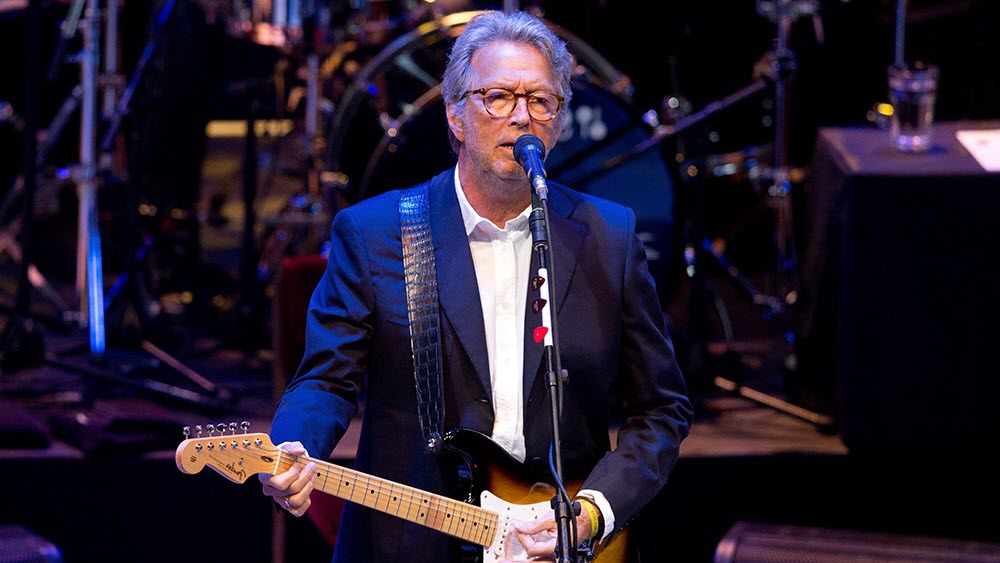
Eric Clapton, often hailed as one of the greatest guitarists of all time, has left an indelible mark on the world of music. With a career spanning over five decades, his soulful voice and masterful guitar skills have captivated audiences worldwide. From his early days with The Yardbirds to his legendary solo career, Clapton’s songs have become timeless classics, resonating with fans across generations.
In this article, we dive into the top 10 most popular Eric Clapton songs of all time. Each track showcases his incredible talent and emotional depth, blending rock, blues, and pop elements that define his unique sound. Whether you’re a lifelong fan or new to his music, these songs are sure to evoke powerful memories and feelings.
Join us as we explore the stories behind these iconic tracks, revealing what makes them so special. From heart-wrenching ballads to electrifying anthems, Clapton’s music captures the essence of love, loss, and redemption. Prepare to be transported through a musical journey filled with riffs that have shaped the landscape of modern music. Let’s celebrate the unforgettable artistry of Eric Clapton!
1. “Tears in Heaven” (1992)
“Tears in Heaven” is one of Eric Clapton’s most emotionally powerful and deeply personal songs. Written in the aftermath of the tragic loss of his four-year-old son, Conor, in 1991, the song is a raw reflection on grief, love, and the pain of unimaginable loss. Unlike much of Clapton’s earlier blues-rock work, this track is stripped down and intimate, featuring gentle acoustic guitar, subtle percussion, and heartfelt vocals that seem to tremble with sorrow. The lyrics ask haunting questions like, “Would you know my name if I saw you in heaven?”—questions that resonate with anyone who has ever lost someone dear. Despite the heavy subject matter, there’s a thread of hope running through it, a quiet strength in confronting the emotions rather than running from them. The song became a worldwide hit, not because of flashy guitar solos or bombastic production, but because of its honest vulnerability. It connected with millions, offering comfort in shared grief. Over the years, “Tears in Heaven” has remained a timeless ballad, demonstrating that sometimes the greatest power in music lies in its ability to help us process the deepest emotions of the human experience.
2. “Layla” (1970)
“Layla” is one of the most iconic love songs in rock history, but it’s far from a simple romantic ballad. Released in 1970 with Derek and the Dominos, the song is a fiery confession of Eric Clapton’s unrequited love for Pattie Boyd, the wife of his friend George Harrison. Driven by one of the most recognizable guitar riffs ever recorded, “Layla” is explosive in both sound and emotion. Clapton’s vocals are filled with passion, frustration, and desperation as he pours his heart out in a raw plea for love. But the genius of “Layla” doesn’t end there—the second half shifts dramatically into a haunting, piano-driven coda that feels like the emotional aftermath of the earlier storm, offering bittersweet reflection and quiet resignation. This contrast between the aggressive opening and the gentle close is part of what makes the song so unforgettable. Guitar enthusiasts and casual listeners alike revere “Layla” for its technical brilliance and emotional depth. It’s not just a song—it’s an experience of love, pain, and vulnerability that continues to resonate decades after its release.
3. “Wonderful Tonight” (1976)
“Wonderful Tonight” is Eric Clapton’s timeless ode to love, tenderness, and admiration. Written in 1976, the song paints a simple yet beautiful picture of an evening spent with someone you adore. Inspired by Pattie Boyd, the same muse behind “Layla,” Clapton wrote the song while waiting for her to get ready for a party. The gentle, lilting guitar melody pairs perfectly with Clapton’s soft, sincere vocals as he narrates the small, intimate moments that define love—the way someone looks, moves, and smiles. There’s a disarming simplicity to the lyrics: no grand declarations, no complicated metaphors—just pure, honest appreciation. The chorus, “You look wonderful tonight,” captures what many struggle to say in their own relationships, making it a go-to song for weddings, anniversaries, and romantic moments. Unlike Clapton’s fiery guitar-driven anthems, this song relies on understated beauty, showcasing his ability to convey deep emotion without ever raising the volume. Over the years, “Wonderful Tonight” has become one of the most beloved love songs in modern music, not for its complexity, but for its universal truth: sometimes the most meaningful moments are also the simplest.
4. “I Shot the Sheriff” (1974)
Eric Clapton’s 1974 rendition of “I Shot the Sheriff” took a reggae classic and transformed it into a crossover hit that brought Jamaican rhythms into mainstream rock. Originally written and performed by Bob Marley, the song is a protest anthem wrapped in storytelling. Clapton’s version stays true to the reggae groove but adds his signature blues-rock guitar licks and smooth vocal delivery, giving it a fresh yet respectful twist. His guitar playing weaves seamlessly through the laid-back rhythm, bringing a new edge without losing the song’s original spirit. Lyrically, the track tells the story of a man defending himself against oppression, though the sheriff symbolizes a larger injustice. Clapton’s cool, effortless vocals contrast with the song’s serious undertones, making it both catchy and thought-provoking. This cover became one of Clapton’s biggest hits, even topping the Billboard Hot 100. More than just a cover, it was a bold experiment that proved Clapton’s versatility—showing that a blues-rock artist could successfully cross genres while paying homage to the roots of the music. “I Shot the Sheriff” remains a testament to his ability to reinterpret and elevate songs in his own unique style.
5. “Cocaine” (1977)
“Cocaine” is one of Eric Clapton’s most recognizable tracks, known for its driving rhythm, gritty guitar riffs, and catchy, provocative hook. Written by J.J. Cale, the song was released by Clapton in 1977 and quickly became both a crowd-pleaser and a subject of controversy. On the surface, the repetitive chant of “Cocaine” paired with a slinky blues-rock groove might sound like an endorsement of the substance. However, Clapton has repeatedly stated that the song is actually a warning against the pitfalls of drug addiction. The subtle irony is in how infectious and enjoyable the song sounds—mirroring the dangerous allure of the drug itself. The guitar work is punchy and slick, with Clapton’s signature blues phrasing front and center, while the stripped-down arrangement lets every note hit with impact. Over the years, “Cocaine” has sparked debates about interpretation but remains a staple in Clapton’s live performances. Its ability to blend a serious message with a toe-tapping, unforgettable groove is a testament to both Cale’s songwriting and Clapton’s masterful delivery. It’s a song that lingers long after it ends, both musically and thematically.
6. “Change the World” (1996)
“Change the World,” released in 1996, is a shining example of Eric Clapton’s ability to craft timeless, soulful music well into the later stages of his career. Co-written by Tommy Sims, Gordon Kennedy, and Wayne Kirkpatrick, the song blends pop, soul, and blues into a smooth, uplifting anthem about love’s transformative power. Clapton’s vocals are warm, tender, and sincere, perfectly complemented by the silky acoustic guitar lines that flow through the track. Produced by Babyface, the song has a polished, radio-friendly sheen without ever losing its emotional core. The lyrics express a beautiful sentiment: the desire to do the impossible—to “change the world”—for the one you love. Its universal message resonated with audiences worldwide, earning Clapton three Grammy Awards, including Record of the Year. Unlike many of his earlier, more guitar-heavy hits, “Change the World” showcases Clapton’s softer, more introspective side. It’s a love song, yes, but also a gentle reminder that love has the power to inspire and elevate us beyond the ordinary. Decades later, it remains a favorite for both longtime fans and new listeners discovering Clapton’s vast catalog.
7. “Sunshine of Your Love” (1967)
“Sunshine of Your Love” stands as one of the most defining songs of the 1960s rock era and one of Eric Clapton’s signature achievements during his time with Cream. Released in 1967, the song features one of the most iconic guitar riffs in rock history—a thick, bluesy line that hooks listeners instantly. The fusion of heavy blues and psychedelic rock captured the rebellious energy of the era, with Clapton’s crunchy guitar tone leading the charge. Jack Bruce’s booming vocals and Ginger Baker’s powerful drumming complete the trio’s massive sound. Lyrically, it’s a straightforward love song, but the music itself feels primal and raw, as if the band captured lightning in a bottle. Clapton’s guitar solo in the song is a masterclass in restraint and phrasing, proving that sometimes it’s the notes you don’t play that make the biggest impact. Over the years, “Sunshine of Your Love” has become a staple not only in Clapton’s live shows but in rock history at large. It represents a moment when blues met hard rock, and the result was nothing short of electrifying.
8. “Bell Bottom Blues” (1970)
“Bell Bottom Blues,” released in 1970 as part of Derek and the Dominos’ Layla and Other Assorted Love Songs, is one of Eric Clapton’s most emotionally raw performances. Written during his tumultuous love affair with Pattie Boyd, the song bleeds vulnerability and longing. Unlike the fiery desperation of “Layla,” “Bell Bottom Blues” is more subdued but no less heartbreaking. Clapton’s voice carries a heavy sadness, delivering lines like “Do you want me to crawl across the floor to you?” with genuine pain. The guitar work is both intricate and soulful, weaving bluesy licks with aching melodies that perfectly match the song’s emotional tone. It’s a plea, a confession, and an admission of helplessness all rolled into one. The subtle backing harmonies and layered guitar textures elevate it beyond a simple ballad into something truly profound. Over the years, “Bell Bottom Blues” has earned its place as one of Clapton’s most cherished songs, beloved for its honesty and emotional depth. It’s proof that sometimes, the most powerful music comes from our most broken places.
9. “My Father’s Eyes” (1998)
“My Father’s Eyes,” released in 1998, is a deeply personal and reflective song that reveals a more introspective side of Eric Clapton. The lyrics grapple with themes of identity, loss, and reconciliation. Clapton never knew his biological father, and the song draws a poignant parallel between that absence and the loss of his son, Conor. As he reflects on both relationships, Clapton wonders what he might have seen in his father’s eyes had they ever met and recognizes glimpses of himself in his own son’s eyes before his tragic passing. Musically, the track blends smooth blues guitar with a more contemporary, almost spiritual sound, supported by subtle synthesizers and a steady groove. Clapton’s vocals are tender, imbued with both sorrow and acceptance. The song is both a catharsis and a meditation—a way of processing grief while finding a sense of closure. “My Father’s Eyes” won a Grammy and remains one of Clapton’s most moving compositions. It stands as a reminder that even through pain and unanswered questions, music can provide a path toward healing and understanding.
10. “Knockin’ on Heaven’s Door” (1976)
Eric Clapton’s 1976 version of “Knockin’ on Heaven’s Door,” originally written by Bob Dylan, is a soulful, blues-infused interpretation that adds a new layer of emotional depth to the classic. While Dylan’s original has a sparse, haunting simplicity, Clapton’s take brings in rich guitar textures, smooth backing vocals, and a laid-back reggae-inspired rhythm that gives it a unique flavor. His vocals are both earnest and reflective, perfectly capturing the song’s meditative contemplation of mortality and acceptance. The repeated refrain, “Knock, knock, knockin’ on heaven’s door,” carries a weight of resignation, but also a sense of peace—as if the narrator is ready to face what comes next. Clapton’s guitar solos are tasteful and understated, adding emotional resonance without overpowering the message. While many artists have covered this song, Clapton’s version stands out for its ability to honor Dylan’s intent while making it unmistakably his own. It’s a testament to his skill as both a musician and an interpreter of other artists’ work. Decades later, it still resonates with anyone reflecting on life’s fragility and the inevitability of saying goodbye.

Edward Tomlin is a frequent contributor to Singers Room. Since 2005, Singersroom has been the voice of R&B around the world. Connect with us via social media below.









