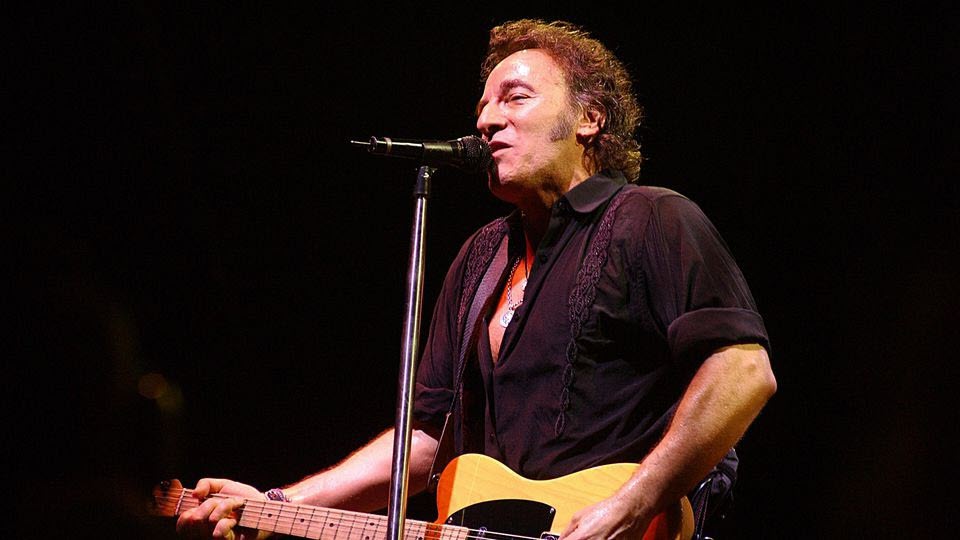
Bruce Springsteen isn’t just a rock legend—he’s a storyteller, a poet of the working class, and a voice that echoes through generations. With a career spanning over five decades, “The Boss” has crafted songs that capture the grit, hope, heartbreak, and triumph of everyday life. From the thunderous highways of youth to the quiet streets of lost dreams, Springsteen’s music is a journey—one that millions have taken with fists raised and hearts wide open. But out of his vast and powerful catalog, which songs truly stand above the rest? Which tracks have defined his legacy, ignited stadiums, and etched themselves into the soul of rock ‘n’ roll? In this ultimate countdown, we dive into the Top 10 Most Popular Bruce Springsteen Songs of All Time—each one a milestone in music history, each one carrying the fire and fury that only Springsteen can deliver. Whether you’re a lifelong fan or a newcomer ready to discover what makes him iconic, get ready to revisit the anthems, the ballads, and the unforgettable stories that made Bruce Springsteen a legend. Turn up the volume—we’re heading straight into the heart of The Boss’s greatest hits.
1. Born to Run (1975)
“Born to Run” isn’t just a song—it’s an escape plan set to music. Released in 1975, it became Bruce Springsteen’s breakthrough anthem, fusing youthful rebellion with cinematic ambition. Right from the opening guitar riff and thundering drums, you’re launched into a world of restless hearts and high-speed dreams. Springsteen’s lyrics follow a desperate young couple yearning to flee their dead-end town in search of something greater—freedom, love, maybe even salvation. The song’s production, influenced by Phil Spector’s “wall of sound,” gives it a sense of grandeur rarely matched in rock music. Every instrument is pushed to the limit, echoing the urgency in Bruce’s voice as he pleads, “Tramps like us, baby we were born to run.” What makes the song truly timeless is its universal appeal: the longing to break away from constraints and chase something bigger than yourself. For millions, it became more than a rock song—it was a declaration of hope, rebellion, and possibility. “Born to Run” didn’t just put Springsteen on the map; it captured the spirit of a generation caught between despair and dreams, standing at the edge of the unknown, ready to leap.
2. Born in the U.S.A. (1984)
“Born in the U.S.A.” might sound like a patriotic anthem with its explosive drums and rousing chorus, but underneath the surface lies a blistering indictment of how America treated its Vietnam veterans. Released in 1984, the title track of Bruce Springsteen’s most commercially successful album tells the story of a working-class man sent off to fight a war he never asked for, only to return to a country that turns its back on him. Springsteen’s gravelly voice is packed with frustration and sadness, but the booming, synth-driven production led many to mistake the track as a flag-waving rallying cry. That’s part of its genius—the way it lures listeners in with its stadium-ready sound while delivering a gut-punch in the lyrics. Lines like “I had a brother at Khe Sahn” and “nowhere to run, nowhere to go” highlight the isolation and betrayal felt by so many. “Born in the U.S.A.” became a lightning rod in pop culture and politics, used and misused by politicians, but its legacy remains powerful. It’s Springsteen at his sharpest: a storyteller unafraid to confront national myths while still delivering a rock anthem that fills arenas.
3. Dancing in the Dark (1984)
With “Dancing in the Dark,” Bruce Springsteen lit up the MTV era without losing his emotional grit. Released in 1984 as the lead single from Born in the U.S.A., the song introduced a slicker, synth-driven sound that was a clear departure from his earlier, more rugged recordings. But beneath the pop sheen lies a restless and revealing self-portrait. Bruce sings not about romantic joy or carefree fun, but about frustration, creative stagnation, and a hunger for change. “I’m just tired and bored with myself,” he admits, making the dance floor feel more like a last resort than a celebration. Produced by Jon Landau, the track rides a tight, infectious groove, and its accompanying music video—featuring a young Courteney Cox pulled onstage—helped make it Springsteen’s biggest commercial hit. Yet the song’s lasting power comes from its emotional core. “Dancing in the Dark” perfectly captures the tension between surface-level motion and deeper emotional inertia. It’s about needing a spark, something to break through the numbness. Decades later, it still resonates with anyone who’s ever felt stuck and tried to shake it off with movement, hoping the night might offer a way out.
4. Thunder Road (1975)
“Thunder Road” isn’t just a song—it’s a journey. Opening with a lone harmonica and piano, this 1975 classic eases you into Springsteen’s world of small-town dreams and last-chance romance. As the first track on Born to Run, it sets the tone for the entire album: cinematic, urgent, and overflowing with hope. Springsteen paints vivid pictures of Mary dancing across her front porch, of dusty roads and promises whispered under open skies. But this isn’t just a love song—it’s a call to action. The narrator invites Mary to leave behind the fear and disappointment of the past and take a leap of faith with him. The music swells with determination, eventually building into a full-band crescendo that mirrors the emotional stakes of the story. What makes “Thunder Road” unforgettable is its balance between realism and romanticism—it doesn’t pretend the road ahead will be easy, only that it’s worth taking. Springsteen’s poetic lyrics and impassioned delivery make this one of the most cherished opening tracks in rock history. For many fans, the line “It’s a town full of losers, and I’m pulling out of here to win” became a personal anthem—and a promise to believe in something better.
5. The River (1980)
“The River” is Bruce Springsteen at his most poignant—raw, reflective, and emotionally devastating. Released in 1980 as the title track of his double album The River, the song tells the story of a young couple whose dreams are quietly crushed under the weight of real life. Inspired in part by Springsteen’s own sister and her husband, it follows a romance that begins with hope and quickly descends into hardship: an unexpected pregnancy, a shotgun wedding, and a future filled with economic uncertainty. The instrumentation is spare—a mournful harmonica, restrained drums, and a plaintive guitar line—creating space for the story to breathe. Springsteen’s voice carries the ache of someone who has watched life harden and opportunities vanish. “Is a dream a lie if it don’t come true, or is it something worse?” he asks, in one of the most haunting lines he’s ever written. Unlike earlier songs that are fueled by escape, “The River” confronts the consequences of staying put. It’s a working-class ballad that doesn’t flinch from pain, but also doesn’t exaggerate it. This quiet masterpiece shows that sometimes, the most powerful stories come not from grand gestures, but from the slow unraveling of ordinary lives.
6. Hungry Heart (1980)
“Hungry Heart” was never supposed to be Bruce Springsteen’s song—it was originally written for The Ramones. But after being convinced to keep it for himself, he turned it into his first Top 10 hit. Released in 1980 as the lead single from The River, the song pairs a bouncy, piano-driven melody with deceptively somber lyrics. On the surface, it’s a sing-along pop song, complete with Beach Boys-style backing vocals. But listen closely, and you’ll hear the story of a man who walks away from his wife and kids, driven by an urge he can’t quite understand. “Everybody’s got a hungry heart,” he sings, capturing a universal restlessness—an emotional hunger that pulls people toward choices they can’t always explain. This contradiction is classic Springsteen: matching upbeat music with introspective themes. That’s part of what made the song so widely appealing—it’s catchy, but not shallow. “Hungry Heart” marked the moment Bruce stepped more confidently into mainstream pop while maintaining his emotional complexity. It’s fun to dance to, but it’s also tinged with regret, making it a perfect example of how Springsteen can make heartbreak sound like a party—and still hit you where it hurts.
7. Glory Days (1985)
At first listen, “Glory Days” feels like a barroom sing-along—a rollicking, feel-good track about reminiscing over beers with old friends. But beneath its upbeat piano lines and playful delivery, Bruce Springsteen’s 1985 hit offers a sly critique of nostalgia. The song’s narrator runs into old classmates—a former baseball star, a once-flirtatious woman—and realizes that all they have left to hold onto are stories from the past. With every verse, Springsteen gently mocks the way people cling to their “glory days” as life steadily moves forward. His delivery walks a fine line between affectionate and ironic, making it clear that while those moments were real, living in them forever can become a trap. The track’s buoyant energy helped make it a radio hit and a concert favorite, but it’s the self-awareness in the lyrics that gives it weight. “Glory Days” resonates because it’s both fun and sobering—a reminder that while it’s okay to look back, you can’t stay there. Springsteen nails the bittersweet truth of growing older: sometimes, the best stories are the ones that make you laugh and wince at the same time.
8. Atlantic City (1982)
Bleak, intimate, and hauntingly beautiful, “Atlantic City” stands as one of Bruce Springsteen’s most affecting songs. Released in 1982 on the stripped-down Nebraska album, it abandons rock theatrics for something more stark and personal. Armed with only an acoustic guitar and a quiet, unsteady voice, Springsteen tells the story of a man pushed to the edge by poverty and desperation. As Atlantic City—once a symbol of glitz—falls into decay, the narrator finds himself drawn into crime, trying to hold onto some semblance of hope in a world that offers little. “Everything dies, baby, that’s a fact,” he sings with resigned sorrow. There’s no catharsis here, no grand resolution—just a man doing what he must to survive. The song’s minimalist production amplifies its emotional impact, making each word hit harder. “Atlantic City” showcases Springsteen’s gift for storytelling, proving that sometimes the quietest songs can speak the loudest. It’s a ballad about moral ambiguity, hard choices, and the collapse of the American dream—all delivered in a whisper that echoes long after the song ends.
9. Jungleland (1975)
“Jungleland” is Bruce Springsteen at his most epic and operatic. Clocking in at over nine minutes and closing out 1975’s Born to Run, the song is a sweeping narrative that pulls you into a mythic version of New York and New Jersey, where street gangs, poets, lovers, and dreamers all crash together in a blaze of doomed romance. Every line is packed with vivid imagery—painted in neon and shadow—while the music shifts through piano ballads, guitar solos, and triumphant rock flourishes. But the soul of the song is Clarence Clemons’ soaring saxophone solo, a moment of pure emotion that feels like a lament for everything lost. “Jungleland” isn’t just a story—it’s a symphony of hope and heartbreak. The song ends not with resolution, but with a slow, mournful fade, as if the characters have vanished into the night. For many fans, this is Springsteen’s crowning achievement: a fearless blend of poetry, rock, and theatrical grandeur. It’s a place where idealism and reality clash, where dreams are as fragile as they are beautiful, and where every note feels like life and death.
10. Streets of Philadelphia (1994)
Quiet, devastating, and unflinchingly honest, “Streets of Philadelphia” is one of Bruce Springsteen’s most emotionally resonant songs. Written for the 1993 film Philadelphia, which tackled the AIDS crisis head-on, the song marked a profound shift in Springsteen’s musical and lyrical approach. Released in 1994, it eschews the full-band energy of his earlier work for a minimalist arrangement—soft drum loops, subtle synths, and Bruce’s own subdued, almost broken voice. The lyrics are spare but heavy, capturing the isolation and erasure felt by those suffering not just from illness, but from society’s indifference. “I was unrecognizable to myself,” he sings, echoing the physical and emotional disintegration of the film’s protagonist. The song earned Springsteen an Academy Award and a Grammy, but more importantly, it helped bring empathy and visibility to a marginalized community. “Streets of Philadelphia” doesn’t shout—it whispers, and that’s what makes it unforgettable. It’s not a song that offers comfort, but one that demands compassion. In just a few minutes, Springsteen delivers one of the most haunting portrayals of human fragility in modern music, cementing his place not only as a rock icon but as a deeply humane storyteller.

Samuel Moore is a frequent contributor to Singers Room. Since 2005, Singersroom has been the voice of R&B around the world. Connect with us via social media below.









