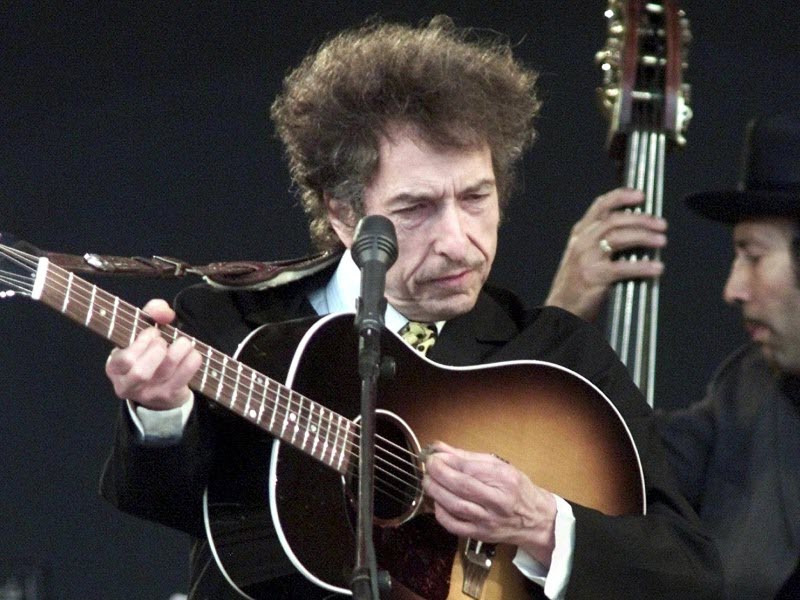
Few artists have reshaped the landscape of music quite like Bob Dylan. With a career spanning over six decades, Dylan has become more than just a singer-songwriter—he’s a cultural icon, a lyrical prophet, and a restless innovator who has never stopped evolving. From folk anthems that fueled the civil rights movement to electric epics that shattered genre boundaries, his songs have echoed through generations, influencing everyone from The Beatles to Kendrick Lamar. But with such a vast and groundbreaking catalog, which songs truly stand out as the most iconic? In this list, we dive deep into the Top 10 Most Popular Bob Dylan Songs of All Time—tracks that not only defined his legacy but also left an indelible mark on the world. These aren’t just fan favorites; they’re milestones in music history, each carrying its own story, sound, and seismic impact. Whether you’re a lifelong Dylan devotee or a curious newcomer ready to explore his musical genius, this journey through his greatest hits is bound to stir your soul, spark your imagination, and remind you why Dylan remains one of the most influential voices of all time. Let’s roll back the years, one unforgettable song at a time.
1. Like a Rolling Stone (1965)
When Bob Dylan released “Like a Rolling Stone” in July 1965, it didn’t just shake up the music charts—it shook the foundation of popular music itself. Clocking in at over six minutes, it flew in the face of industry norms and redefined what a hit single could be. From the very first notes of Al Kooper’s unmistakable organ riff, the song commands attention. Dylan’s vocal delivery—sarcastic, biting, and electric—drips with disdain as he addresses a fallen socialite stripped of her status. “How does it feel?” isn’t just a question; it’s an indictment, a philosophical gut-punch. The track marked Dylan’s full transition from folk troubadour to rock provocateur, debuting on the groundbreaking Highway 61 Revisited album. Its lyrical density, emotional ferocity, and sonic innovation lit a fire under artists across genres, from The Beatles to Bruce Springsteen. More than five decades later, “Like a Rolling Stone” still bristles with defiant energy. It’s not just a song—it’s a revolution caught on tape, a portrait of disillusionment wrapped in poetry and power chords. Dylan didn’t just stretch the boundaries of music—he shattered them, forever altering the landscape of rock and roll.
2. Blowin’ in the Wind (1963)
Released in 1963 on The Freewheelin’ Bob Dylan, “Blowin’ in the Wind” quickly became the anthem of a restless, questioning generation. With a simple acoustic guitar and a plainspoken vocal, Dylan posed some of the most powerful rhetorical questions ever set to music. “How many roads must a man walk down?” he asks—not expecting answers, but urging contemplation. Drawing from gospel and folk traditions, the song’s strength lies in its humility and universality. It became deeply intertwined with the civil rights movement, sung at marches and vigils, its refrain—“The answer, my friend, is blowin’ in the wind”—repeated like a prayer or a prophecy. Dylan wrote it in a matter of minutes, yet its emotional and political impact endures to this day. Covered by Peter, Paul and Mary and countless others, the original version remains unmatched in quiet potency. Dylan’s delivery is unassuming, but the weight of his words lingers. “Blowin’ in the Wind” is more than a folk song—it’s a cultural touchstone, a gentle but insistent call for justice, peace, and reflection. It asks us not to settle for easy answers, but to keep seeking, even when the truth remains elusive.
3. The Times They Are A-Changin’ (1964)
With “The Times They Are A-Changin’,” released in 1964, Bob Dylan distilled the upheaval of an entire era into a few verses. Stark and unrelenting, the song opens like scripture: “Come gather ’round people wherever you roam…” It’s not a plea—it’s a proclamation. Dylan warns politicians, parents, and skeptics alike: adapt or be left behind. Written at the height of social and political ferment, the song captured the spirit of the civil rights movement, the rising youth counterculture, and the deepening generational divide. The melody is simple, the accompaniment sparse—just Dylan, his guitar, and harmonica—but the impact is monumental. Each verse is a wave of truth crashing against the shores of complacency. Over time, the song has been quoted by everyone from activists to presidents, serving as both a mirror and a megaphone for change. Dylan didn’t just chronicle history—he shaped it. “The Times They Are A-Changin’” stands as one of the most iconic protest songs ever written, an enduring reminder that progress waits for no one. It remains urgent, prophetic, and remarkably relevant—a timeless warning wrapped in melody.
4. Mr. Tambourine Man (1965)
Released in 1965 on Bringing It All Back Home, “Mr. Tambourine Man” showcases Bob Dylan at his most poetic and introspective. This isn’t a political anthem or a social critique—it’s a song of surrender to imagination and dreamlike wonder. From the moment he sings, “Take me on a trip upon your magic swirling ship,” Dylan invites listeners into a world beyond logic and linear thought. Influenced by Beat poetry and perhaps altered states of consciousness, the lyrics float on waves of vivid, surreal imagery. It’s a song that resists interpretation, opting instead to envelop the listener in a feeling of gentle escape. While The Byrds famously electrified it and turned it into a chart-topping hit, Dylan’s original remains unmatched in emotional intimacy and lyrical mystique. His weary yet enchanted voice pairs beautifully with the acoustic strumming and harmonica, drawing you into the heart of his reverie. “Mr. Tambourine Man” marked a turning point in Dylan’s songwriting—less overtly political, more inwardly exploratory. It’s not meant to be fully understood; it’s meant to be felt. In a world that often demands clarity, Dylan reminds us of the power of beautiful confusion.
5. Tangled Up in Blue (1975)
Opening Bob Dylan’s 1975 album Blood on the Tracks, “Tangled Up in Blue” is a masterwork of nonlinear storytelling and emotional depth. The song reads like a series of flashbacks—half memoir, half mystery—as it traces the arc of a relationship that’s equal parts love story and elegy. Dylan shifts perspectives and tenses with ease, pulling the listener through time and memory with the precision of a novelist. The acoustic guitar provides a sense of restless motion, mirroring the narrator’s emotional journey. Dylan’s voice, more gravelly and worn than in earlier years, lends weight to every lyric: “We always did feel the same / We just saw it from a different point of view.” The song isn’t content with tidy conclusions. It dwells in ambiguity, in the moments between loss and understanding. Over the years, Dylan has altered the lyrics in live performances, treating it as a living document that evolves with him. Yet its core remains timeless: a meditation on the fragility of love, the passage of time, and the elusive nature of truth. “Tangled Up in Blue” is not just a song—it’s a journey through the tangled corridors of the heart.
6. All Along the Watchtower (1967)
Released on John Wesley Harding in 1967, “All Along the Watchtower” is one of Bob Dylan’s most cryptic and compelling works. The song is short—just 12 lines—but dense with meaning. It opens with a conversation between a joker and a thief, two figures who seem to stand outside society, watching as chaos unfolds. “There must be some way out of here,” the joker laments, setting the tone for a song filled with existential tension. The lyrics unfold like a parable or ancient warning, with imagery that feels both mythic and immediate. Dylan’s original recording is stark and minimalist, emphasizing the song’s eerie, unsettled mood. While Jimi Hendrix’s searing 1968 cover is the version that most people know—and even Dylan himself has performed it in Hendrix’s style—the original retains a haunting power all its own. With just voice, guitar, and harmonica, Dylan creates a sense of impending change, of something larger lurking just beyond the horizon. “All Along the Watchtower” doesn’t offer answers. Instead, it leaves you with questions that echo long after the music fades—a riddle cloaked in prophecy.
7. Knockin’ on Heaven’s Door (1973)
Originally written for the 1973 film Pat Garrett & Billy the Kid, Bob Dylan’s “Knockin’ on Heaven’s Door” transcended its cinematic roots to become one of his most beloved and enduring songs. With just a handful of lines and a simple chord progression, Dylan taps into something profoundly human: the quiet reckoning with mortality. Sung from the perspective of a dying lawman, the lyrics—“Mama, take this badge off of me / I can’t use it anymore”—resonate with weary acceptance rather than fear. The melody is mournful yet gentle, and the sparse instrumentation leaves space for reflection. It’s a song that feels like a farewell, not just to life but to duty, struggle, and identity. Over the decades, it’s been covered by countless artists—Guns N’ Roses, Eric Clapton, and more—each bringing their own flavor. Yet Dylan’s original remains the most intimate and moving. Its emotional impact lies in its restraint; it doesn’t try to dazzle or overwhelm. Instead, it offers a quiet meditation on life’s final moments, wrapped in the kind of honesty that only Dylan can deliver. It’s not just a song—it’s a eulogy whispered in song form.
8. Don’t Think Twice, It’s All Right (1963)
“Don’t Think Twice, It’s All Right,” released in 1963 on The Freewheelin’ Bob Dylan, is a breakup song unlike any other. There’s no melodrama, no wailing heartbreak—just a calm, cutting mix of resignation and sardonic wit. Dylan’s acoustic fingerpicking, influenced by folk traditionalists like Paul Clayton, gives the song an easygoing rhythm that contrasts beautifully with the emotional weight of the lyrics. “I gave her my heart, but she wanted my soul,” he sings—perhaps one of the most devastating lines ever delivered with a shrug. The song captures that strange blend of sadness and liberation that comes at the end of something once meaningful. Dylan doesn’t beg or plead; he simply walks away, head held high, harmonica in tow. His vocal delivery is casual, almost conversational, which only deepens the song’s impact. There’s a universality to its sentiments that still resonates today. “Don’t Think Twice” proves that Dylan’s genius wasn’t just in grand political statements, but also in the way he could turn a personal goodbye into a poetic, philosophical farewell. It’s the sound of moving on—quietly, confidently, and with a lyrical dagger in hand.
9. Subterranean Homesick Blues (1965)
When Bob Dylan dropped “Subterranean Homesick Blues” in 1965, it felt like he was cracking open the future of music. Clocking in at just over two minutes, the track is a rapid-fire barrage of words and ideas, delivered with a speed and rhythm that would later influence everything from punk to hip-hop. “Johnny’s in the basement mixing up the medicine…” he shouts, and from that first line, it’s clear we’re in uncharted territory. The lyrics are a kaleidoscope of cultural critique, counterculture slang, and political paranoia, all delivered over a relentless electric beat. Accompanied by one of the earliest music videos—Dylan flipping cue cards in an alleyway—the song became a symbol of both artistic rebellion and media-savvy commentary. It’s funny, chaotic, urgent, and more than a little subversive. Dylan’s move from acoustic folk to electric rock alienated some purists, but this song proved he wasn’t just evolving—he was reinventing the language of music itself. “Subterranean Homesick Blues” remains a blast of adrenaline and intelligence, a track that dares you to keep up. Dylan wasn’t just singing—he was decoding a world in flux.
10. Hurricane (1975)
“Hurricane,” released in 1975 on Dylan’s Desire album, is one of his most powerful and pointed protest songs. Co-written with playwright Jacques Levy, the song tells the gripping true story of Rubin “Hurricane” Carter, a Black boxer wrongfully imprisoned for murder. From the opening line—“Pistol shots ring out in the barroom night”—Dylan drops you into the chaos, narrating the events with urgency and righteous fury. The arrangement, driven by Scarlet Rivera’s swirling violin and a galloping rhythm, gives the song cinematic momentum. Dylan doesn’t mince words; he calls out racism, judicial failure, and the media’s complicity with an unflinching eye. Each verse unravels the injustice layer by layer, transforming complex legal realities into a human story filled with outrage and empathy. Though controversial and even banned from some radio stations, “Hurricane” brought widespread attention to Carter’s case and helped rekindle public support for his release. It’s a prime example of music as activism—art wielded like a sword. Dylan’s voice is raw, insistent, and unwavering. “Hurricane” isn’t just a song—it’s a trial transcript set to music, a protest sign in 4/4 time, and proof that songs can shake the walls of injustice.

Samuel Moore is a frequent contributor to Singers Room. Since 2005, Singersroom has been the voice of R&B around the world. Connect with us via social media below.









