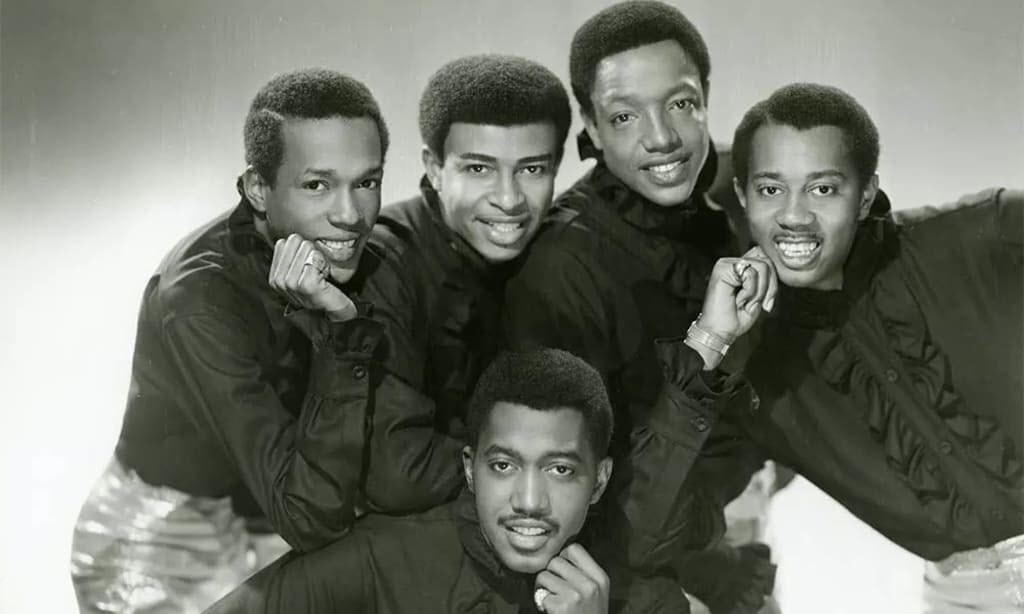
Few groups in music history have left a legacy as rich, soulful, and influential as The Temptations. From the golden age of Motown to the psychedelic soul revolution of the ‘70s, this iconic vocal group not only defined the sound of a generation—they transformed it. With flawless harmonies, electrifying stage presence, and a catalog of hits that continue to inspire, The Temptations became more than just chart-toppers—they became legends. Whether singing about sweet love, heartbreak, or social unrest, their music resonates with emotional depth and timeless groove.
In this countdown of the Top 10 Most Popular The Temptations Songs of All Time, we celebrate the tracks that made the world dance, dream, and think. These aren’t just hits—they’re cultural milestones, sonic snapshots of decades past that still pulse with vitality. From the smooth charm of “My Girl” to the gritty truth of “Papa Was a Rollin’ Stone”, each song tells a story, each note a testament to their enduring genius. Whether you’re a lifelong fan or discovering them fresh, this list is your guide to their greatest and most unforgettable moments. Turn up the volume—The Temptations are about to take center stage once again.
1. “My Girl” (1964)
Released in December 1964, “My Girl” is more than a timeless love song—it’s a defining pillar of the Motown legacy. Written by Smokey Robinson and Ronald White, this classic was tailor-made for David Ruffin’s rich and heartfelt vocals, marking his first lead performance with The Temptations. From the moment that iconic bassline kicks in, listeners are swept into a warm, joyful celebration of love that feels both intimate and universal. The lyrics, simple yet deeply sincere, express admiration in the most tender way—“I’ve got sunshine on a cloudy day” is a line that continues to resonate through the decades. With elegant string arrangements, smooth harmonies, and Ruffin’s soulful delivery, the song became the group’s first No. 1 hit and a cultural touchstone. It wasn’t just a success for The Temptations—it was a milestone moment for Motown, signaling the label’s growing power and global appeal. “My Girl” has been played at weddings, dances, and across countless movie soundtracks, capturing hearts in every generation. It’s a song that radiates timeless charm, evoking a sense of innocence and joy that never fades. Nearly 60 years later, it remains one of the most beloved recordings in soul music history.
2. “Ain’t Too Proud to Beg” (1966)
“Ain’t Too Proud to Beg,” released in 1966, is a masterclass in raw emotion and irresistible rhythm. Built around a foundation of pleading vulnerability, the song finds David Ruffin delivering one of his most dynamic performances, his voice teetering between desperation and determination. Written by Norman Whitfield and Edward Holland Jr., and produced by Whitfield, this track has a grit and urgency that set it apart from the smoother soul hits of the time. Ruffin’s vocals burn with intensity as he belts out the story of a man willing to sacrifice his pride to hold onto love. The instrumentation crackles with energy—punchy horns, galloping drums, and a driving bassline that demand movement. “Ain’t Too Proud to Beg” climbed to No. 13 on the Billboard Hot 100 and became a fixture in The Temptations’ live shows. It also marked a turning point in the group’s sound, steering toward the more robust, funk-infused productions of the late ’60s. Equal parts heartbreak and groove, the song captures the agony of love slipping away while keeping your feet tapping. It’s Motown soul at its most emotionally charged—and utterly danceable.
3. “Papa Was a Rollin’ Stone” (1972)
“Papa Was a Rollin’ Stone” isn’t just a song—it’s a cinematic experience. Released in 1972 and produced by the visionary Norman Whitfield, the track stands as one of The Temptations’ most ambitious and groundbreaking works. Clocking in at nearly 12 minutes on the album All Directions, it opens with a long, moody instrumental—layers of wah-wah guitars, brooding basslines, atmospheric strings, and haunting horns that set the tone before a single lyric is sung. When the vocals do arrive, they unfold like a conversation, as each group member takes turns exploring the emotional fallout of an absent father’s legacy. The lyrics are poignant and haunting, capturing a son’s confusion, anger, and lingering pain. The song won three Grammy Awards and became a landmark of psychedelic soul, showcasing how far Motown—and The Temptations—had evolved since their early days. With its experimental structure, social commentary, and immersive soundscape, “Papa Was a Rollin’ Stone” pushed musical boundaries and redefined what soul music could be. Decades later, it still hits with the weight of a revelation—complex, bold, and deeply resonant.
4. “Just My Imagination (Running Away with Me)” (1971)
“Just My Imagination (Running Away with Me),” released in 1971, is a dream wrapped in melody—one of the most tender and emotionally resonant songs The Temptations ever recorded. After years of psychedelic soul explorations, this track marked a return to the group’s romantic roots. Eddie Kendricks takes center stage with a gentle, wistful performance that captures the fragile beauty of longing for a love that only exists in the mind. The lyrics are simple yet profound, painting the picture of a man who dreams of a perfect life with a woman he’s never truly known. Behind his falsetto, lush orchestration blooms—soft strings, delicate horns, and a gentle rhythm section that mirrors the song’s delicate emotional core. The song soared to No. 1 on the Billboard Hot 100, reaffirming The Temptations’ ability to touch hearts as powerfully as they could move feet. It was also Kendricks’ final major hit with the group before he left for a solo career, making the song feel like a bittersweet farewell. Elegant, poetic, and achingly beautiful, “Just My Imagination” remains one of Motown’s finest love ballads.
5. “I Wish It Would Rain” (1967)
“I Wish It Would Rain,” released in 1967, stands as one of The Temptations’ most emotionally devastating songs. David Ruffin’s performance is a masterclass in vulnerability, his voice aching with sorrow as he pleads for the sky to open and mask his heartbreak. The lyrics, written by Roger Penzabene, were born out of real anguish—his own crumbling marriage—and tragically, he died by suicide shortly after the song was completed. That raw grief bleeds into every line, giving the track an emotional authenticity that’s hard to shake. Backed by a mournful piano line and subtle strings arranged by Motown’s in-house band The Funk Brothers, the song wraps its pain in a restrained, haunting beauty. Despite its sorrowful tone, the track was a commercial success, peaking at No. 4 on the Billboard Hot 100. It remains a standout in the group’s catalog, not just for its heartbreak but for how deeply it connects. “I Wish It Would Rain” is more than just a sad song—it’s a soulful cry of anguish that still resonates with anyone who’s ever suffered in silence.
6. “Cloud Nine” (1968)
When “Cloud Nine” hit the airwaves in 1968, it signaled a bold new direction for The Temptations. Gone were the polished love songs of their early days—this was gritty, experimental, and unmistakably urgent. Produced by Norman Whitfield and featuring Dennis Edwards in his debut as the group’s new lead singer, “Cloud Nine” embraced the psychedelic soul movement with full force. Layered with wah-wah guitars, punchy horns, and a driving rhythm, the song felt like a controlled explosion. Lyrically, it was equally daring, speaking to the despair of inner-city poverty and the allure of escapism. It was one of the first Motown songs to tackle real-world issues so openly, and though the lyrics never say the word “drugs,” the metaphor was loud and clear. The song’s innovative sound and social relevance earned The Temptations their first Grammy Award, proving they could evolve with the times and still lead the pack. “Cloud Nine” wasn’t just a hit—it was a reinvention. It laid the groundwork for a string of socially conscious, funk-infused hits that would define their late-’60s and early-’70s catalog. Bold, experimental, and full of fire, it remains a turning point in the group’s evolution.
7. “Ball of Confusion (That’s What the World Is Today)” (1970)
“Ball of Confusion” is The Temptations at their most fearless. Released in 1970, the song serves as a fast-paced, no-holds-barred commentary on a world in chaos. Against a backdrop of swirling guitars, blistering horns, and a funk-driven rhythm section, the group unleashes a lyrical barrage that touches on war, civil rights, politics, pollution, and economic inequality. There’s no chorus—just an urgent stream of social observations delivered by each member in rapid succession, creating a whirlwind effect that mirrors the confusion of the era. Norman Whitfield’s production is dense and daring, loaded with effects that heighten the tension without overwhelming the message. “Ball of Confusion” didn’t just entertain—it confronted. At a time when most pop songs avoided politics, this track tackled it head-on. It reached No. 3 on the Billboard Hot 100 and became a signature anthem of protest soul. Its fearless critique of society’s dysfunction still rings true today, making it one of The Temptations’ most powerful and relevant songs. Bold, defiant, and rhythmically relentless, “Ball of Confusion” is a masterwork of message-driven music.
8. “Get Ready” (1966)
Bright, buoyant, and bursting with soul, “Get Ready” is one of The Temptations’ most joyfully infectious songs. Written and produced by Smokey Robinson, the track was released in 1966 with Eddie Kendricks on lead vocals, bringing his signature smooth tenor to a playful and romantic tune. Right from the brassy opening and upbeat tempo, “Get Ready” sounds like a party in full swing. Its lively instrumentation—featuring a punchy horn section, handclaps, and an irresistible groove—makes it nearly impossible to sit still. The lyrics are lighthearted and teasing, as Kendricks warns his love interest to prepare for the full force of his affection. Though it peaked at a modest No. 29 on the Billboard Hot 100, the song gained renewed life when rock band Rare Earth turned it into a Top 5 hit in 1970. Over time, “Get Ready” has become a fan favorite and a staple of Motown compilations. It captures the youthful exuberance of early Temptations and serves as a reminder that sometimes, soul music’s greatest power lies in pure, unfiltered joy. It’s a tune made for dancing, smiling, and falling in love.
9. “The Way You Do the Things You Do” (1964)
Released in 1964, “The Way You Do the Things You Do” marked the first major breakthrough for The Temptations—and what a debut it was. Written by Smokey Robinson and Bobby Rogers, the song introduced the group’s charisma, vocal harmonies, and clever lyricism to the world. With Eddie Kendricks handling lead vocals, the track is filled with lighthearted charm, blending romantic wit with an easygoing rhythm. From the first pluck of the guitar to the catchy comparisons (“You’ve got a smile so bright, you know you could have been a candle”), the song immediately hooks the listener. Its clever metaphors and flirtatious tone set the tone for the group’s early sound—smooth, fun, and irresistibly catchy. The song climbed to No. 11 on the Billboard Hot 100, launching The Temptations into national stardom. More than just a hit, it laid the groundwork for a legacy of soulful storytelling and vocal unity. “The Way You Do the Things You Do” remains a vital piece of their catalog, a playful reminder of where it all began for one of the greatest vocal groups in music history.
10. “I Can’t Get Next to You” (1969)
“I Can’t Get Next to You” exploded onto the scene in 1969 with a fire and flair that set it apart from anything The Temptations had done before. Produced by Norman Whitfield, the track is a masterful blend of soul and funk, with a relentless energy that doesn’t let up for a second. What makes it unique is its structure: all five members of the group share lead vocals, creating a dynamic and interactive performance that feels like a conversation in motion. Each voice adds a new layer of frustration and yearning, as the lyrics describe a man who can seemingly do everything—except win the affection of the woman he desires. Musically, it’s a burst of rhythm and power, driven by clapping backbeats, vibrant guitar riffs, and propulsive percussion. The song shot to No. 1 on the Billboard Hot 100 and quickly became a live-show favorite. It’s flashy, urgent, and full of attitude—a prime example of Motown’s shift into funkier, more experimental territory at the turn of the decade. “I Can’t Get Next to You” is loud, bold, and undeniably thrilling—one of The Temptations’ most electrifying hits.

Samuel Moore is a frequent contributor to Singers Room. Since 2005, Singersroom has been the voice of R&B around the world. Connect with us via social media below.









