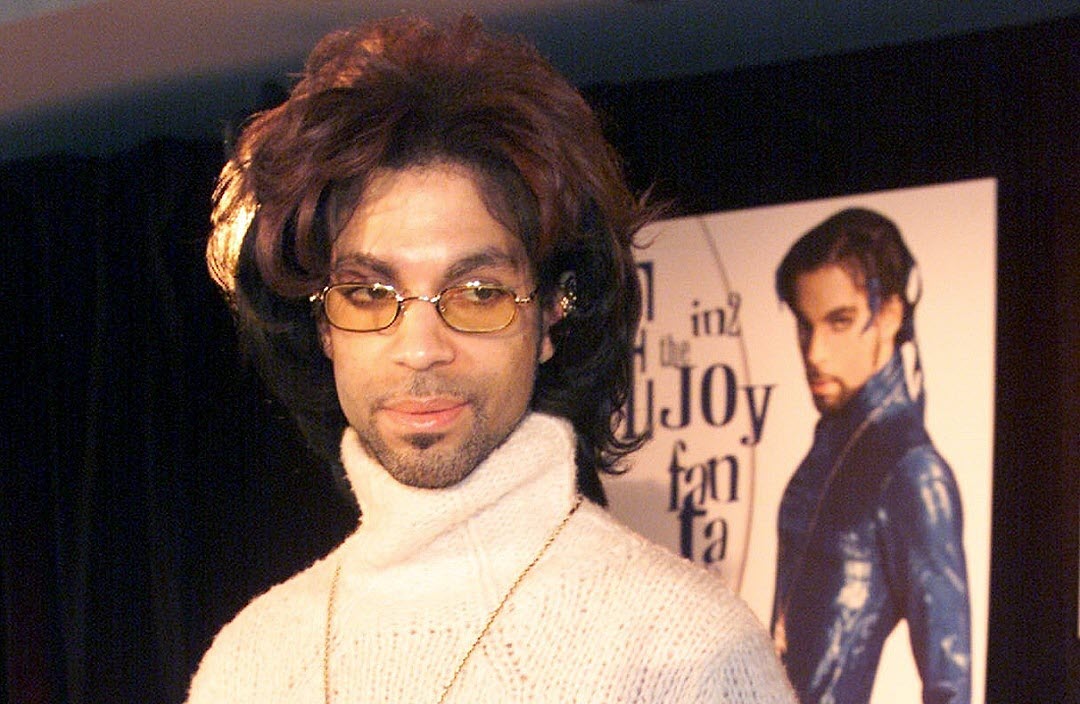
Few artists have ever embodied musical genius, innovation, and raw charisma quite like Prince. A true iconoclast, Prince Rogers Nelson didn’t just challenge the rules of pop—he rewrote them entirely. From his genre-blending sound to his electrifying stage presence, Prince carved out a legacy that’s as bold and boundary-pushing as the man himself. Whether he was shredding a guitar solo in a lavender suit or delivering soul-baring ballads at a whisper, Prince had an uncanny ability to make every note feel personal and unforgettable.
But with a catalog as deep and diverse as his, narrowing down his most iconic songs is no easy task. That’s why we’ve taken on the challenge to celebrate the top 10 most popular Prince songs of all time—not just by chart performance, but by cultural impact, fan devotion, and timeless appeal. These are the tracks that defined eras, inspired generations, and turned Prince into a symbol of artistic freedom and fearless creativity.
So crank up the volume, throw on something purple, and get ready to dive into the music that made the world stop and listen. These are the songs that turned Prince into a legend—and continue to keep his spirit alive today.
1. “Purple Rain” (1984)
Released in 1984 as the emotional finale to both the Purple Rain album and film, “Purple Rain” stands as Prince’s most iconic and soul-stirring masterpiece. Clocking in at over eight minutes on the album version, the song begins with gentle guitar chords and mournful vocals, gradually swelling into a soaring crescendo that blends rock, gospel, and soul in a way few songs ever have. The title itself is evocative and enigmatic—open to interpretations ranging from heartbreak and longing to spiritual rebirth and redemption. Prince, backed by The Revolution, pours every ounce of emotion into the song, his vocal delivery raw and vulnerable. Then comes that unforgettable guitar solo—a cathartic explosion of pain and beauty that ranks among the greatest in rock history. “Purple Rain” wasn’t just a hit; it was a cultural event that solidified Prince as more than a pop star—he was a visionary artist capable of fusing emotional depth with musical brilliance. Released on June 25, 1984, the track has since become a staple of tributes and finales, a song that continues to bring audiences to tears decades later. It’s not just a performance—it’s a transcendental experience.
2. “When Doves Cry” (1984)
With its stark production and fearless innovation, “When Doves Cry” redefined what a pop song could be when it hit the airwaves in 1984. As the lead single from Purple Rain, it was Prince’s first No. 1 hit on the Billboard Hot 100, but more than that, it was a shock to the system. The song defied expectations by completely removing the bass line, creating a sense of emptiness that perfectly mirrored its themes of emotional chaos and fractured relationships. Built around a haunting synthesizer riff and a relentless drum machine loop, the track dives deep into the pain of love gone wrong, of childhood wounds that shape adult intimacy. Prince plays every instrument on the recording, showcasing his peerless musicianship and creative control. His anguished vocals rise and fall with a rawness that feels unfiltered and deeply personal. The accompanying music video, sensual and controversial, added another layer to the song’s mystique, cementing its place as a cultural milestone. “When Doves Cry” didn’t just top the charts—it challenged the conventions of popular music and proved that Prince wasn’t following trends; he was creating them.
3. “Kiss” (1986)
With “Kiss,” Prince stripped pop music down to its bare essentials—and turned that minimalism into pure magic. Released in 1986 as the lead single from Parade, the track was originally written for the funk band Mazarati, but Prince reclaimed it, rewired it, and delivered one of the most irresistible hits of his career. With little more than a tight drum machine beat, a choppy guitar riff, and his soaring falsetto, he created a track that was playful, funky, and undeniably sexy. The song’s lyrics are both flirtatious and commanding—he doesn’t want riches or perfection, just your “extra time and your… kiss.” Prince’s vocal delivery, slipping between breathy whispers and falsetto shrieks, makes the song feel like an intimate conversation and a dance floor jam all at once. “Kiss” became a No. 1 hit and won a Grammy for Best R&B Performance by a Duo or Group with Vocals. It remains a masterclass in how less can truly be more. With every pause and every groove, “Kiss” pulses with charisma. It’s bold, it’s clever, and it captures Prince at his most confident and seductive.
4. “1999” (1982)
When Prince released “1999” in 1982, he wasn’t just predicting a party—he was inviting the world to dance through the apocalypse. The title track from his fifth studio album, “1999” marked Prince’s mainstream breakthrough, a pulsating synth-funk anthem with a heavy dose of Cold War dread. “I was dreamin’ when I wrote this,” he confesses in the opening line, “so sue me if I go too fast.” That blend of whimsy and anxiety runs through the entire song, which combines infectious rhythms with a not-so-subtle warning about the fragility of life. The layered vocals—featuring contributions from bandmates Lisa Coleman and Dez Dickerson—give the track a communal, celebratory energy. The production, driven by a pounding LinnDrum beat and spacey synths, makes it impossible to sit still. Despite its dark undertones, “1999” became a dancefloor staple and a symbol of millennial anticipation, frequently revived during New Year’s Eve celebrations. Its success launched Prince into pop stardom and set the stage for Purple Rain. More than four decades later, “1999” remains a timeless reminder to find joy, even when the world feels like it’s on the brink.
5. “Little Red Corvette” (1983)
“Little Red Corvette,” released in 1983, was the moment Prince crashed the mainstream with both style and substance. It was his first Top 10 hit, blending rock and R&B into a sleek, seductive track that turned a one-night stand into a metaphorical joyride. On the surface, it’s about a fast woman and a faster car, but listen closely, and you’ll find a story of emotional distance, longing, and the fear of getting left behind. Prince’s vocals move between cool detachment and aching vulnerability, giving the track emotional weight beyond its suggestive lyrics. The shimmering synth lines and unforgettable guitar solo add polish to a track that’s as musically sophisticated as it is radio-friendly. “Little Red Corvette” was a game-changer—it proved that Prince could deliver a hit without compromising his artistry. It also helped define the sound of the early ’80s, with its fusion of Minneapolis funk and New Wave gloss. More than just a hit single, the song was a bold declaration: Prince wasn’t just a provocateur—he was a pop innovator with a vision.
6. “Let’s Go Crazy” (1984)
“Let’s Go Crazy,” released in 1984 as the electrifying opener to Purple Rain, is Prince at his most urgent, theatrical, and exuberant. Kicking off with a dramatic spoken-word intro—“Dearly beloved, we are gathered here today to get through this thing called life”—the song immediately sets a tone that is both spiritual and rebellious. From there, it explodes into a whirlwind of funk, rock, and pop, driven by slamming drum machines, squalling guitars, and a gospel-tinged chorus that’s impossible not to chant along with. Prince’s guitar solo near the end is a ferocious blaze of distortion and emotion, further blurring the line between sermon and celebration. At its core, “Let’s Go Crazy” is about finding joy amid chaos, encouraging listeners to live fully and loudly despite life’s inevitable struggles. The song topped the Billboard Hot 100 and became one of Prince’s signature anthems—both a party starter and a philosophical statement. In the Purple Rain film, it takes on an even more powerful role, symbolizing freedom, passion, and defiance. “Let’s Go Crazy” isn’t just a call to dance—it’s a call to be alive, completely and unapologetically.
7. “I Would Die 4 U” (1984)
Released in December 1984, “I Would Die 4 U” is one of Prince’s most fascinating and genre-defying singles. As the fourth release from Purple Rain, it blends upbeat, danceable synth-pop with deeply introspective and ambiguous lyrics that invite endless interpretation. Prince doesn’t just present himself as a romantic partner—he steps into the role of a messianic figure, singing, “I’m not a woman / I’m not a man / I am something that you’ll never understand.” The lyrics blur the lines between personal devotion and spiritual sacrifice, making the song feel both intimate and cosmic. Musically, it’s powered by an infectious beat, tight synths, and an energetic performance from The Revolution, giving the track the feel of a live show condensed into three minutes. Though it peaked at No. 8 on the Billboard Hot 100, “I Would Die 4 U” remains a fan favorite and a staple of Prince’s legacy. It’s a prime example of how he infused pop music with bold ideas—about identity, love, divinity, and human connection—without ever losing his sense of rhythm or style. Few songs are this danceable and this thought-provoking.
8. “Raspberry Beret” (1985)
With “Raspberry Beret,” Prince took a stylistic detour into psychedelic pop, and the result was one of the most whimsical and endearing songs of his career. Released in 1985 as the lead single from Around the World in a Day, the track marked a deliberate shift away from the moody intensity of Purple Rain. Inspired by the sounds and colors of 1960s counterculture, “Raspberry Beret” is awash in jangly guitars, playful strings, and a breezy, nostalgic tone that feels like a daydream set to music. The song tells a vivid story of young love and first romance—centered around a girl in a raspberry-colored beret—imbued with Prince’s usual mix of innocence and eroticism. His vocals are bright and boyish, his lyrics cinematic and full of longing. Behind the lighthearted sound, though, there’s a quiet yearning, a sense that this fleeting moment of joy is already fading. The song soared to No. 2 on the Billboard Hot 100 and remains a staple of retro playlists and feel-good compilations. “Raspberry Beret” is a testament to Prince’s versatility and imagination—proof that even his most playful songs carried layers of artistry and emotion.
9. “Cream” (1991)
Prince strutted into the ’90s with style and swagger when he released “Cream” in 1991. The second single from his Diamonds and Pearls album, the track is a sleek, seductive jam that oozes confidence and attitude. Legend has it Prince wrote it while looking at himself in the mirror—and it shows. “Cream” is built around a slinky guitar groove and a slow, teasing beat that creates a sultry, almost hypnotic vibe. Lyrically, it’s pure flirtation, dripping with double entendres and cheeky bravado. But beneath the sexy surface lies masterful musicianship and impeccable control. Prince’s delivery is playful yet precise, and the minimal arrangement gives every word and note room to shine. Backed by his new band, The New Power Generation, the song captured a fresh, funk-infused sound that helped Prince remain a chart-topping force into the new decade. It became his fifth—and final—No. 1 hit on the Billboard Hot 100. “Cream” isn’t just about seduction—it’s about self-assurance, delivered with a wink and a knowing grin. It’s the kind of song only Prince could pull off: cocky, clever, and irresistibly cool.
10. “Sign o’ the Times” (1987)
“Sign o’ the Times,” the title track from Prince’s landmark 1987 double album, is a stark, sobering meditation on a world in crisis. Gone are the flamboyant costumes and layered production—instead, Prince strips everything down to a minimalist funk beat created with the Fairlight CMI synthesizer, allowing his voice and message to take center stage. He tackles topics rarely heard on pop radio: AIDS, gang violence, drug addiction, nuclear war, and economic hardship. Delivered in a cool, conversational tone, his vocals feel more like a report from the front lines than a typical pop performance. It was a daring move from an artist known for escapism and sensuality, revealing a socially conscious side that had always been present but never so prominently displayed. Despite—or because of—its rawness, the song reached No. 3 on the Billboard Hot 100 and earned widespread critical acclaim. “Sign o’ the Times” stands as one of Prince’s most important songs, a haunting snapshot of the era and a reminder that even amid glitter and glamour, he never lost sight of the world’s realities. It’s proof of his depth—not just as a musician, but as a prophet of truth.

Samuel Moore is a frequent contributor to Singers Room. Since 2005, Singersroom has been the voice of R&B around the world. Connect with us via social media below.









