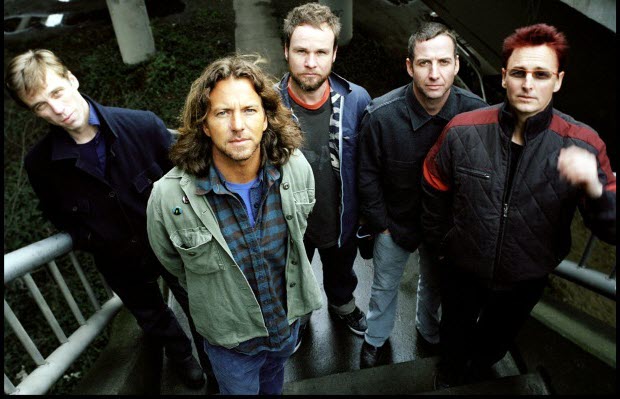
Pearl Jam, a band that emerged from the Seattle grunge scene in the early ’90s, has left an indelible mark on rock music. With their raw energy, poignant lyrics, and unforgettable melodies, they have captivated millions of fans worldwide. As we dive into the top 10 most popular Pearl Jam songs of all time, we celebrate a legacy that spans over three decades. From anthems of rebellion to heartfelt ballads, each track tells a unique story that resonates with listeners on a profound level.
Whether you’re a long-time devotee or a newcomer discovering their music, this countdown showcases the evolution of Pearl Jam’s sound and the themes that have defined their career—love, loss, social justice, and the human experience. Songs like “Alive” and “Black” have become timeless classics, while newer hits continue to demonstrate their ability to innovate and inspire. Join us as we explore these iconic tracks, reliving the moments that cemented Pearl Jam’s status as one of rock’s greatest bands. Get ready to sing along, reflect, and perhaps even rediscover your favorite Pearl Jam anthem!
1. Alive (1991)
“Alive” is one of Pearl Jam’s most iconic tracks, and it served as a powerful introduction to the band’s unique blend of raw emotion and explosive rock energy. Released as part of their debut album Ten, the song tells a complex story of personal identity and survival. Eddie Vedder’s lyrics are deeply autobiographical, dealing with the shocking revelation of a family secret and the confusion and resilience that followed. The now-legendary opening guitar riff from Mike McCready instantly grabs your attention, and the soaring chorus offers a cathartic sense of release. Over time, “Alive” has come to represent much more than its original narrative. It’s been embraced by fans as an anthem of endurance—a rallying cry for anyone who’s been through pain and come out stronger on the other side. Live performances of “Alive” often evolve into euphoric moments of communal catharsis, with audiences singing every word as if their lives depended on it. Its blend of hard rock power and emotional sincerity helped define the early ’90s grunge era and cemented Pearl Jam as a force to be reckoned with. More than three decades later, “Alive” still resonates deeply and continues to inspire new generations.
2. Jeremy (1991)
“Jeremy” remains one of Pearl Jam’s most haunting and unforgettable songs. Taken from their groundbreaking debut album Ten, the track was inspired by the real-life story of a high school student who tragically took his own life in front of his classmates. Eddie Vedder, moved by a small newspaper article, crafted a chilling narrative that captures the pain, isolation, and silent cries for help that often go unnoticed in the lives of young people. The song’s slow-burning intensity is driven by Jeff Ament’s brooding bass line and builds toward an explosive climax, underscoring the weight of its tragic subject matter. Vedder’s vocal performance is gripping—part whisper, part wail—as he inhabits the troubled psyche of a boy pushed too far. “Jeremy” also became known for its controversial yet visually arresting music video, which MTV famously censored, sparking dialogue about violence, youth, and censorship. Its release brought widespread attention to the darker realities of adolescent mental health, giving a voice to those who felt unseen. Decades later, “Jeremy” is still praised for its emotional bravery and remains a stark reminder of the urgent need for empathy and understanding in a world where many still suffer in silence.
3. Black (1991)
“Black” is arguably one of Pearl Jam’s most emotionally wrenching songs. Released on their debut album Ten, it’s a ballad that stands apart from the heavier tracks that dominate the record. The song captures the raw, aching feeling of lost love—of something beautiful that slipped away and left a permanent scar. Eddie Vedder’s voice is the centerpiece, pouring out emotion in every line as if he’s reliving the heartbreak in real time. There’s a poetic quality to the lyrics that elevates the track beyond a typical love song, with vivid imagery and introspection that give listeners something deeper to hold onto. The arrangement is understated but powerful, with subtle guitar work that gradually swells to match the emotional crescendo. “Black” was never released as a commercial single at the band’s request, yet it became a massive fan favorite and remains a staple of their live shows. Vedder often improvises additional lines during performances, making each rendition feel unique and deeply personal. For many, “Black” is not just a song—it’s an emotional experience that taps into the universal pain of longing and the bittersweet beauty of remembering what once was.
4. Even Flow (1991)
“Even Flow” is one of Pearl Jam’s most recognizable songs and a high-energy standout from their debut album Ten. With its infectious groove, bluesy riffs, and explosive choruses, the track became a signature part of the band’s early identity. Lyrically, it paints a vivid portrait of a man experiencing homelessness—someone caught in a cycle of instability and survival, trying to find peace in a world that rarely offers it. Eddie Vedder’s powerful vocals, combined with Stone Gossard’s rhythm guitar and Mike McCready’s electrifying solos, give the song an urgent, almost frantic energy. “Even Flow” is more than just a catchy rock tune; it’s a socially conscious anthem that shines a light on marginalized voices. Its live performances are legendary—extended jams, improvisations, and Vedder’s dynamic stage presence often turn it into a fan-favorite moment of the show. The music video famously had to be reshot because the band wasn’t happy with the original, highlighting how much they cared about their artistic expression. Over time, “Even Flow” has maintained its popularity not just for its musical prowess, but for its storytelling power and the unrelenting energy it brings to Pearl Jam’s legacy.
5. Better Man (1994)
“Better Man” is one of Pearl Jam’s most beloved tracks and a highlight from their third album, Vitalogy. The song explores the internal conflict of someone stuck in a broken relationship, convinced they deserve better but feeling powerless to leave. With its melancholic melody and deeply relatable lyrics, “Better Man” speaks to anyone who has struggled with compromise, disappointment, or emotional entrapment. Eddie Vedder wrote the song in his teenage years, and the maturity of its themes—combined with the vulnerability in his voice—makes it resonate on a profound level. The gradual build from a quiet, introspective beginning to a powerful, full-band chorus gives the song a dramatic arc that pulls listeners in completely. Despite its radio-friendly sound, the band initially hesitated to include it on an album because they feared it might be too commercial. However, it has since become a fan favorite and a regular staple in their concerts, where crowds often sing the entire opening verse without Vedder’s help. “Better Man” captures a moment of emotional clarity that feels both deeply personal and universally understood. It’s a testament to Pearl Jam’s ability to blend honest storytelling with compelling rock arrangements.
6. Corduroy (1994)
“Corduroy” stands out as a raw and passionate statement from Pearl Jam’s Vitalogy album, capturing the band’s complicated relationship with fame and the expectations that come with it. The title is a reference to a corduroy jacket Eddie Vedder wore, which was copied and sold commercially after the band gained widespread success—an ironic symbol of how something personal can be commodified. The song is driven by urgent guitar work and a pulsing rhythm that builds intensity with each verse. Lyrically, Vedder tackles the loss of privacy, the illusion of control, and the deep desire to remain authentic in a world that constantly tries to reshape you. His delivery is forceful and emotional, expressing both defiance and vulnerability. “Corduroy” became a powerful anthem for fans who also felt the pressures of being misunderstood or misrepresented. It’s not just about celebrity—it’s about the human need to stay true to oneself amidst external noise. In concert, it’s one of the songs that often sparks impassioned sing-alongs, as fans connect with its raw honesty. Over time, “Corduroy” has evolved from a personal reflection into a universal cry for authenticity in an increasingly commercialized and image-driven world.
7. Daughter (1993)
“Daughter” is a poignant and beautifully restrained track from Pearl Jam’s second album, Vs. It addresses the complex dynamics between parents and children, especially when a child doesn’t meet societal expectations or struggles with undiagnosed learning disabilities. The lyrics hint at emotional repression and misunderstanding, telling the story of a young girl whose individuality is stifled by a controlling and perhaps abusive parent. Eddie Vedder’s voice carries the sorrow and frustration of someone observing or remembering that pain, while the acoustic-driven arrangement gives the song a quiet but persistent intensity. The simplicity of the melody allows the lyrics to take center stage, and the subtle build of the arrangement adds emotional weight without overwhelming the message. In live performances, Vedder often adds improvised tags or covers at the end of the song, transforming it into a moment of social commentary or solidarity with marginalized voices. “Daughter” resonates with anyone who has ever felt unheard or misunderstood, especially within their own family. It’s a gentle yet powerful song that reminds listeners of the damage silence and control can inflict—and the quiet resilience required to overcome it.
8. I Am Mine (2002)
“I Am Mine,” from Pearl Jam’s 2002 album Riot Act, is a quietly powerful affirmation of self-ownership and inner strength. The song was written by Eddie Vedder in the wake of the Roskilde Festival tragedy in 2000, where nine fans lost their lives during the band’s performance. The lyrics reflect on mortality, identity, and the need to reclaim a sense of control in a chaotic world. With lines like “I know I was born and I know that I’ll die / The in-between is mine,” Vedder delivers one of his most philosophical and introspective pieces. Musically, the song balances gentle verses with a strong, anthemic chorus, supported by thoughtful guitar work that complements the lyrical themes. “I Am Mine” marked a shift in the band’s tone—less angst-driven and more contemplative—signaling growth both musically and personally. It’s a song that offers reassurance and empowerment, encouraging listeners to find peace in who they are, even when the world feels unstable. For fans, “I Am Mine” is more than just a track on an album—it’s a mantra for resilience, a declaration of self-worth, and a reminder that each of us owns our story, no matter what happens.
9. Given to Fly (1997)
“Given to Fly” is one of Pearl Jam’s most uplifting and soaring tracks, released as a single from their 1998 album Yield. Built on a dynamic, wave-like guitar riff from Mike McCready, the song carries a sense of momentum and freedom that makes it instantly memorable. Lyrically, Eddie Vedder weaves a semi-mythical tale of a man who rises above suffering and prejudice to find peace and transcendence. There’s an almost spiritual quality to the song, especially in the chorus where Vedder sings of someone who “made it to the ocean, had a smoke in a tree.” The imagery is open to interpretation—some see it as a metaphor for escape or redemption, while others read it as a celebration of resilience and personal liberation. The track’s slow build and powerful climax create an emotional arc that feels like liftoff. “Given to Fly” has become a fan favorite for its hopeful tone and ability to lift spirits. Whether interpreted literally or symbolically, it captures a rare feeling of transcendence in rock music. It’s a testament to Pearl Jam’s ability to blend storytelling, melody, and emotion into something truly timeless and soul-stirring.
10. Porch (1991)
“Porch” is one of the most electrifying and emotionally charged songs on Pearl Jam’s debut album Ten. It begins with a fast-paced, punk-influenced energy that immediately sets it apart, and it continues to escalate into a furious explosion of sound and passion. The lyrics are cryptic but emotionally potent, touching on themes of disillusionment, lost connection, and the desire to break free from confining circumstances. Eddie Vedder’s vocals are delivered with an urgent, almost breathless intensity, while the band backs him with relentless guitar riffs and pounding drums that mirror the emotional turbulence of the lyrics. Over time, “Porch” has taken on a life of its own in live performances. The band often extends it with long instrumental jams and improvised moments, including Vedder climbing stage rigging or diving into the crowd during the early years. It’s become a space for raw expression, rebellion, and catharsis. While the studio version is gripping, it’s the live renditions that have solidified “Porch” as a Pearl Jam classic. The song captures the restless spirit of youth and the need to question the status quo—a reminder that sometimes, shouting into the void is the first step toward finding your voice.

Edward Tomlin is a frequent contributor to Singers Room. Since 2005, Singersroom has been the voice of R&B around the world. Connect with us via social media below.









