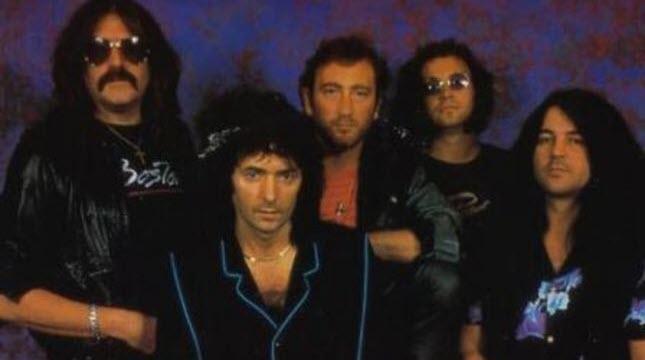
Deep Purple, a titan of rock music, has captivated audiences for decades with their powerful sound and unforgettable melodies. Formed in 1968, this legendary band blended hard rock with progressive elements, creating a unique style that has left an indelible mark on the music scene. With a lineup that has evolved over the years, including iconic members like Ian Gillan and Ritchie Blackmore, Deep Purple’s influence spans generations, inspiring countless artists and fans alike.
In this article, we delve into the top 10 most popular Deep Purple songs of all time. From the thunderous riffs of “Smoke on the Water” to the haunting beauty of “Child in Time,” each track showcases the band’s exceptional musicianship and lyrical depth. Whether you’re a lifelong fan or new to their music, these songs represent the pinnacle of Deep Purple’s artistic legacy.
Join us as we celebrate the timeless hits that have defined a genre and continue to resonate with fans around the world. Get ready to rock as we count down the anthems that have solidified Deep Purple’s status as one of the greatest rock bands in history!
1. Smoke on the Water (1972)
“Smoke on the Water” is Deep Purple’s signature anthem and easily one of the most recognizable rock songs in history. Released in 1972 on their classic album Machine Head, the track tells the real-life story of a fire that broke out during a Frank Zappa concert at the Montreux Casino in Switzerland—right next to where the band planned to record. As the smoke literally drifted across Lake Geneva, the band turned the chaos into musical gold. Ritchie Blackmore’s iconic four-note riff became an instant classic, often cited as one of the first riffs every budding guitarist learns. But there’s more to the track than the riff alone. Jon Lord’s swirling organ adds rich texture, while Ian Gillan’s storytelling vocal delivers a vivid, almost cinematic recounting of the night. Roger Glover’s steady bass anchors the track, and Ian Paice’s drums bring a tight, driving rhythm. What makes “Smoke on the Water” timeless is not just its musical simplicity and power, but how it captures a moment in rock history and transforms it into something mythic. It’s a track that introduced millions to rock and still gets played loudly and proudly over 50 years later.
2. Highway Star (1972)
“Highway Star” is Deep Purple in full-throttle mode—a hard rock classic that feels like a racecar tearing down an open road. Released in 1972 on Machine Head, the song was reportedly written on a tour bus in just a few minutes and debuted live the very next night. From the opening riff to the final note, it’s a nonstop surge of adrenaline. Ian Gillan’s soaring vocals bring swagger and grit to lyrics that compare a fast car to a seductive woman—full of bravado and raw energy. Jon Lord’s organ solo is pure classical-influenced brilliance, and Ritchie Blackmore’s guitar solo is a shredder’s dream: fast, furious, and masterfully melodic. The rhythm section—Roger Glover on bass and Ian Paice on drums—drives the song with precision and force. “Highway Star” captures the spirit of freedom, rebellion, and speed, making it a fan favorite and a staple of Deep Purple’s live shows. It’s not just a song—it’s an experience, one that epitomizes 1970s hard rock at its most thrilling. Even decades later, it continues to inspire awe for its technical skill and its ability to get hearts racing.
3. Child in Time (1970)
“Child in Time” is one of Deep Purple’s most ambitious and emotionally powerful songs, released in 1970 on the album Deep Purple in Rock. Spanning over ten minutes, the track is a slow-burning epic that showcases the band’s ability to fuse hard rock with profound social commentary. The lyrics touch on themes of war, innocence lost, and the consequences of violence—a haunting reflection of the Vietnam War era. Ian Gillan’s vocal performance is jaw-dropping; he begins in a gentle falsetto and gradually builds to blood-curdling screams that have become legendary. Ritchie Blackmore’s guitar solo, full of emotion and fire, stretches across several minutes and stands as one of the most memorable in rock history. Jon Lord’s eerie organ lines add depth and tension, giving the song a cinematic quality. What makes “Child in Time” so gripping is its sense of dramatic progression—it starts quietly, almost prayerfully, and swells into a thunderous crescendo. It’s a masterclass in dynamics, emotion, and musical storytelling. This track isn’t just a fan favorite—it’s a towering achievement that continues to resonate with listeners seeking both intensity and meaning in rock music.
4. Hush (1968)
“Hush” was the breakout hit that first put Deep Purple on the map. Released in 1968 on their debut album Shades of Deep Purple, it’s actually a cover of a Joe South song—but the band made it entirely their own. Featuring the vocals of original frontman Rod Evans, “Hush” delivers a swirling mix of late ’60s psychedelia, R&B rhythms, and hard rock energy. The infectious “na-na-na-na-na” hook and driving beat made it an instant radio favorite. Jon Lord’s Hammond organ takes center stage, delivering catchy riffs and dramatic flourishes that give the track its signature sound. While this version of Deep Purple was still finding its identity, “Hush” showed early signs of the band’s potential for blending groove and power. The call-and-response vocals and stomping rhythm section create a song that’s irresistibly danceable but still heavy enough for rock fans. It became a surprise U.S. hit, climbing to No. 4 on the Billboard Hot 100 and helping the band gain international attention. Though later overshadowed by their heavier material, “Hush” remains a beloved classic that captures the band’s early spark and raw, youthful energy.
5. Black Night (1970)
“Black Night” was a standalone single released in 1970, and it quickly became one of Deep Purple’s most beloved anthems. Built on a hypnotic, chugging riff that draws loosely from Ricky Nelson’s “Summertime,” the track is a masterclass in stripped-down hard rock. The bassline from Roger Glover is simple but totally addictive, laying the foundation for Ritchie Blackmore’s punchy guitar work. Ian Gillan’s vocals are raw and urgent, balancing frustration and swagger as he belts out lines about isolation and defiance. Jon Lord’s organ adds a dark, bluesy counterpoint to the guitar, while Ian Paice’s drumming keeps the whole thing tight and energetic. Though it wasn’t part of a studio album at the time, “Black Night” hit No. 2 in the UK charts and became a staple of the band’s live performances. Its singalong chorus and gritty, driving rhythm gave it massive crowd appeal. What makes “Black Night” endure is its no-frills attitude—it’s a straight-up rocker that doesn’t waste a second. It captures Deep Purple in transition, finding their heavy sound and leaning into the force that would soon define them as pioneers of hard rock and heavy metal.
6. Space Truckin’ (1972)
“Space Truckin’” is one of Deep Purple’s most fun and imaginative tracks, released on their 1972 landmark album Machine Head. This song rockets listeners into a sci-fi-themed journey that fuses cosmic imagery with gritty rock swagger. Ian Gillan’s vocals are bold and playful, guiding us through lyrics about intergalactic adventures and futuristic jam sessions. Behind him, the band lays down a relentless groove, driven by Ian Paice’s muscular drumming and Roger Glover’s tight bassline. Jon Lord’s Hammond organ snarls and dances across the track, giving it a wild, spacey texture. Ritchie Blackmore delivers explosive guitar riffs that match the song’s otherworldly spirit. What sets “Space Truckin’” apart is its ability to be both heavy and fun—it’s a high-energy romp that doesn’t take itself too seriously, yet still showcases Deep Purple’s technical brilliance. The song also became a live favorite, often extended into long, improvisational jams that gave each member a chance to shine. “Space Truckin’” is more than just a quirky rock tune; it’s a testament to the band’s creativity and willingness to push boundaries. Even decades later, it still blasts off with the same electrifying force.
7. Woman from Tokyo (1973)
“Woman from Tokyo” arrived in 1973 as the lead single from Deep Purple’s album Who Do We Think We Are, and it remains one of their most accessible and well-loved songs. Written during a time of worldwide touring, the track reflects the band’s fascination with Japan and its vibrant culture. Musically, it blends hard rock muscle with a pop sensibility, showcasing Deep Purple’s ability to evolve without losing their edge. Ian Gillan’s vocals are smooth and expressive, conveying admiration and desire with a light, romantic touch. Ritchie Blackmore’s guitar riffs are crisp and melodic, offering a more restrained but no less impactful style. Jon Lord’s keyboards add a shimmering elegance that gives the song its polished sound. The chorus is instantly catchy, and the breakdown section in the middle adds a dreamlike contrast that elevates the song. “Woman from Tokyo” doesn’t just pay tribute to a mysterious muse—it also highlights the band’s global appeal and melodic maturity. It remains a radio favorite and a staple of their live shows, striking a balance between commercial charm and classic Deep Purple grit.
8. Perfect Strangers (1984)
“Perfect Strangers” marked a triumphant return for Deep Purple in 1984, reuniting the classic Mark II lineup after nearly a decade apart. As the title track from the comeback album Perfect Strangers, the song feels moody, mystical, and powerful—showing a more mature and introspective side of the band. From the opening notes, Jon Lord’s ominous synth sets a dark, cinematic tone, while Ritchie Blackmore’s haunting guitar lines weave through the mix with dramatic flair. Ian Gillan’s vocals are commanding yet introspective, touching on themes of destiny, identity, and estrangement. The lyrics are open to interpretation, but they carry an emotional weight that resonates deeply with longtime fans. This isn’t just a nostalgic reunion—it’s a statement of creative strength. The band had grown, both musically and personally, and “Perfect Strangers” reflects that growth while staying true to their roots. The song became an instant classic, earning critical acclaim and strong chart performance. It also reestablished Deep Purple as a force in the rock world, proving they could still innovate and captivate. To this day, “Perfect Strangers” stands as one of the most emotionally rich and musically compelling songs in their catalog.
9. Lazy (1971)
“Lazy,” from the 1971 album Machine Head, is a laid-back yet technically dazzling jam that captures Deep Purple at their most playful and improvisational. The track opens with an extended instrumental section—Jon Lord’s bluesy organ lines winding and building like a jazz pianist warming up—before the full band kicks in. What follows is a showcase of pure musical chemistry. Ritchie Blackmore’s guitar playing is sharp and expressive, trading licks with Lord in a seamless groove. Ian Gillan doesn’t enter until halfway through, delivering cheeky, humorous lyrics that reflect the song’s title, all while playing a mean harmonica. Despite its relaxed vibe, “Lazy” is anything but simple; it features complex interplay, rhythmic shifts, and long instrumental stretches that let each band member shine. The song quickly became a fan favorite, especially in live performances where the band could stretch it into 10- or even 15-minute jams. It’s a perfect example of how Deep Purple could blend blues, rock, and even jazz influences into something uniquely theirs. “Lazy” proves that sometimes being laid-back doesn’t mean holding back—and this track grooves hard from start to finish.
10. Fireball (1971)
“Fireball,” the title track from Deep Purple’s 1971 album, kicks off with a strange mechanical whirring sound—actually a recording of an air conditioner—but what follows is pure rock combustion. With its furious tempo and relentless energy, “Fireball” was a bold statement for the band as they pushed the boundaries of hard rock. Ian Paice’s drumming is phenomenal, driving the song with machine-gun speed and intricate patterns that rival any drummer of the era. Ritchie Blackmore’s guitar is fierce and fluid, while Jon Lord’s organ adds harmonic firepower and psychedelic flair. Ian Gillan belts out the lyrics with controlled chaos, his voice soaring over the breakneck rhythm. The song is short, sharp, and explosive, burning with intensity from beginning to end. Though Fireball as an album is sometimes overshadowed by Machine Head, this track stands tall as one of Deep Purple’s most energetic and forward-thinking moments. It captures the sound of a band firing on all cylinders, experimenting with speed and precision. “Fireball” remains a thrilling listen—an early prototype of the fast-paced rock that would later inspire heavy metal and speed metal acts alike.

Edward Tomlin is a frequent contributor to Singers Room. Since 2005, Singersroom has been the voice of R&B around the world. Connect with us via social media below.









