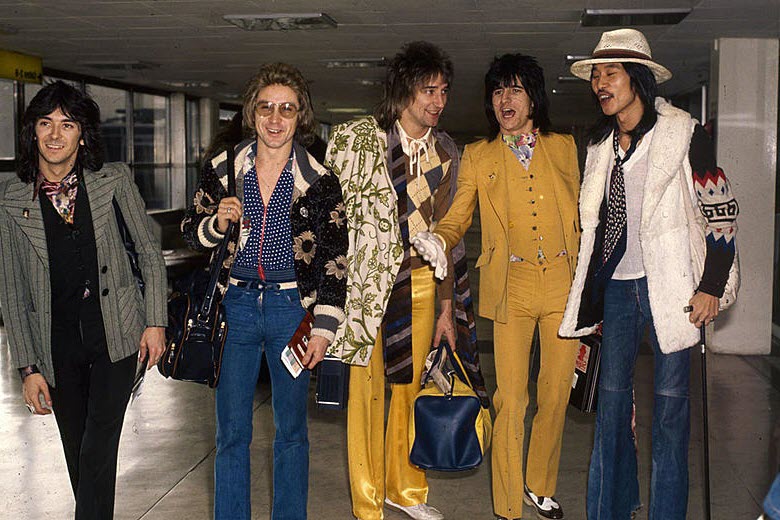
Few bands have embodied the raw energy, rebellious spirit, and soulful grooves of rock ‘n’ roll quite like The Faces. Emerging in the early ’70s, this legendary group—fronted by the charismatic Rod Stewart and featuring the unparalleled talents of Ronnie Wood, Ian McLagan, Kenney Jones, and Ronnie Lane—crafted a sound that was equal parts raucous, heartfelt, and unforgettable. Known for their electrifying live performances and timeless hits, The Faces left an indelible mark on the music world, influencing countless artists across generations.
In this article, we take a journey through their unparalleled discography to explore the Top 10 Most Popular Faces Songs of All Time. From rowdy rock anthems to soulful ballads, these tracks showcase the band’s unique ability to blend blues, folk, and rock into something truly magical. Whether you’re a longtime fan or a newcomer eager to dive into their world, this list is a celebration of the songs that solidified The Faces as one of the greatest bands in rock history. So crank up the volume, let the music take over, and rediscover why The Faces remain a vital part of rock’s golden era. Let’s dive in!
1. “Stay With Me” (1971)
Released in 1971 on the album A Nod Is As Good As a Wink… to a Blind Horse, “Stay With Me” is the definitive Faces anthem—a raucous, hard-rocking song that perfectly captures the band’s swagger and untamed energy. Right from the opening riff, Ronnie Wood sets the tone with a gritty guitar hook that’s instantly recognizable. Rod Stewart’s raspy, magnetic vocals tell the tale of a fleeting romance with unapologetic charm and cheeky wit, making the lyrics both humorous and irresistibly catchy. The song doesn’t take itself too seriously, which is exactly why it works so well. There’s a rebellious joy in its straightforwardness, from the pounding rhythm section to the explosive chorus that begs to be sung at full volume. “Stay With Me” became the band’s biggest hit and remains one of their most enduring songs, often used as a go-to closer at live shows. It’s more than just a classic rock staple—it’s a high-octane snapshot of the early ‘70s rock scene, where attitude, groove, and spontaneity ruled. Whether you’re discovering The Faces for the first time or revisiting old favorites, “Stay With Me” still hits with the same punch it did decades ago.
2. “Ooh La La” (1973)
“Ooh La La,” the title track from The Faces’ 1973 album, is a reflective, folk-infused gem that has only grown more beloved with time. Sung by Ronnie Wood—his only lead vocal with the band—the track takes a gentler approach compared to the group’s rowdier anthems. Written by Ronnie Lane and Wood, the lyrics carry a nostalgic tone, offering advice from an older man to his younger self: “I wish that I knew what I know now when I was younger.” It’s a timeless sentiment that resonates deeply, especially as life’s hard-earned lessons come into focus. The acoustic arrangement and laid-back rhythm create a wistful, almost tender atmosphere that contrasts beautifully with the band’s usual raucous style. While not a chart-topping hit upon release, “Ooh La La” has become one of the band’s most iconic tracks, featured in films, commercials, and countless playlists centered on themes of reflection and aging. Its singalong chorus and heartfelt message make it a song people return to again and again, especially during life’s quieter, more introspective moments. “Ooh La La” is a reminder that sometimes, wisdom comes too late—but the music can still soothe the soul.
3. “Cindy Incidentally” (1973)
“Cindy Incidentally,” released in 1973 as a single and featured on the Ooh La La album, is one of The Faces’ most accessible and radio-friendly songs, without sacrificing any of their grit or personality. With its crisp piano intro, tight rhythm, and blues-tinged guitar licks, the song blends rock and soul in a way that few bands could manage. Rod Stewart delivers the lyrics with a charming mix of playfulness and sincerity, capturing the story of a girl named Cindy and the whirlwind of emotion that surrounds her. The track’s upbeat tempo and catchy melody make it feel breezy and effortless, yet there’s a surprising depth beneath the surface. Ian McLagan’s piano work and Kenney Jones’s drumming give the song a solid backbone, while Ronnie Lane’s bassline adds a smooth, funky undertone. “Cindy Incidentally” became one of The Faces’ most successful UK singles, showing the band’s ability to craft tight, polished songs without losing their raw edge. It’s a reminder of how versatile The Faces truly were—able to go from rowdy barroom rock to sleek, soulful pop in the blink of an eye, always sounding unmistakably like themselves.
4. “Three Button Hand Me Down” (1970)
“Three Button Hand Me Down” closes out The Faces’ 1970 debut album First Step with a punch of funk, swagger, and tongue-in-cheek storytelling. Anchored by Ronnie Lane’s irresistibly groovy bassline, the song feels like a strut through a thrift store with your head held high. Lyrically, it’s a declaration of confidence from someone wearing hand-me-down clothes and not giving a damn about what anyone thinks. Rod Stewart’s vocal delivery is full of personality, blending defiance with humor as he dismisses the judgment of others and embraces his own sense of style. The band sounds loose but locked in, with McLagan’s organ adding warmth and texture, and Wood’s guitar providing just the right amount of bite. While it didn’t chart like some of their later hits, “Three Button Hand Me Down” is a fan favorite, cherished for its funky rhythm and playful attitude. It encapsulates what made The Faces stand out from their contemporaries: a mix of musical chops and streetwise charm, delivered with a wink and a grin. It’s the kind of song that reminds you rock ’n’ roll isn’t about perfection—it’s about presence, personality, and not taking yourself too seriously.
5. “Debris” (1971)
“Debris,” featured on 1971’s A Nod Is As Good As a Wink… to a Blind Horse, is one of the most heartfelt and understated songs in The Faces’ catalog. Written and sung by Ronnie Lane, it diverges from the band’s usual rowdy energy to deliver something deeply personal and emotionally resonant. The song is a touching reflection on family—specifically Lane’s relationship with his father—and memories of simpler times, set against the metaphor of “debris” left behind by life’s passing moments. The gentle acoustic guitar, steady rhythm, and sparse instrumentation allow Lane’s voice and lyrics to take center stage, creating a mood that’s tender and nostalgic without being sentimental. There’s an almost cinematic quality to the way the lyrics paint vivid images of domestic life, yet the emotions are universal. “Debris” shows another side of The Faces—sensitive, poetic, and grounded in real human experience. Though it wasn’t released as a single, it has grown in stature over the years, often cited as a hidden gem. It’s a song that doesn’t demand attention but quietly earns your respect, sticking with you long after it ends. In a discography full of rowdy fun, “Debris” is a beautiful, bittersweet pause.
6. “Pool Hall Richard” (1973)
Released as a standalone single in 1973, “Pool Hall Richard” is a rollicking blast of pure rock ‘n’ roll swagger. From the moment the track kicks off, there’s no mistaking the energy—Ronnie Wood’s crunchy guitar tone and Rod Stewart’s growling vocals make this one of the most infectious songs in The Faces’ catalog. The lyrics tell the story of a fast-living pool shark named Richard, a streetwise character who’s always a step ahead of the game, both literally and figuratively. The band delivers the tale with playful gusto, adding gritty piano riffs and driving percussion that push the momentum from start to finish. While the song didn’t appear on a studio album, it became a fan favorite thanks to its lively beat and sheer bravado. It’s one of those tunes that feels tailor-made for a crowded pub or a sweaty stage, the kind of music that gets bodies moving and voices shouting along. “Pool Hall Richard” isn’t just a story—it’s an attitude, a nod to the underdogs and hustlers who live life on their own terms. In just under three minutes, The Faces deliver a whirlwind of character, charm, and unfiltered rock goodness.
7. “Flying” (1970)
Appearing on The Faces’ 1970 debut album First Step, “Flying” is a sweeping, emotionally charged ballad that showcases the band’s more introspective side. Unlike their raucous rockers, this track trades punch for poignancy. Written by Ronnie Lane, Rod Stewart, and Ronnie Wood, “Flying” begins with a gentle acoustic guitar that gradually lifts into a soaring, melancholic melody. Stewart’s vocals shine here—full of yearning, fragility, and subtle power—as he sings of escape, dreams, and the need to rise above life’s struggles. The track builds with a patient intensity, with layered harmonies and organ swells adding to its expansive atmosphere. While it didn’t storm the charts, “Flying” is often regarded by fans and critics as one of the band’s finest compositions. It’s a perfect example of The Faces’ versatility—able to balance grit and grace, humor and heartache. There’s a timeless quality to the song’s themes of freedom and searching, making it resonate with listeners across generations. “Flying” is the kind of song that sneaks up on you, quietly powerful, deeply emotional, and proof that The Faces were far more than just party-starters—they could move you just as easily as they could rock you.
8. “Miss Judy’s Farm” (1971)
“Miss Judy’s Farm,” the opening track of 1971’s A Nod Is As Good As a Wink… to a Blind Horse, kicks the album off with a bang. This gritty rocker bursts out of the gate with a dirty blues riff from Ronnie Wood and thunderous drums from Kenney Jones, setting the stage for one of Rod Stewart’s most spirited vocal performances. The lyrics tell a colorful, slightly mischievous tale about the goings-on at Miss Judy’s rural property, blending suggestive humor with vivid imagery. Stewart delivers the verses with a wink and a snarl, straddling the line between satire and swagger. Beneath the raucous fun lies an undercurrent of rebellion—against authority, expectations, and polite society. The band plays with tight precision but never loses their loose, spontaneous edge. It’s that blend of polish and pub-rock rowdiness that gives “Miss Judy’s Farm” its punch. This song feels like a statement of purpose from The Faces: loud, bold, unapologetically unrefined, and completely irresistible. It’s no surprise that it became a staple of their live shows, often revving up crowds and setting the tone for a night of unfiltered rock energy.
9. “Had Me a Real Good Time” (1971)
“Had Me a Real Good Time” is pure Faces through and through—a celebration of life’s carefree, chaotic moments wrapped in rollicking rock ‘n’ roll. Featured on the 1971 album Long Player, the song bursts with unrestrained joy and energy. From the opening piano chords to Rod Stewart’s grinning vocal lines, everything about this track radiates good times and unapologetic fun. The lyrics are simple and to the point: a night out, some drinks, good company, and no regrets. What sets it apart is the way the band sells it with gusto—each member bringing their signature flair. Ronnie Wood’s guitar dances playfully around Ian McLagan’s lively piano, while the rhythm section drives the song with a pounding, almost reckless momentum. Stewart’s voice soars with raw excitement, as if he’s reliving the party in real time. Though it wasn’t their biggest hit, “Had Me a Real Good Time” has become a cult favorite, cherished for its spontaneity and infectious spirit. It’s not just a song—it’s an invitation to let loose, have a laugh, and embrace the beautiful messiness of life. In typical Faces fashion, it reminds us that sometimes the best moments are the ones we don’t overthink.
10. “Maybe I’m Amazed” (1971)
The Faces’ 1971 cover of Paul McCartney’s “Maybe I’m Amazed,” featured on their album Long Player, is a powerful and heartfelt tribute to one of the greatest love songs of the era. While McCartney’s original version is intimate and piano-driven, The Faces bring a raw, impassioned edge to their rendition. Rod Stewart pours his heart into the vocal, delivering each line with a raspy tenderness that turns the song into something both personal and universal. Ronnie Wood’s guitar adds a bluesy bite, while Ian McLagan’s organ swells lend emotional depth, creating a version that’s both reverent and uniquely their own. What makes this cover stand out is its sincerity—it never feels like they’re trying to outdo the original. Instead, The Faces inhabit the song, adding their signature grit and soul while staying true to the heart of McCartney’s message. The result is a stirring performance that captures both the vulnerability and strength found in love. Though it may not be as widely known as McCartney’s, The Faces’ version holds its own, offering a different perspective that fans of both artists can appreciate. It’s a reminder of how great songs can be reimagined without losing their soul.

Edward Tomlin is a frequent contributor to Singers Room. Since 2005, Singersroom has been the voice of R&B around the world. Connect with us via social media below.









