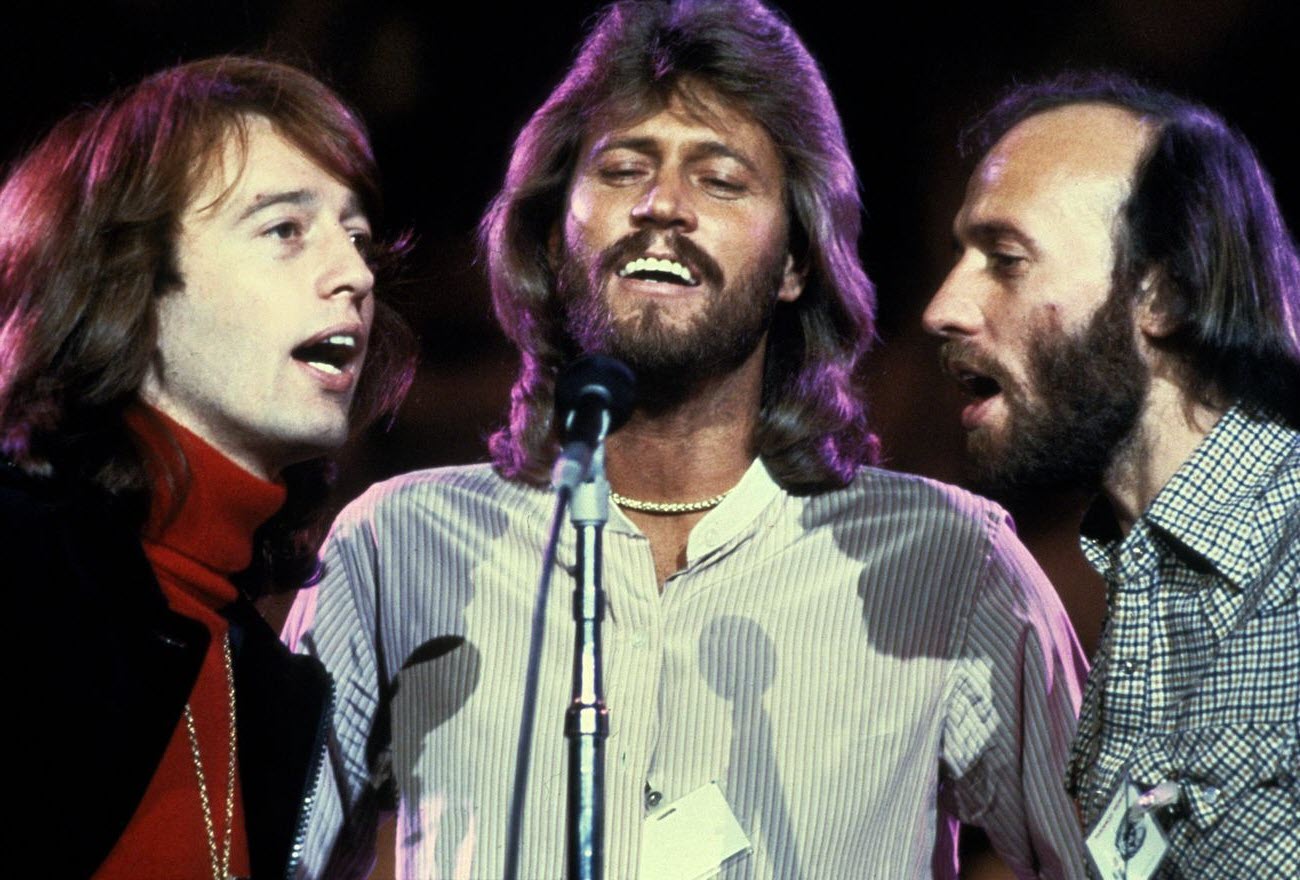
Few bands in music history have left an indelible mark quite like The Bee Gees. With their unmistakable harmonies, infectious melodies, and genre-defining contributions, the Gibb brothers—Barry, Robin, and Maurice—crafted a legacy that transcends generations. From their early days as soulful balladeers to their meteoric rise as disco pioneers, The Bee Gees proved time and again that their music was as versatile as it was enduring.
Spanning decades of chart-topping success, their songs became the backdrop to countless memories, from dance floors pulsating with energy to quiet moments of reflection. Whether it’s the electrifying falsetto of “Stayin’ Alive” or the heartfelt emotion of “How Deep Is Your Love,” The Bee Gees have a song for every mood, every story, and every listener.
In this article, we’ll take you on a journey through their ten most iconic hits—a celebration of music that has stood the test of time. These tracks not only defined an era but also cemented The Bee Gees as one of the greatest musical acts of all time. So dust off your dancing shoes and get ready to rediscover the magic of these timeless classics. Let’s dive into the ultimate Bee Gees playlist!
1. Stayin’ Alive (1977)
“Stayin’ Alive” isn’t just a disco track—it’s a cultural phenomenon. Released in 1977 as part of the legendary Saturday Night Fever soundtrack, the song became an instant anthem of survival, confidence, and swagger. With its pounding rhythm, memorable falsetto vocals, and unforgettable bassline—crafted through innovative tape loop techniques—it captured the energy of an era and gave voice to a generation trying to navigate a gritty, uncertain world. Barry Gibb’s soaring vocals, paired with the tight harmonies of his brothers, inject every line with urgency and attitude. But beyond its groove and dancefloor appeal, the song carries a deeper message. The lyrics speak to the resilience of everyday people, fighting to stay afloat in tough times. It’s this blend of catchy sound and meaningful content that makes “Stayin’ Alive” timeless. Whether you’re strutting down the street or facing a tough day, the song offers a pulse-pounding reminder that you’re still here—and that counts for something. Decades later, it remains one of the Bee Gees’ most iconic works, a track that not only defined disco but continues to influence music, film, and pop culture in profound ways.
2. How Deep Is Your Love (1977)
Released in 1977 as part of the Saturday Night Fever soundtrack, “How Deep Is Your Love” stands as one of the Bee Gees’ most tender and universally cherished love songs. This ballad captures the essence of vulnerability in romance, weaving gentle melodies with soul-stirring harmonies. With its soft production and warm instrumentation, the song offers a peaceful, almost sacred ambiance, making it a favorite for weddings, anniversaries, and quiet, reflective moments. Lyrically, it poses a question that many have asked in relationships—how deeply does someone truly care? That question, paired with the Bee Gees’ delicate delivery, makes the song feel both intimate and eternal. Barry Gibb’s lead vocal, subtly backed by his brothers, brings sincerity and depth to every phrase. Unlike their high-energy disco hits, this track showcases their versatility and emotional intelligence as songwriters. It spent weeks at the top of charts worldwide and solidified the group’s reputation not just as disco kings, but as masters of the love ballad. To this day, “How Deep Is Your Love” continues to stir hearts and remind listeners of the quiet power of a well-spoken sentiment set to music.
3. Night Fever (1977)
“Night Fever,” released in 1977, is another standout from the Bee Gees’ soundtrack for Saturday Night Fever and a quintessential track of the disco era. The song captures the electrifying spirit of late-70s nightlife, from flashing dancefloor lights to the euphoric pulse of weekend escapism. With its lush string arrangements, vibrant falsetto harmonies, and toe-tapping groove, “Night Fever” practically demands movement. It’s the kind of song that transports you—whether to a glittering dancehall or a memory of youth and freedom. The track not only topped charts worldwide but also played a critical role in defining the Bee Gees’ signature disco sound. Barry, Robin, and Maurice Gibb brought sophistication to the genre, layering complex harmonies over infectious beats, giving the music emotional richness in addition to irresistible rhythm. “Night Fever” wasn’t just a hit—it was a phenomenon. It embodied the fantasy and intensity of disco while demonstrating the Bee Gees’ unmatched songwriting and arranging skills. More than 40 years later, it’s still played in clubs, used in movies, and remembered fondly as a vibrant anthem that perfectly captured the heartbeat of a golden era in music.
4. Tragedy (1979)
With “Tragedy,” the Bee Gees proved they were more than just purveyors of disco—this 1979 release brought theatrical intensity and rock energy into their already versatile repertoire. Opening with a dramatic explosion of synthesizers and thunderous percussion, the song immediately establishes a sense of urgency. Barry Gibb’s powerful falsetto, pushed to its emotional limits, delivers lyrics filled with heartbreak and desperation. “Tragedy” isn’t merely about love lost; it’s about the chaotic emotional aftermath that follows, presented with soaring vocals and booming sound effects. Taken from the Spirits Having Flown album, the track showcases the Bee Gees’ ability to blend genres—infusing pop, rock, and disco into a sound that’s all their own. The production is bold and cinematic, marked by sudden stops, dynamic changes, and layered harmonies that add to the song’s theatrical flair. Topping charts across the globe, “Tragedy” became one of the group’s biggest hits and a staple of their live performances. It reflects their fearless creativity at the height of their fame and remains a striking example of how they could shift emotional gears while keeping audiences hooked. It’s drama, heartbreak, and brilliance all rolled into one unforgettable song.
5. Jive Talkin’ (1975)
“Jive Talkin'” marked a pivotal moment in the Bee Gees’ career. Released in 1975, it signaled their transformation from soft rock balladeers to masters of the emerging disco-funk sound. The song’s infectious rhythm was born from an everyday experience—driving across a bridge in Miami. The thumping of the car tires over the metal joints inspired the rhythmic guitar riff that would drive the entire track. With its punchy bassline, syncopated groove, and swagger-filled lyrics, “Jive Talkin’” oozes confidence and cool. Lyrically, it’s a clever take on deceptive words and phony conversations—“jive talkin’” being slang for lying. The song marked the first time Barry Gibb used his signature falsetto in such a prominent way, laying the groundwork for their disco-era hits. Produced by the legendary Arif Mardin, it shot to the top of the charts and became their first number-one hit in the U.S. since the 1960s. More than just a catchy tune, “Jive Talkin’” was a reinvention—proof that the Bee Gees could evolve with the times and set trends instead of just following them. It’s funky, fresh, and still sounds sharp decades after its release.
6. You Should Be Dancing (1976)
Released in 1976, “You Should Be Dancing” is pure disco fire. From the opening cowbell hit to the relentless beat and Barry Gibb’s falsetto soaring over a wall of rhythm, the track screams motion. It was the Bee Gees’ first number-one hit to fully embrace the disco sound they’d become synonymous with, blending funk, soul, and rock into a vibrant dance anthem. The lyrics are simple but irresistible: it’s a call to movement, a directive that’s hard to ignore. The band’s tight musicianship and layered production—especially the horns and driving percussion—create a song that feels alive, urgent, and exhilarating. Featured prominently in the Saturday Night Fever film, “You Should Be Dancing” became a defining track of the disco era and solidified the Bee Gees’ place at the top of the musical world. Its success in both clubs and on the charts helped usher disco into the mainstream. Today, the song remains a staple at parties, retro nights, and DJ sets worldwide. It’s a reminder of the era’s electrifying energy—and of how the Bee Gees could turn a simple idea into a pulse-pounding classic that never goes out of style.
7. To Love Somebody (1967)
“To Love Somebody” is one of the Bee Gees’ earliest masterpieces and a timeless soul ballad that showcases their deep emotional range. Released in 1967, the song was originally written for Otis Redding, but after his untimely death, the brothers recorded it themselves—giving the world a version so heartfelt it became an instant classic. With Barry Gibb’s raw, yearning vocals front and center, the song speaks to the ache of unrequited love, of longing to give your heart to someone who doesn’t see you the same way. The string arrangements and gospel-tinged instrumentation elevate the track beyond typical pop fare, giving it a soulful, almost spiritual quality. What sets this song apart is its vulnerability—there’s no bravado here, just honesty. “To Love Somebody” resonated deeply with audiences and has since been covered by artists across genres, from Nina Simone to Michael Bolton. It’s not just a love song; it’s a soul cry, a declaration of the human need to connect and be seen. In a catalog full of dance anthems and romantic hits, this track stands as one of the Bee Gees’ most powerful and enduring emotional statements.
8. Words (1968)
“Words,” released in 1968, is a beautifully understated ballad that captures the quiet power of language in expressing love and vulnerability. With its minimalistic arrangement and heartfelt lyrics, the song became one of the Bee Gees’ most beloved compositions. Barry Gibb’s tender vocal delivery—fragile yet filled with emotion—sits atop a gentle piano line, subtle strings, and warm harmonies from his brothers. The song’s message is simple but profound: sometimes, all we have are words to show how deeply we feel. And sometimes, those words fail us. “It’s only words, and words are all I have to take your heart away”—that lyric alone has become iconic in pop music. Unlike the more elaborate productions of their later disco years, “Words” relies on emotional honesty and intimacy to make its impact. It’s been covered by dozens of artists and continues to resonate with listeners around the world, especially those navigating the complexities of love and communication. The song stands as a testament to the Bee Gees’ ability to write music that speaks directly to the heart—simple, sincere, and soul-stirring in the most timeless way.
9. Massachusetts (1967)
“Massachusetts,” released in 1967, was a landmark in the Bee Gees’ early career and their first UK number-one hit. The song marked their arrival as serious contenders in the global music scene and showcased their flair for evocative, narrative songwriting. With its rich harmonies, acoustic instrumentation, and introspective lyrics, the song paints a vivid picture of homesickness and emotional longing. The protagonist yearns to return to Massachusetts after being disillusioned by the hippie culture in San Francisco—a sentiment that stood out during the era’s wave of countercultural optimism. Robin Gibb’s melancholic lead vocal captures that longing perfectly, adding an emotional depth that resonates even decades later. The arrangement is lush yet restrained, allowing the harmonies and storytelling to shine. “Massachusetts” broke from the psychedelic trends of the time and found success through sincerity and emotional clarity. It established a template for the Bee Gees’ ability to write deeply moving songs, and its success was a turning point that set the stage for their evolution into global superstars. It remains one of their most iconic early works, still capable of stirring a quiet sense of nostalgia in anyone who hears it.
10. I Started a Joke (1968)
“I Started a Joke” is one of the Bee Gees’ most haunting and introspective songs. Released in 1968, the track is a melancholic meditation on misunderstanding, guilt, and isolation. Robin Gibb’s fragile, aching lead vocal conveys a deep sense of sorrow and emotional weight, telling the story of someone who feels alienated from the world around them—someone whose actions, though unintentional, have caused immense pain. The lyrics are poetic and enigmatic: “I started a joke, which started the whole world crying…” The metaphor is powerful, evoking the loneliness that can come from being out of step with others. The arrangement is simple yet dramatic, with a softly strummed guitar and delicate orchestration building to a mournful climax. “I Started a Joke” resonated with audiences across generations and continents, becoming a surprise hit in countries like Brazil and Australia. Over the years, it has been covered by numerous artists, further cementing its legacy. More than just a sad song, it captures the universal experience of regret and the human desire for redemption. It remains one of the Bee Gees’ most emotionally affecting and artistically respected tracks.

Edward Tomlin is a frequent contributor to Singers Room. Since 2005, Singersroom has been the voice of R&B around the world. Connect with us via social media below.









