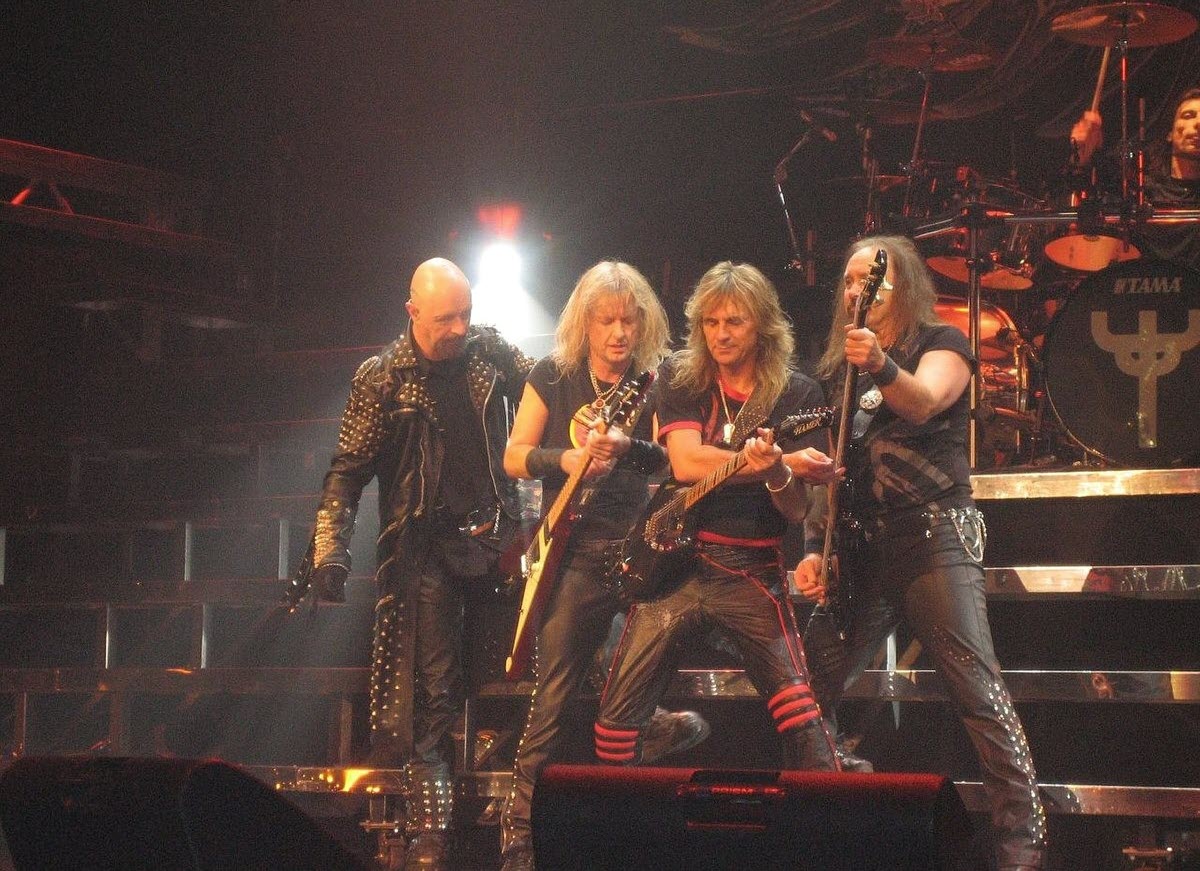
Get ready to crank up the volume and unleash the raw, electrifying power of heavy metal! Judas Priest, the undisputed gods of the genre, have been delivering face-melting riffs, piercing vocals, and anthems of rebellion for over five decades. With their leather-clad image and groundbreaking sound, they’ve shaped the very essence of metal, influencing generations of musicians and fans alike. But with a catalog spanning countless albums and iconic tracks, which songs stand tall as their most celebrated masterpieces?
In this article, we’re diving deep into the heart of Judas Priest’s legendary discography to uncover their top 10 most popular songs of all time. From timeless classics that defined the genre to crowd-shaking live staples that send fans into a frenzy, these tracks are the epitome of heavy metal glory. Whether you’re a lifelong fan or a newcomer looking for the ultimate Priest playlist, this list is your passport to the world of screaming guitars, thunderous drums, and the unmistakable voice of Rob Halford.
So, grab your leather jacket, throw up the horns, and join us as we celebrate the legacy of Judas Priest with the songs that have stood the test of time. Let’s rock!
1. Breaking the Law (1980)
“Breaking the Law” is one of Judas Priest’s most iconic tracks, a lean and ferocious anthem that perfectly captures the angst and rebellion of youth. Released on their landmark 1980 album British Steel, the song wastes no time making its statement. Clocking in at under three minutes, it delivers tight, punchy riffs and a chorus so catchy it’s been chanted by fans for generations. Rob Halford’s vocals are defiant and raw, channeling the frustration of a working-class life where promises are broken and the system seems rigged. The genius of “Breaking the Law” lies in its simplicity—there’s no guitar solo, just power chords, a memorable bassline, and pure attitude. The music video, featuring the band robbing a bank with the power of their sound, added a tongue-in-cheek flair that became instantly iconic. While the lyrics aren’t meant to promote crime, they reflect a deeper emotional truth—what it feels like when all other options seem to disappear. It became a rallying cry for disillusioned fans and a staple of the band’s live performances. Decades later, it still holds up as a perfect slice of heavy metal rebellion, reminding us all of the thrill of fighting back against the odds.
2. Painkiller (1990)
“Painkiller” isn’t just a song—it’s a statement of heavy metal supremacy. Released as the title track of Judas Priest’s 1990 album, it signaled a thunderous return to form for the band after a few experimental years. Right from the start, Scott Travis’s jaw-dropping double-bass drumming grabs your attention, introducing a level of aggression that reshaped the band’s sound. Glenn Tipton and K.K. Downing trade blazing guitar solos, their twin-axe attack more intense than ever. At the center of it all is Rob Halford, whose shrieking high notes and commanding presence earned him the moniker “Metal God.” The lyrics tell of a metallic savior—the Painkiller—descending from the skies to save mankind through fire and fury. It’s mythic, apocalyptic, and gloriously over-the-top. “Painkiller” became an instant classic, not just for its technical brilliance but for the sheer force of its delivery. It raised the bar for speed and precision in metal, influencing countless bands that followed. Whether you hear it for the first time or the hundredth, “Painkiller” is a relentless, spine-tingling experience. It reminds us why Judas Priest are legends—and proves they could still evolve without compromising the essence of who they are.
3. You’ve Got Another Thing Comin’ (1982)
“You’ve Got Another Thing Comin’” is one of Judas Priest’s most enduring hits—a song that embodies the spirit of resilience and rock ‘n’ roll defiance. Released on 1982’s Screaming for Vengeance, it became their breakout track in the United States, earning heavy rotation on radio and MTV. With its infectious guitar riff and punchy groove, the song walks the line between hard rock and heavy metal, making it incredibly accessible to both longtime metalheads and newer fans. Rob Halford’s vocals are confident and assertive, delivering a message of not backing down when life tries to knock you over. The chorus is pure empowerment: bold, catchy, and made to be shouted from the rooftops. It’s no wonder the song has become an anthem—not just for metal fans, but for anyone facing challenges and refusing to give in. The track’s crossover appeal helped solidify Judas Priest’s place in the pantheon of metal greats. Over the years, it has become a concert staple, with fans around the world belting it out with Halford in unison. “You’ve Got Another Thing Comin’” isn’t just a song—it’s a declaration of strength in the face of adversity.
4. Living After Midnight (1980)
“Living After Midnight” is Judas Priest at their most fun and carefree. Released on 1980’s British Steel, this track marked a shift toward a more radio-friendly sound without losing the band’s hard-edged appeal. Built on a steady, fist-pumping rhythm and a powerfully simple guitar riff, it became a party anthem almost instantly. The lyrics celebrate the freedom of the night—the joy of letting loose, staying up late, and living life on your own terms. Rob Halford delivers the lines with a wink and a swagger, channeling a youthful spirit that resonated with fans around the world. It’s a song that invites you to roll down the windows and sing at the top of your lungs. Though some diehard metal fans initially criticized it for being “too pop,” it ultimately proved that Judas Priest could expand their reach without diluting their identity. “Living After Midnight” became one of the band’s most recognizable songs, beloved at concerts and often played as an encore. It’s a reminder that heavy metal doesn’t always have to be dark or intense—it can be fun, liberating, and just plain cool. Sometimes, the best rebellion is simply enjoying life on your own terms.
5. Electric Eye (1982)
“Electric Eye” is a high-octane warning shot from Judas Priest about the dangers of surveillance and control. Released in 1982 on their Screaming for Vengeance album, the track begins with the instrumental intro “The Hellion,” a soaring guitar overture that leads directly into the razor-sharp riffs of “Electric Eye.” From the very first notes, the song feels like a dystopian thriller come to life. Rob Halford’s vocals are sharp and commanding, as he embodies the voice of an omnipresent force watching everything from above. The lyrics were eerily ahead of their time, addressing themes of invasion of privacy and technological overreach long before those issues became part of everyday life. Musically, the song is tight and powerful—each section flows seamlessly, with fierce guitar interplay and a pounding rhythm section. “Electric Eye” has remained a fan favorite not just for its musicality, but for its chilling relevance. In a world where digital surveillance has become commonplace, the song’s message feels more prophetic than ever. It’s a classic example of how metal can be both entertaining and thought-provoking. With its cinematic scope and fierce energy, “Electric Eye” still hits as hard today as it did over four decades ago.
6. Hell Bent for Leather (1978)
“Hell Bent for Leather” is one of Judas Priest’s most adrenaline-charged songs, capturing the band’s iconic biker image and their love for speed, power, and pure heavy metal attitude. Released in 1978 on the Killing Machine album—retitled Hell Bent for Leather in the U.S.—the track blazes forward with a relentless tempo and a no-nonsense riff that grabs you by the collar and doesn’t let go. Rob Halford delivers a fierce vocal performance, almost snarling the lyrics, as he rides metaphorical highways of rebellion and freedom. The song became synonymous with Judas Priest’s live shows, where Halford famously roared onto the stage atop a Harley Davidson, decked in leather and studs. The spectacle perfectly complemented the song’s theme, turning it into a fan-favorite moment at concerts. Musically, it’s a compact blast of heavy metal energy, showcasing the tight interplay between guitarists Glenn Tipton and K.K. Downing, whose synchronized attack defined the band’s twin-guitar legacy. “Hell Bent for Leather” embodies everything that made Judas Priest leaders of the New Wave of British Heavy Metal: speed, swagger, and sheer power. It’s not just a song—it’s a mission statement that still revs up crowds today with its unapologetic intensity.
7. Turbo Lover (1986)
“Turbo Lover” marked a bold departure for Judas Priest when it debuted in 1986 on the Turbo album. Embracing synthesizers and a slicker production style, the song introduced a futuristic, almost sensual edge to the band’s sound. At the time, the move was divisive—some fans felt betrayed by the polished aesthetic—but over time, “Turbo Lover” gained respect for its unique place in the Judas Priest catalog. The track opens with a smooth, pulsating synth line that gives way to a driving beat and a hypnotic guitar groove. Rob Halford’s vocals are sultry and commanding as he delivers double-entendre-laden lyrics that blur the lines between romance and machine. Though the sound leans more toward hard rock than traditional heavy metal, the energy and craftsmanship are unmistakably Judas Priest. What’s most striking is how the song still feels forward-looking, even decades later. The blend of human desire and mechanical power tapped into a cultural fascination with technology and speed. In live performances, “Turbo Lover” has evolved into a crowd-pleasing anthem, its chorus igniting singalongs from fans old and new. It may have been controversial at first, but “Turbo Lover” now stands as proof that great bands aren’t afraid to take creative risks.
8. Victim of Changes (1976)
“Victim of Changes” is a towering epic from Judas Priest’s early years, showcasing the band’s progressive and emotional range. Released in 1976 on the album Sad Wings of Destiny, the song is a journey through heartbreak, transformation, and raw musical power. Clocking in at over seven minutes, it begins with a slow, haunting guitar intro that builds tension before erupting into one of the most dramatic riffs in metal history. Rob Halford delivers a stunning vocal performance, moving from soulful laments to earth-shattering screams that send chills down your spine. The lyrics tell a tale of a relationship unraveling, but they go beyond typical love song territory, exploring deeper themes of identity and inner turmoil. Musically, “Victim of Changes” is full of dynamic shifts—quiet, almost bluesy sections give way to crushing metal assaults, creating an emotional rollercoaster. The guitar interplay between Tipton and Downing is especially intricate here, adding layers of melody and aggression. This song became a cornerstone of Priest’s live sets, often stretched out even further with extended solos and Halford’s dramatic delivery. “Victim of Changes” isn’t just a song—it’s a statement of what heavy metal can be when it’s ambitious, heartfelt, and unflinchingly honest.
9. The Sentinel (1984)
“The Sentinel” is Judas Priest at their most cinematic and menacing, a darkly imaginative track from 1984’s Defenders of the Faith. The song spins a tale of a post-apocalyptic warrior—The Sentinel—who patrols a wasteland, exacting revenge and keeping the peace through sheer force. It’s part metal myth, part futuristic nightmare, and entirely electrifying. From the opening notes, the guitars create an atmosphere of danger and intensity, laying the groundwork for Halford’s commanding vocals. The riff work by Tipton and Downing is exceptional—tight, complex, and dripping with menace. There’s a sense of storytelling that goes beyond the lyrics, as the music itself mirrors the action of the song’s narrative. The mid-song solo section is especially dramatic, heightening the tension before exploding back into the chorus. Lyrically, “The Sentinel” taps into the archetype of the lone avenger, a theme that resonates deeply within the metal genre. It’s a song that feels like a short film wrapped in thunderous instrumentation. Over the years, it’s earned a reputation as one of Priest’s most underrated masterpieces—a track that blends technical prowess with epic scope. “The Sentinel” stands tall as a testament to the band’s ability to mix storytelling with scorching musicianship.
10. Beyond the Realms of Death (1978)
“Beyond the Realms of Death” is one of Judas Priest’s most emotionally powerful and musically profound works. Released in 1978 on the Stained Class album, the song combines the intensity of heavy metal with the introspection of a power ballad. It opens with a soft, sorrowful acoustic guitar and gradually builds into a storm of electric riffs and searing solos. The lyrics explore themes of depression, isolation, and escape—not through destruction, but through transcendence. Rob Halford’s vocals are deeply moving here, as he channels both quiet pain and defiant strength. The track reflects on a person who has chosen to detach from the world, not out of hatred, but out of disillusionment and weariness. While controversial in its time for tackling such heavy subject matter, “Beyond the Realms of Death” has since been recognized as a brave and empathetic piece of songwriting. The guitar solos, particularly Glenn Tipton’s, are among the most heartfelt in the band’s discography—full of emotion, not just technical skill. It remains a cornerstone of Judas Priest’s legacy, resonating with listeners who find solace in its blend of beauty and power. More than just a song, it’s a cathartic journey through sorrow, reflection, and a kind of hopeful release.

Edward Tomlin is a frequent contributor to Singers Room. Since 2005, Singersroom has been the voice of R&B around the world. Connect with us via social media below.









