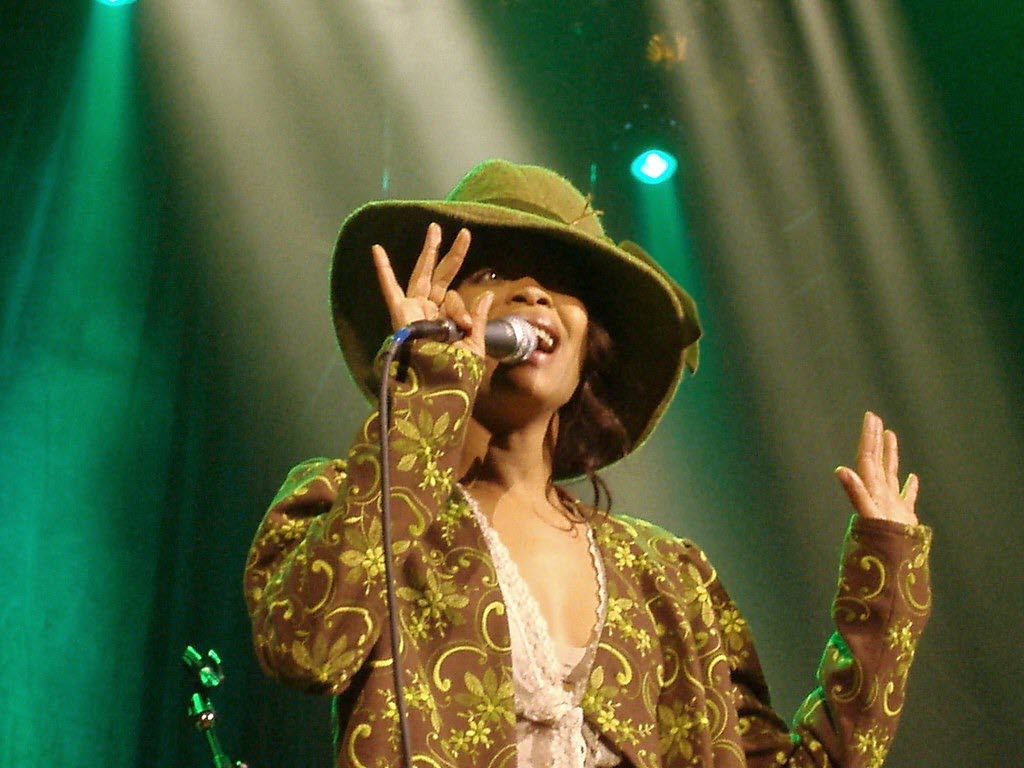
Erykah Badu, the undisputed Queen of Neo-Soul, has been captivating audiences with her unique sound, poetic lyrics, and magnetic energy for decades. Since bursting onto the scene in the mid-90s, Badu has redefined the boundaries of R&B and soul, blending elements of jazz, funk, and hip-hop into a genre all her own. Her music isn’t just a collection of songs—it’s a spiritual experience, an invitation into a world where vulnerability meets power, and tradition merges with innovation.
With a career spanning over 25 years, Erykah Badu has delivered an impressive catalog of hits that resonate deeply with fans around the globe. From her chart-topping anthems to her introspective ballads, each track tells a story, offering a glimpse into her artistry and the cultural movements she inspires. But which songs stand out as her most iconic?
In this article, we’re diving into the top 10 most popular Erykah Badu songs of all time. Whether you’re a lifelong fan or a newcomer eager to explore her genius, these tracks are a testament to why Badu remains a force of nature in the music world. Prepare to rediscover the magic of Erykah Badu—track by unforgettable track.
1. On & On (1996)
“On & On” marked Erykah Badu’s unforgettable introduction to the world. Released in 1996 as the lead single from her groundbreaking debut album Baduizm, the track immediately stood out with its hypnotic rhythm, jazzy textures, and spiritual undertones. With a smooth, almost effortless flow, Badu delivered poetic lyrics that felt both ancient and futuristic—meditating on life’s cycles, reincarnation, and self-awareness. Her voice, rich and earthy, floats over the beat with a laid-back confidence that was completely unique in the R&B landscape at the time. This song helped usher in the neo-soul movement, earning her comparisons to Billie Holiday while also carving out a sound entirely her own. “On & On” became a commercial and critical success, reaching audiences worldwide and earning her a Grammy for Best Female R&B Vocal Performance. It wasn’t just a hit—it was a mission statement. With this single, Badu made it clear she wasn’t chasing trends; she was starting her own. The song’s timeless vibe continues to resonate with listeners who are drawn to its calm wisdom and hypnotic groove. “On & On” was the beginning of something new, and decades later, it still feels like a breath of fresh, mystical air.
2. Tyrone (Live) (1997)
“Tyrone” is one of Erykah Badu’s most iconic tracks, despite the fact that it was never recorded in a studio. Released in 1997 as part of her Live EP, the song became an unexpected cultural moment. With just her voice, a mic, and a small band, Badu created an instant classic—calling out a no-good boyfriend in front of a crowd that couldn’t get enough. The track’s strength lies in its humor and relatability. With lyrics like “you better call Tyrone,” she delivers a sharp message with sass, wit, and style, turning a personal moment into a universal anthem for anyone tired of being taken for granted. The crowd’s reaction is just as much a part of the performance as the lyrics—cheers, laughter, and shouted affirmations become part of the rhythm. It’s raw, real, and electric. “Tyrone” showed Badu’s natural gift for live storytelling and her ability to connect deeply with an audience. Though funny on the surface, the song speaks to real emotional labor and boundaries in relationships. It’s Badu at her boldest—commanding the stage with truth, charm, and a groove so good, it’s unforgettable.
3. Bag Lady (2000)
“Bag Lady” is one of Erykah Badu’s most beloved songs, and for good reason. Released in 2000 as the lead single from Mama’s Gun, the track speaks to the emotional weight we carry through life—and the freedom we find in learning to let it go. Over a warm, relaxed beat inspired by Dr. Dre’s “Xxplosive,” Badu encourages listeners, especially women, to release their emotional baggage so they can move forward and grow. Her delivery is soothing yet firm, filled with compassion and strength. There’s a sense of healing in every note, as if Badu is both teacher and fellow traveler. The lyrics are straightforward but deeply meaningful: “Bag lady, you gon’ hurt your back / Draggin’ all them bags like that.” It’s a gentle reminder that healing begins with self-awareness and choice. The song resonated across generations, becoming a chart-topping hit and a soulful anthem for self-liberation. Its stripped-down production and heartfelt message made it feel personal, like a conversation with a wise friend. “Bag Lady” isn’t just a song—it’s soul therapy. And with it, Badu continues to inspire listeners to face the past, drop the weight, and walk freely into their future.
4. Window Seat (2010)
“Window Seat,” released in 2010 from New Amerykah Part Two (Return of the Ankh), is a deeply personal and introspective track that highlights Erykah Badu’s vulnerability in a way few artists are willing to explore. The song floats along a mellow, dreamy instrumental, anchored by her soft, wistful vocals. At its core, “Window Seat” is about needing space—mental, emotional, spiritual. Badu sings of wanting to escape the noise, the pressures, and the judgment of the outside world, craving solitude not just to rest, but to rediscover herself. The song’s gentle tempo matches this yearning perfectly, creating a meditative space that invites listeners to reflect on their own emotional needs. But “Window Seat” also made waves beyond the music; its music video, in which Badu slowly strips her clothes in public at Dealey Plaza in Dallas, sparked intense public debate about vulnerability, freedom, and censorship. That bold visual only deepened the song’s impact, transforming it from a quiet plea into a cultural statement. “Window Seat” is a standout moment in Badu’s career—a song that merges intimate confession with fearless expression. It’s a reminder of the power in stillness, solitude, and simply asking to be left alone.
5. Love of My Life (An Ode to Hip Hop) (2002)
“Love of My Life (An Ode to Hip Hop)” is both a celebration and a love letter to a genre that shaped a generation. Released in 2002 and featured on the Brown Sugar soundtrack, this track features Common and reunites two artists who have undeniable chemistry—both musically and historically. Here, Badu personifies hip-hop as a former lover, tracing its evolution alongside her own growth. The metaphor is clever and heartfelt, making the song accessible to listeners whether they’re lifelong fans of the culture or simply appreciate great storytelling. The production is smooth and soulful, blending classic hip-hop beats with R&B warmth. Badu’s delivery is confident and affectionate, filled with nostalgia as she recounts her “first love” with reverence and a touch of melancholy. Common adds his signature lyricism, rounding out the song with poetic finesse. The track resonated widely and earned Badu a Grammy for Best R&B Song. But more than accolades, it stands as a tribute to the roots of a movement that shaped her artistry. “Love of My Life” is more than a catchy tune—it’s a cultural homage and a reminder of the deep emotional connections music can inspire.
6. Next Lifetime (1997)
“Next Lifetime” is one of Erykah Badu’s most emotionally rich and contemplative songs. Released in 1997 from her debut album Baduizm, it explores the painful conflict between loyalty and longing. The song tells the story of a woman who meets someone she feels a deep connection with—someone who seems like a perfect match—but she’s already in a committed relationship. Rather than act on her feelings, she imagines the possibility of being with him in another life. With its slow, hypnotic groove and dreamy production, the track perfectly mirrors the bittersweet nature of the subject. Badu’s voice is filled with warmth, restraint, and quiet ache, capturing the weight of emotional tension. The lyrics are simple yet profound, resonating with anyone who’s wrestled with what could’ve been. There’s no blame or bitterness—just a gentle, mature acceptance of timing and fate. “Next Lifetime” shows Badu’s gift for crafting soul music that’s as introspective as it is universally relatable. It’s not just about romantic love—it’s about the complexities of human connection, choice, and sacrifice. This song continues to strike a chord with listeners, offering comfort in the understanding that some things just aren’t meant to be—at least not in this lifetime.
7. Didn’t Cha Know (2000)
“Didn’t Cha Know” is a standout track from Erykah Badu’s second album, Mama’s Gun, released in 2000. Produced by the legendary J Dilla, the song flows with a gentle, psychedelic groove that feels both intimate and cosmic. The lyrics reflect a spiritual and emotional search for purpose, direction, and self-understanding. Badu sings from a place of openness and honesty, admitting that she doesn’t have all the answers—and that’s okay. “Didn’t cha know / I was searching / For a lover to call my own,” she sings, voicing the universal desire for belonging and clarity. J Dilla’s production wraps her words in a warm, swirling rhythm that invites listeners to slow down and reflect on their own journeys. The song doesn’t offer easy solutions; instead, it honors the process of learning and growing through uncertainty. Badu’s vocal delivery is smooth and thoughtful, drawing listeners in with its emotional depth and sincerity. “Didn’t Cha Know” remains a fan favorite because it captures the beauty of being in-between—of wandering with purpose, even if the destination isn’t clear. It’s soul-searching music at its finest, offering comfort in the chaos and reminding us that even the search itself is sacred.
8. Otherside of the Game (1997)
“Otherside of the Game” is one of the most haunting and emotionally complex songs in Erykah Badu’s catalog. Released in 1997 on Baduizm, the track offers a deeply personal look into the life of a woman who loves a man involved in illegal activity. The song paints a picture of emotional conflict—balancing devotion with concern, romance with realism. Badu’s voice, smooth and sorrowful, carries the weight of her character’s loyalty as well as her quiet fear. The lyrics are written like a conversation, giving it an almost cinematic feel as she pleads for peace while preparing for the potential consequences of her lover’s choices. The jazzy, low-key instrumentation underscores the intimacy of the story, giving it a slow, smoky atmosphere. Rather than glorify or condemn the situation, Badu simply tells the truth—love is complicated, especially when survival and morality collide. “Otherside of the Game” is a bold exploration of themes rarely addressed in soul music, especially from a woman’s perspective. It shows Badu’s fearless approach to storytelling and her ability to humanize even the most difficult situations. It’s a song that lingers long after it ends, asking the listener to sit with its quiet tension and empathize.
9. Honey (2007)
“Honey” is one of Erykah Badu’s most playful and upbeat tracks, showcasing a lighter and flirtier side of her artistry. Released in 2007 as the lead single from New Amerykah Part One (4th World War), the song grooves with an infectious energy that’s impossible to resist. Produced by 9th Wonder, the beat is rooted in a soul sample that loops with a smooth, funky rhythm, creating the perfect backdrop for Badu’s syrupy-sweet vocals. She sings with charm and confidence, calling herself “just like honey” and exuding effortless cool. While the lyrics are simple and flirtatious, there’s an unmistakable swagger in her delivery that elevates the track into something more than just a fun listen—it’s a vibe. The song’s music video adds even more layers, paying homage to classic album covers in a creative, visually clever way that celebrates Black musical history. “Honey” stands out in her discography for its joyfulness and style. It’s a track that proves Badu doesn’t always have to go deep to make a statement—sometimes, just having fun and feeling good is enough. The song remains a fan favorite, perfect for lifting spirits and showing that Badu’s artistry shines just as brightly when she’s simply grooving.
10. Cleva (2000)
“Cleva” is a hidden gem on Erykah Badu’s 2000 album Mama’s Gun—a jazzy, self-affirming track that celebrates inner beauty and self-acceptance. The song opens with a bouncy yet laid-back groove, drawing listeners in with its breezy vibe. But beneath the playful surface lies a powerful message. Badu sings candidly about body image, confidence, and rejecting societal standards. “I’m alright with me,” she declares, despite acknowledging that she doesn’t fit conventional ideals. With clever wordplay and heartfelt delivery, she reclaims the word “clever” as “cleva”—her own version of being smart, sharp, and strong. The stripped-down production allows her vocals to shine, revealing both vulnerability and quiet pride. It’s a song that encourages listeners to embrace their individuality and love themselves exactly as they are. What makes “Cleva” so compelling is its balance—light in tone but deep in meaning. Badu doesn’t preach; she shares, offering an honest glimpse into her self-image struggles while celebrating the power of self-love. The track has become a fan favorite for its relatability and charm. “Cleva” is Erykah Badu doing what she does best—empowering through authenticity, all while keeping things cool, catchy, and soulfully sincere.

Edward Tomlin is a frequent contributor to Singers Room. Since 2005, Singersroom has been the voice of R&B around the world. Connect with us via social media below.









