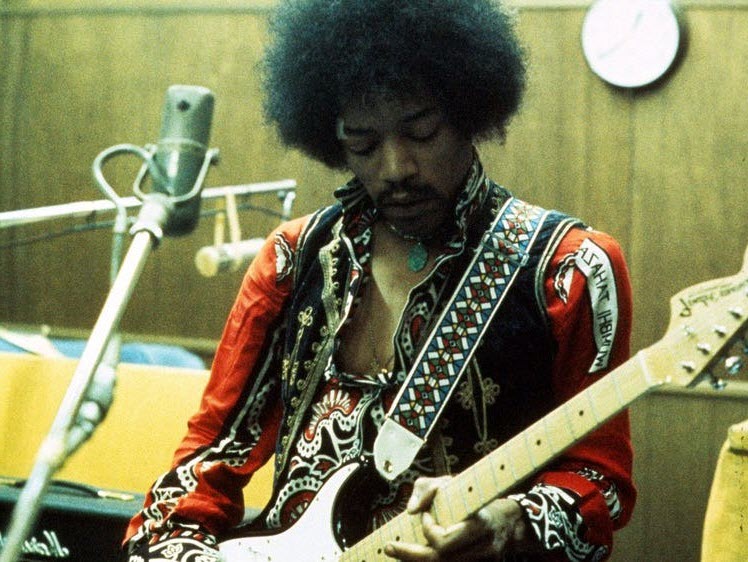
Jimi Hendrix, the legendary guitar virtuoso, revolutionized the world of rock and roll with his unparalleled talent, electrifying performances, and groundbreaking sound. Known for his innovative use of distortion, feedback, and wah-wah effects, Hendrix didn’t just play the guitar—he transformed it into an extension of his soul. In just four short years of mainstream success before his untimely passing, Hendrix redefined what it meant to be a rock musician, leaving behind a legacy that continues to inspire artists and fans alike.
This article dives into the top 10 most popular Jimi Hendrix songs of all time, showcasing the tracks that made him a global icon. From the fiery intensity of “Purple Haze” to the soul-stirring genius of “Little Wing,” these songs capture the essence of Hendrix’s artistry and his ability to channel raw emotion into unforgettable music. Whether you’re a lifelong fan or a newcomer to his work, these tracks stand as a testament to his enduring influence and the timeless power of his craft.
Get ready to immerse yourself in the magic of Hendrix’s greatest hits, as we celebrate the songs that solidified his place as one of the greatest musicians in history!
1. Purple Haze (1967)
“Purple Haze” is arguably the song that introduced the world to the mind-blowing genius of Jimi Hendrix. Released in 1967, this track is a wild, electrifying ride that perfectly encapsulates the psychedelic sound of the late ’60s. The song kicks off with a striking tritone interval—famously known as the “devil’s interval”—that immediately signals something bold and different. Hendrix’s guitar work is nothing short of revolutionary here. With heavy distortion, feedback, and a riff that sounds like it’s tearing through reality, he created a sonic experience unlike anything people had heard at the time. The lyrics, inspired by a dream Hendrix had and influenced by science fiction and surreal imagery, are abstract and captivating. Lines like “’Scuse me while I kiss the sky” became iconic and open to interpretation, fueling the mystique of the track. While often linked to drug culture, Hendrix himself said the song wasn’t directly about LSD. Instead, it was more about a feeling of confusion and disorientation—falling under a metaphorical “haze.” “Purple Haze” didn’t just launch Hendrix’s career—it changed the rules of rock music. It’s a track that still hits hard today, a fiery statement of identity from a true musical revolutionary.
2. All Along the Watchtower (1968)
When Jimi Hendrix covered Bob Dylan’s “All Along the Watchtower” in 1968, he didn’t just reinterpret the song—he completely transformed it. Originally a sparse acoustic track, Hendrix’s version is layered, intense, and electric in every sense of the word. From the opening guitar riff to the thunderous solos that build throughout the song, Hendrix takes Dylan’s apocalyptic lyrics and infuses them with urgency and fire. The track became one of Hendrix’s most acclaimed recordings, even earning praise from Dylan himself, who eventually began performing the song more like Hendrix’s version than his own. There’s a sense of controlled chaos in the arrangement—everything feels on the edge, from the driving rhythm section to Hendrix’s searing leads. His vocals are raw and emotive, perfectly matching the song’s themes of confusion, change, and confrontation. Released during a time of great social upheaval, the song resonated deeply with the public, mirroring the uncertainty of the era. It remains a staple of classic rock radio and a defining moment in Hendrix’s career. With this cover, Hendrix didn’t just pay homage to Dylan—he elevated the song into something timeless and powerful, making it entirely his own.
3. Hey Joe (1966)
“Hey Joe” marked the beginning of Jimi Hendrix’s recording career and set the stage for his meteoric rise. Released in 1966 as his debut single with the Jimi Hendrix Experience, the song is a blues-rock narrative filled with drama, tension, and raw emotion. It tells the story of a man fleeing after shooting his unfaithful lover—a tale as gripping as it is haunting. While Hendrix didn’t write the song, his interpretation is definitive. His soulful vocals add weight to the storytelling, and his guitar playing elevates the track to something extraordinary. The solo isn’t about flashy speed; it’s about feel, phrasing, and emotion. Every note seems to bleed with pain and resolve. The band’s arrangement is tight and purposeful, giving Hendrix space to shine without overpowering the narrative. Though darker in subject matter than many of his later hits, “Hey Joe” showcased Hendrix’s ability to combine technical brilliance with emotional depth. It introduced the world to a performer who could do far more than play loud and fast—he could tell a story that lingered long after the music stopped. The song remains a cornerstone of Hendrix’s legacy and a bold opening chapter to a legendary career.
4. The Wind Cries Mary (1967)
“The Wind Cries Mary” reveals a softer, more poetic side of Jimi Hendrix. Released in 1967, this ballad stands in stark contrast to the wild, psychedelic rock he’s best known for. Written after an argument with his girlfriend—whose middle name was Mary—the song turns personal reflection into universal melancholy. The guitar work is subdued yet expressive, with clean, melodic lines that echo the introspective lyrics. It’s a beautiful showcase of Hendrix’s ability to let his guitar speak, using bends, pauses, and phrasing to convey emotion just as effectively as his words. The lyrics, filled with imagery of emptiness and quiet longing, paint a picture of loneliness that’s haunting and deeply relatable. Rather than relying on distortion or technical showmanship, Hendrix focuses on mood and feeling. It’s a testament to his versatility as both a songwriter and a guitarist. “The Wind Cries Mary” often surprises those who only know Hendrix for his more explosive tracks. It proves he could be tender and introspective without losing his edge. The song continues to resonate with listeners for its raw honesty and emotional depth, reminding us that Hendrix was more than a guitar god—he was a true artist.
5. Voodoo Child (Slight Return) (1968)
“Voodoo Child (Slight Return)” is pure electricity—raw, explosive, and bursting with swagger. Released in 1968, the track is arguably the ultimate showcase of Jimi Hendrix’s guitar wizardry. Opening with that unforgettable wah-wah pedal riff, the song wastes no time in grabbing your attention. Hendrix’s guitar tone is massive, almost otherworldly, and his solos feel like spontaneous bolts of lightning captured on tape. The lyrics are equally bold, with Hendrix casting himself as a mystical figure full of power and confidence. Lines like “I’m a voodoo child, Lord knows I’m a voodoo child” are more than just lyrics—they’re declarations of identity and strength. Though only a few minutes long, the song feels epic, thanks to its improvisational energy and dynamic shifts. Recorded as something of a jam session with Mitch Mitchell on drums and Noel Redding on bass, the track has the unfiltered vibe of a live performance. It’s a masterclass in controlled chaos, with Hendrix pushing his instrument—and rock music itself—to new limits. “Voodoo Child (Slight Return)” is more than just a great guitar song. It’s a statement of power, a burst of creativity, and a lasting symbol of Hendrix’s genius.
6. Foxy Lady (1967)
“Foxy Lady” is Jimi Hendrix at his most flirtatious and confident. Released in 1967, this track struts in with a bold, distorted guitar slide that instantly commands attention. From the very first note, you know you’re in for something hot and heavy. Hendrix doesn’t just sing the lyrics—he seduces them, delivering lines like “I want to take you home” with a playful growl and raw magnetism. The groove is deep and slinky, driven by Noel Redding’s bass and Mitch Mitchell’s steady drumming, but it’s Hendrix’s guitar tone—thick, fuzzy, and slightly dangerous—that really defines the song. “Foxy Lady” is a masterclass in controlled energy. It never erupts into chaos but simmers with intensity throughout. The track perfectly captures the spirit of late-’60s rock: bold, sexy, and unapologetically cool. While not his most technically complex piece, it’s one of his most iconic and instantly recognizable songs. The power of “Foxy Lady” lies in its simplicity and attitude. It’s Jimi being playful, confident, and electric—not just a guitar hero, but a rock star who knew how to own the stage with just a few notes and a wicked smile.
7. Red House (1967)
“Red House” is Jimi Hendrix’s love letter to the blues. Featured on his debut album Are You Experienced (though excluded from the original U.S. version), the track strips away the psychedelic flash to reveal Hendrix’s deep roots in traditional blues music. The song opens with a slow, expressive guitar lick that sets the tone for a mournful tale of lost love. Lyrically, it’s simple—Hendrix sings about returning home only to find his lover gone—but his delivery makes it powerful. His voice is weary and wounded, and his guitar speaks volumes in between the verses. Each solo is a cry, each bend and slide a sigh of heartbreak. What makes “Red House” so captivating isn’t complexity—it’s emotion. Hendrix doesn’t just play the blues; he feels them. The song’s pace is deliberate, giving every note room to breathe. While Hendrix is often associated with explosive rock anthems, this track shows his incredible restraint and soulful depth. “Red House” is the kind of song you sink into, a slow burn that proves Hendrix wasn’t just a virtuoso—he was a true bluesman at heart, channeling the spirit of legends like Muddy Waters and B.B. King through his own unique voice.
8. Little Wing (1967)
“Little Wing” is often considered one of Jimi Hendrix’s most beautiful and soulful compositions. Released in 1967 on the Axis: Bold as Love album, the song is brief—just under two and a half minutes—but it’s packed with emotion and tenderness. Unlike many of Hendrix’s louder, more aggressive tracks, “Little Wing” feels like a dream. The intro, played with a clean, chorused guitar tone, floats delicately through the speakers, evoking a sense of wonder and calm. Hendrix’s lyrics describe a mystical, angelic figure—perhaps a woman, perhaps a spirit—that offers comfort and protection in a chaotic world. The imagery is rich and poetic, and his soft, intimate vocal delivery makes it feel deeply personal. The guitar work is subtle but masterful, with every note and chord carrying weight. “Little Wing” has become a favorite for guitarists and fans alike, inspiring countless covers across genres. It’s a song that shows Hendrix’s gentler side, proving he didn’t always need fireworks to make magic. Instead, with “Little Wing,” he gives us a glimpse of vulnerability and beauty, creating a moment of peace in the middle of his usually thunderous soundscape. It’s one of his most enduring and beloved creations.
9. Fire (1967)
“Fire” is pure adrenaline—a fast-paced, funky burst of energy that captures the raw, untamed spirit of the Jimi Hendrix Experience. Released in 1967 on Are You Experienced, this track kicks off with a driving beat and a rhythmic, choppy guitar riff that instantly gets your feet moving. The lyrics are simple and cheeky, inspired by a real moment when Hendrix asked to warm up near a fireplace at a friend’s house. But the way he turns that request into a full-on rock explosion is classic Hendrix. His voice is playful and urgent, and the band sounds like they’re locked into a groove and having a blast. Mitch Mitchell’s drumming is particularly dynamic, adding punch and swing to every measure. Hendrix’s guitar doesn’t just solo—it dances, snarls, and commands attention. “Fire” is one of those songs that perfectly showcases the chemistry between Hendrix, Redding, and Mitchell. It’s tight, infectious, and full of personality. At just over two minutes, it never overstays its welcome. Instead, it leaves you wanting more, a shot of musical caffeine that shows Hendrix could rock hard without overcomplicating things. It’s a live-show favorite and a staple of high-energy rock playlists to this day.
10. If 6 Was 9 (1967)
“If 6 Was 9” is Jimi Hendrix’s rebellious anthem of individuality and nonconformity. Released on the Axis: Bold as Love album in 1967, the song stands out for its bold message and experimental soundscape. Hendrix isn’t just playing music here—he’s pushing boundaries, both lyrically and sonically. The lyrics challenge societal norms, with Hendrix proclaiming, “I’m the one that’s got to die when it’s time for me to die, so let me live my life the way I want to.” It’s a powerful statement, especially during the turbulent cultural shifts of the late ’60s. Musically, the track is unpredictable and wild, featuring flanged guitars, reversed tape effects, and a laid-back yet menacing groove. It feels almost psychedelic in its construction, reflecting the countercultural energy of the time. The song’s title itself is cryptic and thought-provoking—turning 6 into 9 suggests a world flipped upside down, challenging conventions and embracing the strange. “If 6 Was 9” isn’t just a song; it’s a declaration of independence. It shows Hendrix at his most defiant and creative, unafraid to take risks and speak his truth. It remains one of his most unique and thought-provoking tracks, a snapshot of a revolutionary spirit in full bloom.

Edward Tomlin is a frequent contributor to Singers Room. Since 2005, Singersroom has been the voice of R&B around the world. Connect with us via social media below.









