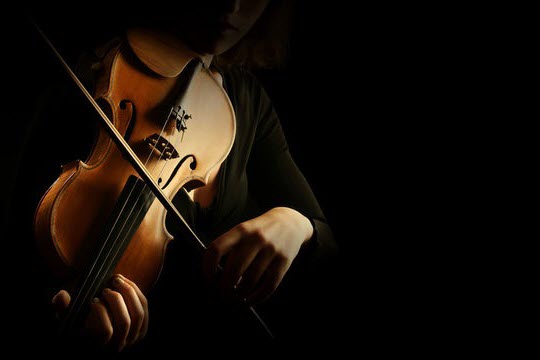
The violin, often called the “queen of instruments,” has captivated audiences for centuries with its ability to express the deepest human emotions. From fiery virtuosity to soul-stirring melodies, the violin transcends mere technique, becoming a voice of passion, elegance, and power in the hands of a true master. Throughout history, a select few violinists have risen to the pinnacle of artistry, leaving an indelible mark on the world of music. These legends, both past and present, have redefined what it means to be a violinist, blending technical brilliance with unparalleled artistry.
In this article, we celebrate the top 15 best violin players of all time—artists who have pushed the boundaries of the instrument and inspired generations. From the dazzling feats of Paganini to the heartfelt interpretations of Perlman and the groundbreaking performances of modern virtuosos, these violinists have shaped the course of music history. Whether you’re a seasoned classical music enthusiast or a curious newcomer, this list is a tribute to the violin’s enduring magic and the extraordinary individuals who bring it to life. Prepare to be dazzled as we journey through the lives and legacies of the greatest violin players the world has ever known!
1. Niccolò Paganini
Niccolò Paganini is widely hailed as one of the most dazzling and enigmatic figures in the history of violin playing. Born in 1782 in Genoa, Italy, he was a child prodigy who grew into a performer whose skills bordered on the supernatural. With his long fingers, agile hands, and fearless spirit, Paganini redefined what the violin could do. Audiences in his time were both mesmerized and mystified—many believed he had made a pact with the devil due to the seemingly impossible feats he performed onstage. He introduced advanced techniques such as left-hand pizzicato, rapid string crossings, and breathtaking harmonics that pushed the violin’s expressive boundaries. His most famous work, 24 Caprices for Solo Violin, remains a pinnacle of technical challenge and expressive depth. Even today, they are a rite of passage for serious violinists. Beyond his compositions, Paganini revolutionized performance itself—turning concerts into theatrical events, captivating listeners with both his artistry and charisma. His impact extended beyond classical music, influencing composers like Liszt and inspiring future generations of virtuosos. Paganini wasn’t just a violinist; he was a phenomenon who set the bar for what was possible on four strings.
2. Jascha Heifetz
Jascha Heifetz is often considered the embodiment of violin perfection. Born in 1901 in Vilnius, Lithuania (then part of the Russian Empire), Heifetz showed remarkable talent from an early age. By the time he was a teenager, he was already a sensation across Europe. What set Heifetz apart was his extraordinary technical control combined with an emotionally restrained yet profoundly expressive style. Every note he played seemed sculpted with precision and purpose. His tone was bright, clear, and unmistakably refined—so much so that many violinists have spent decades trying to imitate it. Heifetz made landmark recordings of major concertos by composers like Tchaikovsky, Brahms, and Sibelius, and those recordings are still held as definitive interpretations. Despite his reserved demeanor on stage, his playing communicated deep emotion and flawless craftsmanship. He also championed new works and arranged many pieces for violin, expanding the repertoire. Later in life, he turned to teaching, passing on his meticulous standards to the next generation. Jascha Heifetz didn’t just play the violin—he redefined what it meant to master it, setting a standard so high that it continues to challenge and inspire musicians to this day.
3. Itzhak Perlman
Itzhak Perlman is more than a virtuoso—he’s a beloved cultural figure who has brought classical music to a global audience with warmth, humor, and deep musical insight. Born in 1945 in Tel Aviv, Perlman overcame polio as a child, which left him needing crutches or a motorized chair to move around. Yet nothing slowed his rise to greatness. His debut on The Ed Sullivan Show as a young boy marked the beginning of a storied career. Perlman’s playing is instantly recognizable for its lush tone, lyrical phrasing, and emotional depth. Whether performing Bach, Beethoven, or Brahms, he brings a human touch to every note. He has also explored other musical worlds, collaborating in jazz and klezmer, showcasing his wide-ranging interests and versatility. Beyond the concert hall, Perlman is known for his work as a teacher and conductor, as well as for mentoring young artists. He’s also been a passionate advocate for music education. His joyful presence and expressive style have won over even those unfamiliar with classical music. Itzhak Perlman isn’t just a phenomenal violinist—he’s a storyteller, communicator, and ambassador for the power of music.
4. Anne-Sophie Mutter
Anne-Sophie Mutter is a powerhouse in the classical music world—an artist who combines virtuosity with fearless innovation. Born in 1963 in Germany, she was discovered at a young age by legendary conductor Herbert von Karajan, who launched her career when she was just a teenager. Since then, she has performed with the world’s leading orchestras and conductors, building a reputation not only for technical brilliance but also for her bold interpretations. Mutter is especially known for her collaborations with contemporary composers like Krzysztof Penderecki, André Previn, and Sofia Gubaidulina, often premiering new works written specifically for her. Her repertoire spans from the baroque to the avant-garde, but she approaches every piece with intensity, clarity, and emotional commitment. Her playing is rich with nuance and shaped by her deep understanding of the music’s structure and intent. Anne-Sophie Mutter is also a philanthropist, supporting young musicians through her foundation and actively promoting new music. With her trademark gowns and commanding stage presence, she defies the traditional mold of a classical violinist. She continues to challenge conventions, redefine the role of the soloist, and expand the boundaries of violin performance in the 21st century.
5. Yehudi Menuhin
Yehudi Menuhin was not only one of the greatest violinists of the 20th century, but also a humanitarian, educator, and global ambassador for the arts. Born in 1916 in New York City, Menuhin’s prodigious talent was evident from an early age—he made his first public performance at seven and quickly captured international attention. His playing was characterized by a purity of tone, spiritual depth, and a sincere connection to the music. More than a technical wizard, Menuhin sought a deeper meaning in his art. Throughout his career, he used music to bridge divides, performing for troops during World War II, and later engaging in cultural diplomacy, including groundbreaking performances with musicians from around the world. His partnership with Indian sitar maestro Ravi Shankar exemplified his commitment to global musical exchange. Later in life, he became a passionate teacher, founding the Yehudi Menuhin School in England to nurture young musical talent. Menuhin’s legacy is about more than just his recordings—it’s about his vision for music as a force for peace, understanding, and healing. His life reminds us that the violin is not only a vehicle for virtuosity but also for compassion and human connection.
6. David Oistrakh
David Oistrakh was a towering figure in the world of violin playing, renowned for his passionate performances and remarkable musicianship. Born in 1908 in Ukraine, then part of the Russian Empire, Oistrakh grew up during a turbulent period but rose to become one of the Soviet Union’s most cherished cultural icons. His playing combined technical brilliance with a warmth and humanity that resonated deeply with listeners. Oistrakh was known for his ability to balance power and delicacy, infusing every phrase with emotional nuance. He was especially admired for his interpretations of 20th-century composers, including Shostakovich and Prokofiev, many of whom wrote violin concertos specifically for him. His collaborations with orchestras and conductors worldwide helped bridge East and West during the Cold War era. Beyond his solo career, Oistrakh was a beloved teacher, shaping generations of violinists with his generosity and insight. His recordings remain definitive, capturing a player who was both a master technician and a profoundly expressive artist. David Oistrakh’s legacy is one of passion, integrity, and a timeless connection to the music he loved.
7. Fritz Kreisler
Fritz Kreisler was the embodiment of elegance and charm on the violin. Born in 1875 in Vienna, Austria, he developed a distinctive style characterized by a warm, golden tone and a singing quality that made his playing immediately recognizable. Kreisler’s performances felt effortless, yet they were underpinned by incredible technical skill and deep musical understanding. He was a master of phrasing and subtlety, able to make even the simplest melodies sing with emotion. In addition to his performing career, Kreisler was a gifted composer and arranger, writing many beloved encore pieces and short works that remain staples in violinists’ repertoires. His compositions often drew inspiration from earlier musical styles, blending nostalgia with his own unique voice. Kreisler’s personality—gracious, witty, and modest—made him a favorite among audiences and peers alike. His legacy endures through his recordings, compositions, and the countless violinists he inspired. More than just a virtuoso, Fritz Kreisler was a true artist whose warmth and grace continue to touch listeners today.
8. Hilary Hahn
Hilary Hahn is widely recognized as one of today’s most talented and versatile violinists. Born in 1979 in Virginia, USA, Hahn showed extraordinary promise from a young age, entering the Curtis Institute of Music at just ten years old. Her playing is celebrated for its clarity, precision, and emotional honesty. Whether performing classical masterpieces or contemporary works, Hahn approaches every piece with meticulous attention to detail and an infectious passion that captivates audiences. She has a fearless attitude toward challenging repertoire, often championing new music by living composers and expanding the violin’s possibilities. Beyond technical skill, her interpretations are noted for their expressive nuance and storytelling quality, making complex music accessible and engaging. Hilary Hahn’s recordings have garnered critical acclaim, and she has won multiple Grammy Awards. She also connects with younger generations through educational outreach and social media, helping to keep classical music fresh and relevant. With her brilliant technique and heartfelt musicianship, Hilary Hahn continues to shape the future of violin playing with both grace and innovation.
9. Nathan Milstein
Nathan Milstein was a violinist whose artistry set a gold standard for generations of players to come. Born in 1904 in what is now Ukraine, Milstein’s career spanned nearly seventy years, a testament to his enduring skill and dedication. He was particularly renowned for his interpretations of Bach’s solo violin works, which many consider definitive. Milstein’s playing was marked by elegant phrasing, flawless technique, and a warm, rich tone that brought out the music’s emotional core. Despite his incredible technical prowess, he never let virtuosity overshadow musicality; every note served the greater expression of the piece. His approach combined a deep respect for tradition with a subtle individuality that made his performances unforgettable. Milstein toured widely, collaborating with the best orchestras and conductors of his time. Beyond performing, he was also a teacher and mentor, passing on his refined sense of style and discipline. Even decades after his passing, Nathan Milstein’s recordings remain cherished for their beauty and insight, inspiring violinists and listeners alike.
10. Sarah Chang
Sarah Chang’s arrival on the international music scene was nothing short of sensational. Born in 1980 in Philadelphia to Korean immigrant parents, she was a child prodigy who began playing the violin before she could even speak. By the age of eight, she was already performing with major orchestras, and her fiery technique and expressive depth quickly earned her widespread acclaim. Chang’s playing is characterized by remarkable precision combined with emotional intensity, making her interpretations compelling and deeply moving. She has performed a wide-ranging repertoire, from classical staples to lesser-known contemporary works, showing a fearless commitment to artistic exploration. Throughout her career, she has remained dedicated to inspiring young musicians and expanding classical music’s reach worldwide. Despite her early fame, Sarah Chang has continued to evolve as an artist, bringing maturity and nuance to her performances. Today, she is regarded as one of the foremost violinists of her generation, celebrated not only for her dazzling skills but also for the heartfelt connection she brings to every stage.
11. Isaac Stern
Isaac Stern was much more than a brilliant violinist—he was a passionate champion for music and musicians everywhere. Born in 1920 in Ukraine and raised in the United States, Stern’s warm, rich tone and deeply lyrical phrasing made his playing stand out. Audiences were drawn to the emotional sincerity and refined elegance of his performances. Beyond his own artistry, Stern’s impact on the musical world was immense. He played a crucial role in preserving Carnegie Hall in New York when it was threatened with demolition, helping to secure a home for classical music in the heart of the city. Stern was also a dedicated mentor, nurturing the talents of many young violinists who went on to become great artists themselves. His advocacy extended to supporting music education and broadening access to classical music. Through countless recordings and concerts, Isaac Stern left a legacy of artistic excellence combined with an unwavering commitment to the arts. His influence continues to be felt by musicians and audiences alike, making him one of the most important figures in 20th-century classical music.
12. Gidon Kremer
Gidon Kremer is renowned for his adventurous spirit and his dedication to expanding the violin repertoire beyond the traditional canon. Born in 1947 in Latvia, Kremer quickly gained recognition for his extraordinary technique and deep musical insight. However, what sets him apart is his fearless approach to programming and performance. Kremer champions contemporary composers and often introduces audiences to lesser-known works that challenge conventional expectations. His concerts are intellectual journeys as much as musical experiences, combining emotional intensity with thoughtful interpretation. He has collaborated closely with living composers, premiering new pieces and breathing life into fresh musical ideas. Kremer’s style is marked by a remarkable balance of precision and passion, and he consistently seeks to push the boundaries of what the violin can express. Over the decades, he has cultivated a reputation not just as a virtuoso performer but as an innovator and cultural influencer. His commitment to music’s evolving landscape ensures that classical music remains vibrant and relevant for modern audiences.
13. Stéphane Grappelli
Stéphane Grappelli was a pioneering figure who brought the violin into the jazz world like few others. Born in 1908 in Paris, France, Grappelli co-founded the legendary Quintette du Hot Club de France with guitarist Django Reinhardt, creating a unique blend of swing jazz and string music that was revolutionary at the time. His playing was characterized by a buoyant, lyrical style and effortless improvisational genius. Grappelli’s violin lines danced fluidly through melodies, rhythms, and harmonies, captivating listeners with their warmth and swing. Unlike the classical violinists who focused on strict technique, Grappelli embraced spontaneity and expression, helping to redefine what the violin could do in popular music. Over his long career, he collaborated with a wide range of musicians, influencing generations of jazz violinists and beyond. His joyful, charismatic performances helped bring jazz to new audiences and cemented his place as a beloved figure in music history. Grappelli’s legacy is a testament to the violin’s versatility and the power of crossing musical boundaries.
14. Ruggiero Ricci
Ruggiero Ricci was a violin virtuoso known for his fiery performances and extraordinary technical prowess. Born in 1918 in San Francisco, Ricci became famous for his fearless approach to some of the most challenging works in the violin repertoire, especially the complete “24 Caprices” by Niccolò Paganini. At a time when many violinists shied away from performing the Caprices in full during concerts, Ricci embraced them, showcasing not only his dazzling technique but also his bold artistic spirit. His playing was marked by brilliant fingerwork, fast and clean bowing, and a captivating energy that electrified audiences. Beyond Paganini, Ricci’s repertoire included a wide variety of works, and he was known for his passionate and intense interpretations. Throughout his career, Ricci recorded extensively, leaving behind a rich legacy of performances that continue to inspire violinists. His dedication to pushing technical boundaries and his fearless musicianship made him a standout figure in the 20th-century violin world. Ricci’s influence is still felt today among performers who aspire to his level of virtuosity and commitment.
15. Midori
Midori is a modern violin icon whose career has been marked by both extraordinary talent and a deep commitment to education and outreach. Born in 1971 in Japan, Midori burst onto the international stage as a prodigy, making her debut with the New York Philharmonic at just 11 years old. Known for her impeccable technique and rich, expressive tone, she quickly established herself as one of the leading violinists of her generation. Beyond her impressive performances, Midori is passionate about giving back to the community. She has founded programs to bring music education to underserved children and actively mentors young musicians around the world. Midori’s artistry is characterized by a powerful emotional connection to the music and an inspiring presence on stage. Her repertoire spans classical masterpieces to contemporary works, demonstrating versatility and a willingness to explore new musical horizons. Midori remains a powerful voice in the classical music world, not only as a performer but also as a dedicated advocate for the transformative power of music.

Edward Tomlin is a frequent contributor to Singers Room. Since 2005, Singersroom has been the voice of R&B around the world. Connect with us via social media below.