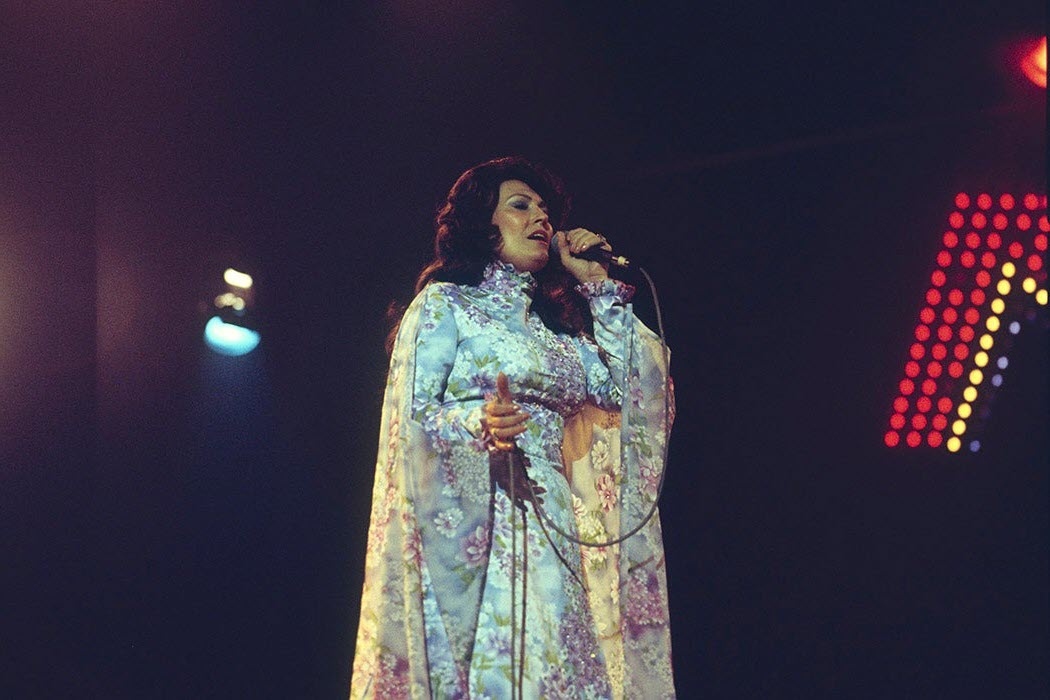
Loretta Lynn, the “Coal Miner’s Daughter,” is a name that resonates with fans of country music around the globe. With a career spanning over six decades, she not only broke barriers in the male-dominated world of country music but also redefined what it meant to tell authentic, heartfelt stories through song. Her lyrics, often drawn from her own life experiences, tapped into themes of love, heartbreak, resilience, and empowerment, making her a voice for everyday women.
From the honky-tonk dancehalls to the Grand Ole Opry, Loretta Lynn’s music has left an indelible mark on the hearts of millions. Her songs, brimming with honesty and wit, have sparked conversations, empowered generations, and earned her countless accolades, including multiple Grammy Awards and the prestigious Presidential Medal of Freedom.
In this article, we’re diving into the top 10 most iconic songs from Loretta Lynn’s incredible repertoire. Whether you’re a lifelong fan or just discovering her unparalleled artistry, these timeless hits will remind you why she’s known as the “First Lady of Country Music.” Get ready to revisit the tracks that changed the face of country music and celebrate the legacy of an artist who dared to sing her truth. Let’s dive in!
1. “Coal Miner’s Daughter” (1970)
“Coal Miner’s Daughter” is more than just a song—it’s a portrait of Loretta Lynn’s life, painted with honesty, pride, and love. Released in 1970, the autobiographical ballad tells the story of her upbringing in Butcher Hollow, Kentucky, where her father worked long hours in the coal mines to provide for their large family. Loretta’s lyrics are rich in detail, describing her mother’s hand-sewn clothes, the lack of modern comforts, and the close-knit nature of their household. But more than anything, it’s a tribute—to her parents’ hard work, to Appalachian resilience, and to the enduring strength of family bonds. The song struck a deep chord with listeners, especially those who came from humble beginnings themselves. Lynn’s warm, sincere delivery makes the story feel personal, even if you’ve never been to Kentucky. Its impact went far beyond the charts, inspiring a bestselling autobiography and a film that won Sissy Spacek an Academy Award. “Coal Miner’s Daughter” remains Loretta Lynn’s signature song because it encapsulates who she was—not just a country music star, but a woman who never forgot where she came from. It’s a legacy wrapped in melody and memory.
2. “You Ain’t Woman Enough (To Take My Man)” (1966)
With “You Ain’t Woman Enough (To Take My Man),” Loretta Lynn delivered one of the fiercest, most iconic female anthems in country music history. Released in 1966, this fiery track is packed with defiance, sass, and a whole lot of confidence. The song’s premise is simple: another woman may be trying to steal her man, but she won’t succeed. What makes it so powerful is how unapologetically direct Loretta is—she doesn’t sugarcoat her warning. Backed by a classic honky-tonk arrangement, her voice cuts through with strength and clarity, leaving no doubt she means every word. At a time when women in country music were expected to play it sweet and submissive, Loretta turned the tables. This wasn’t just a love song; it was a declaration of ownership and power. Women across the country saw themselves in her lyrics, making it an anthem of self-assurance in relationships. The track became one of her biggest hits and solidified her image as a country singer who wouldn’t back down. To this day, it remains a go-to song for anyone who needs a boost of boldness and a reminder not to be messed with.
3. “Don’t Come Home A-Drinkin’ (With Lovin’ on Your Mind)” (1966)
“Don’t Come Home A-Drinkin’ (With Lovin’ on Your Mind)” marked a turning point in country music—and in Loretta Lynn’s career. Released in 1966, the song didn’t just tell a story; it told the truth. In this hard-hitting track, Loretta sings from the perspective of a fed-up wife who’s had enough of her husband’s drinking and late-night advances. At a time when topics like marital dissatisfaction were taboo, especially from a woman’s perspective, Lynn broke new ground. Her lyrics were blunt and honest, delivered with a voice that carried both frustration and strength. She wasn’t pleading—she was putting her foot down. The song’s catchy melody and relatable message propelled it to No. 1 on the Billboard country charts, making it her first chart-topping hit. It also earned her a reputation as a bold truth-teller, unafraid to address the real issues women faced at home. “Don’t Come Home A-Drinkin’” wasn’t just a song—it was a cultural moment. It opened the door for more honest conversations in country music and helped redefine what a female artist could say and sing. For many fans, it was the first time they felt truly seen in a country song.
4. “Fist City” (1968)
“Fist City” is Loretta Lynn at her most unfiltered and feisty. Released in 1968, the song delivers a fiery warning to a woman who’s been getting too friendly with Loretta’s man. And she doesn’t mince words—if this woman doesn’t back off, she’s headed straight to “Fist City.” With its rollicking tempo and no-nonsense lyrics, the track captures Loretta’s fierce loyalty and unshakable confidence. She’s not just defending her relationship; she’s laying down the law with grit and humor. In a genre often steeped in heartbreak and loss, “Fist City” flipped the script with its swagger and sass. Lynn’s vocals are sharp and punchy, matched by an energetic band that drives the message home. What makes the song so enduring is its fearless attitude—it’s a classic country clapback before clapbacks were a thing. The track resonated with listeners who were tired of playing the victim and wanted to hear a woman stand up for herself. “Fist City” solidified Loretta Lynn’s place as a trailblazer in country music and proved that she could throw lyrical punches as well as anyone else on the charts.
5. “One’s on the Way” (1971)
“One’s on the Way,” released in 1971, is one of Loretta Lynn’s most clever and relatable songs, capturing the everyday chaos of domestic life. Written by the whimsical and sharp-witted Shel Silverstein, the song tells the story of a housewife juggling motherhood, chores, and the nonstop demands of family life. With a humorous and slightly frazzled tone, Loretta sings about a woman in Topeka, Kansas, who’s constantly expecting another baby while the world outside seems glamorous and carefree. Hollywood stars are living it up, while she’s elbow-deep in diapers and dishes. What makes the song shine is Loretta’s delivery—she doesn’t just sing it, she lives it. Her voice carries both laughter and exhaustion, making it incredibly relatable for women everywhere who felt overlooked in the glamor of the 1970s. “One’s on the Way” became a major hit because it didn’t glamorize or sugarcoat motherhood—it embraced the messy, unfiltered truth. It gave a voice to women whose experiences were rarely represented in popular music, especially country. With a wink and a weary smile, Loretta reminded her audience that even in the chaos, there’s humor, resilience, and pride in being a mother.
6. “The Pill” (1975)
When Loretta Lynn released “The Pill” in 1975, she wasn’t just singing a song—she was making a statement. At the time, birth control was still a controversial subject, especially in the conservative world of country music. But Loretta didn’t hold back. With “The Pill,” she boldly embraced the power of reproductive choice and the freedom it gave women over their own lives. The lyrics are direct and celebratory: after years of being tied down by pregnancy after pregnancy, the narrator finally has the ability to live for herself. Loretta delivers the verses with cheeky defiance, backed by a bouncy, upbeat melody that only adds to the song’s revolutionary feel. Predictably, the song stirred up plenty of controversy—it was banned by several radio stations. But fans loved it. It became one of her most talked-about tracks and an anthem for women’s liberation in rural America. Loretta wasn’t just pushing boundaries—she was tearing them down. “The Pill” proved that country music could be both traditional and progressive, and that Loretta Lynn wasn’t afraid to lead the charge. The song remains one of her most courageous and impactful works, showing her commitment to speaking the truth for women everywhere.
7. “Love Is the Foundation” (1973)
“Love Is the Foundation,” released in 1973, is a beautiful departure from Loretta Lynn’s more fiery and outspoken songs. This tender ballad showcases her softer, more romantic side, highlighting the deep emotional core that always ran through her music. The lyrics are simple yet profound: love is the glue that holds everything together. Whether times are good or bad, love—true, steady love—is what gives life meaning and strength. Loretta’s gentle, heartfelt delivery brings the song to life with warmth and sincerity. There’s a calmness in her voice that wraps around you, making the song feel intimate and comforting. With its lush orchestration and slow, graceful tempo, “Love Is the Foundation” stands as one of her most elegant recordings. It quickly climbed the charts and became a favorite at weddings and anniversaries, beloved for its timeless message. The song reminds listeners that beyond all the drama and struggle, there’s a quiet power in devotion. Loretta knew how to tap into those universal emotions, and this song is a perfect example of that gift. It’s a reminder that strength doesn’t always shout—sometimes it whispers through love.
8. “She’s Got You” (1977)
In 1977, Loretta Lynn paid tribute to her late friend and fellow legend Patsy Cline with a powerful rendition of “She’s Got You.” Originally recorded by Cline in 1962, the song was already a classic of country heartbreak. But Loretta made it her own, infusing it with raw emotion and personal resonance. The song tells the story of someone who still holds on to the physical reminders of a past relationship—photographs, records, even a class ring—but no longer has the person herself. “She’s got you,” Loretta sings, with a soft ache in her voice that perfectly captures the sting of lingering love. Her version struck a chord with fans not only because of her connection to Cline, but also because of how deeply she conveyed the pain of lost love. There’s a maturity in her performance, a quiet sorrow that doesn’t beg for sympathy—it simply exists. Loretta’s rendition was a hit in its own right, climbing the country charts and reminding listeners of her incredible ability to reinterpret songs with soul and sensitivity. “She’s Got You” is a testament to her vocal strength, her emotional depth, and her profound respect for the women who came before her.
9. “Rated ‘X’” (1972)
“Rated ‘X,’” released in 1972, was one of Loretta Lynn’s most fearless songs—and one of her most necessary. Tackling the harsh double standards faced by divorced women, Loretta used her platform to shine a light on a social issue few in country music dared to address. The song’s lyrics are biting and brutally honest, calling out how society shamed women for the same choices men made without consequence. “Well, if you’ve been a married woman and things didn’t seem to work out,” she sings, “divorce is the key to bein’ loose and free”—but it’s clear the so-called freedom comes with judgment. Loretta’s delivery is pointed but composed, like someone who’s seen it all and is finally calling people out. The upbeat, toe-tapping tune adds an ironic twist, making the serious message even more impactful. “Rated ‘X’” stirred controversy, of course, but that didn’t stop it from climbing the charts and sparking conversations. It became an anthem for women who felt overlooked, mislabeled, or condemned for making hard decisions. Loretta wasn’t just singing for herself—she was speaking up for every woman who had been silenced or shamed. This song remains one of her most powerful statements.
10. “Somebody Somewhere (Don’t Know What He’s Missin’ Tonight)” (1976)
“Somebody Somewhere (Don’t Know What He’s Missin’ Tonight)” is a masterclass in heartbreak storytelling, delivered with Loretta Lynn’s signature emotional depth. Released in 1976, the song explores the bittersweet reality of longing and rejection. It tells the story of a woman who knows her worth but finds herself left behind, watching as the man she loves chases something—or someone—else. The title alone is a heart-tugger: somebody, somewhere, is missing out on something special, and they don’t even realize it. Loretta’s voice carries a mix of sorrow and subtle strength, turning the song into both a lament and a quiet affirmation of self-worth. The instrumentation is classic country—twangy guitars and a steady rhythm—but the real power comes from Loretta’s delivery. She doesn’t overdramatize; instead, she sings like someone who’s been there, making the emotion feel lived-in and real. The song became a No. 1 hit, proving once again that Loretta’s ability to tap into the emotional lives of her listeners was unmatched. It’s a reminder that sometimes the most powerful songs aren’t the loudest—they’re the ones that speak softly but hit straight to the heart.

Edward Tomlin is a frequent contributor to Singers Room. Since 2005, Singersroom has been the voice of R&B around the world. Connect with us via social media below.









