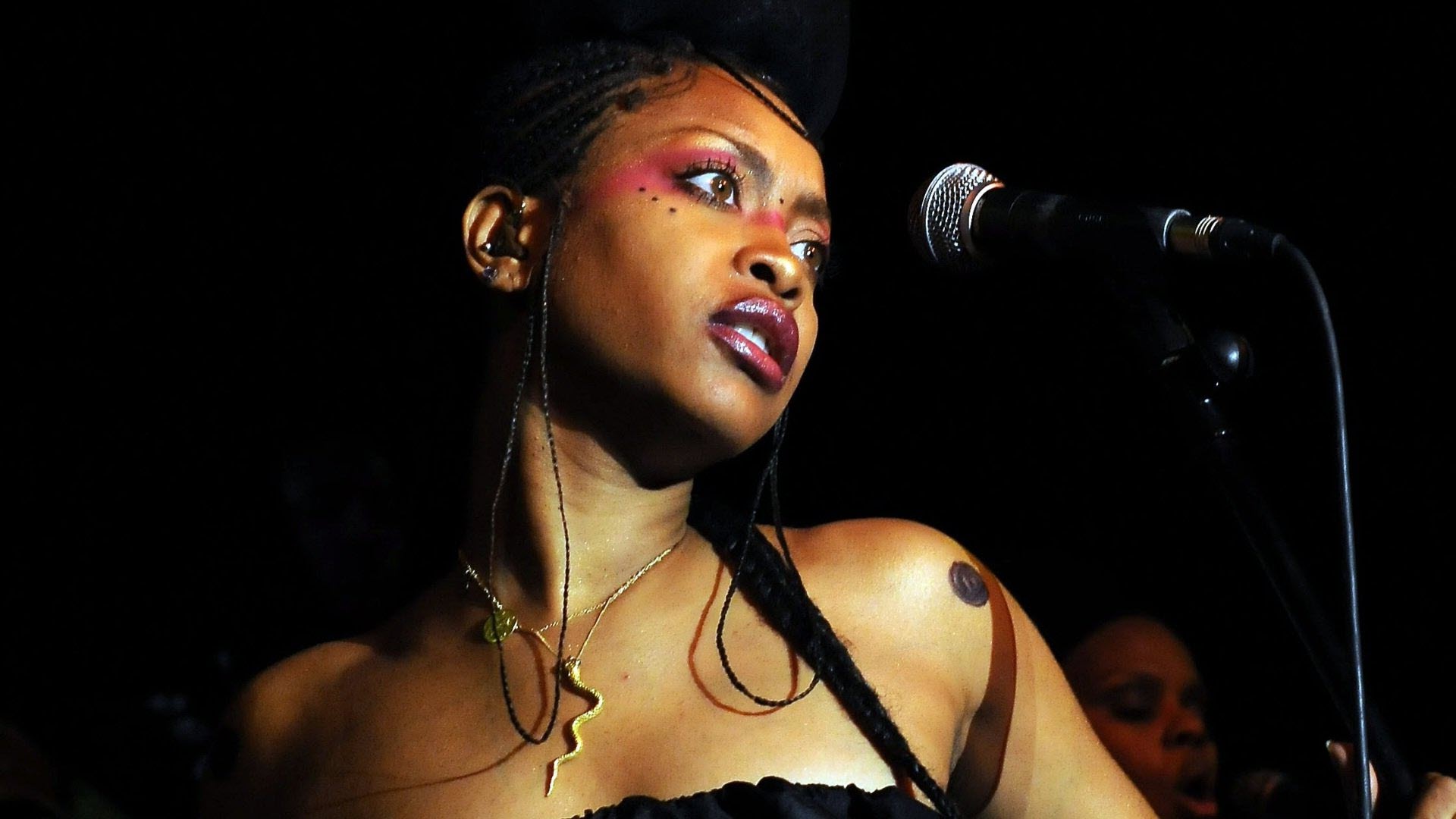
Erykah Badu, the undisputed “Queen of Neo-Soul,” has graced the music world with her unique voice, profound lyricism, and captivating artistry for over two decades. Her music transcends genres, blending soul, R&B, hip-hop, and jazz into a sound that is as timeless as it is innovative. From her debut album Baduizm to her genre-defying later works, Erykah has consistently delivered tracks that resonate deeply with listeners, weaving stories of love, self-discovery, and social consciousness into sonic masterpieces.
In this article, we’re diving into the top 10 most popular songs by Erykah Badu — tracks that have defined her career and cemented her legacy as one of the most influential artists of our time. Whether you’re a longtime fan or new to her music, this list will take you on a journey through her iconic discography, highlighting the hits that shaped the neo-soul movement and inspired countless artists worldwide. From soulful anthems to thought-provoking ballads, each song on this list showcases Erykah’s unparalleled talent and her ability to create music that touches the soul. Get ready to revisit the magic and rediscover the essence of Erykah Badu through her greatest musical gems!
1. On & On (1997)
Erykah Badu burst onto the scene in 1997 with “On & On,” a mesmerizing debut single that introduced her signature neo-soul style to the world. The song, featured on her groundbreaking album Baduizm, blends jazz, soul, and hip-hop in a way that felt entirely new yet warmly familiar. With its hypnotic groove and deeply philosophical lyrics, “On & On” explores themes of growth, self-awareness, and spiritual searching. Lines like “You rush into destruction ’cause you don’t have nothing left” highlight her poetic, almost prophetic voice. The song’s famous question—“What good do your words do if they can’t understand you?”—has echoed through generations as a call for clarity and authenticity. Badu’s distinct tone, casual delivery, and headwrap-wearing mystique immediately set her apart in the late ‘90s R&B landscape. “On & On” didn’t just win her a Grammy for Best Female R&B Vocal Performance; it announced the arrival of an artist with a vision, one who wasn’t afraid to challenge the status quo while staying grounded in emotional and cultural truth. To this day, the track remains a soulful meditation on life’s cycles, wrapped in a groove that continues to captivate listeners old and new.
2. Tyrone (1997)
“Tyrone” might be one of Erykah Badu’s most iconic tracks—not just because of its musical brilliance, but because of its attitude. Released in 1997 on her Live album, this spontaneous, bluesy jam was born during a concert and became an anthem almost overnight. With just a band behind her and a mic in hand, Badu turned a personal rant into a cultural moment. Her storytelling is sharp, biting, and hilarious, calling out a selfish boyfriend and his freeloading crew with the unforgettable line: “I think you better call Tyrone… but you can’t use my phone.” Her delivery is casual but cutting, dripping with frustration and sass. Backed by a warm, funky groove, the live energy elevates the performance, making it feel like you’re right there in the room. But beyond the humor, “Tyrone” resonated with so many because it gave voice to women tired of one-sided relationships and emotional labor. It empowered listeners to draw boundaries, say no, and take back their time. Erykah didn’t need a studio polish or fancy production—just her voice, her truth, and a stage. “Tyrone” proved that sometimes the most powerful songs are the ones that come straight from the heart in real time.
3. Bag Lady (2000)
“Bag Lady” is a soulful, introspective anthem that gently urges listeners to let go of emotional baggage that holds them back. Released in 2000 as the lead single from Mama’s Gun, the song highlights Erykah Badu’s ability to blend wisdom with melody in a way that feels both personal and universal. Her voice is warm and soothing, as she sings directly to those carrying past hurt, fear, and disappointment. “Bag lady, you gon’ hurt your back, draggin’ all them bags like that” is a deceptively simple line that delivers a powerful truth—healing can’t happen if you don’t release what’s weighing you down. The production, inspired by Dr. Dre’s “Xxplosive,” brings a mellow hip-hop edge to the track, but it’s Badu’s delivery that carries it. She doesn’t scold; she uplifts. Her compassion seeps through every verse, making the song feel like a healing conversation between friends. “Bag Lady” earned Grammy nominations and climbed the charts, becoming one of her biggest commercial successes. But more importantly, it became a self-help mantra set to music. In a world where emotional labor is often invisible, Badu gave it a name, a melody, and the space to be acknowledged and released.
4. Next Lifetime (1997)
“Next Lifetime” is one of Erykah Badu’s most emotionally layered and haunting tracks. Featured on her debut album Baduizm in 1997, the song tells a deeply relatable story of longing and restraint. It centers on a woman who feels a strong, undeniable connection with someone—but she’s already in a relationship, and so is he. Instead of diving into temptation, she chooses emotional honesty and spiritual maturity, singing, “I guess I’ll see you next lifetime.” Badu’s voice floats like a soft breeze over a bed of mellow keys and subtle percussion, creating an atmosphere of reflection and romantic tension. The lyrics are steeped in complexity—not just about love, but about timing, responsibility, and the sacrifices we make for integrity. Her use of reincarnation as a metaphor elevates the song to something cosmic, suggesting that some love stories are simply not meant for the here and now. With its gentle rhythm and introspective tone, “Next Lifetime” has remained a fan favorite, particularly for those who’ve experienced the ache of the right person at the wrong time. It’s a meditation on restraint, longing, and the bittersweet possibility that true love might find its moment—just not today.
5. Love of My Life (An Ode to Hip Hop) (2002)
With “Love of My Life (An Ode to Hip Hop),” Erykah Badu and rapper Common crafted a smooth, nostalgic tribute that does more than just reminisce—it elevates hip-hop as a lifelong companion. Released in 2002 for the Brown Sugar soundtrack, the track takes a clever approach: Badu sings about hip-hop as though it’s a past lover, using romantic metaphors to describe the genre’s growth, missteps, and eventual redemption. “I met him when I was a little girl,” she sings, setting the tone for a deeply personal relationship with music. The production is warm and soulful, perfectly suited to Badu’s expressive vocals and Common’s grounded verses. What makes the song truly resonate is how it bridges generations. For older listeners, it evokes the golden age of hip-hop. For younger fans, it provides a blueprint of respect, passion, and authenticity. The chemistry between Badu and Common is palpable, adding another layer of richness to the song’s emotional depth. “Love of My Life” won a Grammy for Best R&B Song, and deservedly so—it captures not just the sound, but the soul of hip-hop through the lens of love, respect, and cultural reverence.
6. Appletree (1997)
“Appletree” is one of those songs that feels like a quiet sermon—laid back in rhythm but powerful in message. Released in 1997 as part of Baduizm, the track is a declaration of self-worth and intentional living. Over a jazzy, soul-infused beat, Erykah Badu delivers lyrics that encourage listeners to guard their peace and be mindful of the company they keep. “I picks my friends like I pick my fruit,” she says, setting the tone for a message about discernment and growth. The metaphor of an apple tree represents wisdom, maturity, and bearing good fruit in one’s life. Badu’s voice is confident yet relaxed, almost conversational, as she gently guides the listener toward self-empowerment without preaching. The stripped-down production, centered on warm keys and smooth bass, lets her vocals take center stage. What makes “Appletree” so enduring is how it balances self-love with soulful grooves, making its message both catchy and contemplative. It became a quiet anthem for those learning to walk in confidence without compromise. In a world where peer pressure often dictates behavior, “Appletree” offers a refreshing reminder: it’s okay to stand alone if it means staying true to yourself.
7. Didn’t Cha Know (2000)
“Didn’t Cha Know” stands out as one of Erykah Badu’s most introspective and spiritually resonant songs. Featured on her 2000 album Mama’s Gun and produced by the late J Dilla, the track wraps deep philosophical musings in a hypnotic, soul-drenched groove. From the opening bars, you’re pulled into a dreamy, almost meditative soundscape that perfectly reflects the lyrical themes of uncertainty, growth, and self-exploration. Badu sings about being lost but still moving forward, caught in a life where the path isn’t always clear. “Didn’t cha know I was looking for a way to go?” she asks, voicing a question many people carry quietly. Her vocals are tender, reflective, and imbued with a quiet vulnerability that makes the song feel like a personal confession. J Dilla’s production—warm, dusty, and subtly layered—acts as the perfect foundation for her soul-searching narrative. The track earned a Grammy nomination, and it’s easy to see why. It’s not just about the melody or the rhythm; it’s about the feeling of being suspended in life’s in-between moments. “Didn’t Cha Know” is more than a song—it’s a spiritual checkpoint, a moment of pause, and a reminder that it’s okay not to have all the answers.
8. Window Seat (2010)
“Window Seat” is one of Erykah Badu’s most vulnerable and courageous tracks, a ballad that captures the longing for solitude, clarity, and freedom. Released in 2010 as part of New Amerykah Part Two (Return of the Ankh), the song marked a return to the more melodic, soul-driven sound that many fans loved from her earlier work. With minimalist production and a slow, sensual groove, Badu’s voice floats effortlessly as she sings about needing space to think and escape the pressures of expectation. “Can I get a window seat? Don’t want nobody next to me,” she sings, creating an image of quiet retreat in a chaotic world. The song became even more impactful thanks to its controversial music video, in which Badu strips down in public as a symbolic act of shedding societal labels and seeking personal liberation. Though it sparked debate, the message was clear: freedom requires vulnerability, and sometimes, boldness. “Window Seat” resonates with anyone who’s ever felt the need to disconnect in order to reconnect with themselves. It’s a beautiful, raw expression of self-preservation and the quiet power of claiming your space—even if the world doesn’t understand it.
9. Otherside of the Game (1997)
“Otherside of the Game” is one of Erykah Badu’s most emotionally rich and narrative-driven songs. Featured on her 1997 debut album Baduizm, the track tells the story of a woman caught between love and morality. She’s in a relationship with a man involved in illegal activities, and while she’s conflicted, she chooses to stand by him. Badu paints this complex portrait with grace and nuance, offering no judgment—just empathy. “I know you got to get your hustle on, so I pray,” she sings, revealing a deep emotional investment laced with worry and resignation. The instrumentation is smooth and moody, guided by jazz-inflected keys and laid-back drums that match the somber tone of the lyrics. Her vocals are soft yet potent, capturing the emotional weight of a woman holding onto love despite the consequences. “Otherside of the Game” is a masterclass in storytelling, humanizing the quiet strength it takes to support someone in the gray areas of life. It remains one of Badu’s most compelling works, not just for its sound, but for its honest portrayal of the inner conflicts that love can bring. This isn’t just a song—it’s a slice of life set to music.
10. Honey (2008)
“Honey” is a vibrant, feel-good track that showcases Erykah Badu’s playful and experimental side. Released in 2008 on New Amerykah Part One (4th World War), the song blends funk, soul, and electronic elements into an irresistible groove that sticks with you from the very first listen. Badu’s voice glides effortlessly over the track, sweet and smooth, as she sings about being completely enamored with someone—“You make my soul feel real new.” The production, courtesy of 9th Wonder, gives the song a modern bounce while keeping its roots in old-school soul. But what really set “Honey” apart was its innovative music video, which featured Badu on the covers of classic album sleeves like Funkadelic and Diana Ross—an homage to music history that fans and critics praised for its creativity. The visual added layers of meaning to the track, highlighting her deep respect for the greats who came before her. “Honey” was more than a catchy tune—it was a love letter to Black music, an artistic experiment, and a reminder that Badu could groove just as hard as she could philosophize. Fun, funky, and unforgettable, it stands as one of her most joyful tracks.

Edward Tomlin is a frequent contributor to Singers Room. Since 2005, Singersroom has been the voice of R&B around the world. Connect with us via social media below.









