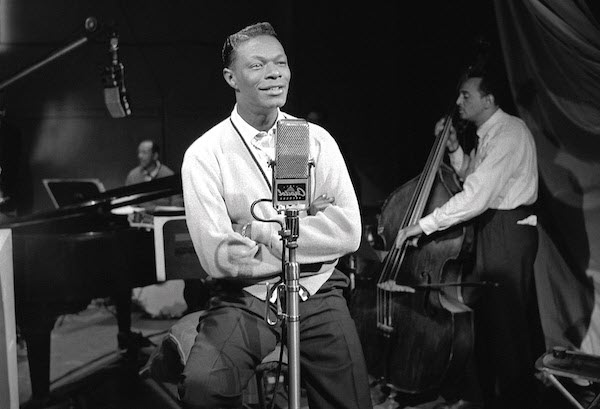
Few voices in music history have been as timeless and universally cherished as that of Nat King Cole. A pioneer in breaking barriers and a master of blending jazz, pop, and soul, Cole’s velvet-smooth baritone has serenaded generations and continues to enchant listeners today. Whether you’re a longtime fan or just discovering his music, his songs resonate with a heartfelt elegance that speaks to the soul.
In this article, we take a journey through the golden era of music to explore Nat King Cole’s most iconic and beloved tracks. From romantic ballads that define love itself to toe-tapping jazz standards that showcase his remarkable artistry, these songs are musical treasures that stand the test of time. Each one is a masterpiece, a testament to Cole’s unmatched talent and charisma, and a reminder of why he remains a legend in popular music.
Prepare to be swept away by timeless melodies, unforgettable lyrics, and the warmth of a voice that feels like home. Let’s celebrate the magic of Nat King Cole as we count down the top 10 most popular songs that have cemented his legacy as one of the greatest artists of all time.
1. “Unforgettable” (1951)
“Unforgettable” is more than just a love song—it’s a moment suspended in time. Released in 1951, this romantic ballad became one of Nat King Cole’s most defining and enduring recordings. From the moment his warm, velvety voice glides in, you’re transported into a world of deep affection and timeless elegance. The lyrics are simple, yet profoundly moving—speaking to a love so powerful that it becomes etched into memory forever. Backed by lush orchestration, Cole delivers each line with such sincerity and grace that it’s no wonder the song continues to be a favorite at weddings and anniversaries even today. It feels like a slow dance under the stars, full of tenderness and quiet reverence. The song was given a second life when Cole’s daughter, Natalie, recorded a duet version decades later, digitally merging their voices in a touching tribute. That version reintroduced the magic of the original to a new generation, proving its timelessness. “Unforgettable” isn’t just about romance; it’s about how some people—and the feelings they bring—leave an indelible mark on your heart. With this song, Nat King Cole didn’t just record a hit—he captured a feeling that lives on eternally.
2. “Mona Lisa” (1950)
There’s a certain magic to “Mona Lisa” that feels almost otherworldly. Released in 1950, the song showcases Nat King Cole at his most poetic and mysterious. The lyrics, inspired by the enigmatic smile of Leonardo da Vinci’s famous painting, ponder the hidden emotions behind a beautiful face. Is she merely a lovely illusion, or is there heartache behind those eyes? Cole delivers the song with exquisite subtlety, his voice soft and contemplative, making every word linger. The arrangement is minimal and elegant, allowing his voice to carry the emotional weight. “Mona Lisa” was an immediate hit, earning an Academy Award for Best Original Song and topping the charts for weeks. What sets it apart is the way it invites listeners to look beyond the surface, to consider the complexity behind appearances. It’s not just a song about beauty—it’s about mystery, longing, and the search for truth in love. Even decades after its release, “Mona Lisa” remains hauntingly beautiful. It’s the kind of song that you don’t just hear—you feel. And in that quiet, tender delivery, Nat King Cole cements his place not just as a singer, but as a storyteller.
3. “The Christmas Song (Chestnuts Roasting on an Open Fire)” (1946)
Few songs define the holiday season like “The Christmas Song,” often simply called “Chestnuts Roasting on an Open Fire.” Originally recorded by Nat King Cole in 1946, it has become a quintessential part of Christmas tradition. From the very first line, Cole’s rich, comforting baritone wraps around you like a warm blanket. You can practically smell the roasting chestnuts and hear the crackle of the fireplace. The song paints a picture of holiday warmth and family togetherness that feels timeless and deeply nostalgic. Its imagery—tiny tots with their eyes all aglow, Jack Frost nipping at your nose—has become the gold standard for Christmas lyrics. What makes it so enduring is the sincerity in Cole’s delivery. It’s not flashy or overly sentimental—it’s genuine, filled with the quiet joy and wonder of the season. His voice brings out the beauty in the simplicity of the moment, making you feel like you’re right there beside him, sipping cocoa and watching the snow fall. No matter how many versions of this classic have been recorded over the years, Nat King Cole’s remains the definitive one. It’s more than a song—it’s the sound of Christmas itself.
4. “Nature Boy” (1948)
“Nature Boy” stands out as one of Nat King Cole’s most haunting and philosophical tracks. Released in 1948, this mesmerizing tune tells the story of a strange, wise wanderer—a “nature boy”—who shares the simple, yet profound lesson: “The greatest thing you’ll ever learn is just to love and be loved in return.” With its mystical, almost ethereal melody and Cole’s introspective delivery, the song feels like a fable set to music. The arrangement is sparse, giving Cole’s voice plenty of space to explore the emotional nuance of the lyrics. Written by eden ahbez, a man who lived a reclusive, nature-centered life, the song was unlike anything else at the time. And yet, Cole embraced it wholeheartedly, recognizing its power and emotional depth. “Nature Boy” wasn’t just a commercial hit—it was a turning point in popular music, introducing a new kind of lyrical and musical sophistication to the mainstream. Nat King Cole’s interpretation turned a curious little poem into a spiritual experience. Even today, the song feels timeless and quietly revolutionary, a gentle reminder of what truly matters in life. It’s a song you carry with you long after it ends.
5. “L-O-V-E” (1965)
“L-O-V-E” is the musical equivalent of a wink and a smile—playful, infectious, and utterly charming. Released in 1965, this jazzy tune showcases Nat King Cole at his most lighthearted and charismatic. The song literally spells out the word “love” with clever, upbeat lyrics: “L is for the way you look at me…” It’s the kind of track that makes you want to snap your fingers, sway a little, and maybe fall in love on the spot. The big band arrangement adds an irresistible bounce, and Cole’s smooth vocals dance effortlessly over the melody. While Cole is often celebrated for his ballads and emotional depth, “L-O-V-E” reveals his knack for fun, energetic performances that radiate joy. This song became one of his most iconic late-career hits, and it’s easy to see why—it’s timeless in the way that classic jazz standards are, both simple and sophisticated. “L-O-V-E” has since been featured in countless movies, commercials, and even covered by other artists, but Nat King Cole’s version remains definitive. It’s pure charm from beginning to end—a love letter set to music that still makes hearts flutter, even all these years later.
6. “Too Young” (1951)
“Too Young” is one of those songs that taps into a universal feeling—the bittersweet nature of young love and the world’s skepticism of it. Released in 1951, it became a massive hit for Nat King Cole, reaching number one on the Billboard charts and staying there for weeks. At the heart of the song is a tender story: two lovers whose feelings are questioned because of their age, despite the depth and sincerity of their connection. Cole’s voice, gentle and filled with longing, gives the lyrics a sense of quiet defiance and vulnerability. He sings not just from the perspective of someone in love, but someone who remembers what that early, overwhelming emotion felt like. The arrangement is soft and elegant, with sweeping strings and subtle piano underscoring the emotion. What makes “Too Young” so enduring is how it captures the ache of wanting to be taken seriously—of love that feels eternal, even when others say it’s fleeting. Cole delivers it with such honesty that it’s impossible not to be moved. It’s a reminder that love, no matter your age, is always real when you feel it that deeply.
7. “Smile” (1954)
There are few songs that manage to uplift while breaking your heart quite like “Smile.” Originally composed by Charlie Chaplin for the 1936 film Modern Times, it wasn’t until 1954 that lyrics were added, and Nat King Cole gave it a voice that truly matched its emotional gravity. Cole’s version of “Smile” is quietly powerful. His delivery is gentle and reassuring, as if he’s speaking directly to someone who’s going through a hard time, telling them to keep going. “Smile, though your heart is aching…”—the opening line sets the tone for a song about resilience and hope in the face of sorrow. It’s a rare blend of sorrow and encouragement, light and shadow. The orchestration is subtle, letting the emotional weight of Cole’s vocals shine through. “Smile” has since become a standard for artists across generations, but there’s something uniquely comforting about Nat’s version. It feels like a warm hand on your shoulder, a reminder that even in your darkest moments, there’s light on the horizon. It’s not just a song—it’s an emotional lifeline, delicately delivered by one of the greatest voices in music history.
8. “Straighten Up and Fly Right” (1943)
“Straighten Up and Fly Right” is where the world really started to take notice of Nat King Cole—not just as a vocalist, but as a pioneering musical force. Released in 1943, this swinging track marked a turning point in popular music, blending jazz, swing, and pop with storytelling charm. Co-written by Cole himself and inspired by a Southern folk tale, the lyrics offer advice through a clever metaphor involving a monkey and a buzzard. It’s funny, smart, and snappy, but beneath the wit lies a deeper message about getting your act together and staying true. The song’s rhythm is infectious, with a bouncing bass line and finger-snapping tempo that make it impossible to sit still. And Cole’s vocals? Smooth, confident, and bursting with character. This track also marked the rise of the Nat King Cole Trio, which brought a fresh, refined style to jazz and pop music of the era. “Straighten Up and Fly Right” wasn’t just a hit—it was a statement. It showcased Cole’s ability to bridge musical worlds and connect with audiences on multiple levels. Even today, it still swings with attitude and style.
9. “Route 66” (1946)
If there’s ever been a song that captures the spirit of the open road, it’s “Route 66.” Released in 1946, Nat King Cole’s version of this traveling anthem became a post-war hit and a cultural symbol of freedom and adventure. The song lists off a string of iconic American cities as it follows the path of the legendary highway from Chicago to Los Angeles. But it’s not just about geography—it’s about the thrill of exploration, the joy of movement, and the wide-open possibilities of the American dream. Cole’s vocals have a relaxed, breezy confidence, perfectly suited for the easy-going swing of the melody. There’s a sense of cool in every line he sings, as if he’s inviting you to hop in the car and hit the road with him. The instrumentation is jazzy and playful, making the whole thing feel like a joyride. Over the years, countless artists have covered “Route 66,” but Cole’s version remains definitive. It captures a moment in time when the road was a symbol of postwar optimism. It’s not just a travel song—it’s an invitation to chase something bigger, wherever the road might lead.
10. “When I Fall in Love” (1956)
“When I Fall in Love” is pure romantic idealism in musical form. Released in 1956, Nat King Cole’s version of this classic ballad is arguably the most beloved. With every note, he brings a profound sincerity to the idea of love—not casual, not fleeting, but deep, faithful, and enduring. The song begins with a soft orchestral swell that feels like the opening of a dream. Then Cole enters, his voice velvet-smooth, wrapping around each word with the kind of care that makes you stop and really listen. The lyrics are a vow: “When I fall in love, it will be forever…” It’s not just a romantic statement—it’s a personal promise. What elevates the song is the emotional gravity Cole brings to it. You believe him. You feel the longing and hope behind each phrase. The arrangement is sweeping without being overpowering, giving his voice room to breathe and the listener space to reflect. Over the decades, “When I Fall in Love” has become a wedding favorite, a Valentine’s Day staple, and a symbol of true love. But Nat King Cole’s version is more than iconic—it’s definitive, capturing the very heart of what it means to love completely.

Edward Tomlin is a frequent contributor to Singers Room. Since 2005, Singersroom has been the voice of R&B around the world. Connect with us via social media below.









