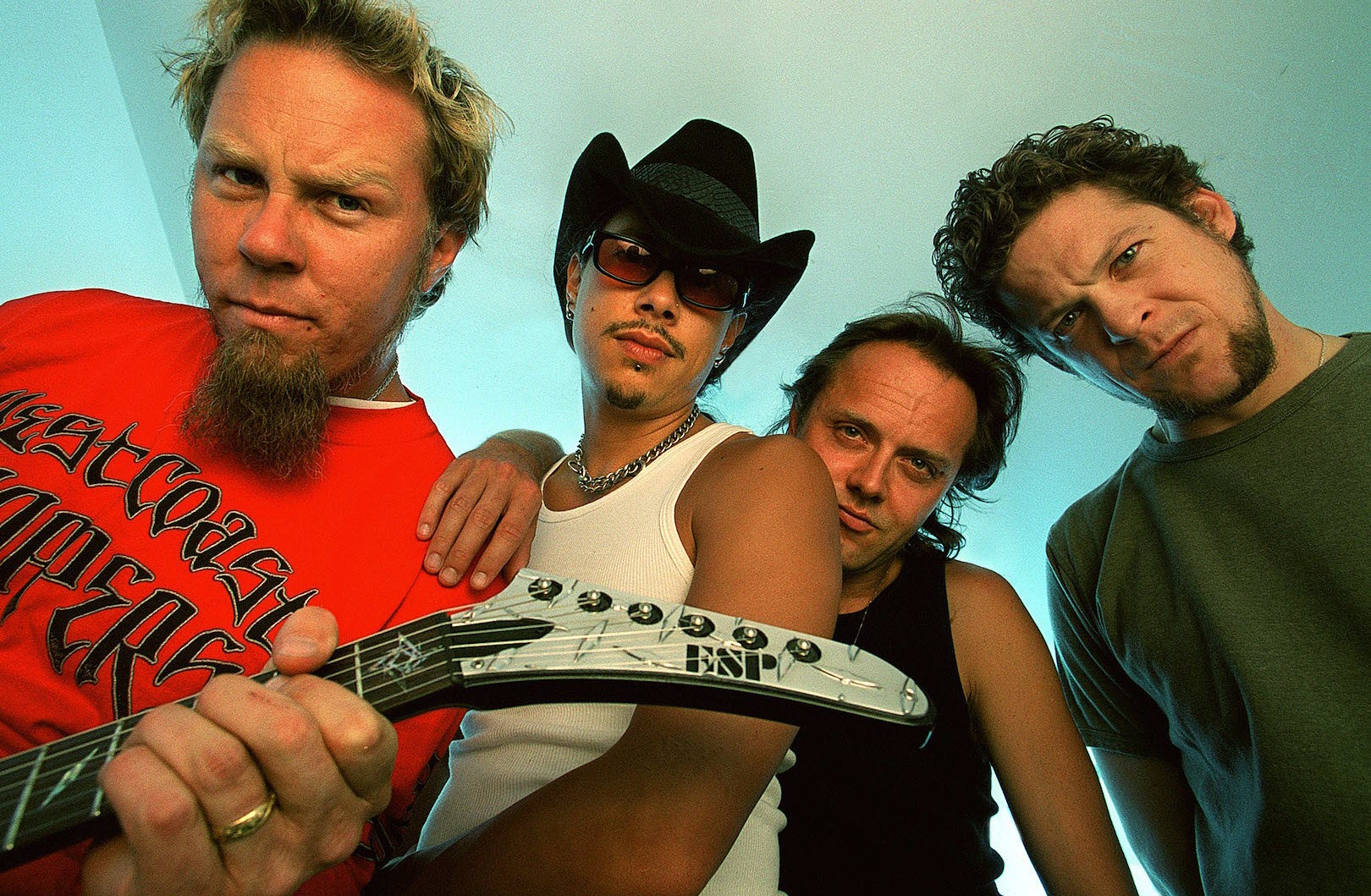
Few bands have defined an entire genre of music as Metallica has. Born from the fiery crucible of the 1980s thrash metal scene, this legendary band has transcended time, trends, and expectations to become one of the most iconic names in rock history. With electrifying riffs, thunderous rhythms, and lyrics that explore everything from raw aggression to profound introspection, Metallica has forged a catalog of unforgettable songs that have left an indelible mark on millions of fans around the world.
In this article, we take a high-octane dive into Metallica’s most popular and enduring tracks — the anthems that turned mosh pits into electric storms and arenas into temples of heavy metal worship. From the ferocious speed of their early years to the polished brilliance of their later releases, these songs represent the very best of Metallica’s storied career. Whether you’re a lifelong fan or just stepping into the world of metal, prepare to rediscover the thunderous might of tracks that defined a generation.
So crank up the volume, feel the surge of adrenaline, and join us as we count down the top 10 Metallica songs of all time. Let the headbanging begin!
1. Master of Puppets (1986)
“Master of Puppets” isn’t just one of Metallica’s most iconic songs—it’s a full-blown metal manifesto. Released in 1986 as the title track of their third album, this epic clocks in at over eight minutes of relentless energy, shifting rhythms, and uncompromising intensity. At its core, the song is a searing commentary on addiction, painting the habit as a dark force pulling the strings, manipulating its victim like a puppet. The lyrics are powerful and poetic, but what truly elevates the track is the band’s technical prowess. James Hetfield’s snarling vocals cut through the chaos with clarity, while Kirk Hammett’s guitar work—especially the solo—is a masterclass in controlled fury. Cliff Burton’s bass adds depth and gravitas, and Lars Ulrich’s drumming keeps everything moving like a runaway train. The song weaves through clean, haunting breakdowns and explosive thrash assaults with surgical precision. “Master of Puppets” captures everything that made Metallica legendary in the metal world: storytelling, musicianship, and raw, emotional power. Decades later, it still hits just as hard—and in many ways, it remains the gold standard for what thrash metal can be.
2. Enter Sandman (1991)
When “Enter Sandman” dropped in 1991, it wasn’t just a new single—it was a seismic shift. Opening Metallica’s self-titled “Black Album,” this track marked a new era for the band: more accessible, more polished, and absolutely massive. The eerie, almost lullaby-like intro sets a tone that’s both haunting and hypnotic before the thunderous riff crashes in like a nightmare made real. The song explores childhood fears—monsters, dreams, the unknown—and wraps them in a wall of sound that’s both ominous and exhilarating. James Hetfield’s vocals are commanding yet full of menace, while the rhythm section creates a relentless drive that refuses to let go. Lyrically, it’s simple but effective, tapping into universal anxieties that linger into adulthood. “Enter Sandman” became a crossover hit, introducing Metallica to a wider audience and helping to push metal further into the mainstream. It’s a stadium anthem now, complete with pyrotechnics and thousands of fans shouting every word. Whether you’re a die-hard metalhead or just dipping your toes into the genre, this is the track that pulls you in and doesn’t let go. It’s Metallica’s gateway drug—and what a trip it is.
3. One (1988)
“One” is more than just a song—it’s a visceral experience. Released in 1988 on the album …And Justice for All, it tells the heartbreaking story of a soldier who survives war only to be left trapped in his own body—unable to see, speak, or move. Inspired by the anti-war novel Johnny Got His Gun, the track begins with a soft, sorrowful guitar passage that mirrors the quiet despair of the wounded protagonist. But as the song progresses, it erupts into one of the most intense crescendos in Metallica’s catalog. Lars Ulrich’s double-kick drumming mimics the staccato of machine-gun fire, while Kirk Hammett’s solo screams with anguish and urgency. The contrast between the somber intro and the explosive climax perfectly captures the torment of the subject matter. James Hetfield’s vocals are emotionally charged, teetering between calm reflection and raw pain. “One” is not just an anti-war song—it’s a meditation on isolation, suffering, and the high cost of conflict. It’s haunting, cinematic, and powerful enough to leave a lasting mark. Decades later, it still stands as one of Metallica’s most ambitious and emotionally resonant pieces.
4. Fade to Black (1984)
“Fade to Black” marked a turning point for Metallica when it appeared on Ride the Lightning in 1984. Up until that point, they were known for their aggressive speed and thrash sound, but this track introduced something more vulnerable—an emotional depth that surprised even some fans. The song opens with a soft acoustic guitar, gradually layering into a heavier, more despairing tone. It’s a reflection on hopelessness and depression, tackling the kind of inner darkness that many rock songs shy away from. James Hetfield’s lyrics are raw and introspective, making “Fade to Black” feel intensely personal. By the time the powerful solos arrive, the emotion spills over completely, with Kirk Hammett’s guitar weeping through every note. The song manages to be both beautiful and brutal, fragile and fierce. It’s one of those tracks that resonates with anyone who’s ever stared down the abyss and felt the pull. “Fade to Black” proved that heavy metal could carry emotional weight without losing its edge, and it opened the door for the more dynamic songwriting Metallica would explore later in their career. A true metal ballad in every sense.
5. Nothing Else Matters (1991)
“Nothing Else Matters” is perhaps the most unexpected—and most beloved—departure in Metallica’s storied career. Released in 1991 on the Black Album, this sweeping ballad stripped away the band’s trademark aggression and showed a side of Metallica that fans hadn’t seen before: tender, introspective, and emotionally open. Written by James Hetfield while on the road, the lyrics speak of trust, vulnerability, and connection. Originally penned as a private love letter, the song grew into something more universal—an anthem for anyone who’s ever loved, lost, or stood by someone through thick and thin. The orchestration, the lush guitar melodies, and Hetfield’s earnest vocals create a rich emotional tapestry that transcends genre. It was a bold move—especially for a band known for speed and aggression—but it paid off. “Nothing Else Matters” helped launch Metallica into mainstream consciousness, and it remains a fan favorite decades later. It’s been covered by artists across genres and continues to strike a chord with listeners of all backgrounds. More than just a ballad, it’s a moment of truth in Metallica’s discography—a reminder that sometimes, even the heaviest of hearts can sing softly.
6. Seek & Destroy (1983)
“Seek & Destroy” from Kill ‘Em All (1983) is the kind of track that gets a crowd’s adrenaline pumping and fists in the air. It’s raw, aggressive, and unapologetically thrash. The song’s riff is instantly recognizable, a fiery, driving force that propels the song forward like a freight train. “Seek & Destroy” is the embodiment of Metallica’s early days—chaotic, rebellious, and fueled by youthful aggression. The lyrics themselves are a call to arms, urging listeners to embrace the primal urge for destruction. There’s a primal energy to this song that has made it a staple of Metallica’s live shows for decades. What’s remarkable about “Seek & Destroy” is how it blends the frantic pace of thrash with a hook that’s impossible to shake. James Hetfield’s vocals are fierce and commanding, rallying the listener like a battle cry. But it’s not just the riff that makes this track iconic; it’s the way the song feels. Every time it’s played live, there’s a shared experience between the band and the audience—a collective sense of release. If you’ve ever seen it performed in person, you know the rush it gives, and why it continues to stand the test of time.
7. Battery (1986)
As the opening track of Master of Puppets (1986), “Battery” hits you like a sonic sledgehammer right out of the gate. The song begins with a brief acoustic intro before launching into a blitzkrieg of thrash riffs and lightning-fast tempos that barely let up for the next five minutes. There’s an undeniable sense of aggression in the song that perfectly captures the spirit of the album. The lyrics are a whirlwind of frustration, rage, and energy, channeling the raw intensity that defined Metallica’s thrash years. The guitar work, led by Kirk Hammett’s shredding solos and Ritchie Blackmore-esque precision, is simply mind-blowing. But it’s the rhythm section that truly holds this song together, with Lars Ulrich’s drumming pushing the tempo to dizzying speeds while Cliff Burton’s bass provides a heavy, rumbling foundation. Hetfield’s vocal delivery is nothing short of ferocious, spitting out the lyrics with a snarl that cuts through the chaos. “Battery” is a celebration of thrash metal’s power, blending technical precision with relentless aggression. It’s the kind of track that leaves you breathless, an anthem for headbangers everywhere. As the perfect intro to an album that would define Metallica’s legacy, “Battery” sets the tone for everything that follows.
8. For Whom the Bell Tolls (1984)
“Inspired by Ernest Hemingway’s novel of the same name, “For Whom the Bell Tolls” is one of Metallica’s most powerful and haunting tracks. Released in 1984 as part of Ride the Lightning, it stands as a sobering commentary on the futility of war. The song opens with a somber, echoing bassline courtesy of Cliff Burton, immediately setting a mournful tone. As the track picks up, it builds into a relentless riff that is both menacing and powerful, mirroring the harsh reality of the battlefield. Lyrically, “For Whom the Bell Tolls” explores the tragic loss of life in war, underscoring the idea that death is inevitable and collective. The phrasing of the lyrics resonates deeply, with James Hetfield delivering each line with solemnity and urgency. The mid-tempo groove keeps the song grounded in a heavy, almost march-like cadence that conveys the brutality of conflict. The track is a standout not only for its emotional weight but for its intricate composition. From the slow, deliberate opening to the faster, more intricate sections, “For Whom the Bell Tolls” shows Metallica’s ability to balance heaviness with narrative depth, making it an enduring anthem against the backdrop of warfare.”
9. Creeping Death (1984)
“Creeping Death” is one of Metallica’s most iconic and intense songs, blending powerful storytelling with relentless energy. Released on Ride the Lightning in 1984, this track draws from the biblical story of the Exodus, specifically the ten plagues that ravaged Egypt. The song’s opening riff is unmistakable, setting the tone for a tale of divine wrath and destruction. As the song progresses, Metallica unleashes a whirlwind of speed and precision, with the riffing getting progressively more intense as the lyrics unfold. The chant of “Die by my hand!” is an iconic moment that amplifies the sense of chaos and devastation, making it a live show favorite. The combination of historical storytelling and fast-paced thrash metal creates a high-energy atmosphere that’s equally cinematic and raw. It’s the kind of song that, when performed live, demands audience participation—the crowd shouting the words back as one. Metallica’s ability to turn a biblical narrative into a thrash anthem is nothing short of remarkable. Every member of the band plays their part flawlessly, from the driving rhythm of Lars Ulrich’s drums to the scorching solos of Kirk Hammett. “Creeping Death” is a perfect example of Metallica’s fusion of narrative depth and thrash metal power.
10. The Unforgiven (1991)
“The Unforgiven” is one of Metallica’s most emotionally resonant songs, capturing the complexity of regret, redemption, and the struggle to break free from one’s past. Released in 1991 on The Black Album, it departs from the thrash roots of earlier material in favor of a more atmospheric, somber tone. The song’s structure is unique, with soft, introspective verses giving way to powerful, crushing choruses. It’s a song that builds slowly, both musically and lyrically, before unleashing a powerful emotional climax. The lyrics tell the story of someone who has lived under the weight of guilt and expectations, constantly striving to meet an unattainable standard. James Hetfield’s vocals are raw and haunting, carrying the weight of the song’s themes with conviction. The instrumental sections are hauntingly melodic, punctuated by a stirring guitar solo from Kirk Hammett. What makes “The Unforgiven” stand out is the way it balances heavy, metallic aggression with a tender vulnerability, creating a soundscape that is as emotionally complex as it is sonically powerful. It’s a song that resonates with anyone who has ever struggled with forgiveness—both from others and themselves—and it remains one of Metallica’s most beloved tracks.

Edward Tomlin is a frequent contributor to Singers Room. Since 2005, Singersroom has been the voice of R&B around the world. Connect with us via social media below.









