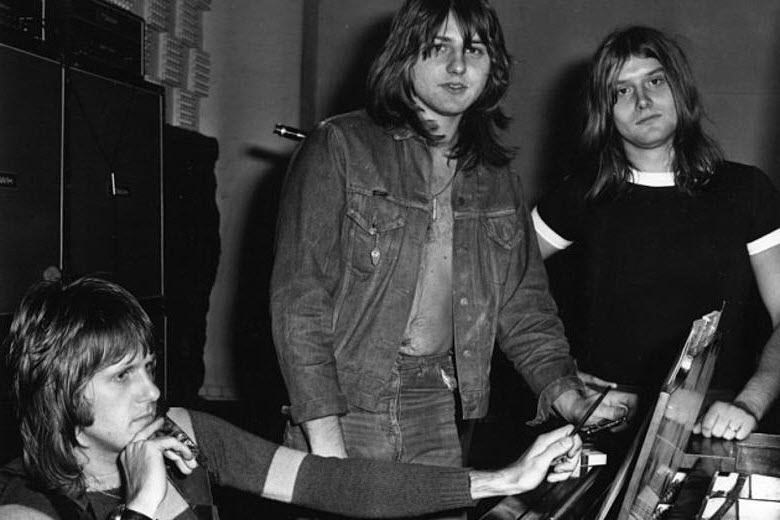
Few bands in the annals of progressive rock have achieved the towering legacy of Emerson, Lake & Palmer (ELP). With their virtuosic musicianship, boundary-pushing compositions, and a flair for theatricality, this legendary trio redefined the possibilities of rock music throughout the 1970s. Keith Emerson’s keyboard wizardry, Greg Lake’s soulful voice and melodic bass playing, and Carl Palmer’s electrifying drumming created a soundscape that was as grandiose as it was groundbreaking. Combining elements of classical music, jazz, and rock, ELP’s music broke free from conventions and carved a niche that still resonates with fans across generations.
In this article, we delve into the top 10 most popular Emerson, Lake & Palmer songs of all time—a collection of tracks that represent the band’s genius, innovation, and timeless appeal. From epic suites that take listeners on a journey to punchy, rock-driven anthems, these songs showcase the sheer range and creativity that made ELP icons of their genre. Whether you’re a lifelong fan or just beginning your journey into their discography, these tracks are a testament to why Emerson, Lake & Palmer remain one of the most celebrated names in progressive rock history. Get ready to rediscover the magic!
1. Lucky Man (1970)
“Lucky Man” stands as one of Emerson, Lake & Palmer’s most enduring and emotionally resonant songs. Written by Greg Lake when he was just 12 years old, the ballad radiates a simple, heartfelt sincerity that contrasts with the band’s more grandiose compositions. Featured on their 1970 self-titled debut album, the song tells the melancholic tale of a man who seemingly had everything—wealth, power, love—only to meet a tragic end. Its acoustic arrangement and poetic lyrics draw listeners in, wrapping them in a story that feels both intimate and universal. The song culminates in one of rock music’s most iconic moments: Keith Emerson’s innovative Moog synthesizer solo. This haunting, otherworldly flourish elevated the track from folk ballad to something timeless and surreal. Over the years, “Lucky Man” has become more than just a hit—it’s a symbol of the band’s ability to blend vulnerability with musical innovation. Its themes of irony and mortality still resonate deeply with fans, making it a staple of ELP’s legacy and a moving piece of progressive rock history that continues to capture the imagination of new generations.
2. Karn Evil 9: 1st Impression, Part 2 (1973)
Opening with the unforgettable line, “Welcome back my friends to the show that never ends,” this track instantly commands attention. “Karn Evil 9: 1st Impression, Part 2” is perhaps ELP’s most theatrical and flamboyant moment, taken from their 1973 album Brain Salad Surgery. This portion of the extended “Karn Evil 9” suite is a high-octane burst of progressive rock energy, built on Keith Emerson’s dazzling keyboard wizardry and Carl Palmer’s powerful, propulsive drumming. Greg Lake’s vocals guide us through a dystopian funhouse of sights and sounds, conjuring imagery of a surreal carnival that critiques the spectacle of modern life and media culture. The song functions almost like a rock opera within a track, packed with sonic surprises, tempo changes, and virtuosic flair. Despite the complexity, it remains accessible and incredibly catchy—no small feat in progressive rock. It’s also a fan favorite during live shows, where the band could stretch its boundaries and let their theatrical instincts run wild. “Karn Evil 9” isn’t just a song—it’s an experience, a chaotic and compelling ride through the heart of ELP’s ambition and artistic vision.
3. Tarkus (1971)
“Tarkus” isn’t just a song—it’s a sprawling, conceptual odyssey that defines Emerson, Lake & Palmer’s ambition. Spanning over 20 minutes on the band’s second album, it tells the surreal story of a creature that’s part armadillo, part tank, thrown into a series of symbolic battles. The music reflects this narrative with a shifting, multi-part structure that includes intense instrumental sections, reflective vocal passages, and dazzling improvisation. Keith Emerson’s virtuosic organ and synthesizer work drives much of the piece, creating both chaotic tension and moments of eerie calm. Greg Lake’s voice delivers cryptic, philosophical lyrics about conflict, evolution, and the cyclical nature of destruction. Carl Palmer’s drumming is relentless and inventive, constantly shifting to match the mood and movement of the music. “Tarkus” pushes the boundaries of what rock could do at the time, and in doing so, it helped define progressive rock itself. It’s dense, intense, and often mind-bending, but for fans of complex music with big ideas, it’s essential listening. Over the years, it’s become one of ELP’s most respected and studied works—a symbol of their musical daring and conceptual depth.
4. From the Beginning (1972)
“From the Beginning” is a gentle, introspective track that showcases a more personal and emotional side of ELP, especially Greg Lake’s songwriting. Featured on their 1972 album Trilogy, the song starts with a beautifully fingerpicked acoustic guitar, setting a peaceful and almost melancholic tone. Lake’s vocals are soft and contemplative, delivering lyrics about doubt, love, and the subtle complexities of human relationships. It’s the kind of song that doesn’t need bombast to leave a mark—its strength lies in its sincerity and vulnerability. As the song progresses, Keith Emerson introduces tasteful touches of Moog synthesizer and electric piano, adding a dreamlike texture that perfectly complements the acoustic core. Carl Palmer keeps the rhythm light and understated, allowing the mood to remain intimate. Unlike ELP’s larger-than-life epics, “From the Beginning” feels like a quiet conversation or a midnight confession. Its universal themes and elegant simplicity have given it lasting appeal, making it a favorite not only among progressive rock fans but also among listeners who might otherwise be intimidated by the band’s more complex compositions. It’s a reminder that even in the most elaborate bands, there’s always room for subtlety and soul.
5. Fanfare for the Common Man (1977)
ELP’s rendition of Aaron Copland’s “Fanfare for the Common Man” is a thunderous celebration of the power and grandeur of instrumental rock. Released in 1977 on Works Volume 1, the track takes Copland’s patriotic original and transforms it into a sprawling, electrifying anthem. Keith Emerson leads the charge with a bold and majestic synthesizer interpretation of the main theme, retaining the classical dignity of the original while injecting it with modern energy. Carl Palmer’s drumming adds a heavy, almost primal rhythm that grounds the piece and propels it forward. Greg Lake’s bass work is subtle yet impactful, providing a steady foundation for Emerson’s synth flourishes. Clocking in at over nine minutes, the track evolves into an improvisational jam, with Emerson pushing his keyboards into explosive, almost psychedelic territory. It’s a masterclass in how rock and classical music can collide without losing their identity. More than just a cover, “Fanfare for the Common Man” is a reimagining—an embodiment of ELP’s belief that classical compositions could be just as thrilling in the context of modern rock. It became a live staple and a fan favorite, helping to cement the band’s status as genre-blending pioneers.
6. Still… You Turn Me On (1973)
Delicate, seductive, and emotionally raw, “Still… You Turn Me On” is one of ELP’s most tender ballads. Appearing on their ambitious Brain Salad Surgery album, this track provides a soft counterpoint to the grandiose and often chaotic compositions that surround it. Greg Lake takes center stage here, both as the vocalist and acoustic guitarist, delivering a performance that feels deeply personal. His lyrics are poetic and filled with yearning, expressing the strange vulnerability of love—the contradictions, the confusion, and the surrender. The line “Every day a little sadder, a little madder” captures a feeling that’s as relatable as it is poignant. Keith Emerson’s contribution is restrained yet essential—light touches of harpsichord and synth wash over the song like a gentle mist, giving it a dreamlike glow. Carl Palmer, too, shows subtlety, letting the rhythm breathe instead of dominating it. Interestingly, the band never performed this one live in its full original arrangement, likely because of its solitary nature, with little room for the trio’s signature bombast. And yet, it remains one of their most cherished tracks—a quiet gem that continues to turn listeners on, emotionally and spiritually, every time they return to it.
7. The Barbarian (1970)
“The Barbarian” explodes from the speakers as the opening track of ELP’s self-titled debut, making a bold statement about the trio’s power and ambition. A fiery reinterpretation of Béla Bartók’s Allegro Barbaro, the piece is infused with raw aggression and muscularity. Emerson, Lake & Palmer waste no time in showing off their chops—Keith Emerson’s Hammond organ roars like a beast unleashed, distorted and primal, while Carl Palmer’s drumming is thunderous, bordering on volcanic. Greg Lake’s bass is dense and growling, adding an almost metallic edge. Together, the band creates a whirlwind of sound that’s more akin to a hard rock or metal track than a classical adaptation. And that’s the brilliance of “The Barbarian”: it bridges worlds. It turns a 20th-century piano composition into a full-blown rock assault, while retaining a sharp sense of dynamics and tension. There are quieter, more brooding moments, too, where Emerson flirts with jazz-like phrasing before the full storm returns. As an introduction to ELP, this song is like a war cry—defiant, complex, and absolutely uncompromising. It announced to the world that this band was not afraid to push musical boundaries from the very beginning.
8. Trilogy (1972)
The title track of ELP’s Trilogy album is a dazzling showcase of their ability to blend romanticism with audacity. Opening with a gentle, almost classical piano figure from Keith Emerson, “Trilogy” lures the listener in with a sense of serenity and emotional intimacy. Greg Lake’s vocals are warm and tender, expressing themes of longing and miscommunication in a relationship—lines like “I’m sorry, I gave you all I had” strike a universal chord. But this is ELP, and no emotional ballad stays grounded for long. Suddenly, the song launches into an explosive midsection, a whirlwind of time changes, keyboard gymnastics, and high-speed instrumental interplay. Emerson’s synths and piano go from delicate to ferocious in seconds, while Palmer’s drumming shifts gear with surgical precision. It’s a masterclass in contrast: beauty meets chaos, control meets madness. And just as suddenly, the song resolves back into its opening motif, closing the circle in a way that feels both inevitable and magical. “Trilogy” captures the band at their most expressive and inventive. It’s progressive rock in its purest form—constantly evolving, emotionally rich, and fearlessly complex.
9. Knife-Edge (1970)
Dark, brooding, and charged with intensity, “Knife-Edge” is one of the standout tracks from ELP’s debut album. The song builds on a spine-tingling riff that feels like it’s been forged in some post-apocalyptic cathedral, drawing inspiration from the first movement of Leoš Janáček’s Sinfonietta, with a touch of Bach’s French Suite No. 1 woven into the organ interlude. Greg Lake’s vocals are commanding, almost ominous, warning of societal collapse and existential peril with lines like “Just a step cried the sad man, take a look down at the madman.” The lyrics paint a world on the brink—a razor-thin balance between control and chaos, stability and destruction. Keith Emerson’s organ is the centerpiece here, with a sound that’s gritty and grand all at once. His solo midway through is part Gothic cathedral, part jazz jam, pushing the track into eerie, unpredictable territory. Carl Palmer’s drumming keeps it tight and driving, adding urgency without ever overwhelming the track. “Knife-Edge” captures a darker side of ELP’s sound, combining their classical influences with raw rock energy. It’s a track that’s as thought-provoking as it is hard-hitting—shorter than their epics, but just as impactful.
10. Hoedown (1972)
“Hoedown” is an exhilarating instrumental that shows ELP at their most playful and electrifying. Adapted from Aaron Copland’s Rodeo, the piece is a masterclass in reinterpretation, transforming a classic slice of Americana into a whirlwind of synthesizers, organs, and unrelenting rhythm. From the first blast of Emerson’s keyboard, you’re launched into a musical rollercoaster—bright, fast, and filled with unexpected twists. Carl Palmer’s drumming is lightning-quick and surgically precise, locking in perfectly with Greg Lake’s punchy bass lines to create a groove that drives the whole track forward like a stampede. Emerson, as always, is the star of the show here, pushing his Moog synthesizer to its limits and then some. He doesn’t just play Copland’s melodies—he reinvents them, bending them into a wild prog-rock context that still somehow maintains the spirit of the original. “Hoedown” became a fan favorite in live performances, often used to open shows and immediately fire up the crowd. It’s fast, fun, and technically jaw-dropping, but it’s also full of joy—a reminder that for all their musical complexity, ELP knew how to have a blast. It’s classical meets rock meets pure adrenaline.

Edward Tomlin is a frequent contributor to Singers Room. Since 2005, Singersroom has been the voice of R&B around the world. Connect with us via social media below.









