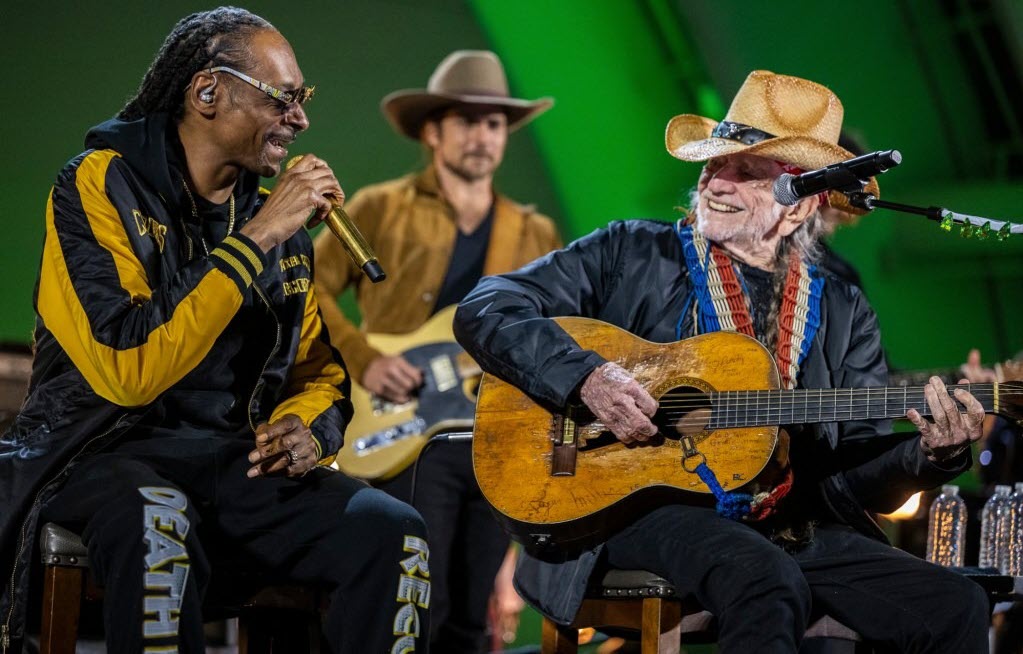
Few artists have left as deep a mark on American music as Willie Nelson. With his unmistakable voice, braided hair, and trusty guitar Trigger, Nelson has become a living legend—an outlaw poet whose songs have shaped the heart and soul of country music for over six decades. His music transcends genre, blending country, folk, blues, and jazz into a sound that’s uniquely his own. Whether he’s crooning a tender ballad or belting out a road anthem, Willie brings raw honesty and emotional depth to every note he sings.
In this list, we’re counting down the Top 10 Most Popular Willie Nelson Songs of All Time—the timeless tracks that defined his career and touched millions of fans around the world. These aren’t just chart-toppers; they’re cultural touchstones, each with a story, a soul, and a place in music history. From tear-soaked love songs to rebellious outlaw anthems, these classics showcase the full spectrum of Willie’s genius as a songwriter, interpreter, and performer.
So whether you’re a lifelong fan or just discovering the Red Headed Stranger for the first time, get ready to dive into the songs that made Willie Nelson a national treasure—and why they still matter today.
1. On the Road Again (1980)
When Willie Nelson penned “On the Road Again” in 1980 for the film Honeysuckle Rose, he likely had no idea it would become a rallying cry for generations of musicians and wanderers alike. The song, written on an airplane barf bag, sprang from a simple request: the producers needed a tune about life on tour. What emerged was an energetic, foot-tapping anthem that celebrated the freedom and joy of constant motion. With its bouncy rhythm and unmistakable guitar riff, “On the Road Again” encapsulates the spirit of the traveling artist like no other. It topped the country charts, won a Grammy for Best Country Song, and has remained synonymous with Willie’s legacy. More than just a hit, it’s a lifestyle statement, a piece of Americana that captures the allure of the open road and the bond between performers and their fans. Decades later, its infectious optimism still resonates, reminding us that the journey often matters more than the destination.
2. Blue Eyes Crying in the Rain (1975)
“Blue Eyes Crying in the Rain” marked a turning point in Willie Nelson’s career. Released in 1975 as part of his concept album Red Headed Stranger, the song showcased a stripped-down, emotional style that contrasted sharply with the polished Nashville sound of the time. Originally written by Fred Rose in 1945, Willie’s heartfelt interpretation transformed it into his first No. 1 solo hit on the country charts. His haunting vocals and sparse guitar arrangement gave the song a raw intimacy that struck a chord with listeners. More than a standard heartbreak tune, it felt like a confession—a glimpse into the soul of a man weathered by love and loss. The song’s success helped usher in the outlaw country movement, affirming Willie’s place as a true innovator. Its quiet power and emotional depth continue to resonate, reminding us that sometimes, less truly is more.
3. Always on My Mind (1982)
Few country ballads have captured regret and longing as poignantly as Willie Nelson’s 1982 rendition of “Always on My Mind.” Though the song had been recorded by others since its original 1972 release, it was Willie’s version that struck gold—both critically and commercially. His tender, trembling vocals lent the lyrics a sincerity that made it feel as if he were speaking directly to each listener. The orchestral arrangement complemented his delivery, adding emotional weight without overpowering the sentiment. The track soared to No. 1 on the country charts and earned Willie three Grammy Awards, including Song of the Year. What made this version so enduring was its vulnerability—his ability to express remorse without melodrama. “Always on My Mind” transcended genre, becoming a crossover hit that solidified Nelson’s reputation as one of music’s most honest interpreters. Even today, it remains a definitive expression of love, loss, and the things we wish we’d said.
4. Whiskey River (1973)
“Whiskey River” is a rowdy, rollicking anthem that Willie Nelson made entirely his own. Although originally written and recorded by Johnny Bush in 1972, Willie’s 1973 version—featured on his Shotgun Willie album—elevated the song into the outlaw country stratosphere. With its driving beat and hypnotic groove, the track became a staple of his live shows, often serving as his opening number. The lyrics tap into themes of heartbreak and self-medication, delivered with a touch of resignation and a whole lot of rhythm. Willie’s phrasing, combined with his signature guitar tone, transformed what could have been a standard honky-tonk number into a soulful declaration of escape. It’s a song that drinks deep from the well of human emotion, while still inviting listeners to raise a glass and sing along. “Whiskey River” captures the paradox at the heart of much of Willie’s music: sorrow wrapped in celebration.
5. Mammas Don’t Let Your Babies Grow Up to Be Cowboys (1978)
When Willie Nelson teamed up with Waylon Jennings in 1978 for “Mammas Don’t Let Your Babies Grow Up to Be Cowboys,” they delivered more than just a hit—they gave voice to a rebellious spirit that defined an era. Originally written by Ed and Patsy Bruce in 1975, the song found new life in the hands of these two outlaw icons. Their rich, contrasting vocals created a dynamic tension, with Willie’s smooth phrasing blending perfectly with Waylon’s gritty baritone. The lyrics wryly warn mothers about the trials of raising boys who choose the cowboy way—lonely roads, barroom fights, and a love for freedom over stability. Yet beneath the caution lies admiration, even envy. The song hit No. 1 on the country charts and won a Grammy for Best Country Performance by a Duo or Group. It remains a cornerstone of outlaw country, celebrating individuality while acknowledging its cost.
6. Georgia on My Mind (1978)
Willie Nelson’s 1978 cover of “Georgia on My Mind” brought a new tenderness to the classic American standard. Originally composed by Hoagy Carmichael and Stuart Gorrell in 1930 and immortalized by Ray Charles in 1960, the song carried emotional weight long before Willie laid it to tape. But his version, featured on the Stardust album, proved that country’s most beloved outlaw could also be a master of jazz and pop standards. Willie’s laid-back delivery, paired with subtle orchestration, turned the tune into a heartfelt ode that felt both personal and timeless. His phrasing gave each word room to breathe, allowing the listener to savor every note. The song became a Top 10 country hit and helped make Stardust one of his best-selling and most critically acclaimed albums. With “Georgia on My Mind,” Willie showed that great songs transcend genre—and so did he.
7. Angel Flying Too Close to the Ground (1981)
“Angel Flying Too Close to the Ground,” released in 1981 on the Honeysuckle Rose soundtrack, is one of Willie Nelson’s most poignant originals. Written solely by Nelson, the song is a gentle ballad about loving someone who is too fragile for this world. With soft guitar lines and a tender vocal delivery, Willie crafts a story of loss that feels deeply personal. The lyrics don’t just mourn—they celebrate the beauty of fleeting love, the kind that burns bright and fades too soon. The song topped the country charts and resonated with fans for its emotional honesty and poetic simplicity. It’s often interpreted as a tribute to those battling inner demons, and Willie’s understated approach only deepens its impact. “Angel Flying Too Close to the Ground” isn’t just a song—it’s an elegy, a lullaby, and a confession, all wrapped into three unforgettable minutes.
8. Funny How Time Slips Away (1961)
Willie Nelson wrote “Funny How Time Slips Away” in the early 1960s, and though it was first recorded by Billy Walker in 1961, Willie’s own renditions have become definitive over the years. The song captures the bittersweet awkwardness of running into an old flame and pretending everything’s fine—when really, time hasn’t healed all wounds. Its slow, swinging rhythm and conversational lyrics make it feel like a private moment overheard. Willie’s performances of the song, especially live, are masterclasses in restraint. He doesn’t oversell the emotion; he lets it simmer. Over the decades, “Funny How Time Slips Away” has been covered by dozens of artists, but Willie’s versions remain the benchmark. It’s a song that embodies his genius as a songwriter: deceptively simple, endlessly relatable, and achingly human.
9. City of New Orleans (1984)
Willie Nelson’s take on “City of New Orleans,” released in 1984, brought a country soul to Steve Goodman’s 1971 folk classic. The song is a nostalgic tribute to the iconic passenger train and the fading glory of American railroads. Willie’s warm, weary voice gave new life to the tale of “the disappearing railroad blues,” turning it into a meditation on change, memory, and resilience. The track soared to No. 1 on the country charts and earned widespread acclaim. His version added a layer of emotional gravity that made the song feel less like a travelogue and more like a eulogy for a vanishing way of life. With its vivid imagery and heartfelt delivery, “City of New Orleans” became more than a cover—it became a journey through America’s heartland, guided by one of its most trusted musical storytellers.
10. Pancho and Lefty (1983)
In 1983, Willie Nelson and Merle Haggard joined forces to record “Pancho and Lefty,” a haunting ballad written by Townes Van Zandt in 1972. Their duet brought the song to mainstream country audiences and turned it into a No. 1 hit. The story of two outlaws—one who dies a martyr, the other who fades into obscurity—is steeped in ambiguity and myth. Willie and Merle’s voices, each weathered and rich with experience, brought the characters to life with chilling authenticity. The sparse instrumentation and slow tempo give the song a cinematic quality, allowing the lyrics to take center stage. It’s a tale of betrayal, survival, and the price of freedom, told with quiet intensity. “Pancho and Lefty” isn’t just a song—it’s a folk legend, passed down through generations, and Willie’s version helped etch it permanently into the American musical canon.

Samuel Moore is a frequent contributor to Singers Room. Since 2005, Singersroom has been the voice of R&B around the world. Connect with us via social media below.









