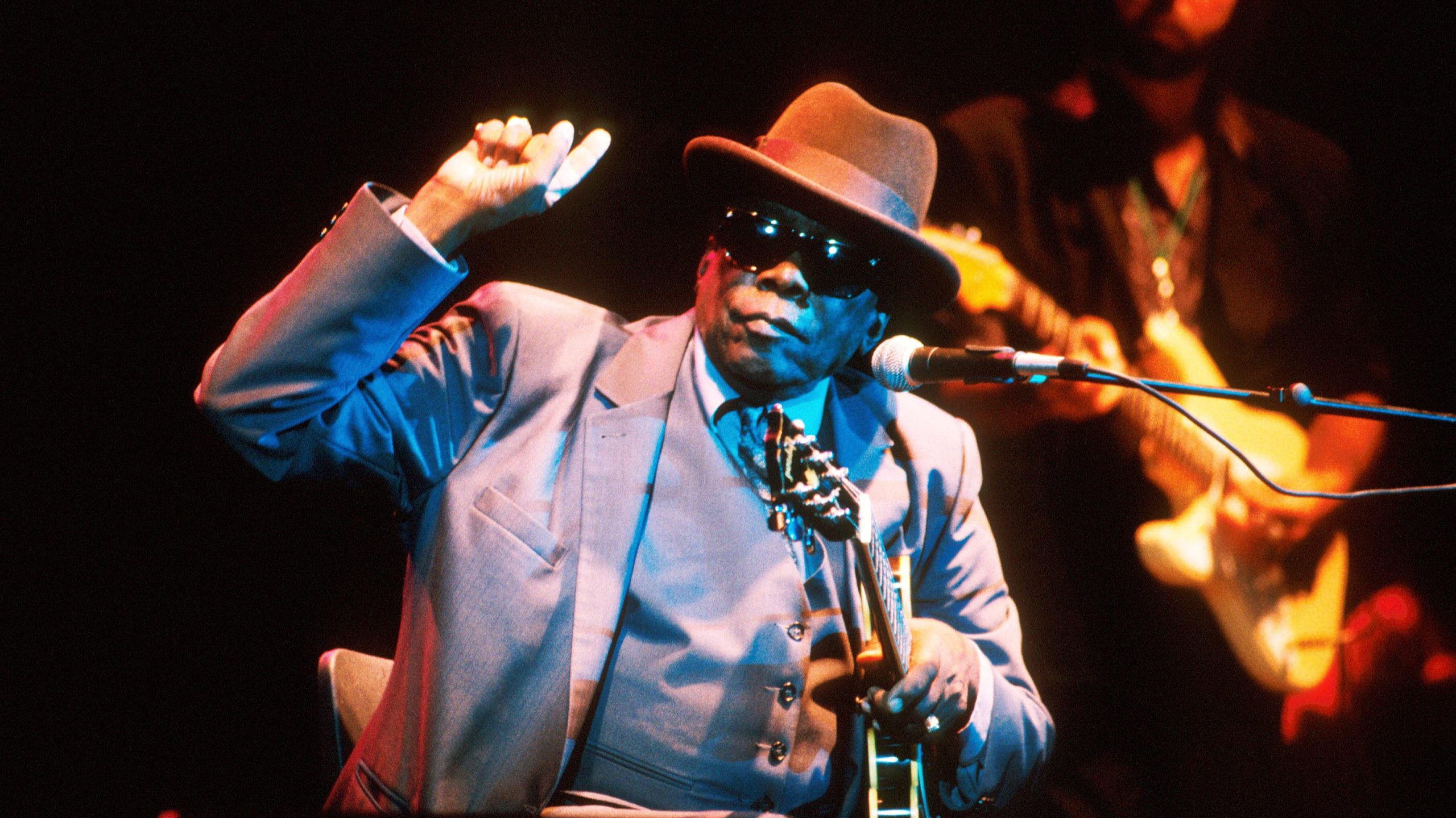
John Lee Hooker’s gravelly voice and hypnotic guitar rhythms didn’t just define the blues—they revolutionized it. Known as “The Boogie Man,” Hooker’s music transcends decades, blending raw emotion with captivating simplicity. From smoky juke joints to international stages, his songs tell stories of heartbreak, resilience, and the gritty realities of life, all delivered with his signature growl and spellbinding grooves.
Hooker’s influence can still be felt today, echoing through rock, soul, and blues. His unique style, marked by that unmistakable foot-stomping beat, has inspired countless musicians, from the Rolling Stones to Bonnie Raitt. But what truly sets him apart is his ability to connect on a deeply human level, whether he’s singing about unrequited love, life’s struggles, or the healing power of music itself.
In this article, we celebrate the top 10 most popular John Lee Hooker songs of all time—tracks that have withstood the test of time and continue to captivate listeners. Whether you’re a lifelong fan or a newcomer to the blues, these iconic songs showcase Hooker’s genius and remind us why he remains one of the most influential figures in music history. Get ready to groove, because Hooker’s magic is eternal!
1. “Boom Boom” (1962)
“Boom Boom” isn’t just one of John Lee Hooker’s biggest hits—it’s a cultural moment captured in blues form. Released in 1962, this track is instantly recognizable from the very first riff. The driving beat and playful, almost teasing lyrics—“Boom boom boom boom, I’m gonna shoot you right down”—perfectly showcase Hooker’s blend of swagger and storytelling. What makes this song special is how it straddles the line between blues and something far more rhythmic and danceable. It’s sultry, sly, and alive with energy, proving that blues didn’t have to be somber to be powerful. Hooker’s deep, smoky vocals carry a sense of confidence and cool that pulls you in. With its catchy hooks and raw intensity, “Boom Boom” became a blueprint for future blues-rock hits and found new life with covers by artists like The Animals. It’s a track that helped push blues into mainstream radio without compromising its authenticity. Whether played in a smoky barroom or through a car stereo decades later, “Boom Boom” keeps its pulse pounding and its charm intact. It’s not just a song—it’s a mood, a strut, a wink, and a warning all rolled into one.
2. “Boogie Chillen’” (1948)
“Boogie Chillen’” is the song that kicked open the door for John Lee Hooker and let the world know the blues had a bold new voice. Released in 1948, this track wasn’t flashy—it was raw, stripped-down, and magnetic. Just Hooker, his electric guitar, and a beat you couldn’t ignore. It was simple in structure, relying on a hypnotic one-chord boogie rhythm, but that’s what made it revolutionary. It wasn’t just music—it was atmosphere. The lyrics reflect a young man’s hunger for freedom, joy, and a night out in the juke joints where life was loud and unfiltered. Hooker’s vocal delivery, part talking and part chanting, felt like a personal confession shared over the crackle of an old radio. “Boogie Chillen’” climbed to the top of the R&B charts and influenced generations of blues and rock musicians who followed. It didn’t just launch Hooker’s career—it shaped the direction of electric blues. There’s something timeless about its groove; even today, it feels like a portal to the soul of postwar America. You can almost hear the stomp of feet on wooden floors and the laughter of a crowd lost in the rhythm. This is blues with fire in its belly.
3. “Crawlin’ King Snake” (1949)
“Crawlin’ King Snake” is the blues at its most raw and primal. Released in 1949, this track taps into something ancient and instinctual—a seductive swagger that slinks along with every beat. John Lee Hooker takes on the persona of the “king snake,” a symbol of power, confidence, and dominance, and his delivery is pure blues poetry. His voice is low, gruff, and commanding, while the minimal guitar work slithers behind him like a shadow. There’s no flashy instrumentation here—just Hooker’s rhythm, voice, and intensity. It’s a song built on tension and mood, and you can feel it in your bones. Lyrically, it’s steeped in metaphor and innuendo, but never feels gimmicky. The track has been covered by countless blues and rock icons—The Doors, Eric Clapton, and more—but none match the original’s raw edge. What Hooker captured here wasn’t just music—it was a feeling, a vibe that couldn’t be manufactured. “Crawlin’ King Snake” reminds us that blues isn’t always loud or fast—it’s about presence, attitude, and letting the silence say just as much as the sound. This is John Lee Hooker at his most mesmerizing, delivering a song that’s as hypnotic as it is unforgettable.
4. “One Bourbon, One Scotch, One Beer” (1966)
“One Bourbon, One Scotch, One Beer” is blues storytelling at its finest—a track that turns everyday hardship into unforgettable art. Released in 1966, this song is less about hooks and more about a mood, a rhythm, and a man just trying to get by. John Lee Hooker lays out a scene: he’s broke, kicked out of his home, and all he wants is a little relief in the form of his three favorite drinks. It’s funny, it’s sad, and it’s totally relatable. Hooker’s delivery is laid-back and conversational, like he’s telling the story directly to you from the next barstool over. There’s a quiet brilliance in the way he stretches out his words and phrases—sometimes it feels like time slows down with him. The groove is steady and repetitive, mimicking the monotony of a tough life, yet it keeps pulling you in. While George Thorogood would famously rework this song later, Hooker’s version remains the definitive take—gritty, authentic, and soaked in soul. This isn’t just a blues song; it’s a blues monologue, full of grit and gallows humor. It reminds you that sometimes all a man needs is to vent, a groove to fall into, and a stiff drink to ease the pain.
5. “I’m in the Mood” (1951)
“I’m in the Mood,” released in 1951, is blues seduction at its smoothest. From the first few notes, you can feel the slow burn—like someone leaning close to whisper in your ear. This track captures a very specific moment: late night, low lights, and the quiet tension between desire and hesitation. Hooker’s deep, drawling vocals are front and center, exuding an understated confidence. He doesn’t need to shout or strut—he just lets the groove do the talking. The simplicity of the track is its strength: the gently pulsing rhythm, the sparse guitar work, and those languid vocals create an atmosphere that’s intimate and hypnotic. What makes “I’m in the Mood” stand out is how it blurs the line between emotional vulnerability and sensual boldness. It topped the R&B charts, becoming one of Hooker’s biggest hits, and it still resonates because the mood it captures is timeless. Whether you’re in love, falling out of it, or just missing someone late at night, this song wraps around you like a warm, slow-moving river. It’s not flashy, but it’s unforgettable—proof that sometimes less really is more when it comes to blues.
6. “Hobo Blues” (1949)
“Hobo Blues” is one of John Lee Hooker’s most personal and emotionally resonant songs. Released in 1949, it paints a vivid picture of life on the road, capturing the loneliness, freedom, and hardship of a wandering soul. Hooker’s own background—growing up in the Mississippi Delta and eventually heading north in search of work and a better life—echoes through every line. The song’s structure is simple: a hypnotic guitar loop and Hooker’s heartfelt, conversational vocals. But within that simplicity lies a world of emotion. You can hear the weariness in his voice, the sense of longing as he sings about moving from town to town, always searching, never quite finding peace. It’s a song about being rootless, about the cost of freedom, and about what it means to be disconnected from home. There’s a melancholy beauty in the rhythm, which mimics the steady clatter of train wheels and the shuffle of worn-out boots on a dusty road. “Hobo Blues” is more than just a song—it’s a slice of real life. It reminds listeners that behind every traveling man, there’s a deeper story, and Hooker tells it in a way that makes you feel like you’re riding that same rail line right beside him.
7. “Dimples” (1956)
Released in 1956, “Dimples” shows a lighter, flirtier side of John Lee Hooker, and it’s flat-out irresistible. With its catchy rhythm and upbeat tempo, the track leans more into the playful energy of early rock and roll while staying rooted in the blues. It’s a song about infatuation—Hooker is smitten by a woman’s charm, and he lets us know it with lines that ooze admiration and desire. “Dimples in your jaw,” he repeats, almost like a mantra, making it clear he’s hooked. The groove is tight and infectious, driven by a repetitive riff that makes you want to move, nod, or just hit replay. Hooker’s vocal delivery is cool and understated, but there’s a spark of boyish excitement beneath it all. It’s that balance—laid-back but locked in—that makes “Dimples” so enduring. This wasn’t the deep, brooding blues Hooker was often known for—it was fun, fresh, and radio-ready. It became one of his most recognizable songs and helped introduce him to a broader audience, especially in the UK where bands like Them and The Animals would later cover it. “Dimples” proves that even the blues can have a little fun now and then.
8. “It Serves You Right to Suffer” (1965)
There’s something almost cinematic about “It Serves You Right to Suffer,” released in 1965. From the very first note, it’s clear this isn’t just another blues song—it’s a slow, brooding, emotional gut punch. Hooker strips everything down to the essentials: sparse guitar, subtle bass and drums, and that voice, rich with experience and pain. The title says it all. This is a song about betrayal, karma, and the consequences of hurting someone who genuinely cared. Hooker doesn’t yell or cry—he doesn’t need to. His tone is calm, but every word cuts deep. You can feel the weight of disappointment and the bitter sense of justice in his delivery. The instrumentation creates space, letting the story breathe, and giving Hooker room to emphasize every pause and sigh. “It Serves You Right to Suffer” is the blues in its purest form: emotionally raw, slow-burning, and full of truth. It’s not just about heartbreak—it’s about recognition, about someone finally seeing things clearly after the damage is done. The track was part of a crossover project with Impulse! Records, typically a jazz label, and the result was something truly timeless. It’s blues as art, and Hooker at his most devastatingly honest.
9. “Tupelo” (1960)
“Tupelo,” released in 1960, is one of John Lee Hooker’s most haunting and evocative tracks. Inspired by the devastating Tupelo, Mississippi flood of 1936, the song blends history, memory, and blues into a chilling sonic landscape. This isn’t a song for the dance floor—it’s a story-song, almost like a blues documentary. Hooker’s voice is heavy and deliberate, setting the tone for what’s to come: a slow, steady narration of disaster, loss, and survival. The guitar mimics the persistent, rising waters, looping endlessly in a pattern that builds quiet tension. There’s a ghostly quality to the performance—like Hooker is channeling the spirits of those affected by the tragedy. As he describes the water rising and the town drowning, you can almost see it, smell the wet earth, and feel the fear. “Tupelo” isn’t just about one event—it’s about the vulnerability of human life and the power of nature. It’s blues as oral history, capturing a moment that could’ve been forgotten but instead lives on through music. Hooker doesn’t need a full band or big production—just his voice and guitar, and suddenly you’re standing knee-deep in the Mississippi mud, listening to the rain pour down.
10. “Shake It Baby” (1963)
“Shake It Baby” is John Lee Hooker at his most upbeat and electrifying. Released in 1963, this track brings together blues and dance music in a way that makes it almost impossible to sit still. From the opening riff, it’s clear Hooker wants you on your feet—the guitar is punchy, the beat is infectious, and his voice is filled with commanding energy. Lyrically, the song is simple and direct—he’s talking to a woman and telling her exactly what he wants: shake it, move it, feel the rhythm. There’s joy and flirtation in every word, and the repetition gives it a chant-like quality that builds momentum. This is Hooker leaning into the crossover appeal of blues, flirting with early rock ‘n’ roll and R&B without ever losing his distinctive voice. The track became a crowd favorite because it didn’t just sound good—it felt good. It’s proof that blues doesn’t have to be slow and sad to be real. “Shake It Baby” is pure kinetic energy bottled into a song, showing that Hooker could work a groove just as well as he could deliver soul-shaking sorrow. It’s fun, it’s alive, and it’s one of his most danceable anthems.

Edward Tomlin is a frequent contributor to Singers Room. Since 2005, Singersroom has been the voice of R&B around the world. Connect with us via social media below.









