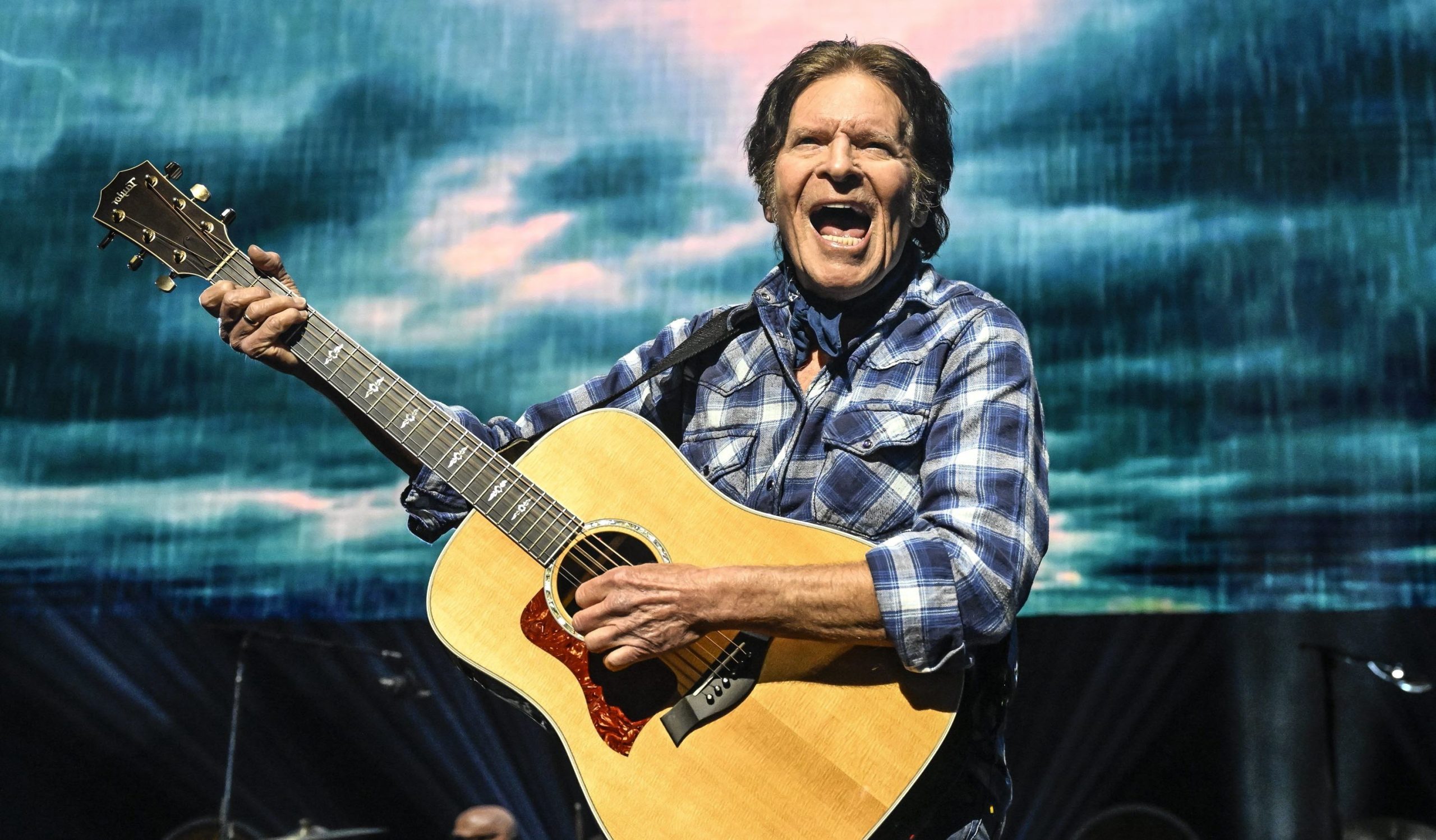
Few voices in rock history are as instantly recognizable—or as enduring—as John Fogerty’s. As the creative force behind Creedence Clearwater Revival and a powerhouse solo artist in his own right, Fogerty has carved out a legendary career spanning over five decades. His music blends swamp rock, blues, country, and Southern storytelling into a sound that’s uniquely American and unmistakably his. From protest anthems that lit up the airwaves in the late ’60s to stadium-filling solo hits that still echo today, Fogerty’s songs have become part of the nation’s musical DNA.
Whether you first heard him belting out “Fortunate Son” in a war movie or clapping along to “Centerfield” at a baseball game, chances are John Fogerty has soundtracked a part of your life. His lyrics cut straight to the heart—honest, raw, and often laced with wit or wisdom. And those guitar riffs? Unforgettable.
In this article, we’re diving deep into the Top 10 Most Popular John Fogerty Songs of All Time—the classics that defined generations, moved millions, and helped shape rock as we know it. So crank up the volume, let the vinyl spin (or queue up your playlist), and get ready to rediscover the songs that made Fogerty a true legend.
1. “Proud Mary” – 1969
Few songs have had the cultural staying power of “Proud Mary,” released in January 1969 as the breakout single from Creedence Clearwater Revival’s Bayou Country. Penned by John Fogerty, the track tells the story of someone who leaves a life of grinding labor behind to find freedom on the Mississippi River. With its rolling rhythm and swampy groove, the song captured a distinctly American spirit of freedom and reinvention. Fogerty’s crisp guitar riffs and gritty vocals made it instantly memorable, while the phrase “rollin’ on the river” became iconic. The song’s success catapulted CCR to stardom and inspired countless covers, most famously by Ike & Tina Turner in 1971. Their fiery rendition brought new life to Fogerty’s original, but it’s the CCR version that remains a timeless blueprint for roots rock. “Proud Mary” isn’t just a song—it’s a musical symbol of escape, grit, and the open road.
2. “Bad Moon Rising” – 1969
Released in April 1969, “Bad Moon Rising” is a deceptively upbeat track with one of the darkest lyrical undercurrents in rock history. Inspired by a hurricane scene in the 1941 film The Devil and Daniel Webster, John Fogerty crafted a song that juxtaposes a cheerful melody with ominous lyrics about impending doom. Clocking in at under three minutes, the track wastes no time delivering its punch: jangly guitars, a catchy chorus, and lyrics that warn of “trouble on the way.” It quickly climbed the charts, reaching No. 2 on the Billboard Hot 100. Its apocalyptic tone resonated with the turbulent late ’60s, making it an anthem for uncertain times. The contrast between its sound and subject matter gives it a timeless quality—one that feels just as relevant today. It’s a masterclass in irony and one of Fogerty’s most brilliantly crafted songs.
3. “Fortunate Son” – 1969
“Fortunate Son,” released in September 1969 during the height of the Vietnam War, is John Fogerty’s fiercest protest song—and arguably one of the most powerful in rock history. With a furious guitar riff and a defiant vocal delivery, Fogerty rails against the injustice of privilege, where the wealthy and well-connected avoid the draft while working-class kids are sent to fight. The song doesn’t name names, but its target is clear: the hypocrisy of those in power. Clocking in at a fiery two minutes and twenty seconds, “Fortunate Son” distills its message with razor-sharp clarity. Though it never hit No. 1, its impact was seismic, becoming a symbol of anti-establishment sentiment. Over the years, it’s been used in countless films, documentaries, and protests. The raw energy Fogerty channels here is unmatched, making this not just a CCR classic, but a defining track of an era.
4. “Have You Ever Seen the Rain?” – 1971
Haunting and heartfelt, “Have You Ever Seen the Rain?” was released in January 1971 as part of CCR’s Pendulum album. It’s one of Fogerty’s most introspective songs, written at a time when the band was unraveling despite their immense success. The lyrics reflect that paradox—the idea of rain falling on a sunny day, a metaphor for sadness amidst external joy. Fogerty’s vocals carry a quiet ache, and the arrangement is beautifully restrained, letting the words shine. Unlike his more aggressive rock anthems, this track leans into folk and country influences, showcasing his versatility as a songwriter. The emotional weight behind the lyrics has led to widespread interpretations—from musings on the Vietnam War to personal loss. Whatever the meaning, the song’s universal appeal has kept it relevant for over five decades. It’s a poignant reminder that even the brightest skies can hide storms.
5. “Green River” – 1969
With “Green River,” released in August 1969, Fogerty transported listeners to a nostalgic vision of American childhood, inspired by his summers spent along Putah Creek in California. The song’s swampy rhythm and playful imagery evoke a simpler time filled with barefoot adventures, rope swings, and lazy days by the water. The title track from CCR’s third studio album, “Green River” is a concise, electrifying blend of rockabilly twang and southern blues. Fogerty’s voice is both gritty and melodic, perfectly complementing the song’s rustic charm. The distinctive guitar lick hooks you in from the first note and never lets go. While the lyrics are rooted in personal memory, they resonate universally as a longing for carefree youth. “Green River” isn’t just a song—it’s a place, a feeling, a memory that Fogerty invites us to share. It’s Americana at its finest, with a groove that still feels fresh.
6. “Centerfield” – 1985
After nearly a decade away from the spotlight, Fogerty returned in full force with “Centerfield,” the title track of his 1985 comeback album. This song is pure joy—a love letter to baseball and the American spirit. With its iconic opening handclaps and the line “Put me in, Coach, I’m ready to play,” Fogerty created an anthem that transcends sports. Written during a time of reflection, the song taps into childhood dreams and the universal desire to be part of something bigger. Musically, it’s a clean, melodic rocker with driving rhythm and a singalong chorus. The track became a staple at ballparks across the country, eventually earning a place in the Baseball Hall of Fame. “Centerfield” proved that Fogerty hadn’t lost his touch, and that his ability to write songs that connect to the heart of America was as strong as ever. It’s not just a sports song—it’s a celebration of hope and passion.
7. “Down on the Corner” – 1969
Released in October 1969 as part of the Willy and the Poor Boys album, “Down on the Corner” is a joyous street jam that imagines a fictional jug band playing music for the neighborhood. Fogerty’s storytelling is in full swing here, painting a vivid scene with quirky characters and infectious rhythm. The song’s upbeat tempo, handclaps, and clean guitar lines make it instantly danceable. It’s a celebration of music as a unifying force—how simple tunes can bring people together, even on a street corner. The fictional band, “Willy and the Poor Boys,” would become a recurring concept in CCR’s world, giving the song a whimsical edge. Despite its lighthearted tone, it’s a masterful piece of songwriting, showcasing Fogerty’s knack for melody and mood. “Down on the Corner” is proof that sometimes the best music is made not in studios, but on sidewalks and soul.
8. “Run Through the Jungle” – 1970
Released in April 1970, “Run Through the Jungle” is one of Fogerty’s most intense and atmospheric works. Contrary to popular belief, the song isn’t directly about Vietnam, despite its eerie jungle imagery. Instead, Fogerty later revealed it was a commentary on America’s obsession with guns. That said, the song’s haunting harmonica, menacing rhythm, and dense sonic landscape made it a powerful backdrop for the war-torn visuals of the era. The track captures a sense of paranoia and danger that was palpable in 1970s America. The production is thick and echoey, almost claustrophobic, creating a cinematic feel that’s rare in CCR’s catalog. Fogerty’s vocals are urgent, and the repetitive guitar riff drives the tension forward relentlessly. “Run Through the Jungle” shows a darker, more experimental side of Fogerty’s songwriting, and it remains one of his most compelling tracks, both musically and thematically.
9. “Lookin’ Out My Back Door” – 1970
Released in July 1970 on the Cosmo’s Factory album, “Lookin’ Out My Back Door” is a whimsical, country-tinged tune that shows Fogerty’s lighter side. Inspired in part by the imaginative world of Dr. Seuss, the lyrics are filled with surreal imagery—flying spoonmen, elephants playing in bands, and tambourines everywhere. But beneath the whimsy lies a song about taking a break from the chaos of life and enjoying simple pleasures. Fogerty wrote it for his young son, and the warmth shines through in every note. The song’s cheerful rhythm and upbeat guitar picking make it an instant mood lifter. It was a commercial success, reaching No. 2 on the Billboard charts. Unlike the politically charged songs of the time, “Lookin’ Out My Back Door” offered a breath of fresh air—a joyful escape rooted in family, imagination, and the beauty of a quiet moment.
10. “The Old Man Down the Road” – 1984
Marking Fogerty’s triumphant solo return, “The Old Man Down the Road” was released in December 1984 as the lead single from Centerfield. With its swampy blues riff and ominous tone, the song felt like a spiritual successor to CCR’s darker classics. Fogerty’s voice is gritty and fierce as he spins a tale of a mysterious figure who “makes the river call your name.” The track’s hypnotic guitar line became instantly iconic, though it would later spark a bizarre lawsuit where Fogerty was accused of plagiarizing himself by his former label. He won the case, cementing the song’s status as a declaration of artistic independence. “The Old Man Down the Road” reached No. 10 on the Billboard charts and signaled that Fogerty’s creative fire was far from extinguished. It’s a swamp rock masterpiece that proved he could still conjure magic from the bayou.

Samuel Moore is a frequent contributor to Singers Room. Since 2005, Singersroom has been the voice of R&B around the world. Connect with us via social media below.









