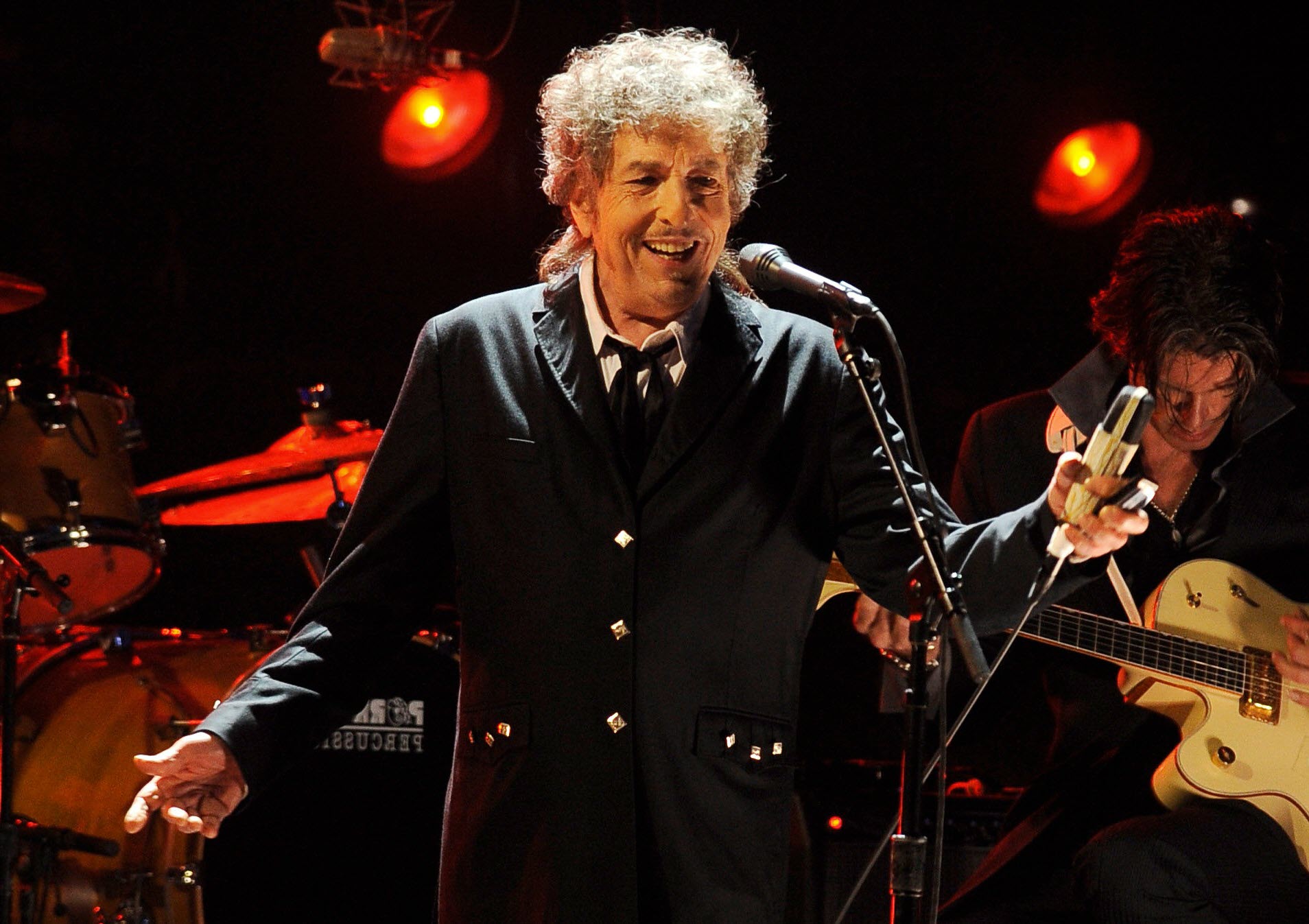
Few artists have reshaped the landscape of music and culture the way Bob Dylan has. With a career spanning over six decades, Dylan isn’t just a songwriter—he’s a force of nature, a poet laureate of rock and folk whose lyrics have echoed through protests, revolutions, heartbreaks, and personal awakenings. From acoustic ballads that challenged the status quo to electric anthems that shattered conventions, his songs have defined generations and inspired countless musicians across every genre. But among the hundreds of songs in his vast and legendary catalog, a select few stand out—not just for their popularity, but for their lasting impact on music, society, and the art of storytelling itself. Whether you’re a lifelong fan or just beginning your journey into Dylan’s world, this list brings together the Top 10 Most Popular Bob Dylan Songs of All Time—the tracks that shaped his legacy and continue to resonate with audiences today. Packed with lyrical genius, raw emotion, and unforgettable melodies, these songs aren’t just hits—they’re cultural milestones. So grab your harmonica, cue up the vinyl, and dive into the music that made Bob Dylan a living legend. These are the songs that changed everything.
1. Like a Rolling Stone (1965)
Released in July 1965, “Like a Rolling Stone” ripped through the boundaries of what a pop single could be. At over six minutes long, it stood as a defiant middle finger to the three-minute radio norm, and yet it became a massive hit. The song’s iconic opening snare crack is instantly recognizable, signaling a new era in rock history. Dylan’s biting lyrics—“How does it feel?”—cut through social pretensions with a sneer, turning a tale of privilege lost into a universal anthem of disillusionment. Marrying poetic storytelling with a rough-edged rock arrangement, Dylan blurred the lines between folk and electric music. This song didn’t just cement his status as a trailblazer—it transformed popular music itself, inspiring generations of artists to write with raw honesty and ambition.
2. Blowin’ in the Wind (1963)
First released on The Freewheelin’ Bob Dylan in May 1963, “Blowin’ in the Wind” is the quintessential protest song of the 20th century. With a melody borrowed from an old spiritual and lyrics that pose timeless moral questions, Dylan distilled the spirit of the civil rights era into three simple verses. “How many roads must a man walk down?” became a rallying cry, not just for activists but for anyone searching for justice or truth. The beauty of the song lies in its ambiguity—the answers, after all, are “blowin’ in the wind.” It’s deceptively simple, yet deeply profound, and its enduring resonance speaks to Dylan’s genius as a songwriter who could capture the world’s complexities in plainspoken verse.
3. The Times They Are A-Changin’ (1964)
Released in January 1964, this anthem of generational upheaval captured the tremors of a society on the brink of transformation. “The Times They Are A-Changin’” is Dylan in full prophet mode—firm, insistent, and unflinching. With biblical cadence and folk roots, the song calls out to senators, critics, and parents alike, warning them to get out of the way if they can’t understand the shifting tides. It was a song tailor-made for the 1960s, but its power hasn’t dimmed with age. The structure is simple, the message unforgettable: change is inevitable, and resistance is futile. Dylan’s voice—nasal, raw, and urgent—drives the message home with a conviction that made this more than a song; it was a statement of purpose.
4. Tangled Up in Blue (1975)
“Tangled Up in Blue” opened Dylan’s 1975 masterwork Blood on the Tracks with a whirlwind of shifting perspectives and emotional complexity. Released in January of that year, the song marked a return to deeply personal songwriting. It plays like a cinematic montage—jumping through time, place, and relationships—yet always tethered to a feeling of loss and longing. Dylan’s narrative technique is astonishing here; he slips between first and third person, past and present, without missing a beat. The acoustic backdrop is warm and intimate, letting the fragmented love story take center stage. It’s a song about memory and regret, about love’s persistence and its inevitable unraveling. Few songs have captured the emotional chaos of human relationships with such poetic clarity.
5. Mr. Tambourine Man (1965)
Released in March 1965 on Bringing It All Back Home, “Mr. Tambourine Man” is a surreal odyssey that marked a turning point in Dylan’s evolution from folk troubadour to visionary poet. The song is a kaleidoscope of dreamlike imagery, carried by Dylan’s hypnotic delivery and the gentle strumming of his acoustic guitar. While The Byrds famously electrified the song later that year, Dylan’s original remains a mesmerizing invocation of escape and imagination. “Take me on a trip upon your magic swirling ship” is less an invitation than a plea to transcend the mundane. In this track, Dylan abandons protest for poetry, pioneering the psychedelic lyricism that would dominate the latter half of the decade.
6. All Along the Watchtower (1967)
Released in December 1967 on John Wesley Harding, “All Along the Watchtower” is one of Dylan’s most enigmatic compositions. Its sparse, circular narrative—featuring a joker, a thief, and a mysterious watchtower—reads like a fragment of ancient scripture or a lost parable. The tension is palpable, the danger implied. Dylan strips down the arrangement to acoustic guitar, bass, and harmonica, creating a haunting atmosphere. While Jimi Hendrix’s searing 1968 cover brought the song to mainstream prominence, Dylan’s version remains eerily powerful in its restraint. It’s a song that rewards repeated listening, each time revealing a new layer of mystery. With just a few verses, Dylan conjures a world teetering on the edge.
7. A Hard Rain’s A-Gonna Fall (1963)
Appearing on The Freewheelin’ Bob Dylan in May 1963, “A Hard Rain’s A-Gonna Fall” is Dylan at his most apocalyptic and poetic. Written during the Cuban Missile Crisis era, the song brims with foreboding imagery and surreal visions. Structured as a Q&A between a parent and a child, it’s a journey through a world ravaged by injustice, war, and spiritual decay. Lines like “I saw guns and sharp swords in the hands of young children” are chilling in their immediacy. Dylan’s voice is solemn, almost prophetic, as if warning of an inevitable reckoning. Yet beneath the bleakness, there’s a strange beauty—a defiance in bearing witness and speaking truth in a crumbling world.
8. Don’t Think Twice, It’s All Right (1963)
Released in August 1963, “Don’t Think Twice, It’s All Right” is Dylan’s folk breakup song par excellence. It’s an intricate blend of resignation, wit, and emotional honesty. Over a delicate fingerpicked guitar pattern, Dylan dismantles the end of a relationship with a tone that veers between bitter and bemused. “You just kind of wasted my precious time” is a line that stings, even when delivered with a smirk. Far from self-pitying, the song embraces the complexity of moving on—acknowledging pain with a shrug rather than a sob. It’s a testament to Dylan’s gift for turning personal sorrow into universal reflection, wrapped in a melody that lingers long after the last verse fades.
9. Subterranean Homesick Blues (1965)
March 1965 brought the release of “Subterranean Homesick Blues,” a dizzying burst of verbal energy that marked Dylan’s full embrace of rock and roll. With its rapid-fire delivery, this track is often cited as a precursor to rap—though it’s steeped in Beat poetry, blues, and counterculture paranoia. The song barrels forward without a chorus, just one breathless verse after another filled with cryptic slogans: “Don’t follow leaders, watch the parking meters.” Dylan’s electric guitar and punchy rhythm section underscore the urgency. It’s chaotic, rebellious, and razor-sharp—a perfect snapshot of the mid-’60s’ cultural turbulence. And who could forget the iconic cue-card video, one of the earliest examples of a music video as art?
10. Visions of Johanna (1966)
Released in June 1966 on Blonde on Blonde, “Visions of Johanna” is often hailed as Dylan’s lyrical masterpiece. Over a slow, nocturnal groove, the song unfolds like a fever dream—layered with longing, disillusionment, and philosophical musings. The titular Johanna is elusive, perhaps unattainable, while the narrator wanders through a world of hollow encounters and surreal vignettes. Dylan’s imagery is dense yet evocative, filled with lines that beg to be reread and reinterpreted. “Inside the museums, Infinity goes up on trial” is just one of many moments that crackle with poetic electricity. It’s a song that resists clarity, and that’s part of its magic—each listen is a plunge into the unknown.

Samuel Moore is a frequent contributor to Singers Room. Since 2005, Singersroom has been the voice of R&B around the world. Connect with us via social media below.









