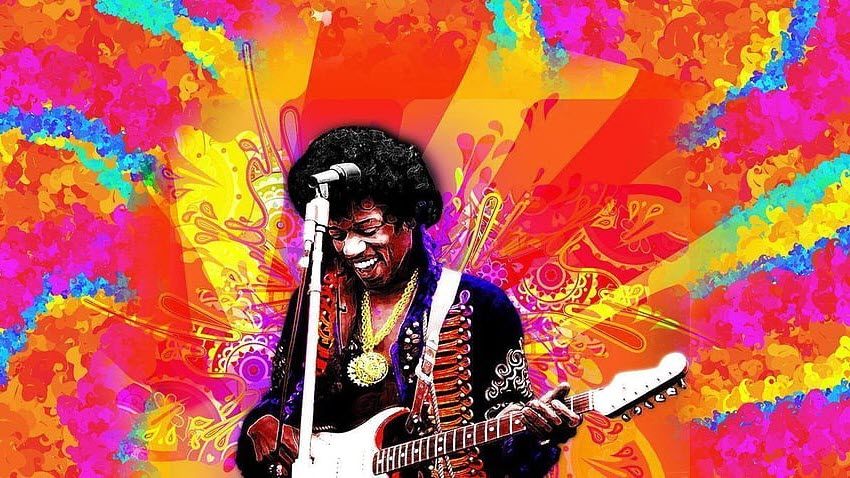
Step into the swirl of sound, color, and consciousness—this is psychedelic rock at its finest. Born from the cultural revolution of the 1960s, psychedelic rock shattered the boundaries of traditional music, inviting listeners on mind-expanding journeys through surreal landscapes of sound. With fuzz-laden guitars, spacey effects, poetic lyrics, and experimental production, these songs weren’t just entertainment—they were experiences. From the cosmic explorations of Pink Floyd to the electrifying mysticism of Jimi Hendrix, the genre became the soundtrack to a generation questioning reality and embracing the unknown.
In this definitive list, we count down the Top 15 Most Popular Best Psychedelic Rock Songs of All Time—timeless tracks that didn’t just reflect the psychedelic era, but helped shape it. These songs transcended musical norms, challenged perceptions, and left a permanent imprint on rock history. Whether you’re a long-time psych-rock lover or a curious newcomer ready to dive in, prepare to be transported. Turn on, tune in, and let the music take you to places you’ve never imagined. This isn’t just a playlist—it’s a portal into the wild, weird, and wonderful world of psychedelic rock. Ready to take the trip? Let’s begin.
1. “Lucy in the Sky with Diamonds” – The Beatles (1967)
Released in May 1967 as part of Sgt. Pepper’s Lonely Hearts Club Band, “Lucy in the Sky with Diamonds” is a kaleidoscopic journey into the surreal, blending whimsical imagery with dreamy instrumentation. Though often associated with LSD due to its acronym, the song’s origin is rooted in a child’s drawing, showing The Beatles’ ability to blur fantasy and reality with poetic finesse. John Lennon’s ethereal vocals over George Martin’s swirling production created an otherworldly soundscape. The track’s shifting time signatures and melodic transitions mirror the psychedelic experience, making it a defining anthem of the Summer of Love. It captures the boundless creativity of the band at their experimental peak, where innovation met imagination in glorious harmony.
2. “White Rabbit” – Jefferson Airplane (1967)
Few songs encapsulate the psychedelic era with the same hypnotic allure as Jefferson Airplane’s “White Rabbit.” Released in June 1967 on Surrealistic Pillow, Grace Slick’s commanding vocals weave a dark fairytale inspired by Alice’s Adventures in Wonderland, using literary references as metaphors for mind expansion. The song builds like a drug-fueled crescendo, its bolero rhythm growing more intense with each line. Jack Casady’s bass and Jorma Kaukonen’s guitar provide a mesmerizing foundation, while Slick’s delivery transforms the nursery-rhyme imagery into a rebellious call to consciousness. At just over two minutes long, it’s a compact but powerful trip into the counterculture’s psychedelic soul.
3. “Purple Haze” – The Jimi Hendrix Experience (1967)
When “Purple Haze” dropped in March 1967, it was unlike anything the world had heard. Jimi Hendrix didn’t just play guitar—he reinvented it. Opening with that iconic tritone riff, the track explodes into a fuzz-drenched swirl of raw power and cosmic wonder. Hendrix’s lyrics, cryptic and trippy, hint at altered states of mind, while his guitar squeals and bends like a surreal conversation with the universe. Backed by Mitch Mitchell and Noel Redding, the Experience created a sonic storm that captured the psychedelic ethos in less than three minutes. It’s a foundational track in psychedelic rock, fusing blues roots with interstellar ambition.
4. “Time” – Pink Floyd (1973)
Though released in 1973, “Time” from Pink Floyd’s The Dark Side of the Moon remains a timeless meditation on life’s fleeting nature. David Gilmour’s soaring guitar solo is one of rock’s most emotionally charged, while Nick Mason’s ticking clock intro and Richard Wright’s rich synth textures immerse listeners in a sonic time machine. Roger Waters’ lyrics are philosophical and sobering, exploring how youth slips by unnoticed until it’s too late. The song captures the existential core of psychedelic rock—using sound and space to explore the abstract. “Time” is not just a track; it’s an awakening wrapped in melody and echo.
5. “Sunshine of Your Love” – Cream (1967)
From the moment that iconic riff kicks in, “Sunshine of Your Love” exudes a smoky, blues-infused psychedelia. Released in December 1967 on Disraeli Gears, this Cream classic brought together the best of British blues-rock with the swirling textures of the psychedelic scene. Eric Clapton’s guitar tone is thick and fuzzy, Jack Bruce’s vocals smolder with passion, and Ginger Baker’s drumming pulses with tribal intensity. The song’s structure is deceptively simple, yet the mood it creates is anything but. It’s a slow burn that simmers with sensual energy, marking a key moment when psychedelia met hard rock in a powerful collision.
6. “Eight Miles High” – The Byrds (1966)
Released in March 1966, “Eight Miles High” is often hailed as one of the first true psychedelic rock songs. With its jazz-influenced guitar work by Roger McGuinn and lyrics that nod to both altitude and altered consciousness, the song broke new ground for American rock. The Byrds took their folk-rock roots and launched them into the stratosphere, creating an atmospheric trip that hinted at what was to come in late-60s music. Influenced by Ravi Shankar and John Coltrane, the track’s modal structure and shimmering 12-string guitar lines made it a bold, exploratory piece that paved the way for psychedelic experimentation.
7. “In-A-Gadda-Da-Vida” – Iron Butterfly (1968)
“In-A-Gadda-Da-Vida,” released in June 1968, is nothing short of an epic psychedelic voyage. Clocking in at over 17 minutes on the original album version, this Iron Butterfly anthem is a heavy, immersive jam filled with fuzzed-out guitar, swirling organ solos, and a legendary drum break by Ron Bushy. The title—originally meant to be “In the Garden of Eden”—was slurred into psychedelic infamy. Doug Ingle’s vocals are cavernous and trance-inducing, while the instrumental sections stretch into a hypnotic groove. This track became a blueprint for psychedelic and early heavy metal bands alike, proving that a song could be both expansive and electrifying.
8. “Tomorrow Never Knows” – The Beatles (1966)
“Tomorrow Never Knows” arrived in August 1966 as the final track on Revolver, signaling a bold new direction for The Beatles—and for rock music itself. Built on a single, droning C chord, the song features tape loops, reverse guitar, and Ringo Starr’s tribal drumming. John Lennon’s vocals, filtered through a Leslie speaker, sound like a cosmic transmission from another dimension. Inspired by Timothy Leary’s interpretation of the Tibetan Book of the Dead, the lyrics invite listeners to surrender to the void. It’s a staggering achievement in studio experimentation that helped birth psychedelic rock as a viable, mind-expanding art form.
9. “Are You Experienced?” – The Jimi Hendrix Experience (1967)
With the title track of his groundbreaking debut album, Jimi Hendrix delivered a psychedelic manifesto. Released in May 1967 in the UK, “Are You Experienced?” is a swirling, backward-looped voyage through altered consciousness. The song eschews traditional structure, relying instead on texture, rhythm, and atmosphere. Mitch Mitchell’s jazz-rooted drumming and Noel Redding’s pulsing bass form the perfect foundation for Hendrix to paint his sonic hallucination. The lyrics invite the listener into a world beyond the ordinary, where perception is fluid and the mind is open. It’s as much a question as a declaration, and it helped redefine what a rock song could be.
10. “White Room” – Cream (1968)
Released in September 1968, “White Room” is a haunting, introspective piece that blends psychedelia with poetic storytelling. Eric Clapton’s soaring wah-wah guitar creates a sense of grandeur, while Jack Bruce’s dramatic vocals and the cryptic lyrics—penned by poet Pete Brown—evoke feelings of isolation and surrealism. The song opens with a melancholic 5/4 intro before shifting into a groove-laden 4/4, echoing the unpredictability of a psychedelic experience. Ginger Baker’s drumming adds a theatrical flair, making the track feel like a tightly wound dream. It’s one of Cream’s most ambitious songs, pushing the boundaries of rock into darker, more textured territory.
11. “See Emily Play” – Pink Floyd (1967)
“See Emily Play,” released in June 1967, captures the whimsical and eerie essence of early Pink Floyd under the creative leadership of Syd Barrett. The song’s nursery-rhyme melody is paired with cosmic sound effects, tape manipulation, and a dreamlike narrative about a mysterious girl named Emily. A hit in the UK, the track introduced mainstream audiences to Floyd’s surreal sonic palette. Barrett’s songwriting here is playful yet tinged with melancholy, reflecting the fragile beauty of the psychedelic mindset. It’s a short but vivid trip through an imaginary world, where reality bends and pop hooks are laced with strange, shimmering layers.
12. “Journey to the Center of the Mind” – The Amboy Dukes (1968)
Before Ted Nugent became a guitar god of another sort, he helped shape psychedelic rock with The Amboy Dukes’ “Journey to the Center of the Mind,” released in June 1968. The track is a high-octane ride through consciousness, driven by Nugent’s searing guitar work and a galloping rhythm section. The lyrics, penned by Steve Farmer, explore inner space rather than outer rebellion, inviting listeners to look inward. Though its creators denied drug references, the song’s title and trippy vibe make it a quintessential acid rock anthem. It’s a polished, electrifying example of late-60s psychedelic rock at its most adventurous.
13. “I Had Too Much to Dream (Last Night)” – The Electric Prunes (1966)
Released in November 1966, this track by The Electric Prunes is a fuzz-laden gem that helped define the psychedelic garage rock sound. “I Had Too Much to Dream (Last Night)” opens with a disorienting tremolo effect that instantly pulls the listener into a dream state. The song’s narrative blurs the line between fantasy and reality, echoing the disjointed logic of dreams and altered perception. With snarling vocals, pounding drums, and eerie guitar effects, it’s a freak-out in under three minutes. The track became a staple of the psychedelic underground and was immortalized on the Nuggets compilation, securing its cult status.
14. “The End” – The Doors (1967)
Released in January 1967 as part of The Doors’ debut album, “The End” is a sprawling, nearly 12-minute odyssey into the subconscious. Jim Morrison’s poetic, often disturbing lyrics unfold over a hypnotic instrumental backdrop, with Robby Krieger’s guitar and Ray Manzarek’s keys creating a dark, cinematic atmosphere. The song shifts from melancholy ballad to primal scream, culminating in a controversial spoken-word section that delves into Oedipal territory. It’s not easy listening, but it’s spellbinding—an unflinching exploration of death, identity, and transformation. “The End” is psychedelic rock at its most dramatic and mythic, a true descent into the abyss.
15. “Crimson and Clover” – Tommy James and the Shondells (1968)
Released in December 1968, “Crimson and Clover” marked a radical shift for Tommy James and the Shondells from bubblegum pop into dreamy psychedelia. The song is a lush, slow-motion swirl of tremolo guitar, sensual harmonies, and minimalist lyrics that evoke mood over meaning. Its title—chosen for its sonic appeal rather than literal sense—mirrors the song’s abstract nature. The track’s production, including its famous stuttering vocal effect, was ahead of its time and helped shape the softer, romantic side of psychedelic rock. It’s a hazy, heartfelt tune that captures the gentle euphoria of late-60s counterculture.

Samuel Moore is a frequent contributor to Singers Room. Since 2005, Singersroom has been the voice of R&B around the world. Connect with us via social media below.









