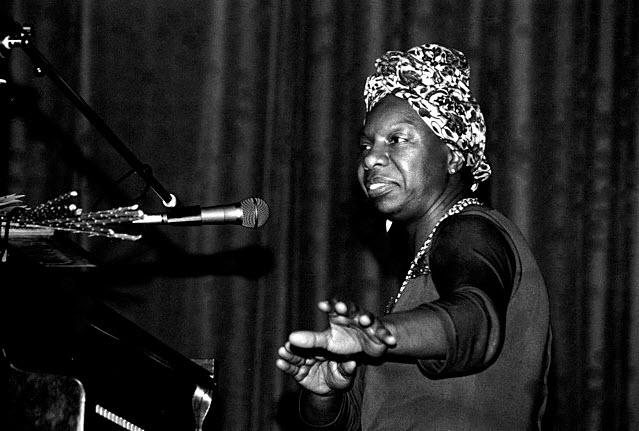
Nina Simone is not just a name—it’s a legacy. Known as the “High Priestess of Soul,” her music transcends genres, blending jazz, blues, gospel, classical, and pop into a style uniquely her own. With a voice that could caress your soul one moment and pierce it the next, Nina Simone’s artistry has left an indelible mark on the world of music and culture. From her haunting ballads to her empowering anthems, every note she sang carried raw emotion, unapologetic honesty, and profound depth.
But Nina Simone was more than a musician—she was a fearless activist and a voice for justice during the Civil Rights Movement, using her songs to challenge oppression and inspire change. Her music is as relevant today as it was decades ago, continuing to resonate with audiences across generations. Whether you’re a lifelong fan or just discovering her genius, this list of her top 10 most popular songs will take you on a journey through her remarkable career. Each track is a masterpiece, a testament to her extraordinary talent and unwavering spirit. So, get ready to rediscover the magic of Nina Simone and the timeless songs that have made her an icon.
1. Feeling Good (1965)
Few songs capture the sheer joy of freedom like “Feeling Good.” When Nina Simone recorded it for her 1965 album I Put a Spell on You, she transformed what was originally a show tune into a powerful anthem of self-liberation. Written by Anthony Newley and Leslie Bricusse for the musical The Roar of the Greasepaint – The Smell of the Crowd, the song’s lyrics paint vivid images of a new dawn, birds flying high, and a world full of endless possibilities.
But what truly makes this version so unforgettable is Simone herself. Her deep, rich voice carries a sense of history, triumph, and resilience, turning the song into something deeply personal. The lush orchestral arrangement swells around her, lifting each word to new heights. Every note drips with conviction, as if she’s not just singing about feeling good—she’s demanding it.
Over the years, “Feeling Good” has been covered countless times, but no version carries the same weight as Simone’s. It has been embraced as a declaration of freedom, from personal struggles to civil rights movements, proving its timeless relevance. When she sings, you believe her. And for those three minutes, you, too, feel invincible.
2. I Put a Spell on You (1965)
Few artists can take a song and make it entirely their own, but Nina Simone did just that with “I Put a Spell on You.” Originally recorded by Screamin’ Jay Hawkins in 1956 as a theatrical, almost comedic blues number, Simone stripped it down and rebuilt it into something hauntingly intense. Her version, featured on her 1965 album of the same name, turns heartache into something almost supernatural—an unstoppable, all-consuming force.
With every line, Simone’s voice trembles between pain and power, as if she’s teetering on the edge of heartbreak and fury. The slow-burning piano, dramatic orchestration, and deep, commanding vocals create an atmosphere thick with longing and desperation. This isn’t just a song about love—it’s about obsession, about refusing to let go.
What makes Simone’s rendition so striking is the sheer emotional control she wields. Even as the music swells and her voice grows more intense, she never fully loses herself to chaos. Instead, she pulls the listener in, making them feel every ounce of longing in her voice. It’s raw, it’s haunting, and it’s impossible to forget.
3. Sinnerman (1965)
If there’s one song that fully captures the hypnotic, spiritual power of Nina Simone, it’s “Sinnerman.” Spanning nearly ten minutes, this relentless masterpiece from her 1965 album Pastel Blues is an intense and urgent plea for redemption, blending gospel, jazz, and folk into something almost otherworldly.
The song’s driving piano riff never lets up, creating a pulse that mirrors the desperation of the lyrics. Simone’s voice moves between urgency and despair, telling the story of a sinner searching for salvation—only to find that no one, not even God, will grant it. The call-and-response sections, frantic handclaps, and echoing vocal refrains build into an overwhelming sonic storm.
Though “Sinnerman” has roots in traditional gospel, Simone’s version turns it into something deeply personal, a reflection of struggle, guilt, and the relentless pursuit of redemption. It has since been sampled, remixed, and covered across genres, but no version comes close to the raw intensity of the original. It’s not just a song—it’s an experience, one that grips you and refuses to let go.
4. My Baby Just Cares for Me (1958)
While Nina Simone is known for her deeply emotional and politically charged music, “My Baby Just Cares for Me” showcases her playful, lighthearted side. Originally recorded in 1958 for her debut album Little Girl Blue, this charming jazz standard became one of her most recognizable songs—though its true rise to fame didn’t come until the 1980s, when it was featured in a perfume commercial.
The song’s breezy, upbeat tempo and joyful piano riffs create an infectious rhythm, perfectly complementing the lyrics about a love that isn’t swayed by money, fame, or material things. Simone’s vocals exude effortless cool, gliding over the melody with a sense of pure delight. Her piano playing, always impeccable, shines with a lively, bouncy energy.
Decades after its release, “My Baby Just Cares for Me” remains one of Simone’s most beloved songs. It’s a reminder that, beyond her powerful protest anthems and heart-wrenching ballads, she was also a master of jazz who could make even the simplest love song feel like pure magic.
5. Don’t Let Me Be Misunderstood (1964)
“Don’t Let Me Be Misunderstood” is one of Nina Simone’s most soul-baring performances, a song that pleads for understanding in the face of judgment. First appearing on her 1964 album Broadway-Blues-Ballads, the track blends blues, jazz, and a touch of classical influence to create an intimate yet powerful confession.
Simone’s voice is both tender and defiant as she delivers the song’s message—she’s not perfect, she makes mistakes, but at her core, she means well. There’s an aching vulnerability in her tone, as if she’s laying her soul bare to the listener. The delicate yet dramatic piano accompaniment mirrors her emotions, shifting between gentle melancholy and soaring desperation.
Though the song later found rock fame through The Animals’ 1965 version, Simone’s original remains unmatched in its depth and sincerity. It’s a song that resonates with anyone who has ever felt misunderstood, reminding us that beneath our flaws, there is always more to our story.
6. I Loves You, Porgy (1958)
Few songs capture the delicate beauty of love and vulnerability quite like “I Loves You, Porgy.” Originally from the 1935 opera Porgy and Bess by George Gershwin, Nina Simone’s 1958 rendition became her first major hit and remains one of her most deeply affecting recordings.
From the moment she begins to sing, Simone draws the listener into an intimate world of quiet longing. Her voice, gentle yet filled with sorrow, paints a picture of someone desperately clinging to love, even as she fears it might slip away. The subtlety of her piano playing mirrors this fragility—each note feels carefully placed, as if she’s hesitant to disturb the moment.
Unlike many other versions of the song, Simone’s interpretation is profoundly personal. She doesn’t just perform it; she inhabits it, making every lyric feel like a whispered confession. There’s a heartbreaking sense of inevitability woven into the melody, a recognition that love, no matter how beautiful, can sometimes be fleeting. It’s a song that lingers long after it ends, leaving behind the quiet ache of something truly special yet impossibly fragile.
7. Mississippi Goddam (1964)
If there’s one song that epitomizes Nina Simone’s fearless activism, it’s “Mississippi Goddam.” Released in 1964, this fiery protest anthem was her immediate response to the racial injustices of the time, particularly the 1963 Birmingham church bombing that killed four Black girls and the murder of civil rights activist Medgar Evers in Mississippi.
Unlike many protest songs that adopt a somber or mournful tone, “Mississippi Goddam” is delivered with biting sarcasm and theatrical energy. It starts off deceptively light, with a jaunty piano melody that feels almost playful—until the lyrics reveal the song’s true weight. Simone’s voice carries a controlled fury as she calls out America’s hypocrisy and demands change.
This was not a song designed to make people comfortable. It was a direct challenge to those who preferred to turn a blind eye to racial violence. Radio stations across the South refused to play it, and Simone faced backlash for her outspokenness. But that didn’t stop her. “Mississippi Goddam” became an anthem for the Civil Rights Movement, proving that music could be a weapon against injustice. Decades later, its message remains just as powerful—and just as necessary.
8. To Be Young, Gifted and Black (1970)
“To Be Young, Gifted and Black” is more than just a song—it’s a celebration, a declaration, and an anthem for generations. Written in honor of playwright Lorraine Hansberry, Simone’s dear friend and the author of A Raisin in the Sun, the song first appeared on her 1970 album Black Gold and quickly became a rallying cry for Black empowerment.
Simone’s voice carries both warmth and urgency as she sings of pride, resilience, and the promise of a brighter future. The melody is uplifting, almost hymn-like, as if meant to be sung in unison by those who need to hear its message most. The lyrics remind young Black people of their worth, encouraging them to stand tall in the face of a world that often tries to diminish them.
This song arrived at a crucial moment in American history, when the Civil Rights Movement was giving way to the Black Power Movement. It became a beacon of hope, embraced by activists and artists alike. Even today, “To Be Young, Gifted and Black” continues to inspire, serving as a reminder of Simone’s legacy as not just a musician, but a voice for justice.
9. Wild Is the Wind (1966)
There’s something otherworldly about “Wild Is the Wind.” Originally written for the 1957 film of the same name, the song was recorded by several artists, but it was Nina Simone’s 1966 version that turned it into a breathtaking masterpiece. Featured on her album Wild Is the Wind, this song is a slow-burning ballad that captures the sheer intensity of love—its beauty, its power, and its inevitable pain.
Simone’s voice moves with aching tenderness, shifting between whispers and soaring cries, as if she’s holding onto something she knows she’ll eventually lose. The sparse piano accompaniment only amplifies the raw emotion, giving the song an almost ghostly quality. It feels less like a performance and more like an intimate confession, as if she’s pouring out emotions too deep to be contained in mere words.
David Bowie later cited Simone’s rendition as a major influence and recorded his own version, but no one has ever matched the pure, aching vulnerability she brought to the song. “Wild Is the Wind” is not just about love—it’s about longing, about surrendering to something bigger than yourself. And in Simone’s hands, it feels almost like a prayer.
10. Ain’t Got No, I Got Life (1968)
A song of defiance, resilience, and self-affirmation, “Ain’t Got No, I Got Life” is one of Nina Simone’s most uplifting anthems. Released in 1968 on her album ’Nuff Said!, the track merges two songs from the musical Hair and turns them into something far more powerful.
The song starts with a list of everything she’s lost or lacks—no home, no shoes, no money, no class. The melody is melancholic, almost resigned. But then the shift happens. The tempo picks up, and suddenly Simone’s voice is bursting with energy as she declares all the things she does have: her arms, her legs, her heart, her soul. It’s an electrifying moment of realization—what she owns isn’t material, but it’s invaluable.
In a time when racial and social struggles were at the forefront, this song became a beacon of empowerment, particularly for the marginalized. It was a reminder that even in hardship, there is still strength, still identity, still life. Simone’s delivery is electric, filled with a fire that makes it impossible not to feel moved. It’s not just a song—it’s a declaration of survival, of joy, and of self-worth.

Edward Tomlin is a frequent contributor to Singers Room. Since 2005, Singersroom has been the voice of R&B around the world. Connect with us via social media below.









