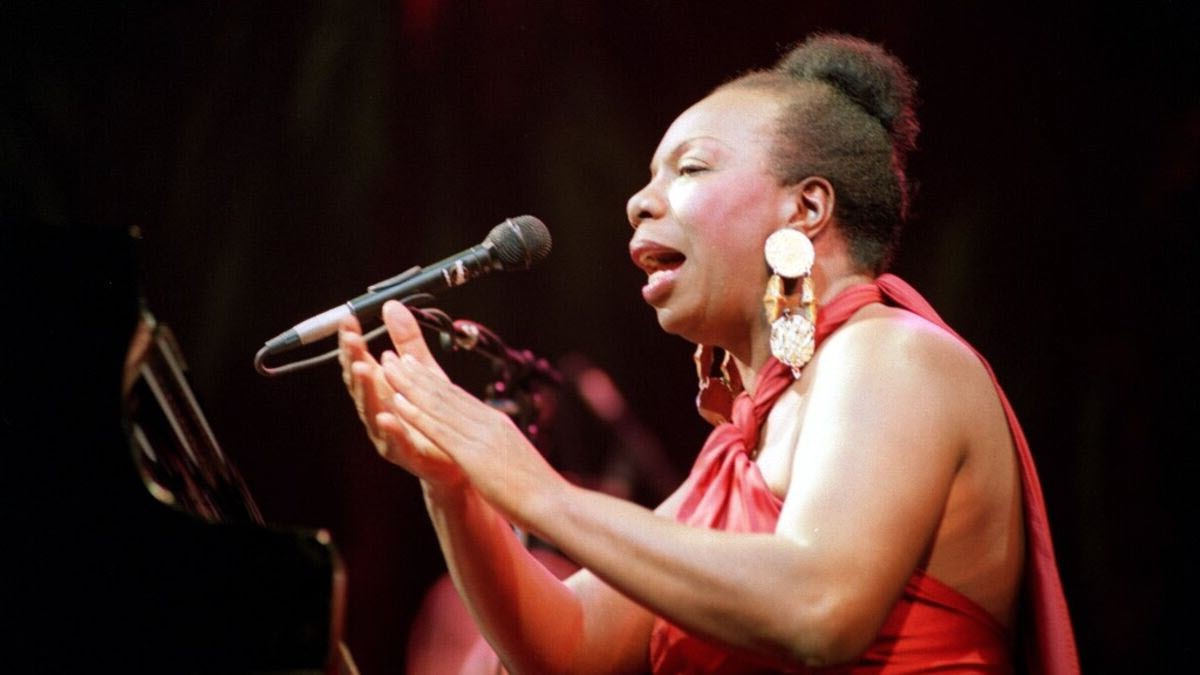
Nina Simone, the High Priestess of Soul, remains one of the most influential and iconic figures in music history. Her voice—haunting, soulful, and unapologetically raw—transcends genres, blending jazz, blues, gospel, and classical styles into a sound that is uniquely hers. With a career spanning over four decades, Nina Simone not only created timeless music but also became a powerful voice for civil rights and social justice, using her art as a weapon against oppression. Each of her songs is a masterclass in storytelling, brimming with emotion, defiance, and a profound connection to the human experience.
In this article, we take a deep dive into Nina Simone’s rich musical legacy to highlight her top 10 most popular songs of all time. From heartfelt ballads that stir the soul to rousing anthems that inspire action, these tracks showcase the genius of an artist who refused to be boxed in. Whether you’re a lifelong fan or new to her music, this list is bound to captivate you and deepen your appreciation for one of the most extraordinary voices of the 20th century. So, let’s celebrate the brilliance of Nina Simone and discover (or rediscover) the songs that continue to shape the soundtracks of our lives.
1. “Feeling Good” (1965)
Originally written for the musical The Roar of the Greasepaint – The Smell of the Crowd, Nina Simone transformed “Feeling Good” into an anthem of empowerment and renewal with her 1965 recording. From the moment the dramatic orchestration swells, Simone’s commanding presence is undeniable. Her deep, velvety vocals wrap around the lyrics like a force of nature, turning the song into more than just music—it becomes a declaration of freedom and personal triumph.
Simone’s version of “Feeling Good” resonates with raw emotion, capturing the euphoria of starting anew. Every note drips with confidence, and her delivery is both sultry and triumphant. The swelling strings and bold brass arrangement enhance the song’s cinematic quality, making it feel like the soundtrack to a personal revolution. Unlike other versions of the song, Simone infuses it with a bluesy, soulful depth that makes it uniquely hers.
Over the years, “Feeling Good” has become an enduring classic, covered by countless artists across genres, but none have matched the power of Simone’s original interpretation. The song remains a symbol of liberation and resilience, standing the test of time as one of the most uplifting and transformative pieces in her legendary catalog.
2. “I Put a Spell on You” (1965)
Nina Simone’s 1965 rendition of “I Put a Spell on You” is a masterclass in reinvention, taking Screamin’ Jay Hawkins’ bluesy original and turning it into a smoldering, jazz-infused powerhouse of obsession and longing. From the very first piano chord, Simone’s version simmers with intensity, drawing the listener into a world of love, desire, and unshakable devotion.
Her vocal performance is spellbinding—alternating between controlled restraint and explosive passion. Unlike Hawkins’ theatrical and wild approach, Simone brings a refined elegance to the song, making it feel deeply personal. Her voice soars and trembles, dripping with emotional complexity as she pleads, commands, and ultimately captivates. The dramatic orchestration, marked by swelling strings and haunting brass, adds to the song’s hypnotic pull.
Simone’s version of “I Put a Spell on You” isn’t just a love song—it’s a declaration of power and possession, wrapped in an intoxicating blend of blues, jazz, and soul. It remains one of her most iconic recordings, proving her ability to take a song and completely redefine its meaning with her unparalleled artistry.
3. “Sinnerman” (1965)
Clocking in at nearly ten minutes, “Sinnerman” is one of Nina Simone’s most electrifying performances, blending gospel fervor, jazz improvisation, and raw storytelling into an unforgettable listening experience. Originally a traditional spiritual song, Simone’s 1965 version, released on Pastel Blues, transforms it into a breathless, urgent plea for redemption.
The song begins with a relentless piano riff, setting the tone for a frantic search for salvation. Simone’s voice is commanding and desperate, embodying the sinner running from divine judgment, seeking refuge in the mountains, the river, and even the Devil himself—only to find no escape. The pounding rhythm section and call-and-response backing vocals amplify the tension, creating an almost hypnotic effect.
As the song builds, the intensity never wavers. Handclaps, frenetic piano runs, and jazz-infused improvisation make it feel like a live spiritual awakening. By the time Simone reaches the climax, her voice erupts in a powerful crescendo, leaving the listener breathless. “Sinnerman” remains one of her most celebrated works, often sampled and covered, but never replicated in its raw emotional impact.
4. “My Baby Just Cares for Me” (1958)
First recorded in 1958 for her debut album Little Girl Blue, “My Baby Just Cares for Me” is a delightful jazz standard that showcases Nina Simone’s effortless charm and virtuosity. With its lighthearted lyrics and playful swing, the song exudes a warmth that makes it instantly endearing. Simone’s distinctive voice carries a sense of joy, while her piano playing adds an extra layer of elegance and sophistication.
The song tells the story of a woman whose partner isn’t swayed by material things—fame, luxury, or movie stars—because his love is focused solely on her. This simple yet heartfelt sentiment is elevated by Simone’s smooth phrasing and the track’s infectious rhythm. The subtle interplay between the bass and drums provides the perfect backdrop for her playful piano flourishes.
Though “My Baby Just Cares for Me” was initially a modest success, it saw a major resurgence in the 1980s when it was featured in a perfume commercial, introducing Simone’s music to a new generation of listeners. Its renewed popularity turned it into one of her most recognizable songs, proving that great music—when performed with authenticity and heart—never fades with time.
5. “Mississippi Goddam” (1964)
Released in 1964, “Mississippi Goddam” is one of Nina Simone’s most powerful and politically charged songs, written in response to the murder of civil rights activist Medgar Evers and the 16th Street Baptist Church bombing that killed four Black girls in Birmingham, Alabama. Unlike traditional protest songs of the era, Simone delivers her message with biting sarcasm, setting her searing lyrics against an upbeat, almost show-tune-like melody.
The song opens with Simone announcing, “This is a show tune, but the show hasn’t been written for it yet,” immediately signaling that this performance will be anything but ordinary. As the tempo drives forward, she delivers each verse with a mix of urgency and defiance, calling out the slow progress of racial justice and the systemic oppression faced by Black Americans. Her voice carries both anger and exhaustion, yet it remains unwavering in its conviction.
Banned in several Southern states due to its bold critique of racism, “Mississippi Goddam” became an anthem of the Civil Rights Movement. It cemented Simone’s reputation as an artist unafraid to use her platform to speak truth to power, and decades later, its message remains just as relevant and hauntingly poignant.
6. “Wild Is the Wind” (1966)
Few songs capture the raw beauty of longing and devotion quite like Nina Simone’s rendition of “Wild Is the Wind”. Originally written for the 1957 film of the same name and famously recorded by Johnny Mathis, Simone transformed the ballad into an achingly intimate masterpiece with her 1966 recording.
From the very first piano notes, the song feels delicate and deeply personal. Simone’s voice glides through the melody with breathtaking vulnerability, making each lyric feel like a whispered confession. “Love me, love me, say you do / Let me fly away with you,” she pleads, her voice carrying a mix of passion and fragility. The sparse arrangement allows every nuance of her performance to shine, with her piano providing an understated yet expressive accompaniment.
Unlike other versions of the song, Simone’s interpretation strips it down to its emotional core. The way she stretches out certain phrases, almost as if savoring the pain of love, turns “Wild Is the Wind” into one of the most hauntingly beautiful performances of her career. It remains a testament to her ability to make any song wholly and unmistakably her own.
7. “I Loves You, Porgy” (1958)
Nina Simone’s “I Loves You, Porgy”, recorded in 1958, is a mesmerizing and deeply emotional interpretation of the classic duet from George Gershwin’s opera Porgy and Bess. This song marked a pivotal moment in Simone’s early career, becoming her first hit and helping to establish her as a major talent in the jazz world.
Simone’s delivery of the song is delicate yet filled with an aching vulnerability. Unlike the grand, theatrical renditions of the past, she strips the song down to its bare essence, letting the emotion shine through in her tender phrasing and masterful piano accompaniment. The story of a woman longing for love but fearing its consequences is brought to life through Simone’s expressive voice, which wavers between hope and despair.
Her classical training is evident in the way she approaches the melody, giving it a graceful, almost meditative quality. Each note is carefully chosen, and the restrained instrumental backing allows the raw sincerity of her vocals to take center stage. “I Loves You, Porgy” remains one of Simone’s most defining recordings, a song that captures her unique ability to convey profound emotion with the simplest of musical elements.
8. “To Be Young, Gifted and Black” (1970)
Released in 1970, “To Be Young, Gifted and Black” is one of Nina Simone’s most uplifting and socially significant songs. Inspired by her close friend Lorraine Hansberry, the author of A Raisin in the Sun, the song was written as an anthem of Black pride, resilience, and empowerment during the height of the Civil Rights Movement. With its soaring melody and deeply affirming lyrics, the song became a powerful declaration of self-worth and a source of inspiration for generations.
Simone’s vocals are filled with both strength and tenderness, making the message of the song even more impactful. “There’s a world waiting for you,” she sings, urging young Black listeners to embrace their identity and potential. The gospel-infused arrangement, complete with uplifting harmonies and a soulful groove, gives the track a celebratory feel, as if it were being sung in a church filled with voices rising in unison.
“To Be Young, Gifted and Black” quickly became an anthem of the Black Power movement, resonating with activists and artists alike. Over the years, it has been covered by various musicians, further solidifying its legacy as a song of hope and empowerment. Today, it remains a timeless tribute to the beauty and strength of Black identity.
9. “Don’t Let Me Be Misunderstood” (1964)
Originally written for Nina Simone in 1964, “Don’t Let Me Be Misunderstood” is a song that captures the complexity of human emotions—vulnerability, frustration, and the desire to be truly seen. While the song has been covered by many artists, including The Animals and Santa Esmeralda, Simone’s original version remains one of the most heartfelt and haunting interpretations.
The track opens with a melancholic piano introduction before Simone’s voice enters with an almost pleading quality. “Baby, you understand me now,” she sings, setting the stage for a deeply introspective piece. Throughout the song, her voice shifts between quiet resignation and impassioned urgency, reflecting the internal struggle of wanting to be accepted for who she truly is.
Unlike later rock or disco adaptations, Simone’s version leans into its jazz and blues roots, with a steady, deliberate rhythm that gives the song an intimate and confessional tone. The orchestral swells in the background add to the emotional weight, making it feel as though she’s pouring her soul into every note. “Don’t Let Me Be Misunderstood” remains a standout in Simone’s catalog, a song that speaks to the universal human longing to be understood and accepted.
10. “Ain’t Got No, I Got Life” (1968)
A song of resilience and self-affirmation, “Ain’t Got No, I Got Life” is one of Nina Simone’s most spirited and empowering performances. Taken from the 1968 musical Hair, Simone’s version combines two separate songs from the production and transforms them into a powerful statement about personal strength and the value of life itself.
The song begins with a list of everything the narrator lacks—home, clothes, money, parents—painting a bleak picture of struggle and deprivation. However, as the song progresses, the mood shifts dramatically. The second half bursts with energy as Simone proclaims all that she does have: “I got my arms, got my hands, got my fingers, got my legs,” she sings, celebrating the simple yet profound aspects of human existence.
Her delivery is full of passion, and the jazz-infused instrumentation drives the song forward with an infectious groove. The contrast between the despair of the first section and the triumphant joy of the second creates an emotional rollercoaster, leaving the listener uplifted and inspired.
“Ain’t Got No, I Got Life” became one of Simone’s most commercially successful songs in Europe and remains a testament to her ability to turn even the simplest lyrics into something deeply meaningful. It is a song about survival, resilience, and finding joy in what truly matters.

Edward Tomlin is a frequent contributor to Singers Room. Since 2005, Singersroom has been the voice of R&B around the world. Connect with us via social media below.









