Drummers are the heartbeat of music, the driving force behind some of the world’s most iconic songs. They’re not just timekeepers; they’re innovators, showmen, and the architects of rhythm. From thunderous solos that leave audiences breathless to subtle grooves that get your feet moving without you even realizing it, the best drummers transcend technique to become legends. But who are the true masters of the drum kit? Who has defined—and redefined—what it means to be a drummer?
In this article, we celebrate the top 15 best drummers of all time, each of whom has left an indelible mark on music history. From the explosive energy of rock to the intricate rhythms of jazz and the infectious beats of funk, these drummers span genres, eras, and styles. They’ve inspired countless musicians, raised the bar for creativity, and proven that the drummer is much more than just “the guy in the back.”
So, whether you’re a die-hard music fan, a budding drummer, or simply curious about the legends who shaped the rhythms of our lives, get ready to dive into a world of incredible talent, passion, and groove. Let’s meet the drumming icons who turned the beat into an art form.
1. John Bonham
John Bonham, affectionately known as “Bonzo,” is widely regarded as one of the greatest drummers in rock history. As the powerhouse behind Led Zeppelin, Bonham’s drumming was a perfect blend of raw power, technical precision, and unrelenting groove. His influence is evident in countless rock drummers who followed, but none have quite captured his unique ability to make a drum kit sound larger than life. Tracks like Moby Dick showcase his jaw-dropping solos, where he could command an audience’s attention with nothing but his sticks and his sense of rhythm. Meanwhile, When the Levee Breaks features one of the most famous drum recordings ever, with a deep, booming sound that has been sampled across genres. Bonham’s secret lay in his impeccable sense of timing, his heavy-handed yet controlled approach, and his ability to groove effortlessly, no matter how hard he hit the skins. Tragically, his life was cut short at just 32, but his drumming remains timeless. From the bombastic energy of Rock and Roll to the thunderous power of Kashmir, Bonham’s drumming not only shaped Led Zeppelin’s sound but also set a gold standard for rock music as a whole.
2. Neil Peart
Neil Peart was more than just a drummer—he was a composer, a poet, and a true innovator in the world of percussion. As the rhythmic force behind Rush, Peart took drumming to new heights, fusing technical mastery with a deep sense of musical storytelling. His playing on tracks like Tom Sawyer and YYZ is nothing short of legendary, with intricate patterns that seem almost impossibly complex yet always remain musical and purposeful. Peart was known for his elaborate drum solos, constantly pushing the boundaries of what rock drumming could be. He was also a scholar of percussion, studying under jazz greats like Freddie Gruber to refine his technique. Beyond his drumming, Peart was Rush’s primary lyricist, writing thought-provoking, often philosophical lyrics that added a profound depth to the band’s music. His ability to combine precision with creativity made him one of the most respected drummers in history. Even after his retirement, his impact on music remained, with generations of drummers citing him as their greatest influence. Peart’s legacy is one of intellect, innovation, and absolute dedication to his craft, making him an immortal figure in the world of rock and progressive music.
3. Keith Moon
Keith Moon was the wild and unpredictable heartbeat of The Who, a drummer whose chaotic energy and unconventional approach made him one of rock’s most unforgettable musicians. Unlike most drummers who provided steady backbeats, Moon treated his drum kit like a lead instrument, filling every available space with rapid-fire rolls, crashing cymbals, and explosive fills. His playing on My Generation captures his untamed spirit, while Won’t Get Fooled Again features his relentless, high-energy drumming that propels the song forward like a runaway train. Moon had an innate ability to create excitement within a song, never content with just keeping time. Instead, he played with reckless abandon, often destroying his drum kits on stage in a theatrical fury. Offstage, he lived just as wildly, earning a reputation for his eccentric and destructive behavior. But beneath the madness was a genius who reinvented rock drumming, inspiring countless musicians with his fearless approach. Though his life was tragically short, Moon’s impact remains immense. His drumming wasn’t about precision—it was about pure emotion, making every Who performance an electrifying experience. To this day, no one has matched his unique ability to make chaos sound so musical.
4. Dave Grohl
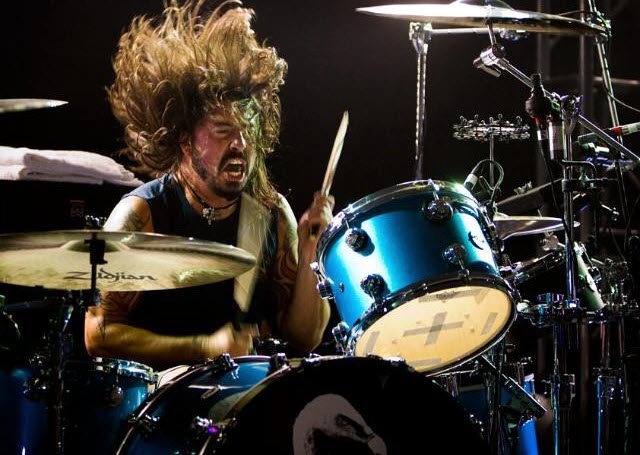
Before becoming the frontman of Foo Fighters, Dave Grohl was the powerhouse drummer who drove Nirvana’s sound with his raw energy and aggressive playing. His drumming on Smells Like Teen Spirit is instantly recognizable—loud, forceful, and undeniably powerful. Unlike many drummers of the grunge era, Grohl played with a punk-rock intensity, bashing his drums with a ferocity that mirrored the raw emotion in Nirvana’s music. His ability to create dynamic, hard-hitting grooves helped define the sound of Nevermind, an album that revolutionized rock music. Even after stepping out from behind the kit, Grohl’s drumming remained influential, making guest appearances with Queens of the Stone Age, Them Crooked Vultures, and many others. He is often praised for his ability to combine technical skill with primal instinct, knowing exactly when to unleash fury and when to pull back. Beyond his drumming, Grohl’s passion for music has made him one of rock’s most beloved figures. Whether behind a drum kit or holding a guitar, his impact on modern rock is undeniable. His influence continues to inspire drummers worldwide, proving that sometimes, the simplest beats played with the right attitude can leave the biggest impact.
5. Ginger Baker
Ginger Baker was a drummer who refused to be confined by genre, blending jazz, rock, and African rhythms into a groundbreaking style that set him apart. As a founding member of Cream, Baker redefined what rock drumming could be, infusing songs like Sunshine of Your Love with intricate tom-heavy grooves and syncopated rhythms. His solo on Toad showcased his technical brilliance, pioneering the idea of the extended rock drum solo. Baker’s approach was deeply influenced by jazz drummers like Max Roach and Elvin Jones, and he often played with the same improvisational spirit. Unlike many rock drummers who focused on sheer power, Baker had a finesse that made his playing unpredictable and engaging. However, his fiery personality made him a difficult bandmate, and his temper was as legendary as his drumming. Despite his confrontational nature, his influence remains undeniable, with drummers across generations admiring his ability to fuse different styles seamlessly. Even in his later years, Baker continued to push boundaries, performing in jazz and world music settings. He was a true original, proving that drumming could be as expressive as any other instrument. His legacy is one of innovation, intensity, and a refusal to follow the rules.
6. Stewart Copeland
Stewart Copeland’s drumming was the heartbeat of The Police, bringing an entirely new sound to rock music with his fusion of punk, reggae, and jazz influences. Unlike most drummers of the late ’70s and early ’80s, Copeland didn’t just keep time—he played with a precision and complexity that elevated every song. Tracks like Roxanne and Message in a Bottle highlight his signature style, with intricate hi-hat work, syncopated rhythms, and a sense of groove that made his playing instantly recognizable. Copeland’s ability to blend aggression with finesse set him apart from his peers. He wasn’t just a drummer; he was a rhythmic innovator, crafting beats that defied convention and helped define The Police’s unique sound. Even after the band disbanded, Copeland continued to push musical boundaries, working on film scores, orchestral compositions, and world music projects. His drumming remains a masterclass in creativity, proving that rhythm can be just as melodic as any other element in a song. Few drummers have managed to blend technicality with musicality as effortlessly as Copeland, making him one of the most influential and respected drummers in rock history.
7. Buddy Rich
Buddy Rich wasn’t just a drummer—he was a phenomenon. Regarded as one of the greatest drummers of all time, his speed, precision, and technical brilliance remain unmatched. From a young age, Rich displayed an almost superhuman ability behind the kit, developing a drumming style that blended jaw-dropping technique with effortless showmanship. Unlike many drummers who relied on sheer power, Rich had an unparalleled sense of control, making even the most complex patterns look easy. His solos, such as the legendary West Side Story Medley, are a masterclass in dynamics, speed, and fluidity. He could play rapid-fire single-stroke rolls with such clarity and force that even modern drummers struggle to replicate them. Beyond his technical abilities, Rich had an electrifying stage presence, often challenging his own band members to musical duels. His fierce perfectionism made him a demanding bandleader, but it also drove him to constantly push the limits of what drumming could achieve. Whether leading his own big band or stealing the spotlight in collaborations with jazz legends, Rich’s impact on drumming is immeasurable. His influence extends far beyond jazz, inspiring drummers across all genres to strive for excellence. To this day, Buddy Rich remains the gold standard for speed, precision, and sheer musicality behind the drums.
8. Lars Ulrich
As the driving force behind Metallica, Lars Ulrich reshaped heavy metal drumming with his intense, machine-like precision and signature double-bass techniques. From the blistering speed of Battery to the relentless build-up of One, Ulrich’s drumming played a crucial role in shaping Metallica’s sound. Unlike many metal drummers who rely solely on speed, Ulrich focuses on creating powerful, dynamic grooves that amplify the impact of each song. His approach to drumming isn’t about flashy technicality—it’s about crafting rhythms that make Metallica’s music hit harder. Songs like Master of Puppets showcase his ability to balance intricate fills with crushingly heavy beats, making his drumming an essential component of the band’s success. Beyond his playing, Ulrich has been instrumental in shaping the band’s artistic direction and sound, proving that a drummer can be just as much a leader as a guitarist or vocalist. Though he has faced criticism over the years, there’s no denying his influence on the metal genre. His high-energy playing and ability to evolve with the band’s sound have cemented his place as one of rock’s most iconic drummers. Whether in the studio or on stage, Lars Ulrich remains a defining force in heavy metal drumming.
9. Phil Collins
Phil Collins is a rare kind of musician—a world-class drummer who also became a globally recognized singer and songwriter. While many know him for his solo career and heartfelt ballads, his drumming was groundbreaking in both Genesis and his solo work. His innovative use of the gated reverb effect on In the Air Tonight created one of the most famous drum moments in music history. Collins’ ability to blend technical skill with emotion made him a standout drummer in the progressive rock scene, and his work in Genesis showed his talent for complex rhythms and unusual time signatures. Songs like Turn It On Again and Dance on a Volcano highlight his ability to craft intricate yet fluid drum parts that drive the music forward. Even after stepping into the spotlight as a vocalist, Collins never abandoned his drumming roots, often performing behind the kit during live shows. His influence extends beyond rock, as his distinctive drumming style has shaped pop, R&B, and even hip-hop production. Though health issues later limited his ability to play, his legacy as both a drummer and a songwriter is undeniable. Few musicians have achieved what Collins has—mastering both rhythm and melody with equal brilliance.
10. Ringo Starr
Ringo Starr may not have been the flashiest drummer, but his impact on modern drumming is immeasurable. As the rhythmic backbone of The Beatles, Starr’s style was defined by its musicality and feel rather than technical showmanship. He had an uncanny ability to craft drum parts that perfectly complemented the song, never overpowering the melody but always adding a unique touch. Tracks like Come Together and A Day in the Life showcase his inventive fills and subtle yet effective grooves. Unlike many drummers who rely on speed and complexity, Starr played with a natural swing and an unmistakable sense of groove that made every Beatles song feel just right. His use of unusual sticking patterns and creative tom fills influenced countless drummers, proving that technical ability isn’t the only measure of greatness. Beyond his drumming, Starr’s laid-back personality and signature humor made him an integral part of The Beatles’ charm. Even after the band’s breakup, he continued to make music, solidifying his reputation as one of rock’s most beloved figures. While some may overlook his contributions, the reality is that Ringo Starr’s drumming changed rock and pop music forever. His influence can be heard in generations of drummers who value feel and musicality over sheer speed.
11. Travis Barker
Travis Barker didn’t just play drums—he redefined what punk rock drumming could be. As the powerhouse behind Blink-182, Barker brought an unparalleled level of technical skill, speed, and creativity to the genre. His drumming on songs like All the Small Things and First Date is a perfect blend of energy and precision, driving the band’s high-energy sound with relentless intensity. Unlike many punk drummers who stuck to straightforward beats, Barker infused his playing with complex fills, rapid-fire snare rolls, and lightning-fast footwork. His ability to incorporate hip-hop, jazz, and even drumline influences into his style made him one of the most versatile drummers of his generation. Beyond Blink-182, Barker has worked across genres, collaborating with hip-hop artists like Lil Wayne and Machine Gun Kelly, further proving his adaptability. His live performances are legendary, often featuring drum solos on floating platforms or mid-air rotations. After surviving a near-fatal plane crash in 2008, Barker made a triumphant return to drumming, continuing to push boundaries and inspire new generations of musicians. Whether in punk, hip-hop, or rock, Travis Barker’s influence is undeniable—he’s a drummer who plays with both unmatched technicality and raw passion.
12. Danny Carey
Danny Carey is a drumming mastermind, blending technical complexity with an almost mystical sense of rhythm. As the drummer for Tool, he’s known for his mastery of polyrhythms, unconventional time signatures, and intricate percussion patterns. Tracks like Schism and Lateralus showcase his ability to weave hypnotic drum parts that feel both mathematical and primal. Carey’s drumming is deeply influenced by his interest in sacred geometry and esoteric concepts, which he incorporates into his compositions to create rhythmic structures that feel almost otherworldly. His ability to shift between delicate, atmospheric playing and thunderous, tribal-like drumming makes him one of the most dynamic drummers in progressive metal. He also incorporates electronic percussion, blending acoustic and digital sounds to create something entirely unique. Carey’s drum solos often feel like sonic journeys, pushing the boundaries of what’s possible on a drum kit. His precision, creativity, and deep understanding of rhythm make him not just a great drummer, but a true innovator. Few drummers have managed to combine technical brilliance with artistic depth as effortlessly as Carey, solidifying his status as one of the most influential drummers in modern rock and metal.
13. Mitch Mitchell
Mitch Mitchell brought jazz sensibilities into rock drumming, creating a fluid and dynamic style that perfectly complemented Jimi Hendrix’s revolutionary guitar work. As the drummer for The Jimi Hendrix Experience, Mitchell was more than just a timekeeper—he was an essential part of the band’s sonic experimentation. Songs like Fire and Manic Depression highlight his fast, intricate drum fills and expressive playing. Unlike many rock drummers of his era, Mitchell didn’t stick to rigid beats; instead, he played with a sense of freedom, often improvising on the spot. His ability to seamlessly shift between soft, jazzy grooves and explosive rock rhythms made his drumming feel alive and unpredictable. Mitchell’s playing was deeply inspired by jazz greats like Elvin Jones and Buddy Rich, and it showed in his use of dynamic accents, ghost notes, and rapid cymbal work. His chemistry with Hendrix was undeniable—they played off each other in a way that felt almost telepathic. While many drummers focus solely on power, Mitchell’s strength lay in his ability to balance intensity with finesse. His work with Hendrix helped shape the future of rock drumming, and his influence can still be heard in drummers who aim to fuse technical skill with musical expression.
14. Carter Beauford
Carter Beauford is a drumming virtuoso, blending jazz, funk, and rock into a style that is as intricate as it is groovy. As the drummer for Dave Matthews Band, Beauford’s playing is instantly recognizable for its fluidity, complexity, and effortless precision. His ability to switch between time signatures and layer complex rhythms makes his drumming feel more like an orchestrated performance than just a beat. Songs like Ants Marching and Two Step showcase his dynamic range, from delicate cymbal work to explosive, driving grooves. What makes Beauford truly unique is his ambidextrous drumming style—he plays with an open-handed approach, allowing for greater freedom and flexibility across the kit. His jazz background gives him an incredible sense of swing, even in a rock setting, and his use of ghost notes and syncopation adds a layer of depth to his grooves. Beyond technical ability, Beauford’s playing is full of joy—you can often see him smiling behind the kit, completely immersed in the music. His influence extends beyond jam bands and rock, as drummers across multiple genres admire his ability to blend technical mastery with an undeniable sense of groove. Few drummers play with as much musicality and finesse as Carter Beauford.
15. Chad Smith
Chad Smith is the heartbeat of the Red Hot Chili Peppers, bringing a powerful blend of funk, rock, and groove to the band’s signature sound. With a style deeply rooted in funk drumming, Smith’s playing is full of infectious energy and undeniable feel. Songs like Give It Away and Californication highlight his ability to create tight, driving grooves that elevate the music without overpowering it. His hard-hitting, no-frills approach draws influence from classic rock and funk legends like John Bonham and Clyde Stubblefield, resulting in a style that is both precise and explosive. One of Smith’s greatest strengths is his pocket—his timing is impeccable, and he has an innate ability to lock in with Flea’s bass lines, creating some of the tightest rhythm sections in rock history. Beyond his work with the Chili Peppers, Smith has showcased his versatility in collaborations with artists like Glenn Hughes and even as part of the supergroup Chickenfoot. Despite his incredible chops, he never overplays, always serving the song first. His stage presence is also a huge part of his appeal—he brings an infectious enthusiasm to every performance. Chad Smith isn’t just a drummer; he’s a driving force behind one of the most enduring rock bands of the modern era.

Edward Tomlin is a frequent contributor to Singers Room. Since 2005, Singersroom has been the voice of R&B around the world. Connect with us via social media below.