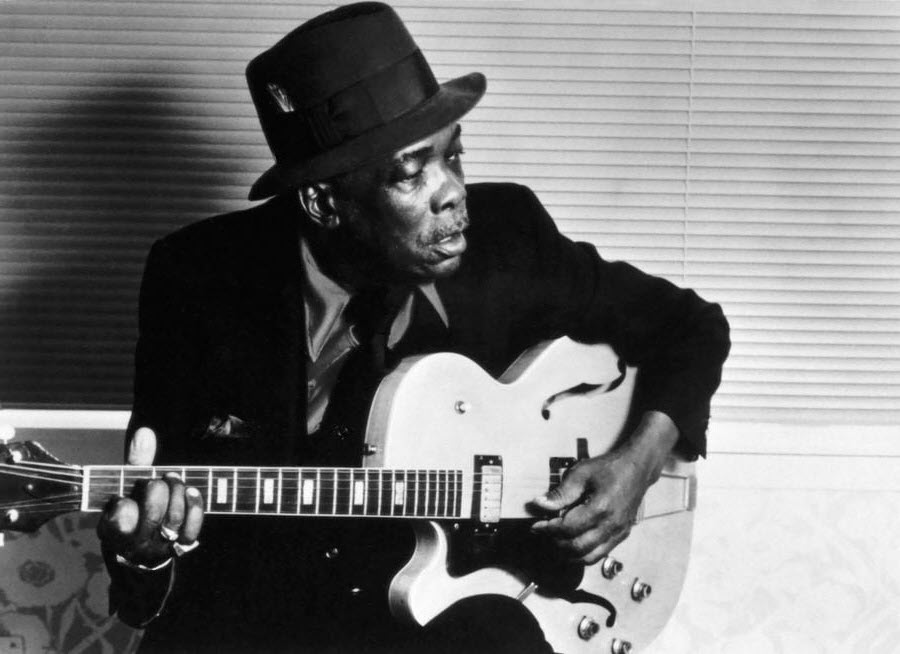
John Lee Hooker wasn’t just a blues musician—he was a phenomenon, a storyteller, and a voice that defined a genre. Known for his hypnotic rhythms, raspy vocals, and raw emotional intensity, Hooker’s music transcended generations and left an indelible mark on the world of blues. His songs weren’t just tunes; they were experiences, steeped in the struggles, joys, and soul of everyday life. From smoky juke joints to grand stages, Hooker’s music carried a vibe that was both deeply personal and universally understood.
In this article, we dive into the top 10 most popular John Lee Hooker songs of all time—tracks that encapsulate his genius and continue to resonate with listeners decades later. Whether you’re a lifelong fan or a newcomer to the blues, this list is your gateway to Hooker’s timeless artistry. From the foot-stomping grooves of “Boom Boom” to the haunting melancholy of “I’m in the Mood,” each song is a masterpiece that showcases his ability to weave emotion and rhythm into unforgettable melodies. Get ready to explore the music of a legend who captured the essence of the human spirit in every note he played. Let the blues take you away!
1. Boom Boom (1961)
“Boom Boom” is one of John Lee Hooker’s most recognizable and enduring songs, a fiery blues anthem that still resonates with audiences decades after its 1961 release. The song’s hypnotic rhythm, infectious groove, and Hooker’s unmistakable vocal delivery make it an irresistible listen. Its origins stem from a playful back-and-forth Hooker had with a bartender at Detroit’s Apex Bar, where she would often tease him for arriving late, prompting him to respond, “Boom Boom, you late again!” Inspired by this lighthearted exchange, Hooker transformed it into a blues classic, infusing it with his signature foot-stomping beat and call-and-response style.
The song’s rolling bassline and repetitive guitar riff create an electrifying pulse that drives the track forward, giving it a contagious energy that transcended blues and seeped into rock and R&B. The lyrics, simple yet evocative, build a sense of anticipation and excitement as Hooker delivers each line with his signature growl. “Boom, boom, boom, boom / I’m gonna shoot you right down”—his playful, yet commanding presence turns a casual encounter into a bold declaration.
“Boom Boom” became one of Hooker’s most commercially successful songs, reaching a broad audience and later being covered by rock bands like The Animals. Its impact on blues, rock, and soul is undeniable, cementing John Lee Hooker’s place as a true innovator of American music.
2. One Bourbon, One Scotch, One Beer (1953)
“One Bourbon, One Scotch, One Beer” is a storytelling masterpiece, a blues song that captures the essence of heartbreak, hard living, and late-night indulgence. Released in 1953, the song paints a vivid picture of a man drowning his sorrows in alcohol after facing eviction and personal troubles. The slow-burning groove, driven by Hooker’s signature rhythmic guitar style, creates a moody, almost cinematic atmosphere, pulling the listener deep into the narrator’s troubles.
Hooker’s conversational vocal delivery makes the song feel like an intimate barroom confession. As he recounts his misfortunes—being out of work, behind on rent, and unable to catch a break—his raspy voice conveys both resignation and defiance. The chorus, “One bourbon, one scotch, and one beer,” becomes a mantra, a ritualistic response to life’s hardships. The repetition of the title phrase emphasizes the blues tradition of using music to cope with struggle.
The song’s raw, storytelling-driven structure influenced countless musicians, most notably George Thorogood, who later recorded a rock-influenced version in 1977. While Thorogood’s rendition added a fiery, barroom-rock energy, Hooker’s original remains a cornerstone of the blues—gritty, soulful, and deeply human.
3. Boogie Chillen’ (1948)
“Boogie Chillen’” is the song that launched John Lee Hooker’s career and changed the blues landscape forever. Released in 1948, this hypnotic, groove-driven track became his first major hit, introducing audiences to his unique brand of blues—raw, unfiltered, and deeply personal. With nothing more than his foot-stomping rhythm, a single electric guitar, and his deep, commanding voice, Hooker created a minimalist masterpiece that would lay the foundation for countless blues and rock musicians.
The song’s structure is deceptively simple, consisting of a repeating boogie riff that Hooker plays with a loose, improvisational feel. What makes “Boogie Chillen’” so captivating is its spontaneity—Hooker almost speaks the lyrics, telling the story of a young man discovering the thrilling world of music, freedom, and nightlife. He recalls being drawn to a juke joint, where he experiences the infectious energy of the boogie-woogie sound for the first time. His excitement is palpable as he declares, “Let that boy boogie-woogie, it’s in him, and it got to come out.”
This track was groundbreaking not just because of its infectious rhythm but because it broke away from traditional 12-bar blues structures, giving Hooker the freedom to play with timing and phrasing. Its influence can be heard in rock & roll, R&B, and even hip-hop, proving that Hooker’s boogie was more than just a passing trend—it was a revolution.
4. I’m in the Mood (1951)
Released in 1951, “I’m in the Mood” is a slow-burning blues classic that captures the essence of desire, longing, and raw emotion. Unlike many of John Lee Hooker’s more energetic, boogie-driven tracks, this song is smooth, sensual, and hauntingly intimate. The echoing guitar licks, paired with Hooker’s signature rhythmic foot tapping, create a mesmerizing effect that pulls the listener into the song’s smoky, late-night atmosphere.
The lyrics are simple but deeply evocative: “I’m in the mood, baby / In the mood for love.” Hooker’s voice, deep and hypnotic, delivers each line with a mix of yearning and command. He isn’t just singing about romance; he’s embodying the emotion, making the listener feel every note and every pause. The call-and-response style, where Hooker subtly echoes his own words, adds to the track’s hypnotic quality, making it one of his most memorable recordings.
“I’m in the Mood” became one of Hooker’s biggest hits, earning him widespread recognition and proving that his music didn’t need elaborate instrumentation to be powerful. The song’s seductive energy and understated intensity have influenced countless blues and soul artists, cementing its place as one of Hooker’s most enduring works.
5. Crawlin’ King Snake (1949)
Few songs in John Lee Hooker’s catalog exude as much confidence and swagger as “Crawlin’ King Snake.” Released in 1949, this primal, brooding blues track is filled with themes of power, dominance, and seduction, making it one of his most compelling performances. With a raw, stripped-down arrangement featuring nothing but Hooker’s deep, growling voice and a rolling guitar riff, the song perfectly encapsulates his unique brand of Delta blues.
The lyrics are brimming with metaphor and attitude: “I’m a crawlin’ king snake / And I rule my den.” The song’s central image of the snake—often associated with danger, temptation, and control—adds to the song’s mystique, as Hooker asserts his dominance over both his surroundings and his relationships. His vocal delivery is intense and hypnotic, his words slithering over the beat like the very creature he’s embodying.
“Crawlin’ King Snake” became one of Hooker’s most influential recordings, later covered by The Doors, who infused it with a psychedelic rock edge. But no matter how many versions exist, the raw, stripped-down menace of Hooker’s original remains unmatched. It’s blues at its purest—gritty, defiant, and utterly captivating.
6. Dimples (1956)
Released in 1956, “Dimples” is a blues song with a playful, infectious energy that highlights John Lee Hooker’s ability to blend charm and groove effortlessly. While many of his songs focus on heartbreak, hardship, or power struggles, “Dimples” takes a different approach—it’s a lighthearted, flirtatious tribute to a woman who has completely captivated him. The song’s title comes from the dimples in her smile, a small but striking detail that Hooker turns into the song’s central theme.
The driving rhythm and repetitive, toe-tapping beat make “Dimples” one of Hooker’s most accessible and upbeat tracks. The guitar work is simple yet irresistibly catchy, cycling through a tight, rolling groove that hooks the listener instantly. Hooker’s vocals are playful, exuding both admiration and desire as he sings, “I love the way you walk, I love the way you talk.” His signature conversational singing style makes the song feel personal, almost as if he’s speaking directly to the woman who inspired it.
Although it wasn’t a major hit upon its initial release, “Dimples” became one of Hooker’s most enduring songs, later gaining popularity in the UK blues scene. The track has since been covered by numerous artists, including The Animals and The Spencer Davis Group, proving that Hooker’s charm and groove are truly timeless.
7. It Serves You Right to Suffer (1966)
Few songs in John Lee Hooker’s catalog carry as much weight and emotional intensity as “It Serves You Right to Suffer.” Released in 1966, this slow, brooding blues masterpiece is a stunning showcase of Hooker’s storytelling abilities and raw vocal power. Unlike his more upbeat boogie tracks, this song is a deep, smoldering lament, soaked in pain and delivered with unshakable conviction.
The song’s structure is deliberate and unhurried, allowing every note to linger. The sparse yet powerful arrangement features a haunting electric guitar, subtle basslines, and a slow-burning groove that perfectly complements Hooker’s soulful voice. His delivery is filled with both sorrow and quiet fury as he sings, “You know you hurt me, baby / You treated me wrong.” There’s no yelling, no dramatic outburst—just the cold, hard sting of betrayal and regret.
Despite its melancholy tone, “It Serves You Right to Suffer” is captivating in its intensity. The song feels like a blues sermon, each word and note resonating with an emotional depth that only Hooker could deliver. This track cemented his place as not just a blues musician, but a master of emotional storytelling, influencing artists across blues, rock, and jazz for generations to come.
8. Hobo Blues (1949)
John Lee Hooker was a master of storytelling, and “Hobo Blues” is one of his most vivid and evocative songs. Released in 1949, this track tells the tale of a wandering drifter, capturing the loneliness, hardship, and fleeting joys of life on the road. With little more than a repetitive, hypnotic guitar riff and Hooker’s deeply expressive voice, the song immerses the listener in the weary journey of a man who has no home to call his own.
The lyrics paint a picture of constant movement and struggle: “When I first thought to hobo’in, I took a freight train to be my friend.” There’s a sense of longing in his voice, a quiet yearning for something more, but also a resignation to his fate. The way Hooker delivers each line—half-sung, half-spoken—feels deeply personal, as if he’s recounting his own experiences.
The song’s raw, stripped-down arrangement makes it even more powerful. With no flashy instrumentation or elaborate production, “Hobo Blues” thrives on its simplicity, allowing the emotion in Hooker’s voice to take center stage. It’s a testament to his ability to turn a simple blues progression into a deeply moving narrative, making this track one of his most poignant and memorable.
9. Shake It Baby (1963)
“Shake It Baby” is John Lee Hooker’s blues at its most electrifying. Released in 1963, this high-energy track is all about movement—both in the music and in its playful, dance-driven lyrics. From the very first note, the song bursts to life with a lively, infectious rhythm that makes it impossible to sit still. Hooker’s unmistakable voice commands attention as he urges his partner to “shake it one time for me.”
What sets “Shake It Baby” apart from many of Hooker’s earlier recordings is its fuller sound. While his stripped-down, solo performances defined his early work, this track features a tight band backing him up, adding layers of rhythm and groove that elevate the energy to new heights. The boogie-style guitar riff, combined with the steady beat and Hooker’s commanding presence, gives the song an almost hypnotic effect, pulling the listener deeper into its infectious rhythm.
Lyrically, “Shake It Baby” is pure fun—a celebration of dance, music, and uninhibited movement. There’s no heartbreak, no sorrow, just the joy of letting loose and feeling the music. It’s a reminder that the blues isn’t always about pain and struggle; sometimes, it’s about cutting loose and enjoying the moment. This track remains a favorite for blues lovers and dancers alike, proving that Hooker’s boogie never goes out of style.
10. House Rent Boogie (1951)
Few artists could turn everyday struggles into compelling blues narratives quite like John Lee Hooker, and “House Rent Boogie” is a perfect example of this talent. Released in 1951, this song takes a mundane topic—paying the rent—and transforms it into an energetic, foot-stomping blues jam. With its conversational style and driving rhythm, the song feels more like an impromptu storytelling session than a traditional blues track.
Hooker’s lyrics are humorous, yet relatable: “Hey landlord, hey landlord / Hey now, hey now / I gotta move.” His delivery is filled with playful frustration, as he recounts his financial troubles and the inevitable scramble to come up with rent money. The call-and-response phrasing and steady boogie rhythm make the song feel alive, as if it’s unfolding in real time.
Musically, “House Rent Boogie” is classic Hooker—minimalist yet deeply engaging. The guitar riff loops hypnotically, mimicking the never-ending cycle of work, bills, and rent. The song’s raw energy and real-life relatability have made it a standout in Hooker’s discography, proving that even life’s little struggles can be turned into unforgettable blues.

Edward Tomlin is a frequent contributor to Singers Room. Since 2005, Singersroom has been the voice of R&B around the world. Connect with us via social media below.









