Jazz is more than just music—it’s a movement, a language, and a celebration of expression. Born out of the heartbeats of New Orleans, this genre has transcended time, breaking barriers and redefining the boundaries of sound. From smoky clubs to grand concert halls, jazz has captivated audiences with its smooth melodies, daring improvisations, and soul-stirring rhythms. It is a genre that breathes life into every note, carrying the stories of its creators and their groundbreaking artistry.
This article celebrates the legends who have shaped the very fabric of jazz, bringing their unique styles and unmatched talent to the world stage. These are the trailblazers who pushed the limits of creativity, leaving an indelible mark on music history. From the sultry vocals of timeless divas to the electrifying solos of virtuoso instrumentalists, these 15 artists represent the pinnacle of jazz excellence.
Whether you’re a lifelong jazz enthusiast or a newcomer discovering this incredible genre, prepare to be inspired. Join us as we dive into the lives and legacies of the greatest jazz artists of all time. Their music isn’t just heard—it’s felt, proving that jazz is truly the soundtrack of freedom, passion, and innovation. Let the journey begin!
1. Louis Armstrong
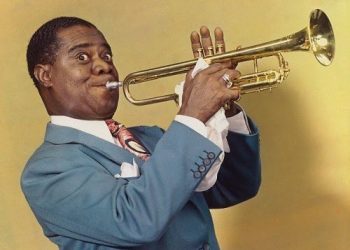
Louis Armstrong, affectionately known as “Satchmo” or “Pops,” was one of the most influential figures in jazz history. Born in New Orleans in 1901, Armstrong rose from humble beginnings to become a global ambassador of jazz. His distinctive gravelly voice, infectious charisma, and groundbreaking trumpet playing revolutionized the genre.
Armstrong’s ability to improvise and his pioneering scat singing helped shape jazz into a dynamic, expressive art form. He brought a new level of technical brilliance to the trumpet, demonstrating how it could be both a powerful and deeply emotional instrument. His innovative approach to phrasing and melody can be heard in classics like West End Blues, where his soaring solo set a new standard for jazz musicianship.
Beyond his instrumental mastery, Armstrong was a magnetic performer. His warm personality and joyous stage presence made him beloved by audiences worldwide. Songs like What a Wonderful World, La Vie En Rose, and When the Saints Go Marching In remain timeless, thanks to his heartfelt delivery. Armstrong’s work transcended jazz, influencing blues, swing, and even pop music.
Throughout his career, Armstrong shattered racial barriers in the music industry. As one of the first Black entertainers to achieve widespread mainstream success, he helped bring jazz into the American cultural mainstream. He toured the world as a musical diplomat, spreading the gospel of jazz from Europe to Africa and beyond.
His legacy is immeasurable—his recordings remain essential listening, his innovations continue to shape modern jazz, and his joyous spirit still resonates with listeners of all generations. Whether through his dazzling trumpet solos or his unforgettable voice, Armstrong’s contributions to music are nothing short of legendary.
2. Duke Ellington
Duke Ellington was more than just a jazz musician—he was a visionary composer, bandleader, and pianist whose influence extended far beyond the genre. Born Edward Kennedy Ellington in 1899, he transformed jazz into a sophisticated and richly expressive art form. His music was elegant, inventive, and deeply rooted in the African American experience, earning him the title of one of the greatest composers of the 20th century.
Ellington led one of the longest-running and most successful big bands in jazz history. Under his leadership, the Duke Ellington Orchestra became a powerhouse of talent, featuring legendary musicians like Johnny Hodges, Cootie Williams, and Paul Gonsalves. Unlike many bandleaders, Ellington composed music tailored to the unique strengths of his musicians, allowing their individual voices to shine while maintaining a unified sound.
His compositions are timeless, ranging from the swinging rhythms of It Don’t Mean a Thing (If It Ain’t Got That Swing) to the lush harmonies of Mood Indigo. The sophisticated arrangements of Take the ‘A’ Train, written by his longtime collaborator Billy Strayhorn, became synonymous with the elegance of the swing era. Ellington’s orchestral works, such as Black, Brown and Beige, showcased his ability to weave jazz with classical elements, elevating the genre’s artistic credibility.
Beyond his musical genius, Ellington was a cultural icon. He toured the world, bringing jazz to international audiences and redefining what the genre could be. His influence extended beyond jazz into film scores, sacred music, and even collaborations with symphony orchestras.
Duke Ellington’s legacy is one of innovation, excellence, and refinement. His impact on jazz and American music as a whole is immeasurable, and his compositions continue to be studied and performed by musicians worldwide.
3. Charlie Parker
Charlie Parker, affectionately known as “Bird,” was a revolutionary force in jazz, redefining the possibilities of the saxophone and shaping the bebop movement. Born in 1920, Parker’s genius lay in his astonishing improvisational ability, rapid-fire phrasing, and harmonic complexity, which changed jazz forever.
Parker’s technical mastery was unparalleled. He pushed the limits of melody and rhythm, crafting intricate solos that combined lightning-fast runs with deep emotional expression. His work with bebop pioneers like Dizzy Gillespie and Thelonious Monk helped establish the genre as a form of intellectual and virtuosic artistry. Songs like Ko-Ko, Ornithology, and Scrapple from the Apple showcased his breathtaking speed and innovative harmonic approach, inspiring generations of musicians.
What made Parker truly remarkable was his ability to balance technical brilliance with raw emotion. His saxophone playing could be fierce and explosive one moment, then heartbreakingly tender the next. His recording of Parker’s Mood reveals a more introspective side of his artistry, demonstrating his deep connection to the blues.
Despite his musical genius, Parker’s life was marked by personal struggles. His battle with addiction and health issues led to an untimely death at just 34 years old. However, his influence on jazz remains unmatched. His improvisational language became the foundation of modern jazz, shaping the playing styles of countless saxophonists, from John Coltrane to Sonny Rollins.
Charlie Parker wasn’t just a great musician—he was a true innovator who changed the course of jazz history. His recordings remain essential listening for any jazz lover, and his impact on the genre continues to be felt more than 70 years after his passing.
4. Miles Davis
Miles Davis was a musical chameleon, constantly reinventing himself and pushing jazz into new, uncharted territories. As a trumpeter, composer, and bandleader, Davis was at the forefront of nearly every major jazz movement of the 20th century, making him one of the most influential musicians of all time.
Born in 1926, Davis rose to prominence in the bebop era, playing alongside Charlie Parker. However, he quickly distinguished himself with a sound that was understated yet deeply expressive. His work on the seminal album Birth of the Cool introduced a more relaxed, lyrical approach to jazz, setting the stage for the cool jazz movement.
Davis’s career was defined by constant innovation. His 1959 masterpiece Kind of Blue remains the best-selling jazz album of all time and a defining work of modal jazz. Featuring legends like John Coltrane and Bill Evans, the album embraced simplicity and spaciousness, allowing for more melodic improvisation. The haunting beauty of So What and Blue in Green demonstrated Davis’s unparalleled ability to convey emotion through minimalism.
Not content to stay in one place, Davis pioneered jazz fusion in the late 1960s with Bitches Brew, a groundbreaking album that fused jazz with rock, funk, and electronic elements. His later explorations into funk and electronic music influenced artists far beyond jazz, from hip-hop producers to rock musicians.
Davis’s ability to spot and nurture young talent was another hallmark of his career. His bands served as a training ground for future jazz legends, including Herbie Hancock, Wayne Shorter, and Tony Williams.
Miles Davis was more than a jazz musician—he was an architect of sound who constantly defied expectations. His legacy continues to shape jazz and contemporary music, proving that true artistry knows no boundaries.
5. Billie Holiday
Billie Holiday, known as “Lady Day,” was one of the most expressive and emotionally powerful vocalists in jazz history. Her voice, filled with raw emotion and vulnerability, had the ability to tell stories in a way that few singers could match.
Born in 1915, Holiday’s unique phrasing and deep connection to the lyrics made every song she sang feel personal. She didn’t just sing melodies—she lived them. Her haunting rendition of Strange Fruit, a chilling protest against racism, remains one of the most powerful songs ever recorded. With just a few words, she could evoke a world of pain, defiance, and longing.
Holiday’s repertoire was filled with classics like God Bless the Child, Lover Man, and Don’t Explain, each showcasing her ability to blend jazz and blues with unmatched sincerity. Her voice, though not conventionally powerful, carried an intimacy and depth that drew listeners in.
Despite her success, Holiday’s life was filled with hardship. She battled addiction, abusive relationships, and systemic racism throughout her career. Yet, even in her struggles, she continued to create music that resonated with deep emotional truth.
Her influence on jazz and popular music is immeasurable. Artists from Nina Simone to Amy Winehouse have drawn inspiration from her raw, confessional style. Billie Holiday’s legacy is not just in the songs she left behind, but in the way she used music as a means of emotional storytelling. Her voice, fragile yet unbreakable, remains one of the most unforgettable in jazz history.
6. John Coltrane
John Coltrane was more than just a saxophonist—he was a visionary who took jazz to spiritual and transcendent heights. His music wasn’t just about technical brilliance; it was about searching for something deeper, something almost divine. Born in 1926, Coltrane’s relentless drive for musical exploration made him one of the most influential figures in jazz history.
Coltrane first gained recognition as a sideman, playing with Miles Davis in the groundbreaking Kind of Blue sessions. But it was his work as a bandleader that cemented his legacy. His album Giant Steps (1960) showcased a revolutionary approach to harmony, featuring intricate chord progressions that pushed the limits of jazz improvisation. The title track remains a rite of passage for jazz musicians, its rapid chord changes demanding unmatched technical skill.
Yet Coltrane wasn’t content to simply innovate—he wanted to express something profound. His 1964 masterpiece A Love Supreme was a deeply personal and spiritual album, a four-part suite that felt like a prayer set to music. Tracks like Acknowledgment and Resolution carried an intensity that transcended jazz, reaching listeners on a deeply emotional level.
Later in his career, Coltrane ventured even further into free jazz and avant-garde experimentation. Albums like Ascension and Interstellar Space defied convention, embracing raw expression over traditional structure. His playing became more urgent, more impassioned, as if he were searching for something beyond music itself.
Coltrane’s influence extends far beyond jazz. His spiritual approach to music has inspired artists across genres, from rock to classical. Even decades after his passing, his work continues to be studied, performed, and revered. John Coltrane wasn’t just a musician—he was a force of nature, forever changing the way we experience jazz.
7. Ella Fitzgerald
Ella Fitzgerald, the “First Lady of Song,” possessed a voice that was pure magic. With a range that soared effortlessly from the lowest notes to the highest, impeccable diction, and an unmatched ability to swing, she became one of the most beloved jazz vocalists of all time.
Born in 1917, Fitzgerald’s career began when she won an amateur singing contest at the Apollo Theater. From there, she quickly rose to prominence, joining the Chick Webb Orchestra and delivering hits like A-Tisket, A-Tasket, which catapulted her into stardom. Her voice was warm, joyful, and full of life, making every song she sang feel like a celebration.
One of her greatest strengths was her impeccable sense of rhythm and phrasing. She had an innate ability to improvise, and her scat singing—particularly on songs like How High the Moon and Air Mail Special—was nothing short of dazzling. She turned her voice into an instrument, effortlessly matching the virtuosity of the greatest jazz musicians.
Her Songbook series, where she interpreted the works of composers like Cole Porter, George Gershwin, and Duke Ellington, showcased her ability to bring depth and nuance to classic songs. Tracks like Summertime, Cheek to Cheek, and Misty highlighted not just her technical brilliance, but her ability to connect with listeners on an emotional level.
Ella’s voice had a rare quality—it could make you feel pure joy, deep longing, and everything in between. She won 13 Grammy Awards and left behind a catalog of music that continues to inspire. Whether singing a tender ballad or a fast-paced swing number, she made every note count. Ella Fitzgerald wasn’t just the First Lady of Song—she was the very soul of jazz.
8. Thelonious Monk
Thelonious Monk was jazz’s great eccentric—a pianist and composer who reshaped the way people thought about melody and rhythm. His music was unpredictable, filled with angular phrases, unexpected pauses, and a deep sense of swing that made him one of the most distinctive voices in jazz history.
Born in 1917, Monk’s approach to the piano was unconventional. He used dissonant harmonies, percussive attack, and silence as part of his musical vocabulary. At first, his style puzzled many listeners, but over time, it became clear that he was a genius operating on a different wavelength. His compositions, like Round Midnight, Blue Monk, and Straight, No Chaser, have become jazz standards, their quirky yet elegant structures challenging musicians and delighting audiences.
Monk’s playing was full of personality. He had a habit of standing up and dancing around the piano mid-performance, as if his own music was too infectious to sit still. His use of space in his solos was as important as the notes themselves—he knew exactly when to let a phrase breathe before hitting the listener with an unexpected chord.
Despite his unorthodox approach, Monk’s impact on jazz was profound. His harmonic innovations influenced countless musicians, from John Coltrane to Herbie Hancock. He was one of the early architects of bebop, yet his music always retained a sound that was uniquely his own.
Thelonious Monk was proof that jazz could be playful, mysterious, and deeply personal all at once. His genius wasn’t in following the rules—it was in rewriting them entirely.
9. Sarah Vaughan
Sarah Vaughan, often referred to as “The Divine One,” possessed one of the most extraordinary voices in jazz history. Her rich, velvety tone, impeccable phrasing, and breathtaking control made her a singer of unmatched elegance and power.
Born in 1924, Vaughan’s career took off after she won an amateur night contest at the Apollo Theater, leading to gigs with big bands led by Earl Hines and Billy Eckstine. She quickly gained recognition for her remarkable vocal range and ability to glide effortlessly between notes, making even the most complex melodies sound effortless.
Her ballads were lush and full of depth—songs like Misty and Tenderly showcased her ability to bring out the emotional core of a lyric. At the same time, she could swing with the best of them, her voice soaring over fast-paced tunes like Lullaby of Birdland. Her vibrato was smooth and controlled, adding a richness to every note she sang.
Unlike many jazz singers of her era, Vaughan had a background in classical music, and it showed in her technique. She had an almost operatic sense of phrasing, allowing her to take even the simplest melody and turn it into something extraordinary.
Throughout her career, Vaughan’s voice remained as powerful and expressive as ever. She won multiple Grammy Awards, influenced countless singers, and left behind a legacy of recordings that still sound as fresh and captivating today as they did decades ago.
Sarah Vaughan didn’t just sing songs—she elevated them. Her voice was a force of nature, one that continues to inspire musicians and enchant listeners worldwide.
10. Dizzy Gillespie
Dizzy Gillespie wasn’t just a jazz trumpeter—he was a musical innovator, a showman, and a driving force behind bebop. With his puffed cheeks, bent trumpet, and infectious energy, he became one of jazz’s most recognizable figures. But beyond his playful personality was a musician of immense talent and vision, whose contributions shaped modern jazz.
Born in 1917, Gillespie was a virtuoso trumpeter known for his blazing-fast runs, wide-ranging improvisations, and harmonic daring. Alongside Charlie Parker, he pioneered bebop, a complex and fast-paced style of jazz that emphasized intricate melodies and advanced harmonies. Songs like A Night in Tunisia, Salt Peanuts, and Groovin’ High became bebop anthems, showcasing his technical brilliance and rhythmic ingenuity.
But Gillespie wasn’t just about bebop—he was also a key figure in blending jazz with Afro-Cuban rhythms. His collaborations with Cuban percussionist Chano Pozo brought Latin jazz to the forefront, resulting in groundbreaking compositions like Manteca and Tin Tin Deo. This fusion of jazz with African and Latin influences became a cornerstone of modern jazz.
Beyond his musical genius, Gillespie was an engaging performer who knew how to entertain. His humorous stage presence, coupled with his masterful playing, made him a beloved figure in the jazz world. His influence extended to future jazz greats, including Miles Davis and John Coltrane, and his impact on jazz trumpet playing remains profound.
Dizzy Gillespie’s legacy is one of innovation, energy, and joy. He helped shape jazz into a sophisticated, global art form, proving that music could be both intellectually challenging and deeply fun. Even today, his compositions and trumpet lines remain essential listening for jazz musicians and fans alike.
11. Louis Armstrong
Louis Armstrong wasn’t just a jazz musician—he was the face of jazz itself. With his gravelly voice, dazzling trumpet playing, and joyful spirit, he became one of the most influential musicians of all time. His music didn’t just change jazz; it changed popular music forever.
Born in 1901 in New Orleans, Armstrong rose from humble beginnings to become a global icon. As a young trumpeter, he played in King Oliver’s Creole Jazz Band before making a name for himself as a soloist. His recordings with his Hot Five and Hot Seven in the 1920s—featuring classics like West End Blues and Heebie Jeebies—set new standards for jazz improvisation. His ability to take a melody and transform it into something completely new was revolutionary, turning jazz into a soloist’s art form.
Armstrong’s trumpet playing was groundbreaking. His powerful, clear tone and ability to bend and shape notes made every solo he played instantly recognizable. His sense of swing and rhythmic innovation set the foundation for modern jazz. But he wasn’t just an instrumentalist—his gravelly, warm voice became just as legendary. Songs like What a Wonderful World, La Vie En Rose, and When the Saints Go Marching In remain timeless, beloved by audiences across generations.
More than just a musician, Armstrong was a cultural ambassador. At a time when racial barriers were high, he became one of the first African American entertainers to gain widespread mainstream success. He toured the world, spreading the joy of jazz to every corner of the globe.
Louis Armstrong’s legacy is unparalleled. His music continues to bring joy, and his influence can be heard in jazz, pop, and beyond. As long as people listen to music, the sound of Louis Armstrong’s trumpet and voice will never fade.
12. Herbie Hancock
Herbie Hancock is a true innovator—one of the few musicians who has continuously reinvented jazz while staying relevant across multiple generations. Whether playing acoustic jazz, fusion, funk, or electronic music, Hancock has remained at the cutting edge of musical exploration.
Born in 1940, Hancock was a child prodigy on the piano, performing with the Chicago Symphony Orchestra at just 11 years old. He first gained recognition as a sideman for Miles Davis in the 1960s, playing in Davis’s legendary second quintet. During this time, he helped shape post-bop jazz with his sophisticated harmonies and rhythmic flexibility.
As a solo artist, Hancock quickly established himself as a composer of jazz classics. Songs like Cantaloupe Island, Watermelon Man, and Maiden Voyage blended soulful grooves with complex harmonies, making them both accessible and musically rich. His work on albums like Speak Like a Child showcased his ability to craft lush, cinematic soundscapes.
But Hancock wasn’t content to stay in one place. In the 1970s, he embraced jazz fusion, incorporating electric keyboards, synthesizers, and funk influences into his music. His album Head Hunters (1973) was a groundbreaking fusion of jazz and funk, featuring the hit Chameleon, a track that became a defining anthem of jazz-funk.
Hancock continued to experiment with electronic music in the 1980s, scoring a major hit with Rockit, one of the first jazz tracks to incorporate hip-hop elements like scratching. Even in the 21st century, he has remained active, collaborating with contemporary artists while staying true to his jazz roots.
Herbie Hancock is a testament to jazz’s limitless potential. His career has spanned over six decades, and he continues to push boundaries, proving that great music has no limits.
13. Count Basie
Count Basie was the king of swing. As a bandleader and pianist, he led one of the most swinging and enduring big bands in jazz history. His music was all about groove, rhythm, and effortless cool—his band didn’t just play jazz; they made it dance.
Born in 1904, Basie’s early career saw him playing in Kansas City, a hotbed of jazz innovation. In the 1930s, he formed the Count Basie Orchestra, which became one of the most popular swing bands of all time. Unlike the elaborate arrangements of Duke Ellington, Basie’s music was built on simple, bluesy riffs that packed an irresistible rhythmic punch.
Basie’s playing style was economical but powerful—he knew that sometimes, a single well-placed note could say more than a flurry of them. His signature sound combined tight horn sections, driving rhythms, and relaxed yet precise swing. Hits like One O’Clock Jump, Jumpin’ at the Woodside, and April in Paris became big band staples.
The Basie Orchestra became known for its tight ensemble playing and legendary soloists, including saxophonist Lester Young and drummer Jo Jones. Even as big band jazz declined in popularity, Basie adapted, leading his orchestra well into the 1980s. His collaborations with singers like Frank Sinatra and Ella Fitzgerald further cemented his place in jazz history.
Basie’s music wasn’t about complexity—it was about feel. His ability to create effortless swing made his band one of the greatest in jazz history. His influence on rhythm sections and big band arranging remains essential, proving that sometimes, less is more.
14. Thelonious Monk
Thelonious Monk was one of jazz’s most original and enigmatic figures. A pianist and composer like no other, his music was filled with unexpected pauses, angular melodies, and an unmistakable sense of rhythm. His unorthodox approach to both the piano and composition made him one of the most influential jazz musicians of all time.
Born in 1917, Monk developed a unique style that set him apart from his contemporaries. While many jazz pianists aimed for fluidity and technical flash, Monk embraced dissonance and space. His playing was percussive, his chord voicings dense, and his timing unpredictable. But despite his eccentric approach, his music swung with an undeniable groove.
Monk’s compositions are some of the most celebrated in jazz history. Pieces like Round Midnight, Blue Monk, and Straight, No Chaser have become jazz standards, challenging musicians to navigate their offbeat harmonies and intricate rhythms. His ability to create music that was both unconventional and deeply emotional cemented his legacy.
Beyond his music, Monk’s personality was as unique as his playing. He was known for his quiet, introspective nature and his habit of standing up from the piano and dancing while his band played. His influence on jazz pianists and composers is immeasurable, and his work continues to be studied and admired by musicians across all genres.
Though he wasn’t always fully appreciated during his lifetime, today Monk is rightfully recognized as one of the true geniuses of jazz. His music remains as fresh, challenging, and inspiring as ever, proving that jazz, at its core, is about individuality and fearless creativity.
15. John Coltrane
John Coltrane wasn’t just a saxophonist—he was a seeker, a visionary, and a force of nature. His music wasn’t just about technical brilliance; it was about spiritual exploration, pushing the limits of what jazz could express. His relentless drive for innovation made him one of the most important and revered figures in jazz history.
Born in 1926, Coltrane first gained recognition playing with Miles Davis’s classic quintet in the 1950s. His early recordings showcased a powerful, searching tone and an astonishing command of the saxophone. But he wasn’t content to stay within the boundaries of traditional jazz. Instead, he developed a groundbreaking style that combined blistering speed, complex harmonies, and deeply spiritual themes.
His 1960 album Giant Steps was a milestone in jazz, introducing harmonic complexity that set a new standard for improvisers. But Coltrane’s true masterpiece came with A Love Supreme (1965), a deeply personal and spiritual album that transcended jazz and became one of the most revered recordings in music history. Tracks like My Favorite Things and Naima displayed his ability to blend beauty with intensity, creating music that felt both urgent and transcendent.
In his later years, Coltrane delved into avant-garde and free jazz, seeking new forms of musical expression. His work became increasingly abstract and experimental, challenging listeners to experience music on a deeper, more emotional level.
Coltrane’s influence stretches far beyond jazz. His fearless pursuit of artistic and spiritual truth continues to inspire musicians across all genres. Even decades after his passing, his music remains a source of inspiration, a reminder that jazz is not just about notes and rhythms—it’s about expression, discovery, and reaching for something greater.

Edward Tomlin is a frequent contributor to Singers Room. Since 2005, Singersroom has been the voice of R&B around the world. Connect with us via social media below.