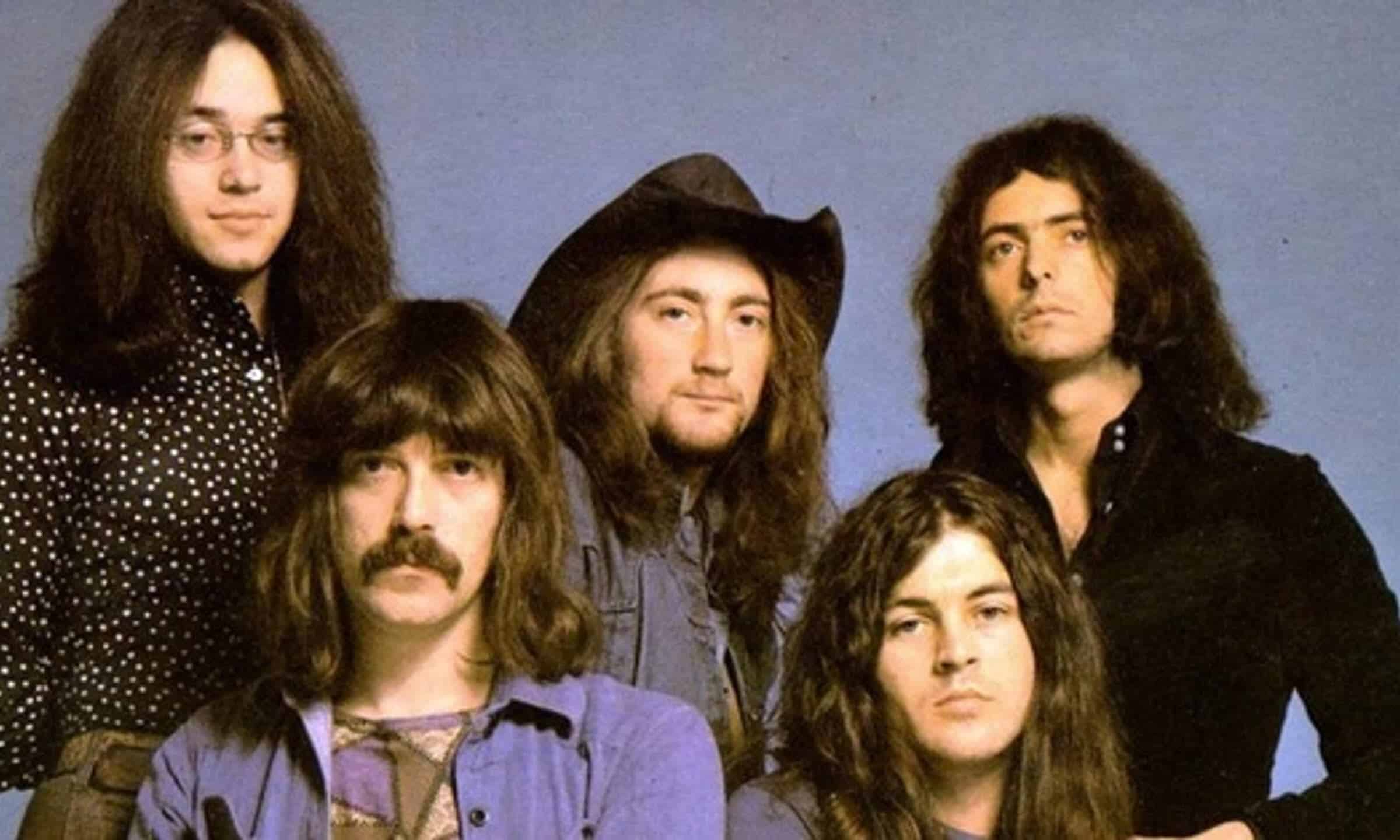
Deep Purple, the legendary pioneers of hard rock and heavy metal, have carved an indelible mark in the annals of music history. With a career spanning over five decades, this iconic band has mesmerized audiences worldwide with their electrifying riffs, powerful vocals, and genre-defining sound. From the thunderous echoes of their early classics to the timeless anthems that continue to inspire generations, Deep Purple has become synonymous with pure rock brilliance.
In this article, we dive into the heart of their unparalleled discography to celebrate the Top 10 Most Popular Deep Purple Songs of All Time. These tracks are more than just music—they’re explosive journeys that pulse with energy, emotion, and unrelenting creativity. Whether you’re a lifelong fan or a curious newcomer, you’ll find yourself swept away by the irresistible power of these legendary tunes. From the unmistakable opening riff of “Smoke on the Water” to the dramatic intensity of “Child in Time,” each song on this list has left an enduring legacy.
So crank up the volume, let the music take hold, and join us as we count down the songs that have defined Deep Purple’s monumental career. Get ready to rock like never before!
1. Smoke on the Water (1972)
Few rock songs are as instantly recognizable as Smoke on the Water, a track that has become synonymous with Deep Purple’s legacy. Released in 1972 on their Machine Head album, this song is built around one of the most famous guitar riffs in history. That four-note, bluesy progression by Ritchie Blackmore has been played by countless aspiring guitarists and remains a staple in rock music.
Lyrically, the song tells the real-life story of a fire that broke out at the Montreux Casino in Switzerland during a Frank Zappa concert. The band, who had planned to record Machine Head there, watched as the venue burned to the ground, with flames reflecting off Lake Geneva—hence the song’s title. The lyrics vividly recount the chaos of that night, from the smoke filling the sky to the scramble to find a new recording location.
Despite its mid-tempo groove, Smoke on the Water carries an unmistakable energy, driven by Ian Paice’s steady drumming, Roger Glover’s thumping bass, and Jon Lord’s rich organ work. Ian Gillan’s powerful yet understated vocals complete the package. The song became one of Deep Purple’s biggest hits, securing their place in rock history and influencing generations of musicians. Even decades later, Smoke on the Water remains a go-to song for rock fans and guitarists alike.
2. Child in Time (1970)
Child in Time is one of Deep Purple’s most haunting and emotionally charged songs. Released in 1970 on Deep Purple in Rock, this ten-minute epic is a slow-burning masterpiece that builds from a gentle, almost meditative beginning into an explosive climax. The song is widely regarded as an anti-war anthem, its lyrics and dynamics reflecting the growing tension and devastation of conflict.
The track begins with Jon Lord’s melancholic organ chords, setting a solemn mood. Ian Gillan’s vocals start off soft and restrained, but as the song progresses, he unleashes one of the most dramatic and chilling screams in rock history. His wailing, almost operatic delivery adds to the song’s sense of urgency and despair. As the intensity builds, Ritchie Blackmore delivers a searing guitar solo, matching the emotion in Gillan’s voice with pure instrumental fire.
As Child in Time reaches its peak, it explodes into a frenetic instrumental section, with Paice’s drumming and Lord’s organ runs creating a sense of chaos. Then, just as suddenly, it returns to the haunting serenity of the intro, leaving the listener in awe. The song remains one of Deep Purple’s most celebrated compositions, a testament to their ability to fuse technical prowess with deep emotion.
3. Highway Star (1972)
If there’s one song that embodies the rush of adrenaline that rock music can deliver, it’s Highway Star. Released in 1972 on Machine Head, this high-octane track is often considered one of the first true heavy metal songs, with its relentless speed, soaring vocals, and virtuosic guitar and organ solos. It’s the ultimate driving song, capturing the exhilaration of the open road.
The song kicks off with a galloping riff that immediately sets the tone for the ride ahead. Ian Gillan’s lyrics celebrate the thrill of speed, comparing his love for cars to the intensity of rock ‘n’ roll itself. His vocals are sharp and commanding, matching the energy of the music. However, what truly sets Highway Star apart are its jaw-dropping solos.
Ritchie Blackmore delivers one of his most electrifying guitar solos, incorporating neoclassical influences that would later inspire countless shredders in the metal world. Jon Lord counters with an equally impressive organ solo, both musicians pushing the boundaries of rock instrumentalism. The song never lets up, maintaining its furious pace until the very end.
Highway Star remains one of Deep Purple’s most beloved live songs, often serving as the perfect opener for their concerts. It’s a pure adrenaline rush, proving that Deep Purple was not just about bluesy hard rock—they could go full throttle when they wanted to.
4. Lazy (1972)
Lazy, another standout track from 1972’s Machine Head, is a blues-infused jam that showcases Deep Purple’s technical brilliance and improvisational prowess. Despite its title, the song is anything but lazy—its slow-burning intro builds into one of the most electrifying performances in the band’s catalog.
Jon Lord takes the spotlight in the song’s opening minutes, delivering an extended, jazz-inspired organ solo that feels like a nod to the blues greats of the past. His playing is intricate and expressive, gradually increasing in intensity before Ritchie Blackmore’s guitar steps in with scorching blues licks. When the full band kicks in, the song transforms into a high-energy groove, with Ian Gillan’s vocals adding a playful, carefree attitude.
The lyrics, though minimal, fit the song’s loose, jam-like feel, as Gillan sings about embracing laziness in the most charismatic way possible. His harmonica solo adds an extra layer of blues authenticity, further enhancing the track’s old-school charm. Meanwhile, Roger Glover’s bass and Ian Paice’s drumming keep the rhythm locked in tight, allowing Lord and Blackmore to unleash their instrumental magic.
While not as commercially successful as some of Deep Purple’s other hits, Lazy is a favorite among musicians and fans who appreciate the band’s ability to blend blues, rock, and jazz into a seamless, exhilarating performance.
5. Burn (1974)
Released in 1974 as the opening track of the Burn album, this song marked the arrival of a new era for Deep Purple. With David Coverdale and Glenn Hughes taking over vocal duties after Ian Gillan’s departure, Burn introduced a fresh, fiery energy to the band’s sound. The result was one of the most aggressive and explosive songs in their catalog.
Right from the start, Burn grabs the listener’s attention with its thunderous opening riff—one of Ritchie Blackmore’s finest creations. The rapid, almost classical-inspired guitar work is matched by Jon Lord’s swirling organ, setting the stage for a track that feels both urgent and powerful. Coverdale and Hughes trade vocal lines effortlessly, adding a new dynamic to the band’s vocal arrangements.
Lyrically, Burn tells the tale of destruction and chaos, fitting perfectly with the song’s relentless energy. The instrumental break is nothing short of exhilarating, with blistering solos from both Blackmore and Lord that push the limits of rock virtuosity. Meanwhile, Ian Paice’s drumming drives the song forward with unstoppable momentum.
As the first song of the Burn album, this track made a bold statement: Deep Purple was evolving, and they weren’t slowing down. It remains a fan favorite and a live staple, proving that even with lineup changes, the band’s ability to create iconic rock anthems remained as strong as ever.
6. Hush (1968)
Before Deep Purple became the hard rock giants of the 1970s, they made their mark with Hush, a song that introduced the world to their dynamic sound. Released in 1968 as part of their debut album Shades of Deep Purple, this track was originally written and recorded by Joe South, but Deep Purple’s version took it to a whole new level.
From the very first notes, Hush grabs the listener with its infectious organ riff, courtesy of Jon Lord. The driving rhythm and handclaps give it an undeniable groove, while Rod Evans’ smooth yet commanding vocals add a sense of mystery and excitement. The song tells the story of an irresistible woman who has left the singer utterly captivated, and Evans delivers the lyrics with a cool, laid-back charm.
One of the most memorable elements of Hush is its call-and-response chorus, which makes it an absolute crowd-pleaser. The instrumental break features a lively organ solo, blending blues, rock, and a touch of psychedelia, showcasing Deep Purple’s early versatility. Ritchie Blackmore’s sharp guitar work adds an extra layer of energy, proving that even in their early days, the band had something special.
While Deep Purple would later shift toward a heavier and more aggressive sound, Hush remains a beloved classic that highlights their ability to craft a catchy, radio-friendly hit. It became their first major success, climbing the charts in both the U.S. and the U.K., and it remains one of their most enduring tracks.
7. Black Night (1970)
Black Night was the song that truly catapulted Deep Purple into mainstream rock success. Released as a standalone single in 1970, it became the band’s first Top 10 hit in the U.K., solidifying their status as a rising force in hard rock. With its bluesy swagger, infectious groove, and simple yet effective riff, Black Night is a perfect example of Deep Purple’s signature sound.
The song’s main riff, played by Ritchie Blackmore, is deceptively simple but incredibly catchy, locking in with Roger Glover’s steady bassline to create an irresistible rhythm. Jon Lord’s organ adds a rich, textured layer to the track, giving it depth and a sense of urgency. Meanwhile, Ian Gillan’s vocals are powerful yet controlled, delivering lyrics about a restless soul searching for meaning in the darkness.
Unlike the longer, more complex compositions Deep Purple became known for, Black Night keeps things straightforward and direct, making it an easy song for audiences to latch onto. The call-and-response nature of the chorus made it an instant crowd favorite, and the band has frequently played it live ever since.
Despite not being included on a studio album at the time, Black Night became one of Deep Purple’s most enduring hits, proving that sometimes, simplicity and raw energy are all a rock song needs to make an impact.
8. Perfect Strangers (1984)
By the mid-1980s, many fans had given up hope of seeing the classic Deep Purple lineup reunite. But in 1984, after an eleven-year split, the Mark II lineup—featuring Ian Gillan, Ritchie Blackmore, Jon Lord, Roger Glover, and Ian Paice—came back together and released Perfect Strangers. The title track of the album quickly became an anthem of their return, proving that Deep Purple still had plenty of fire left.
The song opens with a dramatic, almost ominous keyboard melody from Jon Lord, setting a cinematic tone. Blackmore’s guitar work is more restrained than usual, creating an atmospheric, brooding energy that builds throughout the track. The rhythm section, with Glover’s steady bass and Paice’s pounding drums, gives the song a hypnotic drive.
Lyrically, Perfect Strangers is cryptic and poetic, touching on themes of destiny, nostalgia, and the weight of history. Ian Gillan’s vocals carry an air of mystery, and his delivery adds a sense of grandeur to the track. The chorus, with its soaring melody and layered instrumentation, makes it one of Deep Purple’s most emotionally powerful songs.
Unlike their fast-paced, hard-hitting rockers, Perfect Strangers leans into a more epic, atmospheric sound, showing a different side of the band. It became one of their biggest hits of the 1980s and remains a fan favorite, often performed in their live sets. The song is a testament to Deep Purple’s ability to evolve while staying true to their roots.
9. Space Truckin’ (1972)
Few songs capture the adventurous, high-energy spirit of Deep Purple quite like Space Truckin’. Released in 1972 on Machine Head, this track combines science fiction-inspired lyrics with relentless rock intensity, making it one of the band’s most exciting and enduring live songs.
From the moment Ian Paice’s pounding drum intro kicks in, Space Truckin’ launches into a hard-driving groove that doesn’t let up. Ritchie Blackmore’s guitar riff is sharp and aggressive, giving the song a raw edge, while Jon Lord’s organ adds a swirling, almost spacey effect that perfectly complements the song’s cosmic theme.
Lyrically, Space Truckin’ is playful and imaginative, with Ian Gillan singing about intergalactic travels and wild space adventures. The song’s chorus, with its repeated chant of “Come on! Come on! Come on! Let’s go space truckin’!” is infectious and tailor-made for live audiences to shout along to.
What sets this track apart is its sheer energy and drive. The band sounds completely locked in, with each member contributing to the song’s relentless momentum. When performed live, Deep Purple often extended Space Truckin’ into long, improvisational jams, allowing Blackmore and Lord to showcase their virtuosity.
Even after decades, Space Truckin’ remains one of Deep Purple’s most electrifying songs—a testament to their ability to mix hard rock with a sense of fun and adventure.
10. Soldier of Fortune (1974)
Deep Purple is best known for their hard-hitting rock anthems, but Soldier of Fortune, from 1974’s Stormbringer, reveals a more introspective and emotional side of the band. This acoustic-driven ballad, featuring the soulful vocals of David Coverdale, is one of the most hauntingly beautiful songs in their catalog.
The song is a melancholic reflection on a life of wandering and regret, with lyrics that evoke images of a lone traveler who has seen too much of the world but still longs for something more. Coverdale’s vocal performance is heartfelt and intimate, showcasing his ability to convey deep emotion with his voice.
Ritchie Blackmore’s acoustic guitar playing is delicate and expressive, perfectly complementing the song’s somber mood. The simple yet poignant melody lingers long after the song ends, and the sparse instrumentation allows the raw emotion of the lyrics to shine through.
Although Soldier of Fortune was not released as a single and didn’t achieve mainstream success at the time, it has since become a cult favorite among Deep Purple fans. Many regard it as one of the most moving ballads in rock history. The song’s timeless quality and universal themes of longing and solitude make it a deeply relatable piece that continues to resonate with listeners to this day.

Edward Tomlin is a frequent contributor to Singers Room. Since 2005, Singersroom has been the voice of R&B around the world. Connect with us via social media below.









