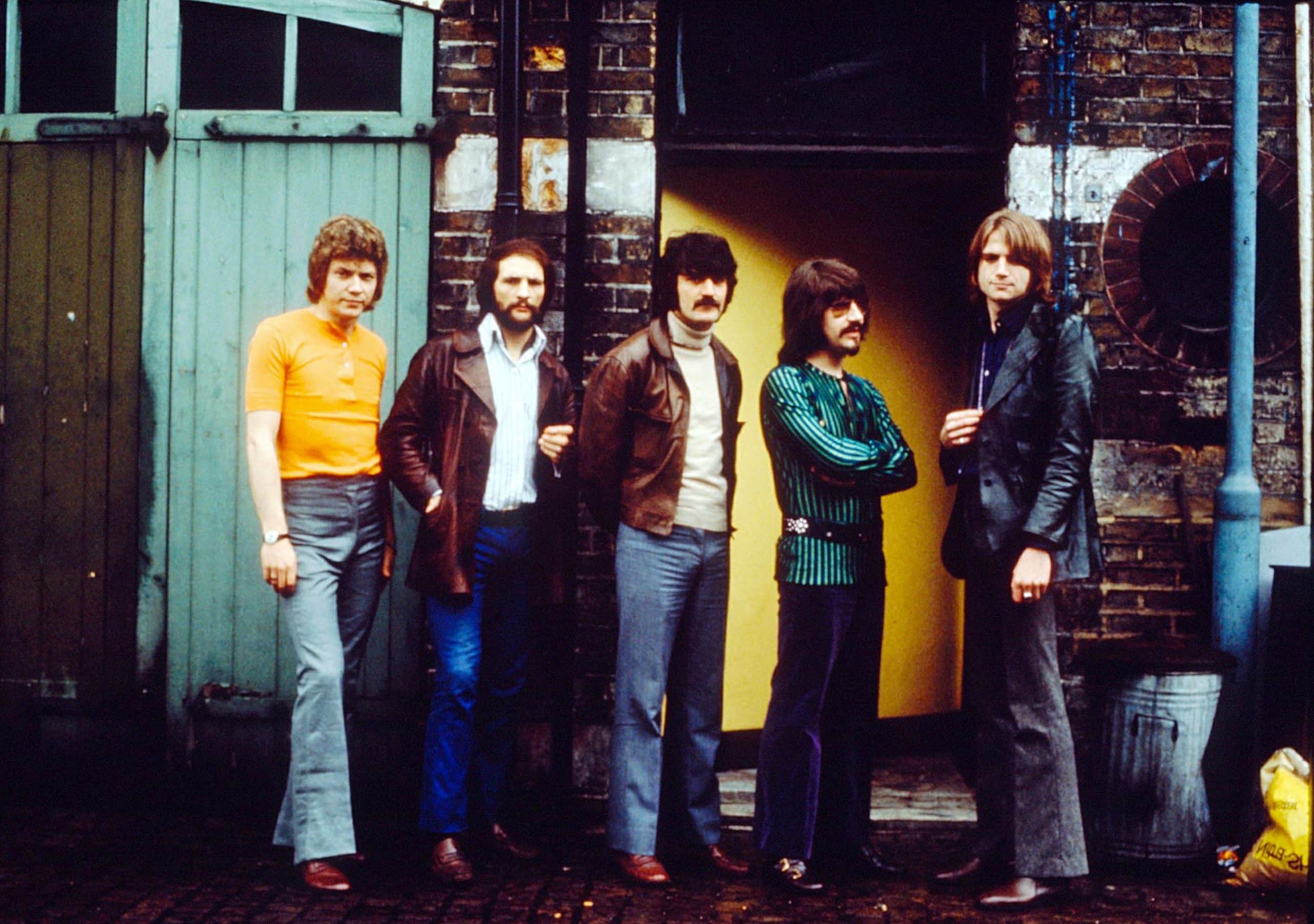
Few bands have mastered the art of blending rock, orchestration, and poetic storytelling quite like The Moody Blues. Emerging in the 1960s, the band revolutionized progressive rock with their lush soundscapes, introspective lyrics, and groundbreaking use of the Mellotron. From symphonic ballads to electrifying rock anthems, their music transcended generations, leaving an indelible mark on the world of classic rock.
With a career spanning over five decades, The Moody Blues delivered some of the most unforgettable songs in rock history—tracks that evoke deep emotions, transport listeners to otherworldly realms, and spark nostalgia for times gone by. Whether it’s the haunting beauty of Nights in White Satin, the philosophical musings of Question, or the uplifting energy of Ride My See-Saw, their music continues to captivate audiences worldwide.
In this list, we count down the 10 most popular Moody Blues songs of all time, celebrating the tracks that defined their legacy. Whether you’re a lifelong fan or just discovering their music, these songs are a testament to their brilliance. Get ready to relive the magic, the mystery, and the melodies that made The Moody Blues legendary! 🎶✨
1. Nights in White Satin (1967)
A timeless classic, “Nights in White Satin” stands as The Moody Blues’ most iconic and emotionally resonant song. Released in 1967 as part of the groundbreaking album Days of Future Passed, this haunting ballad masterfully blends orchestral grandeur with deeply poetic lyricism. The song captures the melancholy of love, loss, and longing, with Justin Hayward’s heartfelt vocals soaring over lush Mellotron strings. Its dreamlike atmosphere, built through sweeping crescendos and introspective verses, struck a powerful chord with listeners, solidifying its place as one of rock’s greatest ballads. Adding to its mystique is the spoken-word outro, “Late Lament,” which delivers a philosophical reflection on life and love. Over the decades, the song has been covered, sampled, and immortalized in film and television, proving its enduring influence in popular culture.
2. Tuesday Afternoon (Forever Afternoon) (1967)
A beautifully atmospheric track from Days of Future Passed, “Tuesday Afternoon” is a psychedelic journey that captures a moment of peaceful introspection. Written and sung by Justin Hayward, the song’s delicate acoustic guitar and Mellotron melodies create a whimsical, floating sensation, evoking the tranquility of a quiet afternoon. The lyrics explore themes of self-reflection, wonder, and optimism, making it one of the band’s most uplifting songs. The orchestral reprise at the song’s end seamlessly ties it into the album’s concept of a day’s emotional evolution. Over the years, “Tuesday Afternoon” has remained a fan favorite, cherished for its poetic beauty and soothing, dreamlike quality.
3. Ride My See-Saw (1968)
One of The Moody Blues’ most energetic rockers, “Ride My See-Saw” bursts with an infectious, electrifying energy. Featured on In Search of the Lost Chord, the song boasts a driving bassline, dynamic guitar riffs, and exhilarating harmonies that perfectly capture the highs and lows of youthful discovery. John Lodge’s commanding lead vocals add a sense of urgency, while the song’s pulsating rhythm propels it forward with relentless momentum. Frequently performed as a concert finale, it has become an enduring anthem of adventure, freedom, and the ever-changing ride of life. Its high-energy performance and timeless appeal make it one of the band’s standout rock tracks.
4. Question (1970)
Opening with a rapid acoustic guitar riff that immediately grabs attention, “Question” is one of The Moody Blues’ most thought-provoking and dynamic songs. Released as the lead single from A Question of Balance, the track showcases Justin Hayward’s passionate vocals as he explores profound themes of love, war, and the search for meaning in an uncertain world. The song’s structure alternates between urgent, percussive strumming and sweeping, melancholic orchestration, mirroring the emotional intensity of the lyrics. Its anthemic quality, combined with its deep philosophical musings, helped it become a fan favorite and a defining track in the band’s catalog.
5. The Story in Your Eyes (1971)
A powerful and compact rock song from Every Good Boy Deserves Favour, “The Story in Your Eyes” delivers an intense mix of driving beats and emotionally charged lyrics. Justin Hayward’s impassioned vocals convey a sense of urgency as he contemplates the passage of time and the uncertainties of the future. The track features one of the band’s most memorable guitar riffs, providing a raw and electrifying energy that sets it apart. Balancing introspection with a forceful rock sound, the song remains one of The Moody Blues’ most enduring classics, capturing both their lyrical depth and musical power.
6. Isn’t Life Strange (1972)
A deeply moving and symphonic ballad from Seventh Sojourn, “Isn’t Life Strange” showcases the band’s orchestral ambitions at their finest. John Lodge’s haunting vocals and the song’s grand instrumental arrangements create an almost cinematic experience. The track begins as a delicate contemplation of life’s unpredictable nature before building into a dramatic, sweeping climax. The intricate harmonies and evocative orchestration lend the song an operatic quality, making it one of the most emotionally stirring compositions in the Moody Blues’ repertoire. Its timeless theme of life’s uncertainty continues to resonate with listeners.
7. I’m Just a Singer (In a Rock and Roll Band) (1973)
A high-energy anthem with a rebellious spirit, “I’m Just a Singer (In a Rock and Roll Band)” delivers a powerful message about the role of musicians in society. Featured on Seventh Sojourn, the song was written in response to fans who looked to the band for answers to life’s big questions. With a bold, driving rhythm, brass-like synthesizer stabs, and John Lodge’s commanding vocals, the track emphasizes that musicians are storytellers, not prophets. Its infectious groove and no-nonsense attitude make it one of the band’s most energetic and memorable tracks, solidifying its place as a standout hit.
8. Your Wildest Dreams (1986)
Blending 1980s synth-pop with The Moody Blues’ signature emotional depth, “Your Wildest Dreams” is a nostalgic and romantic masterpiece from The Other Side of Life. The lyrics explore themes of lost love and the lingering memories of past relationships, resonating with listeners who have ever reminisced about what once was. Justin Hayward’s heartfelt vocals, combined with shimmering synthesizers and an uplifting chorus, made the song a major hit. It remains one of their most recognizable and beloved tracks, proving that even in their later years, the band could create timeless music that connects with audiences on a deeply personal level.
9. I Know You’re Out There Somewhere (1988)
A spiritual successor to “Your Wildest Dreams,” “I Know You’re Out There Somewhere” continues the theme of lost love and the possibility of reunion. Featured on Sur la Mer, the song carries an optimistic and hopeful message, with soaring melodies, lush synthesizers, and an anthemic chorus. Justin Hayward’s earnest vocals drive home the song’s emotional core, making it a favorite among fans of their later work. With its polished production and relatable themes of destiny and longing, it remains a standout track in The Moody Blues’ catalog.
10. Gemini Dream (1981)
A vibrant and energetic track from Long Distance Voyager, “Gemini Dream” highlights The Moody Blues’ seamless transition into the 1980s sound. Featuring a pulsating beat, catchy hooks, and a futuristic feel, the song blends rock with synth-driven elements, proving the band’s ability to evolve while staying true to their signature style. Lyrically, it celebrates escapism and the duality between dreams and reality, making it a fitting anthem for an era defined by both idealism and innovation. With its infectious rhythm and engaging melody, “Gemini Dream” remains a beloved hit from the band’s later years.

Samuel Moore is a frequent contributor to Singers Room. Since 2005, Singersroom has been the voice of R&B around the world. Connect with us via social media below.









