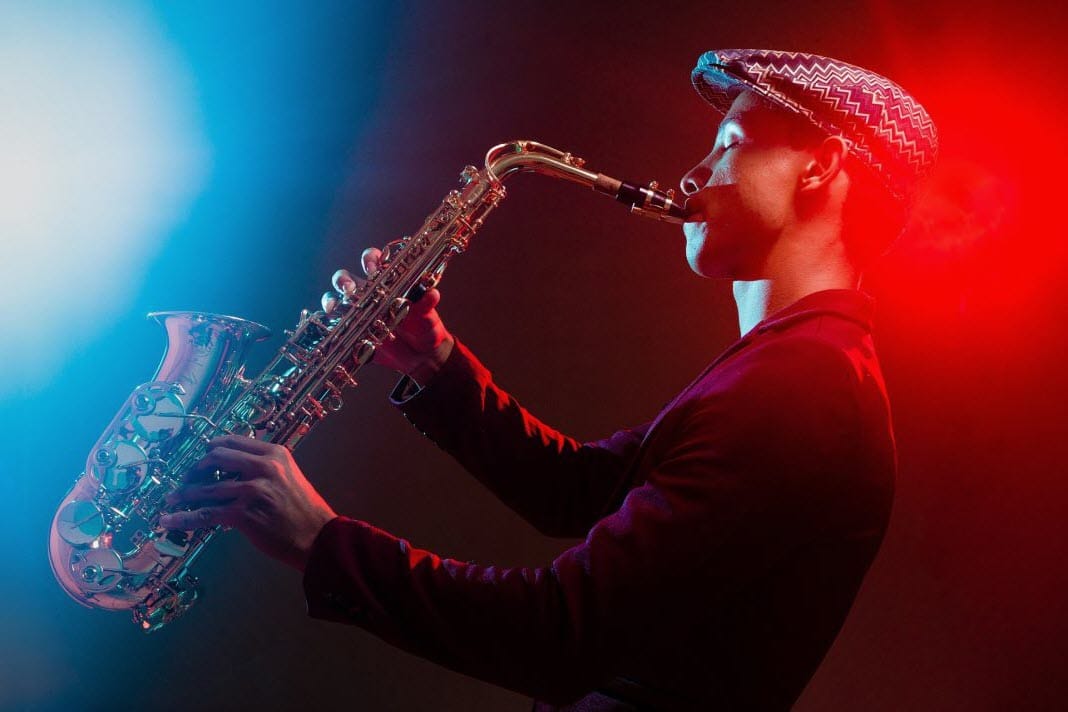
The saxophone, with its smooth curves and sultry tones, has long been a cornerstone of musical expression, captivating audiences across genres from jazz to classical, rock to blues. For over a century, this instrument has been a bridge between technical mastery and raw emotion, giving rise to some of the most iconic and groundbreaking musicians in history. In this article, we celebrate the top 15 best saxophone players of all time—virtuosos who have not only mastered the instrument but also reshaped the musical landscape with their innovative styles, unforgettable performances, and timeless compositions.
From the smoky jazz clubs of New Orleans to the global stages of the modern music scene, these legendary players have left an indelible mark on music. Whether it’s John Coltrane’s soul-stirring improvisations, Charlie Parker’s lightning-fast bebop runs, or the genre-defying artistry of players like Candy Dulfer and Michael Brecker, each of these musicians has a unique story and sound that continues to inspire generations.
Prepare to embark on a journey through the golden age of jazz, the electric fusion of funk, and beyond as we honor the saxophone maestros who turned every note into magic. Who made the list? Let’s dive in and find out!
1. Charlie Parker
Charlie “Bird” Parker wasn’t just a saxophonist—he was a revolutionary force in jazz. As one of the co-founders of bebop, Parker changed the trajectory of jazz with his blistering speed, complex harmonies, and deeply expressive phrasing. His approach to improvisation set a new standard, with lightning-fast runs that danced effortlessly over chord changes. Pieces like Ornithology and Ko-Ko remain iconic examples of his technical and creative genius.
Despite his struggles with addiction, Parker’s influence never wavered. His collaborations with Dizzy Gillespie and Thelonious Monk pushed jazz into uncharted territory, making bebop the dominant form of modern jazz. He could make the saxophone wail with raw emotion one moment and dazzle with breathtaking virtuosity the next. Even after his untimely passing at just 34, his recordings remain essential listening for musicians and jazz lovers alike.
Beyond his technique, Parker’s impact on jazz is immeasurable. His fearless approach to harmony laid the groundwork for generations of improvisers, while his sheer energy and innovation continue to inspire saxophonists in every genre. His nickname, “Bird,” is now synonymous with musical brilliance. To this day, Charlie Parker’s legacy looms large over jazz, proving that true artistry transcends time.
2. John Coltrane
John Coltrane was more than just a saxophonist—he was a spiritual seeker who used music to explore the depths of human emotion and the mysteries of the universe. A master of both the tenor and soprano saxophones, Coltrane redefined jazz with his innovative approach to harmony, improvisation, and modal jazz. His relentless pursuit of musical and personal transcendence led him to create some of the most profound and moving recordings in jazz history.
Coltrane first gained recognition as a sideman with Miles Davis, contributing to the legendary album Kind of Blue. But it was his own work that cemented his status as one of jazz’s greatest visionaries. Albums like Giant Steps showcased his technical brilliance, while A Love Supreme became a spiritual manifesto, blending raw emotion with intricate improvisation. His later explorations into avant-garde jazz pushed the boundaries of what the saxophone—and jazz itself—could be.
Coltrane’s “sheets of sound” technique, characterized by dense flurries of notes, influenced countless musicians and expanded the possibilities of saxophone playing. His devotion to his craft was almost monastic, and his music continues to inspire saxophonists, composers, and listeners worldwide. Whether playing a tender ballad or an explosive improvisation, Coltrane’s saxophone always spoke with soul, urgency, and a profound sense of purpose.
3. Sonny Rollins
Sonny Rollins is a living jazz legend, known for his bold, imaginative improvisations and powerful tone. Nicknamed the “Saxophone Colossus,” Rollins emerged in the 1950s as one of the most inventive voices in jazz, blending deep blues feeling with bebop complexity. His ability to transform a simple melody into an exhilarating improvisational journey is unmatched.
His recordings, particularly Saxophone Colossus and The Bridge, highlight his fearless approach to improvisation. “St. Thomas,” one of his most famous compositions, exemplifies his signature style—effortlessly swinging, melodically playful, and rhythmically dynamic. Rollins was also known for his time away from the spotlight; in the late 1950s, he famously took a break from performing to practice on New York’s Williamsburg Bridge, refining his sound in solitude before making a triumphant return.
What sets Rollins apart is his ability to tell stories through his solos. His improvisations are filled with humor, intelligence, and deep emotion, making his music feel alive and spontaneous. Even well into his later years, Rollins continued to push the boundaries of jazz, proving that creativity and mastery only grow with time. His legacy is one of constant reinvention and fearless expression, making him one of the most revered saxophonists in history.
4. Stan Getz
Stan Getz, often called “The Sound,” was one of the smoothest and most lyrical tenor saxophonists in jazz history. His warm, velvety tone and effortless phrasing made him a standout in both cool jazz and bossa nova, helping to bring Brazilian music to a worldwide audience.
Getz’s early career saw him working with big bands, but he truly found his voice in the cool jazz movement. His ballad playing was particularly stunning, with each note dripping with emotion and nuance. However, it was his collaboration with Brazilian musicians João Gilberto and Antonio Carlos Jobim that cemented his place in history. The album Getz/Gilberto introduced the world to bossa nova and produced the timeless hit “The Girl from Ipanema,” which remains one of the most recognizable jazz recordings of all time.
While Getz was often associated with mellow, melodic playing, he was also a highly skilled improviser with deep jazz roots. His ability to weave intricate, flowing lines over chord changes made him a master of bebop as well as ballads. Whether playing a fiery solo or a tender melody, his saxophone always seemed to sing. His influence on jazz saxophonists is immeasurable, proving that technical mastery and emotional depth can coexist in perfect harmony.
5. Cannonball Adderley
Cannonball Adderley was a force of nature on the alto saxophone, blending boundless energy with an irresistibly warm, bluesy tone. His playing was deeply rooted in bebop but infused with a soulful, gospel-like quality that set him apart from his contemporaries. Whether delivering fiery improvisations or smooth, lyrical solos, Adderley had an uncanny ability to make every note feel joyful and alive.
His rise to fame came when he joined Miles Davis’s band in the late 1950s, contributing to the iconic album Kind of Blue. His expressive playing on tracks like “All Blues” and “Freddie Freeloader” showcased his deep understanding of melody and swing. But it was his work as a bandleader that truly defined his legacy. Classics like “Mercy, Mercy, Mercy” and “Work Song” fused jazz with R&B and funk, helping to pave the way for soul jazz.
Cannonball’s onstage personality was just as vibrant as his playing. He often introduced his songs with engaging, humorous commentary, making jazz more accessible to a broader audience. His infectious enthusiasm and unmatched skill made him a favorite among jazz lovers, and his influence can still be heard in the playing of countless saxophonists today.
6. Dexter Gordon
Dexter Gordon was a towering figure in the world of jazz—both literally and musically. At 6’6″, his physical presence was as commanding as his bold, full-bodied tenor saxophone sound. One of the first musicians to translate Charlie Parker’s bebop innovations to the tenor sax, Gordon played with a deep, rich tone that could swing hard one moment and convey deep tenderness the next.
His career spanned several decades, with standout recordings like Go! and Our Man in Paris solidifying his place among jazz royalty. His playing was characterized by its lyrical phrasing and effortless swing, making even the most complex bebop lines sound smooth and natural. His love for melody was evident in his ballad playing, where his velvety tone and relaxed approach made every note sing.
Gordon’s legacy isn’t just in his music—he also made history as one of the first jazz musicians to successfully transition into acting. His performance in the 1986 film Round Midnight earned him an Academy Award nomination, proving that his charisma extended beyond the stage. A true jazz icon, Dexter Gordon’s influence can still be felt in the work of modern saxophonists who strive to capture his distinctive blend of sophistication and soul.
7. Michael Brecker
Michael Brecker was a saxophone virtuoso whose technical brilliance and emotional depth made him one of the most influential saxophonists of the late 20th century. Whether playing jazz, rock, or fusion, his unmistakable sound and flawless technique set him apart as a musician who could do it all.
Brecker first gained recognition in the 1970s as part of the Brecker Brothers, a jazz-fusion group he co-led with his brother, trumpet player Randy Brecker. His ability to craft intricate, high-energy solos made him a sought-after session musician, and he went on to play with legends like Joni Mitchell, Steely Dan, and Paul Simon. But despite his success in the pop world, Brecker remained deeply committed to jazz, leading his own groups and delivering breathtaking performances.
One of his most notable contributions was his pioneering use of the Electronic Wind Instrument (EWI), which allowed him to create otherworldly sounds and expand the possibilities of the saxophone. Yet, even with all his technical innovations, what set Brecker apart was the raw emotion in his playing. His ability to combine dazzling speed with deep feeling made him one of the most respected musicians of his time. His influence continues to shape modern jazz saxophonists who aspire to match his unparalleled mastery.
8. Ornette Coleman
Ornette Coleman was a revolutionary force in jazz, redefining the boundaries of improvisation and structure. As the pioneer of free jazz, he rejected traditional chord progressions and harmonic constraints, creating a sound that was raw, spontaneous, and deeply expressive. His alto saxophone playing was unlike anything that came before—unpredictable, emotionally charged, and often defying conventional technique.
His 1959 album The Shape of Jazz to Come was a game-changer, featuring classics like “Lonely Woman,” which showcased his ability to blend avant-garde exploration with deep emotional resonance. The lack of a traditional harmonic foundation in his compositions allowed him and his bandmates to interact in an entirely new way, emphasizing melody and feeling over rigid structure.
Despite early skepticism from jazz traditionalists, Coleman’s influence grew, and he went on to release landmark albums like Free Jazz, a daring experiment that featured a double quartet playing simultaneously. His sound was at times abrasive and chaotic, yet always deeply human. Even as he expanded into symphonic compositions and collaborations with rock and funk musicians, his spirit of fearless innovation remained.
Coleman’s legacy is one of artistic freedom—he encouraged musicians to trust their instincts and break the rules. His approach to music, often called “harmolodics,” has inspired generations of avant-garde jazz artists and remains a cornerstone of experimental jazz.
9. Lester Young
Lester “Prez” Young was one of the most influential saxophonists in jazz history, shaping the sound of the tenor saxophone with his smooth, lyrical style. While many of his contemporaries favored a bold, aggressive approach, Young played with a light, flowing touch, pioneering a relaxed, cool sound that would later influence entire jazz movements.
His tenure with Count Basie’s orchestra in the 1930s and 1940s established him as a standout soloist. His improvisations were melodic and effortless, often dancing around the beat with a laid-back feel that was ahead of its time. His collaborations with Billie Holiday produced some of the most intimate and heartfelt jazz recordings ever made, their musical connection so strong that she affectionately called him “Prez.”
Young’s playing was notable for his unique phrasing and his ability to convey emotion with the subtlest inflections. His solos on tracks like “Lester Leaps In” and “These Foolish Things” remain classics, showcasing his ability to swing with ease while maintaining a gentle, almost conversational tone.
Though he faced personal struggles later in life, his influence never waned. His cool, understated style laid the groundwork for future jazz movements, including cool jazz and West Coast jazz. Musicians like Stan Getz and Paul Desmond cited him as a major inspiration, and his legacy lives on in the countless saxophonists who strive to capture his effortless elegance.
10. Gerry Mulligan
Gerry Mulligan was a trailblazer on the baritone saxophone, transforming an often-overlooked instrument into a vehicle for lyrical, melodic jazz. Unlike many baritone players who emphasized its deep, heavy tones, Mulligan brought a lightness and fluidity to the instrument, making it sing with warmth and grace.
He was a key figure in the development of cool jazz, particularly through his groundbreaking work with the pianoless quartet featuring trumpeter Chet Baker. This unconventional setup, which relied on counterpoint and interplay between instruments rather than a chordal foundation, gave their music an airy, free-flowing quality. Tracks like “Walkin’ Shoes” and “Line for Lyons” exemplified Mulligan’s ability to craft swinging, sophisticated melodies.
Beyond his work as a saxophonist, Mulligan was a gifted composer and arranger. He contributed to the iconic Birth of the Cool sessions led by Miles Davis, helping to shape the smooth, restrained aesthetic of cool jazz. He later led big bands and experimented with orchestral jazz, always pushing the boundaries of his instrument’s role in the genre.
Mulligan’s legacy is one of innovation and refinement. His contributions to cool jazz and his unique approach to the baritone saxophone cemented his place in jazz history. Even decades after his passing, his recordings remain a benchmark for musicians seeking to blend technical mastery with effortless musicality.
11. Ben Webster
Ben Webster, affectionately known as “The Brute,” was a tenor saxophonist with one of the most distinctive sounds in jazz. He had the rare ability to switch between a growling, full-bodied tone and a whisper-soft, tender approach, making his playing deeply expressive. His mastery of dynamics and phrasing made every note count, turning simple melodies into profoundly emotional statements.
Webster first gained prominence as a key member of Duke Ellington’s orchestra in the 1940s, where his rich, warm tone added depth to the band’s signature sound. His solos on pieces like “Cotton Tail” and “All Too Soon” became legendary, demonstrating his ability to swing effortlessly while injecting a raw, bluesy feel.
But it was in his ballad playing that Webster truly shined. His renditions of standards like “Tenderly” and “Danny Boy” remain some of the most soulful saxophone performances ever recorded. His breathy, almost vocal-like tone made him a master of romantic, intimate jazz.
Even after leaving Ellington’s band, Webster continued to record and perform prolifically, collaborating with artists like Oscar Peterson and Art Tatum. His influence on later saxophonists, particularly those drawn to warm, expressive playing, is immeasurable. He remains a defining figure in the history of the tenor saxophone, known for his unmatched ability to balance brute strength with tender emotion.
12. Coleman Hawkins
Coleman Hawkins, often called the “Father of the Tenor Saxophone,” was one of the first musicians to establish the instrument as a serious voice in jazz. Before Hawkins, the tenor saxophone was mainly used as a novelty or background instrument in big bands. But his bold, commanding tone and sophisticated harmonic approach transformed it into a leading solo instrument.
His 1939 recording of “Body and Soul” is one of the most influential jazz performances of all time. Unlike the traditional approach of playing a song’s melody before improvising, Hawkins launched directly into a series of intricate, harmonically rich variations. His lush, arpeggiated lines and deep, full-bodied tone set a new standard for saxophone improvisation.
Hawkins was a restless innovator who refused to stay stuck in one style. He adapted seamlessly to the swing era, bebop, and even early avant-garde movements, proving his versatility. His collaborations with Thelonious Monk and Dizzy Gillespie showed his willingness to embrace new harmonic concepts, even as he remained deeply rooted in his own powerful sound.
His influence on jazz saxophonists cannot be overstated. Players like Sonny Rollins, John Coltrane, and Dexter Gordon all built upon the foundation that Hawkins laid. His pioneering approach to harmony, phrasing, and tone ensured that the tenor saxophone would forever be at the forefront of jazz.
13. Wayne Shorter
Wayne Shorter was a visionary saxophonist and composer who constantly pushed jazz forward. From his early days with Art Blakey’s Jazz Messengers to his groundbreaking work with Miles Davis’s Second Great Quintet and Weather Report, Shorter was a fearless innovator.
His tenor and soprano saxophone playing was defined by its poetic, almost storytelling-like quality. Unlike many of his contemporaries, Shorter didn’t rely on pure technical firepower; instead, he played with a deep sense of mystery, space, and emotional weight. His compositions, such as “Footprints,” “Speak No Evil,” and “Infant Eyes,” became jazz standards, blending sophisticated harmonies with haunting melodies.
Shorter’s time with Miles Davis in the 1960s was particularly transformative. He played a crucial role in the development of modal and post-bop jazz, helping to create an atmospheric, free-flowing style that allowed for more open-ended improvisation. Later, as a founding member of Weather Report, he helped pioneer jazz fusion, bringing in elements of rock, funk, and electronic music.
Even in his later years, Shorter never stopped evolving. His Grammy-winning compositions and orchestral works demonstrated that his creative mind remained as sharp as ever. His impact on jazz is immeasurable—his saxophone voice was one of the most distinctive in the genre, and his compositions continue to inspire generations of musicians.
14. Candy Dulfer
Candy Dulfer is a contemporary saxophonist who has carved out a unique place in the world of jazz, funk, and pop. With her signature blend of smooth jazz and high-energy funk, she has captivated audiences worldwide, proving that the saxophone remains a powerful force in modern music.
Born into a musical family—her father, Hans Dulfer, is a respected jazz saxophonist—Candy picked up the saxophone at an early age and quickly developed a bold, confident sound. She first gained international recognition with her breakout hit “Lily Was Here,” a sultry, atmospheric collaboration with Dave Stewart of Eurythmics. The song became a major success and showcased her ability to blend jazz with contemporary styles.
Dulfer’s career has been defined by her versatility. She has worked with a diverse range of artists, including Prince, Maceo Parker, Van Morrison, and Beyoncé, seamlessly adapting her style to different genres. Whether playing a fiery funk solo or a smooth jazz ballad, her sound remains instantly recognizable—bright, energetic, and soulful.
Beyond her studio work, Dulfer is known for her electrifying live performances. Her stage presence and charisma make her concerts an unforgettable experience, and she continues to tour extensively. Her contributions to modern jazz and fusion music ensure that she remains one of the most influential saxophonists of her generation.
15. Grover Washington Jr.
Grover Washington Jr. was a pioneer of smooth jazz, blending the technical mastery of jazz with the accessibility of R&B and soul. His warm, lyrical tone and impeccable sense of groove helped define the sound of contemporary jazz, making him one of the most beloved saxophonists of all time.
Born in Buffalo, New York, Washington was steeped in jazz and blues from an early age. He developed a style that was both technically sophisticated and deeply melodic, making his music appealing to both jazz purists and mainstream audiences. His breakthrough came with the album Mister Magic, which featured a fusion of jazz, funk, and R&B rhythms. The title track became a hit and established Washington as a leading figure in jazz-fusion.
Perhaps his most famous song is “Just the Two of Us,” a smooth, soulful collaboration with Bill Withers. The track’s laid-back groove and Washington’s velvety saxophone lines made it an instant classic, further cementing his reputation as a crossover artist. Other hits like “Winelight” and “Let It Flow” continued to showcase his ability to craft beautiful, immersive melodies.
Washington’s influence extends far beyond jazz—his sound helped shape the development of R&B, hip-hop, and neo-soul. Artists from Kenny G to Najee have cited him as a major inspiration. His legacy lives on through the countless musicians who continue to be inspired by his smooth, sophisticated approach to the saxophone.

Edward Tomlin is a frequent contributor to Singers Room. Since 2005, Singersroom has been the voice of R&B around the world. Connect with us via social media below.