Jazz—an art form that transcends time, borders, and generations. From smoky clubs in New Orleans to grand concert halls around the world, jazz has evolved into a genre synonymous with innovation, passion, and boundless creativity. It’s a style of music that speaks to the soul, where every note tells a story and every improvisation is a leap of faith. At its heart are the pioneers, virtuosos, and visionaries who shaped its history, pushing boundaries and redefining what music could be.
In this article, we embark on an electrifying journey through the lives and legacies of the 15 greatest jazz artists of all time. These are the legends who revolutionized the genre, from Louis Armstrong’s trailblazing trumpet to Miles Davis’s genre-defying brilliance, from Ella Fitzgerald’s velvety vocals to John Coltrane’s transcendent saxophone. Whether you’re a lifelong jazz aficionado or a curious newcomer, this list will immerse you in the artistry, innovation, and sheer magic that these musicians brought to the world.
Get ready to rediscover timeless classics, uncover hidden gems, and celebrate the genius of the icons who turned jazz into more than just music—it’s a way of life. Let the rhythm take you!
1. Louis Armstrong
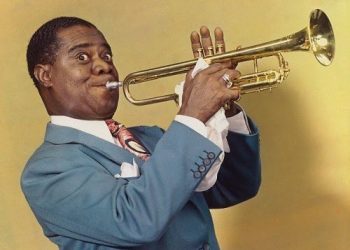
Louis Armstrong, often called the father of jazz, was more than just a musician—he was a revolutionary force who changed the way music was played, sung, and even perceived. His unmistakable gravelly voice and dazzling trumpet skills set the standard for jazz musicians, influencing countless artists across generations. Born in New Orleans in 1901, Armstrong’s rise from poverty to global stardom is one of the most inspiring stories in music history.
With hits like “What a Wonderful World” and “La Vie En Rose”, Armstrong’s music exuded warmth, optimism, and sheer joy. But his impact went far beyond chart-topping songs—he was a master of improvisation, breaking musical boundaries with his expressive playing and pioneering scat singing. His recordings with his Hot Five and Hot Seven bands in the 1920s transformed jazz from ensemble-based performances to a soloist’s art, making room for personal expression in ways never seen before.
Nicknamed “Satchmo” and “Pops,” Armstrong wasn’t just a musician; he was a cultural ambassador who used his music to break racial barriers and bring jazz to a worldwide audience. His stage presence, infectious smile, and unbreakable spirit made him a beloved figure, even beyond the jazz world. He played for presidents, kings, and fans across continents, proving that jazz was a universal language. His influence on both jazz and popular music remains immeasurable, as his innovative techniques still shape how musicians approach rhythm, phrasing, and improvisation.
Decades after his passing, Armstrong’s recordings continue to inspire and delight listeners. Whether delivering an electrifying trumpet solo or singing with heartfelt sincerity, Louis Armstrong remains one of the greatest musical icons of all time, a name forever etched in the history of jazz.
2. Miles Davis
Miles Davis wasn’t just a jazz musician—he was a sonic architect, constantly reinventing himself and the genre. Over a career spanning five decades, Davis shaped the course of jazz multiple times, pioneering styles ranging from bebop and cool jazz to modal jazz and fusion. His ability to push boundaries made him one of the most influential and innovative artists in music history.
Born in 1926 in Alton, Illinois, and raised in East St. Louis, Davis displayed remarkable talent early on. By the time he was 18, he had already played with bebop legends like Charlie Parker and Dizzy Gillespie. But rather than simply following in their footsteps, Davis carved out his own path. His landmark album Kind of Blue (1959) remains one of the best-selling jazz records of all time, introducing modal jazz—a style based on scales rather than chord progressions—allowing for greater freedom in improvisation. Tracks like “So What” and “Freddie Freeloader” became defining moments in jazz history.
Never one to stay in one place musically, Davis evolved constantly. In the late 1960s and early ’70s, he pioneered jazz fusion, blending rock, funk, and electronic sounds into groundbreaking albums like Bitches Brew (1970). This era expanded jazz’s audience and proved that the genre could absorb new influences while remaining fresh and forward-thinking. His ability to surround himself with extraordinary musicians—including John Coltrane, Herbie Hancock, and Chick Corea—further cemented his legendary status.
Davis’s signature muted trumpet sound, his cool yet commanding stage presence, and his relentless pursuit of innovation made him a towering figure in jazz. His legacy isn’t just in the records he left behind, but in the fearless spirit of musical exploration he inspired in generations of artists after him.
3. Duke Ellington
Duke Ellington wasn’t just a jazz musician—he was a visionary composer, bandleader, and one of the most significant figures in American music. His career spanned more than 50 years, during which he transformed jazz into a sophisticated art form, elevating it beyond mere entertainment into a respected genre of musical expression.
Born in 1899 in Washington, D.C., Ellington was drawn to music early, excelling as a pianist before forming his own band in the 1920s. By the time the group became the house band at Harlem’s famed Cotton Club, Ellington’s orchestra had developed a distinctive sound, fusing swing, blues, and classical influences. Songs like “Take the ‘A’ Train” (written by longtime collaborator Billy Strayhorn) and “Mood Indigo” became jazz standards, showcasing Ellington’s genius for melody, harmony, and orchestration.
One of his greatest strengths was his ability to write music specifically for the talents of individual musicians in his band, such as saxophonist Johnny Hodges and trumpeter Cootie Williams. This approach made his compositions deeply personal and unique. Ellington also broke new ground with ambitious extended works, such as Black, Brown, and Beige, which told the story of African American history through music.
Unlike many of his contemporaries, Ellington never viewed jazz as a passing fad. He continued to innovate into the 1960s and beyond, composing film scores, collaborating with other jazz greats like John Coltrane, and performing around the world. His contributions to music earned him numerous awards, including a Pulitzer Prize posthumously. More than just a musician, Ellington was a cultural ambassador whose legacy continues to inspire musicians and audiences alike.
4. John Coltrane
John Coltrane was more than a saxophonist—he was a spiritual force in jazz, pushing the boundaries of improvisation and composition. His playing was technically dazzling, emotionally profound, and deeply personal, making him one of the most influential jazz artists of all time.
Born in 1926 in North Carolina, Coltrane’s early career saw him working as a sideman with Miles Davis and Thelonious Monk. However, it wasn’t until he formed his own quartet in the early 1960s that his revolutionary ideas fully blossomed. His album Giant Steps (1960) redefined jazz improvisation, introducing complex harmonic progressions that challenged musicians and delighted listeners. But it was A Love Supreme (1965) that cemented his status as a jazz icon. More than just an album, it was a spiritual statement—a deeply moving suite of music that expressed his faith and devotion.
Coltrane’s later work delved even further into avant-garde jazz, embracing free improvisation and experimental sounds. Albums like Ascension and Interstellar Space reflected his constant desire to explore new dimensions of music. His playing became increasingly raw, passionate, and untethered, influencing countless musicians beyond jazz, including rock artists like Jimi Hendrix and The Doors.
Despite his tragically short life—he passed away in 1967 at just 40 years old—Coltrane’s impact remains enormous. His music continues to inspire jazz musicians, and his relentless pursuit of artistic and spiritual truth has made him a transcendent figure in music history.
5. Charlie Parker
Charlie Parker, known simply as “Bird,” was a jazz revolutionary who reshaped the landscape of the genre with his lightning-fast saxophone runs and complex harmonic innovations. A founding figure of bebop, Parker’s influence can be heard in nearly every jazz musician who followed him.
Born in 1920 in Kansas City, Parker’s early musical journey was marked by intense practice and relentless dedication. By the early 1940s, he had teamed up with trumpeter Dizzy Gillespie, and together they pioneered the bebop movement, a fast-paced, highly intricate form of jazz that moved away from the danceable swing style of the 1930s. His recordings of “Ko-Ko”, “Ornithology”, and “Now’s the Time” showcased his dazzling technical ability and groundbreaking approach to melody and improvisation.
Despite his musical genius, Parker’s life was plagued by struggles with addiction, which ultimately led to his untimely death at the age of 34. However, his legacy remains untouchable. He transformed jazz into an intellectually challenging art form, paving the way for modern jazz and influencing countless musicians across all genres.
6. Ella Fitzgerald
Ella Fitzgerald, the “First Lady of Song,” had a voice that was pure magic—silky smooth, effortlessly agile, and endlessly expressive. Whether she was swinging through an up-tempo tune or delivering a heart-wrenching ballad, her vocal control and improvisational skills made her one of the greatest jazz singers of all time.
Born in 1917 in Virginia and raised in New York, Fitzgerald’s career took off after winning an amateur singing competition at the Apollo Theater. She quickly rose to fame as the lead singer of the Chick Webb Orchestra, gaining recognition with her hit “A-Tisket, A-Tasket.”
Fitzgerald’s ability to interpret the Great American Songbook was unparalleled. Her recordings of Cole Porter, George Gershwin, and Duke Ellington compositions remain definitive renditions. But what truly set her apart was her mastery of scat singing—her ability to improvise wordless melodies with the precision of an instrumentalist. Tracks like “How High the Moon” and “Summertime” showcased her incredible vocal dexterity.
Over her six-decade career, Fitzgerald won 13 Grammy Awards and became one of the most beloved jazz vocalists in history. Her voice, full of warmth and joy, continues to captivate audiences worldwide.
7. Billie Holiday
Billie Holiday’s voice was a raw, emotional instrument that could tell a story like no other. With her distinctive phrasing and deeply personal interpretations, she brought a new level of expression to jazz singing.
Born in 1915 in Philadelphia, Holiday’s early life was fraught with hardship, but music became her refuge. By the 1930s, she was recording with jazz legends like Teddy Wilson and Count Basie, and her smoky, intimate voice quickly gained attention. Her performance of “Strange Fruit”, a haunting protest song about racial injustice, remains one of the most powerful moments in recorded music history. Other classics like “God Bless the Child” and “Lover Man” showcased her unique ability to infuse songs with raw emotion.
Despite personal struggles and battles with addiction, Holiday’s artistry remained unparalleled. Her voice, filled with longing and pain, spoke to the depths of the human experience. She left behind a legacy that continues to influence generations of vocalists across genres.
8. Thelonious Monk
Thelonious Monk was one of jazz’s most unconventional geniuses—a pianist and composer whose quirky, angular melodies and unpredictable rhythms set him apart from everyone else. His music was filled with a sense of humor and an unmistakable originality that still influences musicians today.
Born in 1917 in North Carolina, Monk moved to New York City at a young age, where he became a key figure in the bebop revolution. However, unlike Charlie Parker and Dizzy Gillespie, Monk’s approach to jazz was more minimalistic and percussive. His compositions, such as “Round Midnight”, “Straight, No Chaser”, and “Blue Monk”, featured unexpected dissonances and rhythmic shifts that defied traditional jazz conventions. His piano playing was just as unique—he often used silence as much as he used notes, creating a sense of space that made his music both challenging and deeply expressive.
Though his unconventional style wasn’t always understood during his early career, Monk eventually gained widespread recognition. He became one of the most recorded jazz composers, and his music has since become standard repertoire for jazz musicians around the world. Despite his eccentricities and a later struggle with mental illness, Monk’s legacy remains one of creativity, innovation, and unmatched individuality.
9. Art Blakey
As one of the most powerful drummers in jazz history, Art Blakey wasn’t just a rhythmic force—he was a mentor, bandleader, and a key figure in shaping the hard bop movement. His explosive drumming style and relentless energy made every performance electrifying.
Born in 1919 in Pittsburgh, Blakey started his career as a pianist before switching to drums. He played with jazz greats like Thelonious Monk and Dizzy Gillespie before forming The Jazz Messengers in the 1950s. More than just a band, The Jazz Messengers became a training ground for young talent, launching the careers of musicians like Wayne Shorter, Freddie Hubbard, and Wynton Marsalis.
Blakey’s drumming was thunderous yet precise, driving the band forward with unmatched intensity. Songs like “Moanin’” and “Blues March” showcase his signature hard-swinging grooves and dynamic solos. He had an instinct for discovering and nurturing talent, ensuring that jazz remained fresh and innovative for generations to come. Even after his passing in 1990, Blakey’s impact on jazz remains immeasurable.
10. Dizzy Gillespie
Dizzy Gillespie was jazz’s ultimate showman—an extraordinary trumpet player, a key architect of bebop, and an innovator who brought Afro-Cuban rhythms into jazz. With his iconic puffed cheeks and bent trumpet, he brought both technical mastery and a sense of fun to the music.
Born in 1917 in South Carolina, Gillespie quickly became known for his dazzling trumpet playing, filled with blistering speed and complex harmonic ideas. Alongside Charlie Parker, he helped create bebop, pushing jazz into more intricate and challenging territory. Songs like “A Night in Tunisia” and “Salt Peanuts” remain bebop classics, highlighting his virtuosic abilities.
Gillespie was also a pioneer in blending jazz with Latin music, collaborating with Cuban percussionist Chano Pozo to create vibrant, rhythmically rich compositions like “Manteca”. His charismatic personality and ability to connect with audiences made him one of the most beloved figures in jazz. Even as jazz evolved, Gillespie remained a leading figure, inspiring musicians worldwide until his passing in 1993.
11. Sarah Vaughan
Sarah Vaughan, often called “The Divine One,” possessed a voice of extraordinary depth, range, and technical precision. Her rich, velvety tone and impeccable control made her one of the most revered jazz vocalists of all time.
Born in 1924 in Newark, New Jersey, Vaughan got her big break after winning an amateur night competition at the Apollo Theater. She went on to sing with Earl Hines’ and Billy Eckstine’s bands, alongside jazz giants like Dizzy Gillespie and Charlie Parker. Her solo career soon took off, and her recordings of “Misty” and “Lullaby of Birdland” became legendary.
What set Vaughan apart was her ability to navigate intricate melodies and improvisations with ease, as if her voice were an instrument. She could deliver soaring high notes or plunge into deep, resonant lows, always maintaining impeccable phrasing and emotional depth. Whether she was singing jazz standards, pop songs, or even opera, her voice remained unmatched in beauty and sophistication.
12. Nat King Cole
Nat King Cole was more than just a jazz pianist—he was one of the most beloved vocalists of all time, with a voice so smooth it could melt even the coldest heart. His elegant style and timeless recordings made him a household name.
Born in 1919 in Montgomery, Alabama, Cole first gained fame as a jazz pianist, leading the Nat King Cole Trio. His warm, honey-toned voice soon took center stage, and hits like “Unforgettable” and “Mona Lisa” became instant classics. His sophisticated phrasing and effortless delivery made his music universally appealing.
Beyond his music, Cole broke racial barriers, becoming the first African American to host a nationally televised variety show in the U.S. Despite facing discrimination, he remained a trailblazer, paving the way for future Black artists in mainstream entertainment. His legacy lives on, with his music still cherished by audiences worldwide.
13. Herbie Hancock
Herbie Hancock is a true jazz innovator, constantly reinventing his sound and pushing boundaries. From acoustic jazz to funk-infused fusion, his music has remained fresh and relevant for over six decades.
Born in 1940 in Chicago, Hancock was a child prodigy on the piano. He first made waves in jazz as a member of Miles Davis’ Second Great Quintet, where he helped revolutionize modern jazz. His early compositions like “Maiden Voyage” and “Watermelon Man” became jazz standards, blending sophistication with accessibility.
Hancock later embraced electronic music, experimenting with synthesizers and funk on albums like Headhunters, which featured the infectious hit “Chameleon”. He continued to explore new sounds, even winning a Grammy for River: The Joni Letters, a jazz-infused tribute to Joni Mitchell. Whether playing straight-ahead jazz or futuristic fusion, Hancock remains a fearless innovator.
14. Chet Baker
Chet Baker was the epitome of cool—his soft, melancholic trumpet playing and hushed, intimate vocals made him a jazz icon. His music had an effortless, dreamlike quality that set him apart from more fiery, virtuosic players.
Born in 1929 in Oklahoma, Baker rose to fame in the 1950s as part of the West Coast jazz movement. His recording of “My Funny Valentine” remains one of the most hauntingly beautiful jazz ballads ever recorded. His playing was lyrical and understated, emphasizing emotion over technical showmanship.
Despite his struggles with addiction, Baker continued to record and perform throughout his life, producing some of his most poignant work in the later years of his career. His music remains a touchstone for those who appreciate jazz’s softer, more introspective side.
15. Wynton Marsalis
Wynton Marsalis is more than just a virtuoso trumpeter—he’s one of jazz’s greatest ambassadors, dedicated to preserving the tradition while pushing the music forward. His technical brilliance and deep respect for jazz’s history have made him one of the genre’s most important figures.
Born in 1961 in New Orleans, Marsalis was a child prodigy, mastering both classical and jazz trumpet. He became the first musician to win Grammy Awards in both genres in the same year. Albums like Black Codes (From the Underground) showcased his dazzling technique and deep-rooted swing feel.
As the leader of Jazz at Lincoln Center, Marsalis has worked tirelessly to educate and inspire new generations of jazz musicians. Whether playing fiery bebop, traditional New Orleans jazz, or composing large-scale works, Marsalis remains one of the most influential jazz artists of his time.

Edward Tomlin is a frequent contributor to Singers Room. Since 2005, Singersroom has been the voice of R&B around the world. Connect with us via social media below.