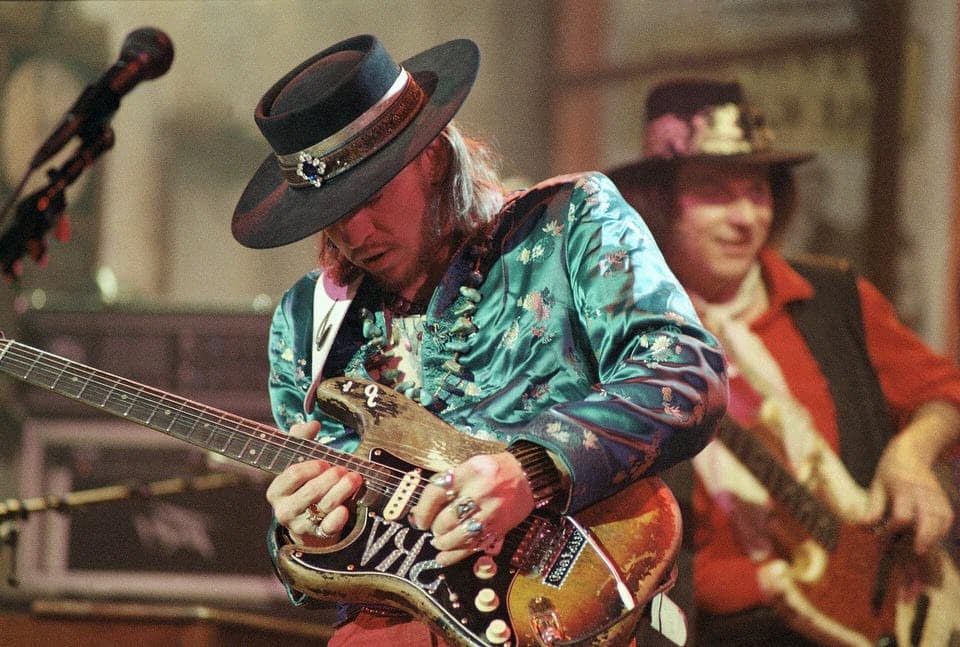
Few artists have left as indelible a mark on the world of music as Stevie Ray Vaughan. A master guitarist and a trailblazer in blues-rock, Vaughan’s electrifying performances and soul-stirring compositions continue to resonate with fans across generations. Emerging from the smoky clubs of Texas to dominate the global stage, Vaughan’s unmatched talent and raw emotional expression set him apart as one of the greatest musicians of all time.
With his iconic Fender Stratocaster in hand, Vaughan redefined the blues for a modern audience, blending searing riffs with heartfelt lyrics. His music is a testament to both technical brilliance and emotional depth, capturing everything from fiery passion to poignant introspection. Every note he played bore the weight of his soul, and his influence still reverberates through the music of countless artists today.
In this article, we celebrate the legacy of Stevie Ray Vaughan by delving into his top 10 most popular songs. From the high-octane energy of “Pride and Joy” to the haunting beauty of “Little Wing,” these tracks represent the very best of Vaughan’s artistry. Whether you’re a lifelong fan or a newcomer to his music, this list is sure to remind you why Stevie Ray Vaughan remains an enduring legend.
1. *Pride and Joy* (1983)
“Pride and Joy” stands as one of Stevie Ray Vaughan’s most iconic tracks, and is widely regarded as his signature song. Released on his 1983 debut album Texas Flood, this up-tempo blues-rock number exudes energy and confidence, showcasing Vaughan’s unmistakable guitar skills and infectious enthusiasm. The song’s driving Texas shuffle rhythm, paired with fiery guitar solos and Vaughan’s emotive vocals, creates an irresistible atmosphere that commands listeners to groove along. The lyrics tell the story of a joyful love, and Vaughan’s delivery perfectly complements the exuberance in the song, painting a picture of pure, unfiltered happiness. From the opening riff to the final note, “Pride and Joy” captures the spirit of Texas blues and rock and roll. The track has become a fan favorite, especially during Vaughan’s live performances, where his improvisational flair and fiery solos took the song to another level. In fact, “Pride and Joy” quickly became a staple of Vaughan’s live shows, a song that was guaranteed to set the crowd ablaze. What’s most impressive about the track is Vaughan’s ability to combine technical brilliance with raw emotion. His playing is incredibly fast and precise, but it’s also deeply heartfelt, making the song both technically impressive and emotionally moving. It’s this blend of musical mastery and passion that made “Pride and Joy” such an enduring anthem of Vaughan’s career. Over time, it has come to symbolize the power of love, the energy of live music, and the essence of the Texas blues tradition.
2. *Texas Flood* (1983)
The title track from Stevie Ray Vaughan’s debut album, Texas Flood, is a slow, haunting blues ballad that highlights his incredible range as a guitarist and vocalist. Released in 1983, the song paints a vivid picture of the devastation and chaos of a flood, with Vaughan’s wailing guitar evoking the powerful imagery of a stormy Texas landscape. The emotional depth of the song is evident in every note, from the anguished cries of his guitar to the pain in his voice. What’s remarkable about “Texas Flood” is how Vaughan turns the theme of natural disaster into an intimate exploration of heartache and struggle. It’s as much about personal torment as it is about the floodwaters themselves. The slow, bluesy rhythm of the track allows Vaughan’s guitar to breathe, giving each note and every bend of the string time to resonate deeply. His ability to express raw emotion through his playing is evident throughout, with each note filled with sorrow, yearning, and release. The song is a powerful testament to Vaughan’s connection to the blues tradition, paying homage to the genre’s deep roots while simultaneously showcasing his unique voice and skill. The title track also captures the atmosphere of the album, which is soaked in the rich, soulful tones of Texas blues. While “Texas Flood” is slow and contemplative, it still contains a fiery intensity, one that builds and ebbs throughout the song. Vaughan’s mastery of the blues is on full display, making “Texas Flood” not only one of his most iconic songs, but also a cornerstone of his legendary career.
3. *Scuttle Buttin’* (1984)
“Scuttle Buttin’,” released in 1984 on Stevie Ray Vaughan’s Couldn’t Stand the Weather album, is a jaw-dropping instrumental track that remains a true showcase of Vaughan’s unparalleled guitar technique. Clocking in at just over two minutes, the song is a lightning-fast, frenetic display of musical brilliance that leaves listeners in awe. The track is a true testament to Vaughan’s ability to blend speed, precision, and emotion, as he effortlessly shreds through intricate fingerwork and complex riffs at breakneck speed. The song’s breakneck pace and intricate guitar work are jaw-dropping, making it a favorite among guitarists and music enthusiasts alike. It’s one of those tracks that seems almost impossible to replicate, with Vaughan’s virtuosity and technical prowess shining through in every note. There is a sense of urgency in the song that perfectly matches its title, and Vaughan’s raw energy and passion fuel the performance from start to finish. What’s remarkable about “Scuttle Buttin’” is that it’s not just about showing off technical skills—Vaughan injects personality and emotion into every lick and run, making the song a perfect balance of virtuosity and feel. His trademark smoothness and fluidity are evident even in the fastest, most intricate parts of the song, highlighting the depth of his musicality. The song has become a defining track in Vaughan’s catalog, not only because of its technical brilliance but also because it encapsulates the very essence of what made Vaughan a guitar hero: his combination of speed, precision, and deep emotional expression.
4. *Couldn’t Stand the Weather* (1984)
The title track from Stevie Ray Vaughan’s Couldn’t Stand the Weather album is a blues-rock masterpiece that blends intricate guitar work with atmospheric grooves and a sense of emotional intensity. Released in 1984, this song sees Vaughan at the height of his powers, combining blistering guitar solos with a groovy, almost hypnotic rhythm. The track exudes a sense of resilience, as Vaughan’s fiery solos echo themes of change and the inevitability of life’s storms. The lyrics are introspective, hinting at personal struggles and challenges, but they are delivered with a sense of hope and perseverance. There’s a feeling of catharsis in the song as Vaughan’s guitar reaches towering, thunderous heights. The track’s mood is atmospheric, with Vaughan creating an almost cinematic vibe with his solos. His ability to seamlessly blend rock and blues is a hallmark of the song, as he moves between smooth, soulful lines and high-octane riffs effortlessly. The song builds momentum as it goes, taking the listener on a ride through waves of emotion and musical complexity. The blend of blues and rock feels organic and fluid, with Vaughan’s guitar often leading the way through a labyrinth of melodies and rhythms. What makes “Couldn’t Stand the Weather” stand out is its emotional depth. Vaughan uses his guitar as a vehicle to express feelings of longing, frustration, and strength, giving the song a rich, soulful edge. The track has become a cornerstone of Vaughan’s catalog, not only for its technical brilliance but also for its ability to connect on a deeply emotional level.
5. *Voodoo Child (Slight Return)* (1984)
Stevie Ray Vaughan’s take on Jimi Hendrix’s “Voodoo Child (Slight Return)”, released in 1984 on Couldn’t Stand the Weather, is an electrifying tribute to one of Vaughan’s greatest influences. While Hendrix’s original is a towering anthem of psychedelic rock, Vaughan’s version brings a fresh, blues-infused interpretation that feels both faithful to the spirit of the original and entirely his own. From the opening riff, it’s clear that Vaughan isn’t just trying to replicate the sound of Hendrix—he’s channeling his own energy and style into the track. Vaughan’s rendition is fiery and soulful, with his scorching guitar solos and impeccable technique elevating the song to new heights. The iconic riff is played with a unique blend of finesse and aggression, and Vaughan’s virtuosity shines as he takes the track in new, unpredictable directions. The rhythm section, too, is tight and driving, creating a perfect foundation for Vaughan’s blistering solos. What makes “Voodoo Child (Slight Return)” so special is Vaughan’s ability to inject his own personality into a song that is already so iconic. He honors the legacy of Hendrix, while adding his own spin, creating a version that stands on its own as a blues-rock masterpiece. Vaughan’s performance is brimming with soul and passion, and his ability to express emotion through his guitar is truly remarkable. The track has become a fan favorite and a defining moment in Vaughan’s career, showcasing his respect for the past while pushing the boundaries of the blues genre.
6. *Life Without You* (1985)
“Life Without You,” released in 1985 on Soul to Soul, is a deeply emotional ballad that unveils a softer, more introspective side of Stevie Ray Vaughan. Written as a tribute to a close friend, the song explores themes of loss, longing, and the profound impact someone can have on a person’s life. From the very first note, Vaughan’s guitar weaves a tapestry of emotion, with each bend and slide reflecting the heartache of living without someone special. His raw, soulful vocals add a layer of vulnerability, perfectly complementing the aching lyrics. The song is a perfect example of Vaughan’s ability to blend personal sorrow with universal emotions. The delicate, yet powerful, guitar playing on “Life Without You” is one of Vaughan’s finest moments, showcasing his ability to use the guitar not just as an instrument of technical skill, but as an extension of his soul. The melody is both haunting and beautiful, with the guitar acting as a conversation between Vaughan and the listener. This track marks a departure from the fiery, blues-rock style that Vaughan was known for, allowing him to explore a more reflective, melodic approach to his music. The song has become one of Vaughan’s most cherished ballads, resonating with anyone who has ever experienced loss and reminding them of the healing power of music. “Life Without You” is a testament to Vaughan’s versatility as an artist and his ability to turn personal grief into a powerful musical experience that touches the hearts of his listeners.
7. *Crossfire* (1989)
From the 1989 album In Step, “Crossfire” is a funky, groove-driven track that highlights Stevie Ray Vaughan’s evolution as both a guitarist and a songwriter. The song’s infectious rhythm, with its tight bassline and smooth percussion, gives it a contemporary feel while still maintaining Vaughan’s signature blues influence. The track is a dynamic fusion of blues, rock, and soul, reflecting Vaughan’s growing versatility and his ability to experiment with new sounds. The song’s lyrics tackle social issues, with Vaughan addressing the complexities of life in a world that often feels chaotic and divided. His delivery is both powerful and introspective, adding depth to the track’s message. The playful, yet serious, tone of “Crossfire” is balanced by Vaughan’s trademark fiery guitar solos, which cut through the song like a knife. Each solo is a masterclass in technique and emotion, filled with expressive bends, fast runs, and intricate phrasing that showcase Vaughan’s impeccable musicality. What makes “Crossfire” stand out is Vaughan’s ability to blend infectious rhythms with sharp, socially-conscious lyrics, all while delivering some of the most technically impressive guitar work of his career. The track marks a turning point in Vaughan’s musical journey, as he began to explore more diverse styles while still staying true to his blues roots. It was a hit on the charts and remains one of the standout tracks of his later career, a song that shows off Vaughan’s growing maturity as both a musician and a storyteller.
8. *Tightrope* (1989)
“Tightrope,” from Stevie Ray Vaughan’s In Step album, is a powerful and emotional song that explores Vaughan’s personal struggles with addiction and his journey toward recovery. The track’s raw honesty makes it one of Vaughan’s most compelling songs, as he opens up about his inner turmoil and the steps he’s taken to regain control of his life. The song’s driving rhythm and intense guitar solos mirror the tumultuous nature of Vaughan’s struggle, while the reflective lyrics speak to the emotional highs and lows he experienced during his recovery. “Tightrope” is a perfect example of how Vaughan used his music to confront his demons and turn them into a powerful message of hope and resilience. The guitar playing is nothing short of exceptional, with Vaughan’s emotive solos conveying the deep internal conflict he was facing. The song’s catchy, yet serious, rhythm gives it a sense of urgency and determination, as if Vaughan is walking a fine line between despair and redemption. The track resonates with anyone who has faced personal challenges and serves as a reminder that even in the darkest times, there is always the possibility of finding a way forward. Vaughan’s honesty and courage in sharing his journey make “Tightrope” one of his most poignant and relatable songs, demonstrating his growth not just as a musician, but as a person. It remains one of his most unforgettable tracks, and a testament to his ability to transform pain into a powerful, healing force.
9. *Little Wing* (1991)
Stevie Ray Vaughan’s instrumental cover of Jimi Hendrix’s “Little Wing”, released posthumously on The Sky Is Crying in 1991, is a breathtaking display of musical brilliance and emotional depth. Vaughan’s interpretation of the classic is nothing short of mesmerizing, as he brings his own voice to Hendrix’s iconic melody while maintaining the song’s soul-stirring beauty. From the very first note, Vaughan’s guitar sings with a voice of its own, capturing the ethereal quality of the original while adding layers of his own technical mastery and emotional expression. His use of tone and phrasing is exquisite, with each note seemingly floating in the air, capturing the feeling of freedom and spirituality that the song evokes. Vaughan’s guitar work is both delicate and powerful, as he weaves intricate runs and bends with precision and passion. His playing on “Little Wing” is deeply introspective, with each note expressing a longing and reverence that perfectly matches the song’s original intent. The track has become one of Vaughan’s most celebrated performances, not only because of his impeccable technical ability but also because of the emotional connection he establishes with the listener. “Little Wing” remains a standout moment in Vaughan’s career, showcasing his unparalleled ability to take a beloved song and transform it into something uniquely his own, while honoring the legacy of one of the greatest guitarists in history.
10. *The Sky Is Crying* (1991)
The title track from Stevie Ray Vaughan’s 1991 posthumous album The Sky Is Crying is a soulful, slow-burning blues ballad that perfectly encapsulates the emotional power of Vaughan’s music. Originally written by Elmore James, the song is a mournful expression of heartache and sorrow, and Vaughan’s rendition brings a new level of depth and vulnerability to the classic blues standard. The mournful cry of Vaughan’s guitar and his soulful vocals perfectly capture the feeling of loss, creating an atmosphere of profound emotional release. The track’s slow, deliberate pace allows Vaughan’s guitar to take center stage, with each bend and slide feeling like a cry from the heart. The emotion in his playing is palpable, as if every note is a testament to the pain and longing that the song conveys. Vaughan’s ability to convey deep emotion through his guitar is one of the reasons he is considered one of the greatest blues musicians of all time, and “The Sky Is Crying” is a shining example of this talent. The song’s haunting, bluesy melody combined with Vaughan’s heartfelt performance makes it an unforgettable track, one that remains etched in the minds of listeners long after the music has stopped. As a farewell from one of the greatest blues guitarists in history, “The Sky Is Crying” serves as a poignant reminder of the power of music to heal and express the deepest emotions.

Edward Tomlin is a frequent contributor to Singers Room. Since 2005, Singersroom has been the voice of R&B around the world. Connect with us via social media below.









