Jazz is more than just a genre of music—it’s a journey, a story, an art form that transcends boundaries and speaks directly to the soul. Born in the vibrant streets of New Orleans at the turn of the 20th century, jazz has grown into a global phenomenon that continues to inspire, innovate, and captivate. Its rhythms, improvisations, and melodies have shaped the soundscape of modern music, influencing everything from rock and pop to hip-hop and classical. But behind the genre’s evolution stand the true trailblazers—the artists who dared to redefine music, challenge conventions, and leave an indelible mark on history.
In this article, we celebrate the top 15 best jazz artists of all time—legends whose passion and genius elevated jazz to unprecedented heights. From the sultry vocals of Billie Holiday to the groundbreaking trumpet of Miles Davis, each artist on this list has left a legacy that resonates far beyond the jazz world. Whether you’re a lifelong fan or a curious newcomer, prepare to dive into the lives and works of the visionaries who turned improvisation into poetry and music into magic. Get ready to feel the swing, embrace the blues, and discover why jazz remains one of the most electrifying art forms ever created!
1. Louis Armstrong
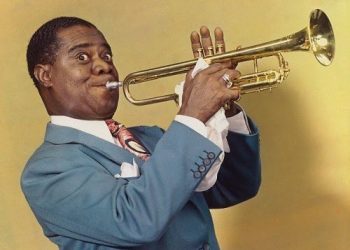
Few musicians have had as profound an impact on jazz as Louis Armstrong. Affectionately known as “Satchmo” or “Pops,” Armstrong wasn’t just a trumpeter—he was a trailblazer who transformed jazz into a mainstream art form. His powerful, gravelly voice and innovative trumpet playing made him one of the most beloved figures in music history. Armstrong’s ability to improvise and bring raw emotion into his performances changed how jazz was perceived, shifting it from ensemble-driven music to a genre that celebrated individual expression.
One of his most famous recordings, What a Wonderful World, showcases his ability to convey deep emotion with simplicity, becoming an anthem of hope and joy. His rendition of Hello, Dolly! was so popular that it knocked The Beatles off the top of the charts in 1964, proving his timeless appeal. But Armstrong’s influence extends far beyond these hits—his earlier recordings with the Hot Five and Hot Seven revolutionized jazz, setting a standard for solo improvisation.
Beyond his musical talents, Armstrong’s charisma and warm stage presence endeared him to audiences worldwide. Despite facing racial barriers in his lifetime, he broke through many of them, becoming one of the first African American entertainers to achieve widespread popularity without conforming to stereotypes. His legacy remains undeniable—his music, joy, and innovative spirit continue to inspire musicians and jazz lovers alike.
I’ll expand each section to approximately 300 words while maintaining a natural and engaging tone.
1. Louis Armstrong
Few musicians have had as profound an impact on jazz as Louis Armstrong. Affectionately known as “Satchmo” or “Pops,” Armstrong wasn’t just a trumpeter—he was a trailblazer who transformed jazz into a mainstream art form. His powerful, gravelly voice and innovative trumpet playing made him one of the most beloved figures in music history. Armstrong’s ability to improvise and bring raw emotion into his performances changed how jazz was perceived, shifting it from ensemble-driven music to a genre that celebrated individual expression.
One of his most famous recordings, What a Wonderful World, showcases his ability to convey deep emotion with simplicity, becoming an anthem of hope and joy. His rendition of Hello, Dolly! was so popular that it knocked The Beatles off the top of the charts in 1964, proving his timeless appeal. But Armstrong’s influence extends far beyond these hits—his earlier recordings with the Hot Five and Hot Seven revolutionized jazz, setting a standard for solo improvisation.
Beyond his musical talents, Armstrong’s charisma and warm stage presence endeared him to audiences worldwide. Despite facing racial barriers in his lifetime, he broke through many of them, becoming one of the first African American entertainers to achieve widespread popularity without conforming to stereotypes. His legacy remains undeniable—his music, joy, and innovative spirit continue to inspire musicians and jazz lovers alike.
2. Duke Ellington
Duke Ellington wasn’t just a musician—he was a visionary who elevated jazz to an art form of sophistication and elegance. As a pianist, composer, and bandleader, Ellington redefined what big band music could be, blending jazz with classical influences and pushing the boundaries of musical composition. Over his 50-year career, he led one of the most respected orchestras in history, producing a body of work that remains unparalleled in its depth and beauty.
One of his most famous pieces, It Don’t Mean a Thing (If It Ain’t Got That Swing), captured the essence of the swing era, while Take the “A” Train, composed by his longtime collaborator Billy Strayhorn, became the signature song of his orchestra. But Ellington’s brilliance wasn’t just in writing hit songs—it was in his ability to orchestrate for individual musicians. His compositions were tailored to highlight the unique strengths of his band members, creating a distinct and dynamic sound.
Unlike many jazz musicians of his time, Ellington saw jazz as more than just entertainment. He believed it was a serious art form deserving of the same recognition as classical music. His extended works, such as Black, Brown and Beige, explored African American history and culture, showcasing his ambition to use jazz as a vehicle for storytelling and social commentary.
Ellington’s impact on music is immeasurable. His orchestra remained active until his death in 1974, and his influence can be felt in jazz, film scores, and modern music. His timeless compositions continue to be performed worldwide, a testament to his genius and enduring legacy.
3. Miles Davis
Miles Davis was more than just a jazz musician—he was a revolutionary who reshaped the genre multiple times throughout his career. As a trumpeter, composer, and bandleader, Davis was always ahead of the curve, pioneering new styles and constantly reinventing his sound. From bebop and cool jazz to hard bop, modal jazz, and jazz fusion, he never stayed in one place for long, always pushing the boundaries of what jazz could be.
His 1959 album Kind of Blue is often regarded as the greatest jazz album of all time, introducing modal jazz and featuring a lineup of legends, including John Coltrane and Bill Evans. The album’s relaxed, spacious approach to improvisation changed jazz forever. Later, in the late 1960s and early 70s, Davis broke new ground with Bitches Brew, an electrifying fusion of jazz, rock, and funk that paved the way for jazz fusion.
Davis wasn’t just an innovator—he was also a tastemaker, assembling bands that nurtured future jazz greats like Herbie Hancock, Wayne Shorter, and Chick Corea. His ability to adapt to changing musical landscapes, from acoustic jazz to electric experimentation, kept him at the forefront of jazz for over five decades.
Beyond his music, Davis was a cultural icon. His distinctive fashion sense, raspy voice, and rebellious attitude made him as influential offstage as he was on it. Even today, his impact is felt across multiple genres, from hip-hop to electronic music. Miles Davis didn’t just play jazz—he changed it, redefined it, and left a legacy that continues to inspire musicians worldwide.
4. Billie Holiday
Billie Holiday wasn’t just a jazz singer—she was a storyteller whose voice carried the weight of a thousand emotions. With her unique phrasing and deeply personal delivery, Holiday could transform a song into an intimate and haunting experience. She didn’t have the technical range of some of her peers, but her ability to convey raw emotion made her one of the greatest vocalists of all time.
One of her most powerful songs, Strange Fruit, wasn’t just a song—it was a statement. A chilling protest against racism and lynching, the song became one of the first examples of music being used as a tool for social change. Her performance of it remains one of the most haunting and unforgettable moments in jazz history. Other classics like God Bless the Child and Don’t Explain showcased her talent for blending vulnerability with strength, making her music deeply personal and universal at the same time.
Despite her success, Holiday’s life was marked by struggles. She battled addiction, racism, and an abusive upbringing, all of which shaped her music. Her voice carried the pain and resilience of someone who had lived through immense hardship, making her performances feel incredibly authentic.
Holiday’s influence extends far beyond jazz. Singers from Frank Sinatra to Amy Winehouse have cited her as an inspiration, and her recordings continue to captivate listeners today. Though she left us too soon at the age of 44, her legacy remains timeless, proving that music isn’t just about technical perfection—it’s about feeling, soul, and truth.
5. Charlie Parker
Charlie Parker, often called “Bird,” wasn’t just a jazz musician—he was a revolutionary force that changed the course of jazz forever. As one of the pioneers of bebop, Parker’s lightning-fast saxophone runs and complex harmonies set a new standard for improvisation. His fearless approach to music made him one of the most innovative and influential figures in jazz history.
Parker’s compositions, like Ornithology, Ko-Ko, and Now’s the Time, are masterpieces that showcase his genius. He could take a simple melody and twist it into something intricate, unpredictable, and full of life. His improvisations were dazzling, moving through scales and chord changes at breakneck speed while maintaining an effortless flow.
Despite his technical brilliance, Parker’s playing was never just about speed—it was also deeply expressive. His tone could be piercing and urgent one moment, then smooth and lyrical the next. He had an uncanny ability to make his saxophone sing, laugh, cry, and shout, often within the same solo.
But Parker’s life was as turbulent as his music. Struggles with addiction and personal demons took a toll on him, and he tragically passed away at just 34. However, in his short life, he changed jazz forever. His influence can be heard in countless musicians, from John Coltrane to modern jazz players today.
Charlie Parker didn’t just play the saxophone—he redefined what jazz could be. His genius, intensity, and passion continue to inspire musicians, proving that great art often comes from those who dare to break the rules.
6. Ella Fitzgerald
If there was ever a singer who could make any song sound effortless, it was Ella Fitzgerald. Known as the “First Lady of Song,” Fitzgerald possessed a voice that was pure, clear, and unbelievably agile. Whether singing jazz, swing, or pop, she delivered every note with warmth and precision, making her one of the most beloved vocalists of all time.
One of Fitzgerald’s greatest strengths was her scat singing—an improvisational vocal technique where she used her voice like an instrument. Songs like How High the Moon and A-Tisket, A-Tasket showcased her ability to improvise intricate, playful melodies with stunning accuracy. Her sense of rhythm and pitch was impeccable, allowing her to trade solos with musicians as if she were one of the instruments in the band.
Her Songbook series, in which she recorded the works of legendary composers like Cole Porter, George Gershwin, and Duke Ellington, solidified her reputation as a master interpreter of American music. These recordings remain some of the finest examples of jazz vocals ever recorded.
But beyond her technical skills, what made Fitzgerald truly special was her joyful spirit. Even in her more emotional songs, there was always a sense of optimism in her voice. She had an uncanny ability to make listeners feel good, no matter what she was singing.
Despite facing racial barriers throughout her career, Fitzgerald broke down walls and became an international star. She won 13 Grammy Awards, sold millions of records, and earned a Presidential Medal of Freedom.
Ella Fitzgerald’s legacy isn’t just in her incredible recordings—it’s in the joy and inspiration she brought to the world. Her voice remains timeless, proving that great music never fades.
7. John Coltrane
John Coltrane wasn’t just a saxophonist—he was a visionary who took jazz to new spiritual and artistic heights. His playing was intense, searching, and deeply personal, often pushing the boundaries of what was possible on the saxophone. Whether through his groundbreaking technical prowess or his deeply moving compositions, Coltrane left an everlasting imprint on jazz and beyond.
His early work with Miles Davis and Thelonious Monk established him as a force to be reckoned with, but it was his later solo career that truly defined his legacy. His 1965 album A Love Supreme is considered one of the greatest jazz recordings of all time. More than just an album, it was a spiritual statement—an offering of devotion, emotion, and transcendence that resonated with listeners far beyond the jazz world.
Coltrane’s technique was nothing short of astonishing. His “sheets of sound” approach, where he played rapid-fire notes in cascading waves, redefined the saxophone’s capabilities. Tracks like Giant Steps showcased his technical mastery, with chord progressions so complex that they remain a challenge for musicians today.
But Coltrane wasn’t just about speed and complexity—he was about exploration. His later work ventured into avant-garde and free jazz, where he sought new ways to express himself beyond traditional harmonies and structures. Even his covers, like his famous rendition of My Favorite Things, became completely transformed in his hands.
Coltrane’s influence can’t be overstated. His relentless pursuit of musical and spiritual truth continues to inspire musicians across all genres. He wasn’t just a saxophonist—he was a seeker, a pioneer, and one of the most important artists of the 20th century.
8. Thelonious Monk
Thelonious Monk was a true original—both in his music and in his personality. With his distinctive playing style, unpredictable rhythms, and quirky yet brilliant compositions, Monk carved out a unique place in jazz history. His music was playful, angular, and full of surprises, making him one of the most influential jazz pianists and composers of all time.
Monk’s approach to the piano was unconventional. He often played with a percussive touch, using unexpected pauses and dissonant harmonies that seemed almost off-kilter—but always made perfect sense in the end. His compositions, like Round Midnight, Straight, No Chaser, and Blue Monk, became jazz standards, celebrated for their complexity and originality.
Beyond his technical genius, Monk’s music was deeply expressive. His melodies could be whimsical one moment and profoundly melancholic the next. He had a way of distilling complex emotions into simple, unforgettable phrases. And while some listeners initially found his style eccentric, those who listened closely realized they were hearing something truly special.
Monk was also known for his stage presence—often standing up and dancing around the piano during performances or wearing his signature hat and sunglasses. His unique personality only added to his mystique.
Despite facing challenges throughout his career, Monk’s influence on jazz is immeasurable. His music continues to inspire pianists, composers, and musicians of all kinds. He proved that jazz wasn’t just about playing fast or flashy—it was about creativity, individuality, and pushing the boundaries of what music could be.
9. Sarah Vaughan
Sarah Vaughan, often called “The Divine One,” had a voice that could stop you in your tracks. Rich, smooth, and effortlessly expressive, Vaughan’s vocals set her apart as one of the greatest jazz singers of all time. She combined technical brilliance with deep emotional expression, making every note she sang feel like pure magic.
Vaughan’s range was astonishing—she could glide from a deep, velvety low note to a shimmering high with effortless grace. Her control was impeccable, allowing her to play with melodies, stretch phrases, and add dazzling embellishments that made even familiar songs sound fresh and exciting.
Her interpretation of Misty, with its lush phrasing and subtle shifts in tone, remains one of the most beloved jazz performances ever recorded. Songs like Lullaby of Birdland and Tenderly showcase her ability to take a song and make it entirely her own. Whether singing swing, ballads, or bebop, Vaughan’s voice was always smooth, sophisticated, and deeply captivating.
What made Vaughan truly special, though, was her ability to connect emotionally with her audience. She didn’t just sing songs—she lived in them, making every lyric feel personal. Her phrasing was both precise and natural, giving her performances an effortless, conversational quality.
Throughout her career, Vaughan worked with jazz legends like Dizzy Gillespie and Count Basie, but she also ventured into pop and classical music, proving that her talent had no boundaries. She won multiple Grammy Awards, and her influence can be heard in generations of singers who followed her.
Even today, Sarah Vaughan’s recordings remain timeless. Her voice, full of warmth and depth, continues to inspire and move listeners, proving that true artistry never fades.
10. Dizzy Gillespie
Dizzy Gillespie wasn’t just a phenomenal trumpeter—he was a game-changer in jazz history. With his signature bent trumpet, puffed cheeks, and boundless energy, Gillespie was one of the architects of bebop, a fast, complex, and revolutionary style of jazz. But beyond his technical brilliance, he was also a charismatic showman and a visionary who brought Afro-Cuban rhythms into jazz.
Gillespie’s playing was explosive. His speed, precision, and ability to soar into the highest registers of the trumpet were unmatched. Songs like A Night in Tunisia and Salt Peanuts showcase his dazzling technique and his playful, inventive approach to improvisation. His solos were bold, unpredictable, and full of life—just like his personality.
But Gillespie’s influence went beyond bebop. He was instrumental in introducing Latin jazz to a wider audience, collaborating with Cuban percussionist Chano Pozo to create rhythms that blended Afro-Cuban beats with jazz harmonies. This fusion gave birth to some of the most exciting and infectious jazz recordings ever made.
Beyond his musical genius, Gillespie was also known for his humor and warmth. He had an infectious spirit that made him beloved by both fellow musicians and fans. His performances were as entertaining as they were virtuosic—he could make you laugh one moment and leave you in awe the next.
Gillespie’s contributions to jazz were groundbreaking, and his influence is still felt today. His technical mastery, innovation, and sheer joy for music left an indelible mark, making him one of the greatest musicians of all time.
11. Nina Simone
Nina Simone was more than just a singer and pianist—she was a force of nature. Her music transcended jazz, blending elements of classical, blues, gospel, and soul into something entirely her own. With her deep, commanding voice and unfiltered emotional intensity, she could take any song and turn it into an unforgettable statement.
Simone’s performances were raw, powerful, and deeply personal. Songs like Feeling Good and I Put a Spell on You showcase her ability to take a melody and infuse it with layers of meaning and passion. She didn’t just sing—she communicated, pouring her soul into every note. Her phrasing was dramatic yet precise, giving her music an almost hypnotic quality.
But Simone wasn’t just an artist—she was an activist. She used her music to speak out against racism and injustice, making her a voice for the Civil Rights Movement. Her haunting rendition of Strange Fruit and the defiant anthem Mississippi Goddam were bold, fearless expressions of protest at a time when speaking out came with great risks.
Simone’s classical training also set her apart. She had a sophisticated, almost orchestral approach to piano playing, often weaving intricate, classically inspired flourishes into her jazz and blues arrangements. This made her sound both elegant and deeply soulful, an unusual and striking combination.
Though her life was filled with struggles, Simone’s impact on music and culture is immeasurable. She was uncompromising in her artistry, refusing to conform to industry expectations. Today, her music continues to inspire not just jazz lovers but musicians and activists across all genres. She wasn’t just a musician—she was a movement.
12. Count Basie
Count Basie wasn’t just a pianist and bandleader—he was the architect of swing. His name is synonymous with effortless groove, sophisticated arrangements, and a style that could make even the most complex music feel light and joyful. Leading one of the greatest big bands in history, Basie helped define an era of jazz.
Basie’s piano style was a masterclass in understatement. He didn’t overplay or show off—instead, he played just the right notes at the right time. His minimalist, blues-infused touch gave his music a natural, infectious rhythm. He understood that swing wasn’t just about speed or technical prowess—it was about feel. And Basie had it in abundance.
His orchestra became legendary, producing classics like One O’Clock Jump and April in Paris. The Count Basie Orchestra wasn’t just a group of musicians—it was a machine of pure swing, with tight horn sections, impeccable timing, and a rhythm section that laid down grooves so deep you couldn’t help but move.
One of Basie’s greatest strengths was his ability to let the musicians in his band shine. He gave space for legendary soloists like Lester Young and Freddie Green to express themselves, making his band not just about him but about the collective brilliance of its players.
Basie’s influence extended beyond jazz—his sound shaped rhythm and blues, rock and roll, and even modern pop music. His ability to balance sophistication with raw energy made his music timeless. Even today, his recordings feel fresh, reminding us that great music isn’t just about complexity—it’s about groove, feel, and soul. And in those areas, Count Basie was unmatched.
13. Chet Baker
Chet Baker was the embodiment of cool jazz. With his smooth, understated trumpet playing and his soft, melancholic voice, he created music that felt effortlessly intimate. Whether playing a smoky ballad or delivering a haunting vocal performance, Baker’s sound was pure emotion.
Baker’s most famous song, My Funny Valentine, captures everything that made him special. His trumpet playing was lyrical and unforced, with a quiet intensity that pulled listeners in. Unlike the flashy virtuosos of his time, Baker played with restraint, proving that sometimes, less is more. His playing felt personal, as if he was whispering his melodies directly into your ear.
His singing was just as iconic. With a delicate, almost fragile voice, Baker delivered songs with a vulnerability that was rare in jazz. Tracks like I Fall in Love Too Easily and Let’s Get Lost have a dreamlike quality, as if they exist in a world separate from reality—a world of late nights, lost love, and longing.
But Baker’s life was as turbulent as his music was smooth. Struggles with addiction plagued his career, leading to moments of brilliance followed by periods of downfall. Despite this, he continued to record and perform until his tragic and mysterious death in 1988.
Even with all his struggles, Baker’s legacy in jazz is undeniable. His influence can be heard in countless musicians who favor subtlety over spectacle. His music remains timeless, a perfect soundtrack for introspective moments and quiet nights. In a genre often defined by energy and excitement, Chet Baker proved that jazz could also be about stillness, beauty, and heartache.
14. Art Blakey
If jazz had a heartbeat, Art Blakey was its drummer. A relentless force of rhythm, Blakey wasn’t just a musician—he was a mentor, a bandleader, and a driving force behind the evolution of hard bop. His explosive, propulsive drumming pushed jazz forward, inspiring generations of musicians.
Blakey’s playing was dynamic and thunderous, full of rolling snare patterns and powerful cymbal crashes that made every performance feel urgent and alive. He wasn’t just keeping time—he was telling a story with his drums, using rhythm to push the music to its emotional peak.
His band, The Jazz Messengers, became a breeding ground for future jazz legends. Musicians like Wayne Shorter, Freddie Hubbard, and Wynton Marsalis all passed through Blakey’s band, learning from his leadership and honing their craft. Blakey didn’t just play with great musicians—he helped shape them.
His signature album, Moanin’, is a masterclass in hard bop—bluesy, soulful, and driven by an irresistible groove. The title track alone is enough to cement his status as one of jazz’s greats, with its unforgettable horn lines and Blakey’s relentless drumming pushing the music forward.
What set Blakey apart was his passion. He played with a fire that made every note feel important, and he believed that jazz was more than just entertainment—it was a spiritual experience, a way to communicate something deep and profound.
Even after decades in music, Blakey never lost his energy. He kept playing until the very end, always pushing, always driving the music forward. His impact on jazz is immeasurable—not just as a drummer, but as a leader, a teacher, and a champion of the art form.
15. Herbie Hancock
Few musicians have reinvented themselves as successfully as Herbie Hancock. A pianist, composer, and musical innovator, Hancock has explored everything from acoustic jazz to funk, fusion, and electronic music. His ability to blend technical mastery with genre-defying creativity has made him one of the most influential figures in modern music.
Hancock started as a jazz prodigy, playing with Miles Davis’s groundbreaking quintet in the 1960s. His compositions from this era, like Maiden Voyage and Cantaloupe Island, became jazz standards, showcasing his sophisticated harmonies and melodic inventiveness.
But Hancock wasn’t content to stay in one lane. In the 1970s, he dove into jazz-funk with Chameleon and Watermelon Man, bringing synthesizers and groove-driven rhythms into jazz. His album Head Hunters became one of the best-selling jazz albums of all time, proving that jazz could be both innovative and accessible.
In the 1980s, he embraced electronic music and hip-hop, scoring a massive hit with Rockit, a pioneering track that featured turntablism in a jazz context.
Hancock continues to evolve, collaborating with artists across genres and keeping his music fresh and relevant. His career is proof that jazz isn’t just about tradition—it’s about curiosity, experimentation, and pushing the boundaries of what’s possible.

Edward Tomlin is a frequent contributor to Singers Room. Since 2005, Singersroom has been the voice of R&B around the world. Connect with us via social media below.