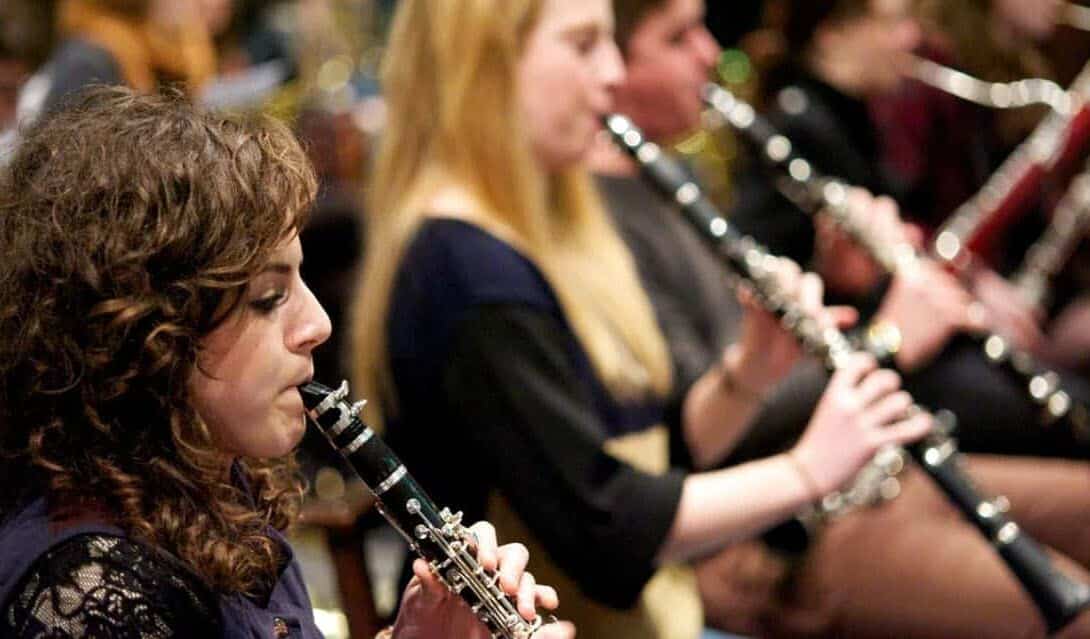
The clarinet, with its rich, versatile tone and stunning expressive range, has captivated audiences and inspired musicians for centuries. From the velvety depths of its lower register to the brilliant, soaring heights, this woodwind instrument has found a home in jazz, classical, and contemporary music alike. But what truly brings the clarinet to life is the artistry of the players who wield it with skill, passion, and creativity.
In this article, we celebrate the 15 best clarinet players of all time—artists who have redefined the instrument’s possibilities and left an indelible mark on the world of music. These virtuosos have enchanted audiences with their technical brilliance, emotional depth, and innovative approaches, paving the way for future generations of clarinetists.
From legendary classical performers who shaped the concert hall repertoire to jazz icons who unleashed the clarinet’s improvisational potential, this list spans eras and genres, showcasing the diversity and beauty of the instrument. Whether you’re a lifelong clarinet enthusiast or a curious listener, prepare to be inspired by these extraordinary musicians whose legacies continue to resonate.
So, let’s dive in and explore the remarkable stories and achievements of the clarinet’s all-time greats!
1. Benny Goodman
Benny Goodman, famously known as the “King of Swing,” was more than just a clarinetist—he was a revolutionary force in jazz. His impeccable technique and natural ability to blend classical precision with the free-spirited nature of swing made him one of the most influential musicians of the 20th century. Goodman’s rise to fame came during the 1930s, a time when jazz was evolving rapidly, and he played a crucial role in shaping the sound of the era.
One of his greatest achievements was his 1938 Carnegie Hall concert, a landmark event that legitimized jazz as a serious art form. The performance, which featured both white and Black musicians, was groundbreaking not just musically but also socially, as Goodman was one of the first major bandleaders to integrate his ensembles. His collaborations with legendary musicians like Teddy Wilson, Lionel Hampton, and Gene Krupa further cemented his legacy.
Beyond his influence in jazz, Goodman also had a deep respect for classical music. He commissioned and performed works by composers such as Béla Bartók and Aaron Copland, proving that the clarinet could bridge the gap between genres. His ability to bring jazz to the concert hall and classical music to the jazz club set him apart from his contemporaries. Even decades after his peak, his recordings remain essential listening for any clarinetist or jazz enthusiast.
2. Artie Shaw
Artie Shaw was a clarinetist, bandleader, and composer who embodied the essence of musical sophistication and innovation. Often seen as Benny Goodman’s greatest rival, Shaw was known for his technical brilliance and smooth, lyrical tone that set him apart in the world of swing music. While both clarinetists defined the era, Shaw’s approach was often more refined and experimental, blending jazz with classical influences in a way that was uniquely his own.
His breakthrough came with the release of “Begin the Beguine,” a song that skyrocketed him to fame and became one of the most iconic recordings of the swing era. Unlike many of his contemporaries, Shaw was never satisfied with commercial success alone. He frequently disbanded his orchestras at the height of their popularity, always searching for new creative directions. His refusal to conform to industry pressures made him an enigmatic figure, but his artistry remained undeniable.
Beyond his jazz career, Shaw had a deep appreciation for classical music, and his technical skill on the clarinet reflected that influence. He later dedicated himself to studying and performing classical repertoire, proving his versatility as a musician. His ability to merge the worlds of jazz and classical music made him a rare talent whose influence continues to inspire clarinetists across genres. Despite his complex relationship with fame, Artie Shaw remains a pivotal figure in both jazz history and the evolution of the clarinet.
3. Sabine Meyer
Sabine Meyer is one of the most distinguished clarinetists of the modern era, known for her exceptional technique, expressive phrasing, and dedication to expanding the instrument’s repertoire. Born in Germany, Meyer first gained international recognition as a soloist and later became one of the most sought-after performers in the classical world. Her warm, resonant tone and ability to convey deep emotion through her playing have made her a favorite among audiences and critics alike.
Her career took off when she became one of the first female clarinetists to join the Berlin Philharmonic—a decision that was met with resistance at the time. Despite facing opposition, Meyer persevered and went on to establish herself as a leading figure in the classical music world. She has performed with top orchestras worldwide and worked with renowned conductors such as Claudio Abbado and Simon Rattle.
Beyond her work as a soloist, Meyer has been instrumental in championing new music for the clarinet. She has premiered works by contemporary composers, ensuring that the instrument continues to evolve within the classical tradition. Her recordings of Mozart’s Clarinet Concerto and Brahms’ Clarinet Sonatas are considered definitive interpretations. Through her artistry, dedication, and trailblazing career, Sabine Meyer has inspired countless musicians and solidified her place as one of the greatest clarinetists of all time.
4. Sidney Bechet
Sidney Bechet was a fiery and passionate musician whose influence on jazz cannot be overstated. While he is best known as a soprano saxophonist, his clarinet playing was equally legendary, filled with expressive vibrato and a rich, full-bodied tone. Bechet was one of the first jazz soloists to rise to prominence, paving the way for the improvisational freedom that would define the genre.
Born in New Orleans, Bechet was a prodigious talent who began playing professionally at a young age. His clarinet style was deeply rooted in the blues and the vibrant brass band traditions of his hometown. Unlike many early jazz musicians who played with a more subdued approach, Bechet’s playing was bold, dynamic, and emotionally charged. He had a remarkable ability to make his clarinet sing, often bending and stretching notes in a way that gave his performances a vocal-like quality.
His career took him across the world, from Chicago and New York to Paris, where he found an appreciative audience and eventually settled. His recordings, including classics like “Petite Fleur” and “Summertime,” remain timeless examples of early jazz artistry. Bechet’s influence can be heard in generations of musicians who followed, particularly those who embraced a more expressive and melodic approach to jazz clarinet. Though he often lived in the shadow of later jazz greats, his role as one of the genre’s true pioneers is undeniable.
5. Karl Leister
Karl Leister is a name that commands respect in the world of classical clarinet. As the principal clarinetist of the Berlin Philharmonic for over three decades, Leister set the gold standard for orchestral and solo clarinet playing. His warm, velvety tone and impeccable technique made him one of the most admired clarinetists of the 20th century.
Born in Germany, Leister grew up surrounded by classical music and quickly established himself as a prodigious talent. His tenure with the Berlin Philharmonic, under legendary conductor Herbert von Karajan, cemented his reputation as one of the leading clarinetists of his time. His interpretations of Brahms, Mozart, and Weber are widely regarded as definitive, showcasing his extraordinary control and musical sensitivity.
In addition to his orchestral work, Leister has enjoyed a distinguished solo career, performing with major ensembles and recording extensively. His dedication to chamber music has also been significant, and his recordings of the clarinet quintet repertoire are considered some of the finest ever made. His ability to balance technical brilliance with deep emotional expression has inspired countless musicians. Even in retirement, Leister remains an influential figure, mentoring young clarinetists and continuing to shape the future of classical clarinet performance.
6. Giora Feidman
Giora Feidman is a clarinetist unlike any other. Known as the “King of Klezmer,” he has brought the soulful and deeply expressive sounds of Jewish folk music to audiences around the world. His playing is filled with warmth, emotion, and an unmistakable human quality that speaks directly to the listener’s heart.
Born in Argentina to a family of klezmer musicians, Feidman grew up immersed in the rich traditions of Eastern European Jewish music. His career initially began in the classical world—he was a member of the Israel Philharmonic Orchestra—but he later dedicated himself to klezmer, helping to revive and popularize the genre. His performances blend traditional melodies with modern sensibilities, often incorporating jazz and classical influences to create a sound that is uniquely his own.
Feidman’s ability to communicate deep emotion through his instrument is what sets him apart. Whether playing a lively dance tune or a mournful ballad, his clarinet seems to tell a story. His influence extends beyond klezmer; he has collaborated with classical musicians, film composers, and contemporary artists, broadening the scope of what the clarinet can achieve. His recordings and live performances continue to inspire and move audiences, making him a true ambassador of music’s power to connect people across cultures.
7. Eddie Daniels
Eddie Daniels is a rare musician who has mastered both classical and jazz clarinet at the highest level. His technical brilliance, combined with his effortless ability to switch between genres, has earned him widespread acclaim and made him one of the most versatile clarinetists of all time.
Born in New York, Daniels first gained recognition as a jazz clarinetist in the 1960s, performing with some of the biggest names in the industry. His improvisational skills and dazzling technique quickly set him apart in a genre where the clarinet had become less common. However, Daniels didn’t stop at jazz—he also pursued a career in classical music, proving that the clarinet could be a serious voice in both worlds. His recordings of Mozart, Copland, and Gershwin showcase his ability to play with precision and expressiveness while maintaining a deep understanding of both traditions.
One of Daniels’ most celebrated works is his album Breakthrough, which perfectly exemplifies his ability to merge classical and jazz influences into something entirely new. His command of the instrument, whether performing a delicate classical piece or a high-energy jazz solo, is nothing short of extraordinary. Few clarinetists have managed to balance two distinct musical worlds so effortlessly, making Daniels a true pioneer of crossover artistry.
8. Richard Stoltzman
Richard Stoltzman is a clarinetist who refuses to be confined by tradition. A Grammy-winning musician, he has built a career on versatility, seamlessly moving between classical, jazz, and contemporary music with unmatched artistry. His expressive playing, combined with his willingness to push musical boundaries, has made him one of the most influential clarinetists of the modern era.
Stoltzman’s unique style is characterized by a rich, fluid tone and a deeply personal approach to phrasing. Whether performing a Brahms sonata, a Gershwin jazz standard, or an avant-garde contemporary piece, he brings a level of emotional depth that captivates audiences. His collaborations with world-class orchestras, jazz legends, and even pop musicians have expanded the role of the clarinet in ways few others have attempted.
One of Stoltzman’s most significant contributions has been his advocacy for new music. He has premiered numerous works by contemporary composers, ensuring that the clarinet continues to evolve as a modern instrument. His recordings, which range from classical concertos to jazz improvisations, demonstrate an unparalleled breadth of musical understanding. By continually challenging conventions, Stoltzman has inspired generations of clarinetists to explore beyond the boundaries of their chosen genre.
9. Martin Fröst
Martin Fröst is one of the most electrifying clarinetists in the world today. Known for his technical brilliance, artistic creativity, and willingness to push the boundaries of classical performance, he has redefined what it means to be a clarinet soloist. His performances often incorporate elements of choreography, lighting effects, and multimedia, transforming traditional concerts into immersive experiences.
Born in Sweden, Fröst quickly established himself as one of the leading clarinetists of his generation. His command of the instrument is breathtaking—his lightning-fast technique, flawless articulation, and deeply expressive phrasing make every performance unforgettable. He has performed with top orchestras around the world and has worked closely with composers to expand the clarinet repertoire, premiering new works that challenge and inspire musicians.
One of Fröst’s most celebrated recordings is his interpretation of Mozart’s Clarinet Concerto, which showcases his unparalleled control and delicate musicality. However, he doesn’t limit himself to classical staples—his concert programs often feature a mix of Baroque, contemporary, and folk-inspired music, keeping audiences on the edge of their seats. His innovative approach to performance has earned him comparisons to great musical visionaries, and his ability to connect with audiences on an emotional level has made him a beloved figure in the world of classical music.
10. Buddy DeFranco
Buddy DeFranco was a trailblazer who brought the clarinet into the world of bebop, a genre that had been dominated by saxophones and trumpets. His fast, intricate improvisations and unmatched technical skill made him one of the most influential jazz clarinetists of the 20th century. While many clarinetists of his time stayed within the swing tradition, DeFranco boldly stepped into the world of modern jazz, adapting the clarinet’s voice to fit the complex harmonies and rapid tempos of bebop.
Born in New Jersey, DeFranco first gained recognition in big bands during the 1940s, playing with legends like Tommy Dorsey and Count Basie. However, his heart was in small-group jazz, where he could explore new harmonic ideas and improvisational freedom. His work with pianist Art Tatum and collaborations with major bebop musicians showcased his ability to push the clarinet into uncharted territory.
DeFranco’s playing was characterized by lightning-fast runs, effortless articulation, and a deep understanding of jazz phrasing. He recorded extensively, leaving behind a vast catalog of bebop and modern jazz recordings that continue to inspire clarinetists today. His willingness to experiment and innovate ensured that the clarinet remained relevant in jazz, influencing generations of musicians who followed in his footsteps.
11. Anton Stadler
Anton Stadler may not be a household name today, but his impact on classical clarinet music is immeasurable. A close friend and collaborator of Wolfgang Amadeus Mozart, Stadler was the inspiration behind some of the most beloved clarinet compositions in history, including the Clarinet Concerto in A major and the Clarinet Quintet. His playing was said to possess a warm, expressive tone that deeply moved listeners, and his influence helped elevate the clarinet to a prominent solo instrument in classical music.
Born in Austria, Stadler was a leading clarinetist of his time, performing in orchestras and chamber ensembles across Europe. He was one of the first musicians to champion the basset clarinet, an extended-range version of the instrument, which allowed for richer, deeper tones. Mozart’s compositions for Stadler made full use of this extended range, resulting in some of the most beautiful and expressive music ever written for the clarinet.
Although few details about his personal life remain, Stadler’s legacy lives on through the music Mozart wrote for him. His influence on the development of clarinet technique and repertoire is profound, and every clarinetist who performs Mozart’s works is, in a sense, continuing the tradition that he helped establish. Without Stadler, the clarinet might never have achieved the artistic prominence it enjoys today.
12. Reginald Kell
Reginald Kell was a groundbreaking clarinetist whose influence on classical clarinet playing still resonates today. Born in England, Kell was known for his expressive musicality, impeccable phrasing, and, most notably, his pioneering use of vibrato in classical clarinet playing—an approach that was previously more associated with string and wind instruments in jazz. His innovative style brought a new warmth and vocal-like quality to the instrument, setting him apart from his contemporaries.
Kell’s career took off in the 1930s and 1940s, during which he became one of the leading clarinetists in Europe. He held principal positions in prestigious orchestras, including the London Philharmonic and the Philharmonia Orchestra. However, it was as a soloist that he truly made his mark. His interpretations of Mozart, Brahms, and Debussy were deeply expressive, revealing the clarinet’s capacity for lyrical and nuanced playing.
Beyond his performing career, Kell was also a highly respected teacher. He later moved to the United States, where he taught at institutions such as the Juilliard School and influenced a new generation of clarinetists, including the great Benny Goodman, who sought him out for lessons in classical technique. Kell’s recordings remain highly regarded, capturing his smooth, flowing sound and distinctive vibrato. His contributions to the art of clarinet playing continue to inspire musicians who seek to bring more depth and expressiveness to their performances.
13. Pete Fountain
Pete Fountain was the embodiment of New Orleans jazz, bringing his warm, lyrical clarinet sound to audiences around the world. With a tone as smooth as molasses and a style that was both relaxed and deeply expressive, Fountain became one of the most beloved clarinetists in jazz history. His music was infused with the spirit of his hometown, capturing the joyful, soulful, and sometimes bittersweet essence of traditional New Orleans jazz.
Born in 1930, Fountain grew up surrounded by the rich musical traditions of Louisiana. He was heavily influenced by swing and Dixieland jazz, and by the time he was a teenager, he was already making a name for himself in the local music scene. His big break came when he joined Lawrence Welk’s orchestra in the 1950s, where his charming personality and smooth, flowing improvisations made him a national sensation. However, he soon left to pursue a more authentic New Orleans jazz career, opening his own club and becoming a fixture of the French Quarter music scene.
Fountain’s signature sound—a rich, woody tone with effortless phrasing—made his recordings instantly recognizable. Whether playing a lively, foot-stomping jazz number or a slow, sentimental ballad, he brought warmth and sincerity to every note. His influence extended beyond jazz; even those unfamiliar with the genre could appreciate the sheer joy and soulfulness of his music. His legacy lives on in the vibrant New Orleans jazz scene, where clarinetists continue to emulate his iconic sound.
14. Charles Neidich
Charles Neidich is a modern clarinet master known for his technical precision, interpretive depth, and dedication to expanding the clarinet repertoire. His artistry spans both classical and contemporary music, making him one of the most respected clarinetists of his generation. With a reputation for tackling some of the most challenging works ever written for the instrument, Neidich has set a high bar for clarinetists worldwide.
Born into a musical family, Neidich began playing the clarinet at an early age and quickly demonstrated an exceptional talent. He studied at the Juilliard School and honed his craft under the guidance of some of the greatest clarinetists of the 20th century. His ability to blend impeccable technique with profound musical insight has made him a sought-after performer and collaborator.
Neidich is particularly known for his advocacy of contemporary music. He has premiered numerous works by modern composers and has played a crucial role in pushing the boundaries of clarinet performance. His command of historical performance practice is equally impressive—he has extensively studied and performed on period instruments, bringing a fresh perspective to classical repertoire. As a teacher, he has mentored countless young clarinetists, ensuring that his innovative approach to music-making continues to influence future generations.
15. Heinrich Baermann
Heinrich Baermann was one of the most important clarinetists of the early 19th century, playing a crucial role in elevating the clarinet to a leading solo instrument in classical music. His extraordinary skill, expressive phrasing, and warm, singing tone made him a favorite among composers of the Romantic era. His playing was so admired that some of the greatest clarinet works ever written—such as those by Carl Maria von Weber and Felix Mendelssohn—were composed specifically for him.
Born in Germany in 1784, Baermann studied with renowned clarinet teachers of his time and quickly gained a reputation as a virtuoso. His collaborations with Weber resulted in some of the most beloved clarinet concertos and chamber works, including the Concertino for Clarinet and Clarinet Concertos Nos. 1 and 2. These pieces showcased the clarinet’s expressive capabilities, from dazzling technical runs to soaring, lyrical melodies.
Baermann’s influence extended beyond performance—his innovations in clarinet technique and instrument design helped shape the development of the modern clarinet. He worked closely with instrument makers to refine the clarinet’s mechanics, leading to improvements in tone quality and ease of playing. His legacy continues through the music he inspired and the advancements he helped bring to the instrument. Even today, clarinetists study and perform the works written for Baermann, keeping his contributions to the clarinet world alive.

Edward Tomlin is a frequent contributor to Singers Room. Since 2005, Singersroom has been the voice of R&B around the world. Connect with us via social media below.