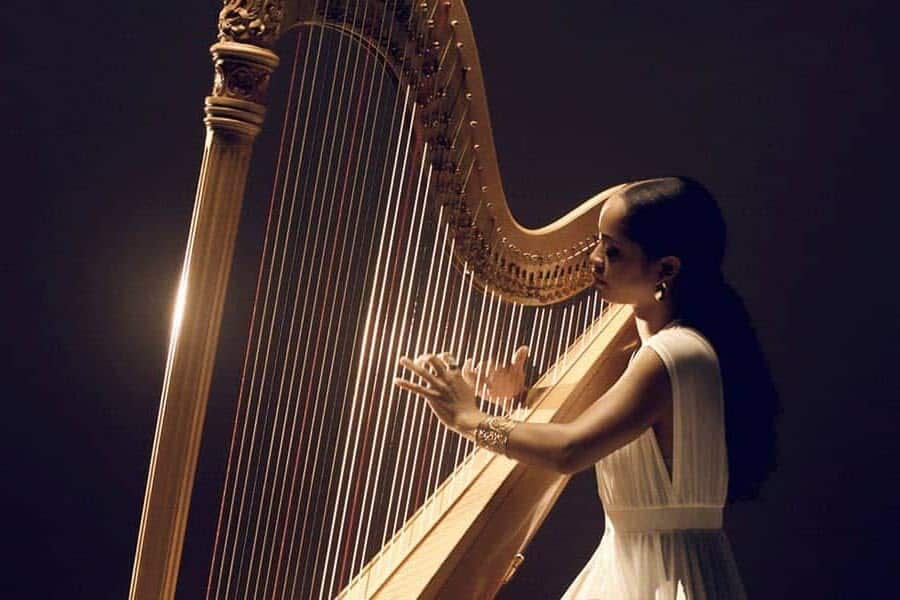
The harp, with its ethereal sound and elegant form, has captivated audiences for centuries. From the grand concert halls of Europe to intimate folk gatherings, this enchanting instrument has a rich history woven with the talents of extraordinary musicians. In the realm of stringed instruments, few can match the harp’s ability to evoke emotion and tell stories through its melodic strings.
This article takes you on a journey through time to celebrate the top 15 best harp players of all time. Each of these artists has left an indelible mark on the world of music, pushing the boundaries of what the harp can achieve. From classical virtuosos who have redefined traditional harp techniques to innovative modern players who blend genres and styles, these musicians have showcased the harp’s versatility and profound beauty.
Join us as we explore the lives, careers, and masterpieces of these legendary harpists, highlighting their contributions to music and the lasting impact they’ve made on the harp’s legacy. Whether you’re a lifelong fan of the instrument or new to its mesmerizing sound, prepare to be inspired by the artistry and passion of these remarkable harp players!
1. Dorothy Ashby
Dorothy Ashby was a groundbreaking artist who revolutionized the jazz world by showcasing the harp in a genre that traditionally did not feature it. A true pioneer, Ashby demonstrated that the harp could transcend its classical roots and be a dynamic force in modern music. Her innovative style combined the elegance of traditional harp techniques with the improvisational freedom of jazz. Albums like *Hip Harp* and *The Rubaiyat of Dorothy Ashby* illustrate her ability to blend genres seamlessly, often incorporating elements of world music and spoken word.
Ashby’s work was deeply influential, proving that the harp was not confined to orchestras or chamber music. Her use of the instrument in jazz ensembles broke stereotypes and opened doors for future musicians. Despite working in a male-dominated industry, Ashby’s talent and determination earned her respect among her peers and a devoted following among listeners. Her compositions often highlighted the versatility of the harp, pushing its boundaries with her intricate rhythms and rich harmonies.
Today, her legacy continues to inspire harpists and jazz musicians alike. She paved the way for artists to reimagine the potential of their instruments, proving that innovation and tradition can coexist. Her contributions remain a cornerstone in the history of jazz and harp music, reminding the world of the power of creativity and resilience.
2. Andrés Segovia
While Andrés Segovia is celebrated as one of the greatest classical guitarists of all time, his influence on the harp cannot be overlooked. Segovia’s passion for stringed instruments and his dedication to elevating their status had a ripple effect on the harp community. Through his collaborations with harpists and his arrangements for the instrument, he helped expand its repertoire and highlighted its expressive potential.
Segovia’s artistry went beyond performance; he was a trailblazer in music education, advocating for a deeper appreciation of string instruments. His meticulous interpretations of classical works revealed the nuanced beauty of strings, which resonated with harpists seeking to expand their own musical horizons. By raising the profile of plucked instruments, Segovia indirectly contributed to the harp’s evolution in both classical and modern contexts.
One of Segovia’s most enduring legacies is his commitment to inspiring future generations. His performances, recordings, and teachings emphasized musicality, precision, and emotion, values that harpists and musicians across disciplines continue to embrace. Segovia’s ability to bridge tradition and innovation left an indelible mark on the music world.
Even today, his impact is evident in the way harpists approach their craft, often drawing inspiration from his dedication to artistry and technical excellence. Segovia’s legacy serves as a reminder that music is a universal language, capable of uniting and inspiring across genres and instruments.
3. Lily Laskine
Lily Laskine was a pioneering French harpist whose artistry and technical mastery set a new standard for the instrument. Born in 1893, she became one of the first female harpists to achieve international acclaim, breaking barriers in the male-dominated classical music world. Her career spanned several decades, during which she captivated audiences with her expressive interpretations and impeccable technique.
Laskine was renowned for her performances of works by French composers such as Debussy, Ravel, and Saint-Saëns. Her ability to convey the delicate nuances and rich textures of these compositions earned her widespread admiration. She was also a prolific recording artist, and her recordings remain essential listening for harpists and classical music enthusiasts alike.
What set Laskine apart was her dedication to expanding the harp’s repertoire. She worked closely with composers, inspiring new works that highlighted the harp’s lyrical and dynamic potential. Her collaboration with contemporary composers not only enriched the instrument’s catalog but also cemented her status as a forward-thinking artist.
Beyond her performances, Laskine was a devoted teacher and mentor, nurturing the next generation of harpists. Her influence can still be felt in the harp community today, as many of her students went on to have successful careers of their own.
Lily Laskine’s legacy is one of excellence and innovation. She demonstrated that the harp could be both a solo instrument and an integral part of orchestral and chamber music, paving the way for future harpists to explore its limitless possibilities.
4. Carlos Salzedo
Carlos Salzedo was a visionary harpist, composer, and educator whose contributions fundamentally transformed the world of harp music. Born in France in 1885, Salzedo was a prodigy who quickly gained recognition for his exceptional skill. He later emigrated to the United States, where he became a leading figure in the harp community and left an indelible mark on the instrument’s development.
As a composer, Salzedo was a trailblazer, creating innovative works that showcased the harp’s dramatic and expressive capabilities. Pieces like Scaramouche and Chanson dans la nuit challenged traditional notions of harp music, incorporating modern techniques and bold tonalities. He developed new ways of playing, such as percussive effects and glissando variations, which expanded the instrument’s range and expressive power.
Salzedo was also a passionate educator, founding the Salzedo Harp Colony in Camden, Maine, where he trained generations of harpists in his revolutionary methods. His approach emphasized the importance of posture, hand position, and musical interpretation, creating a holistic system that many harpists still follow today.
Beyond his compositions and teachings, Salzedo was a tireless advocate for the harp, working to elevate its status as a concert instrument. His influence is evident in the way contemporary harpists approach their craft, blending traditional techniques with modern innovation.
Carlos Salzedo’s legacy is one of creativity and dedication. His work reshaped the harp repertoire and inspired countless musicians to push the boundaries of what the instrument could achieve, making him one of the most influential figures in harp history.
5. Harpo Marx
Harpo Marx, the silent yet unforgettable member of the Marx Brothers comedy team, brought the harp to mainstream audiences with his unique blend of humor and musical talent. Born in 1888, Harpo initially learned to play the harp as a self-taught musician, but his natural affinity for the instrument soon became a defining part of his stage persona.
In films such as A Night at the Opera and Duck Soup, Harpo’s harp performances were moments of pure magic. His ability to weave beautiful, melodic interludes into the chaos of comedic scenes showcased the harp’s ability to convey emotion and charm. These performances introduced many audiences to the harp for the first time, making it accessible and endearing in ways that classical settings often could not.
Harpo’s style was unconventional, reflecting his playful personality. He approached the harp with an improvisational spirit, creating a sound that was uniquely his own. Despite his comedic background, Harpo was deeply serious about his music, often practicing for hours to perfect his craft. His love for the harp shone through in every performance, captivating viewers with his sincerity and skill.
Offscreen, Harpo was a passionate advocate for music and the arts. His dedication to the harp helped break down stereotypes about the instrument, showing that it could be both sophisticated and whimsical.
Harpo Marx’s legacy as a harpist is as enduring as his comedic genius. He not only entertained millions but also inspired a newfound appreciation for the harp, proving that music and humor are universal languages that transcend boundaries.
6. Judith Cohen
Judith Cohen is an accomplished harpist whose career has been defined by her passion for traditional and folk music. Known for her deep understanding of the harp’s cultural roots, Cohen has dedicated her life to preserving and celebrating the instrument’s rich history. Her performances are a tribute to the diverse traditions that have shaped harp music over centuries.
Cohen’s repertoire spans a wide range of styles, from Celtic and medieval to Sephardic and Balkan folk music. Her ability to authentically interpret and adapt these genres for the harp has made her a highly respected figure in the music world. Whether performing solo or as part of an ensemble, Cohen brings a unique sensitivity to her music, creating a deep connection with her audience.
As a recording artist, Cohen has released numerous albums that showcase the versatility of the harp in traditional music settings. Her arrangements often incorporate elements of storytelling, drawing listeners into the cultural narratives that inspire her work. Through her music, she reminds audiences of the harp’s role as a vessel for cultural expression and preservation.
In addition to her performances, Cohen is a dedicated educator and researcher. She has spent decades studying the origins and evolution of folk harp traditions, sharing her knowledge through workshops, lectures, and publications. Her efforts have helped to ensure that these traditions are passed on to future generations.
Judith Cohen’s commitment to the harp and its cultural heritage has made her a vital figure in the music community. Her work not only preserves the past but also inspires a deeper appreciation for the harp’s role in shaping the world’s musical landscape.
7. Cécile Chaminade
Cécile Chaminade was a trailblazing French composer and pianist who made significant contributions to the harp’s classical repertoire. Born in 1857, Chaminade was a child prodigy whose musical talent earned her early recognition. Over the course of her career, she composed numerous works that highlighted the harp’s lyrical and expressive qualities, paving the way for its greater prominence in the classical music world.
One of Chaminade’s most celebrated compositions for the harp is her Concertstück, a piece that showcases both technical brilliance and emotional depth. This work remains a favorite among harpists for its blend of challenging passages and melodic beauty. Chaminade’s ability to write music that was both accessible and artistically sophisticated earned her widespread acclaim during her lifetime.
In addition to her harp compositions, Chaminade wrote extensively for piano and orchestra, and her music often featured the same charm and elegance that defined her harp works. As one of the few prominent female composers of her era, she faced considerable challenges in gaining recognition, but her perseverance and talent ultimately secured her place in music history.
Chaminade’s influence on the harp repertoire extends beyond her own compositions. Her works inspired other composers to explore the harp’s potential, contributing to its development as a solo and ensemble instrument. Today, her music is celebrated not only for its beauty but also for its role in advancing the status of women in classical music.
Through her artistry and determination, Cécile Chaminade left an enduring legacy that continues to inspire harpists and composers alike.
8. Nicanor Zabaleta
Nicanor Zabaleta was a virtuoso harpist who transformed the instrument’s role in classical music with his unparalleled artistry and dedication. Born in Spain in 1907, Zabaleta began studying the harp at a young age and quickly emerged as one of the most talented musicians of his generation. His career spanned several decades, during which he captivated audiences around the world with his masterful performances and innovative interpretations.
Zabaleta was known for his impeccable technique and ability to bring out the full expressive range of the harp. His repertoire included works from the Baroque, Classical, and Romantic eras, as well as contemporary compositions. He collaborated with leading composers of his time, commissioning new works that expanded the harp’s repertoire and showcased its versatility. Many of these pieces are now considered staples of harp literature.
In addition to his solo performances, Zabaleta frequently appeared with orchestras and chamber ensembles, earning praise for his ability to integrate the harp seamlessly into a variety of musical contexts. His recordings, many of which remain influential today, set new standards for harp performance and interpretation.
Beyond his work as a performer, Zabaleta was a passionate advocate for the harp. He dedicated much of his career to raising the instrument’s profile, both through his own playing and by inspiring others to explore its potential.
Nicanor Zabaleta’s legacy is one of excellence and innovation. His contributions to the harp community have had a lasting impact, inspiring generations of musicians to push the boundaries of what the instrument can achieve.
9. Alice Coltrane
Alice Coltrane was a trailblazing musician and composer who brought the harp into the realm of spiritual jazz and avant-garde music. Born in 1937, she was a highly skilled pianist before turning her attention to the harp, an instrument she used to explore deeply spiritual and transcendent themes. Her work broke new ground, combining the ethereal sound of the harp with the improvisational nature of jazz and the meditative qualities of Eastern music.
One of Coltrane’s most iconic albums, Journey in Satchidananda, highlights her innovative use of the harp to create otherworldly soundscapes. Her playing on this album blends seamlessly with instruments like the oud and bass, resulting in a unique fusion of jazz, Indian classical music, and spiritual exploration. Her compositions often had a meditative quality, reflecting her interest in Eastern philosophies and her deep spiritual journey.
Coltrane’s contributions went far beyond her music. As the wife of legendary saxophonist John Coltrane, she played a pivotal role in preserving his legacy while carving out her own identity as a groundbreaking artist. Her work redefined the role of the harp, proving that it could be a powerful tool for emotional expression and innovation in modern music.
Throughout her career, Alice Coltrane’s dedication to pushing musical boundaries inspired countless musicians. Her ability to blend genres and create a unique voice for the harp has left a lasting legacy in the world of jazz and beyond. Today, her music continues to resonate with listeners, serving as a reminder of the harp’s incredible versatility and its capacity for profound emotional depth.
10. Anna Maria Friman
Anna Maria Friman is a contemporary harpist known for her innovative performances and collaborations across diverse musical genres. With a background in both classical and folk music, Friman has made a name for herself by pushing the boundaries of traditional harp playing. Her adventurous spirit and passion for experimentation have earned her recognition as a leading figure in the modern harp community.
Friman’s performances often blend elements of classical precision with the raw emotion of folk traditions. She has collaborated with a wide range of artists, exploring the intersection of the harp with other instruments and styles. Her dynamic approach to music-making has led to groundbreaking projects, including works that incorporate electronic effects, vocal elements, and improvisation.
As a composer, Friman has created pieces that challenge conventional notions of the harp’s role in music. Her compositions highlight the instrument’s versatility, ranging from delicate, shimmering textures to bold, percussive sounds. These works have been performed by harpists worldwide, further cementing her influence on the instrument’s evolving repertoire.
Beyond her work as a performer and composer, Friman is a dedicated educator. She regularly leads workshops and masterclasses, inspiring students to explore new techniques and expand their artistic horizons. Her commitment to innovation and education ensures that her impact will be felt for generations to come.
Anna Maria Friman’s contributions to the harp world are both profound and far-reaching. Through her creativity and dedication, she continues to redefine what the harp can achieve, inspiring musicians and audiences alike to see the instrument in a new light.
11. Susann McDonald
Susann McDonald is a highly respected harpist and educator whose career has left an indelible mark on the world of music. Renowned for her exceptional technique and deep musicality, McDonald has been a leading figure in the harp community for decades. Her influence as a performer, teacher, and mentor has shaped the careers of countless harpists worldwide.
As a performer, McDonald is celebrated for her versatility, effortlessly transitioning between classical masterpieces and contemporary works. Her interpretations are characterized by precision, expressiveness, and a profound understanding of the harp’s unique capabilities. She has performed in prestigious venues around the globe, earning accolades for her artistry and technical brilliance.
McDonald’s impact extends beyond the concert stage. As a passionate educator, she has taught at some of the world’s most renowned music institutions, including Indiana University, where she served as chair of the harp department. Her students have gone on to achieve international success, a testament to her dedication and expertise as a teacher.
In addition to her teaching, McDonald has contributed significantly to the harp repertoire. She has championed new compositions and arrangements, ensuring that the instrument remains vibrant and relevant in contemporary music. Her published works and educational resources continue to be valuable tools for aspiring harpists.
Susann McDonald’s legacy is one of excellence and inspiration. Through her performances, teachings, and advocacy, she has elevated the harp to new heights, ensuring its continued prominence in the world of classical music.
12. Myra Hess
Though primarily celebrated as a pianist, Myra Hess also made a significant impact on the harp’s presence in classical music through her collaborations and advocacy. Born in London in 1890, Hess became renowned for her masterful interpretations of classical works and her ability to connect deeply with her audiences. During World War II, she organized and performed in a series of morale-boosting concerts in London, which often featured harpists, thereby elevating the instrument’s profile.
Hess’s collaborations with harpists showcased her appreciation for the instrument’s delicate and expressive qualities. Her chamber music performances often included harp, blending its ethereal tones with piano and strings to create uniquely textured ensembles. She had a particular gift for selecting repertoire that highlighted the harp’s strengths, whether in traditional classical pieces or in arrangements tailored for wartime audiences.
One of Hess’s enduring contributions was her role in popularizing the harp as a solo and ensemble instrument in public concerts. At a time when the harp was often overshadowed by other string instruments, her efforts brought it into the spotlight, helping audiences recognize its potential for both dramatic and subtle expression.
Myra Hess’s legacy extends far beyond her own performances. Her work in championing the harp and her collaborations with harpists continue to inspire musicians to explore the instrument’s beauty and versatility. Through her artistry and commitment, Hess left a lasting impact on the classical music world, fostering a deeper appreciation for the harp in concert settings.
13. Kim Bock
Kim Bock is a contemporary harpist whose innovative approach to music has earned her a reputation as a rising star in the harp community. With a background that spans classical training and popular music, Bock seamlessly blends tradition with modernity, pushing the boundaries of what the harp can achieve.
Bock’s performances are characterized by their creativity and emotional depth. She is known for her ability to adapt the harp to a wide range of genres, from classical and jazz to electronic and experimental music. Her unique style often incorporates unconventional techniques, such as percussive effects and electronic enhancements, which add new dimensions to her sound.
In addition to her solo work, Bock is an active collaborator, working with musicians across various disciplines to create innovative projects. Her ability to integrate the harp into diverse musical contexts has made her a sought-after artist for both live performances and studio recordings.
As a composer, Bock has contributed original works that challenge traditional perceptions of the harp. Her compositions often explore themes of identity and storytelling, using the harp as a medium for emotional expression. These pieces have garnered critical acclaim and have been performed by harpists around the world.
Kim Bock’s dedication to expanding the harp’s possibilities makes her a standout figure in the contemporary music scene. Her passion for innovation and her willingness to experiment with new techniques and genres ensure that her influence will continue to grow, inspiring a new generation of musicians.
14. Roslyn Rensch
Roslyn Rensch is a distinguished harpist, educator, and author whose contributions have had a profound impact on the harp community. Known for her exceptional artistry and deep knowledge of the instrument, Rensch has spent decades championing the harp’s history, repertoire, and educational potential.
As a performer, Rensch is celebrated for her versatility and expressiveness. She has mastered a wide range of styles, from classical masterpieces to contemporary compositions, bringing a unique voice to each piece she plays. Her performances have been praised for their technical precision and emotional resonance, earning her recognition as a leading figure in the harp world.
Rensch’s dedication to education is one of her most enduring legacies. She has taught at prestigious institutions and mentored countless students, many of whom have gone on to successful careers in music. Her teaching emphasizes a deep understanding of the harp’s history and techniques, fostering a comprehensive approach to learning the instrument.
In addition to her work as a performer and educator, Rensch is a respected author. Her writings on the history and development of the harp have become essential resources for musicians and scholars alike. Through her books and articles, she has helped preserve the harp’s rich heritage and inspired others to explore its potential.
Roslyn Rensch’s contributions to the harp community are immeasurable. Her commitment to excellence and her passion for the instrument have left a lasting impact, ensuring that the harp’s legacy continues to thrive in the modern era.
15. Rébecca Lamy
Rébecca Lamy is a dynamic harpist whose innovative approach and captivating performances have made her a standout figure in contemporary music. With a foundation in classical training and a passion for exploring new styles, Lamy pushes the boundaries of what the harp can achieve, creating a unique and compelling voice in the music world.
Lamy’s playing is marked by its technical brilliance and artistic sensitivity. She seamlessly blends traditional techniques with modern innovations, incorporating elements of jazz, folk, and experimental music into her repertoire. Her ability to adapt the harp to diverse genres has earned her acclaim from audiences and critics alike.
As a composer, Lamy creates works that reflect her adventurous spirit and deep connection to the harp. Her compositions often explore themes of nature, emotion, and human experience, using the harp’s rich tonal palette to evoke vivid imagery and atmosphere. These pieces have been performed by harpists around the globe, further cementing her influence on the instrument’s evolving repertoire.
In addition to her performance and compositional work, Lamy is an advocate for collaboration and education. She regularly participates in interdisciplinary projects, working with artists from different fields to create innovative and immersive experiences. Her dedication to sharing her knowledge through workshops and masterclasses has also inspired a new generation of harpists to explore the instrument’s potential.
Rébecca Lamy’s contributions to the world of harp music are both profound and far-reaching. Her creativity, passion, and commitment to innovation continue to redefine what the harp can achieve, inspiring musicians and audiences alike.

Edward Tomlin is a frequent contributor to Singers Room. Since 2005, Singersroom has been the voice of R&B around the world. Connect with us via social media below.