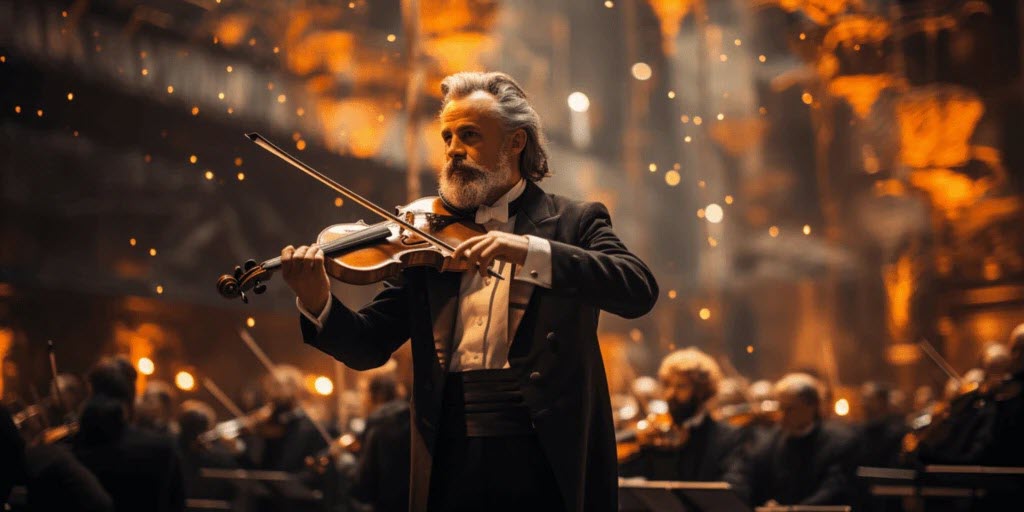
Classical music is a timeless treasure trove of artistry, emotion, and human expression. From the sweeping symphonies of Beethoven to the delicate piano works of Chopin, these pieces have stood the test of time, captivating generations of listeners across the globe. Whether you’re a seasoned classical music aficionado or just beginning your journey into this rich and diverse world, certain pieces rise above the rest, becoming iconic representations of the genre’s power and beauty.
In this article, we explore the Top 15 Most Popular Classical Music Pieces of All Time—a collection of works that have transcended their era to become cultural staples. These masterpieces have been played in concert halls, echoed through films, inspired countless musicians, and moved listeners in unforgettable ways. Each piece tells its own story, evoking a range of emotions from joy to sorrow, triumph to tragedy. Get ready to immerse yourself in music that has shaped not only the world of classical composition but also the broader landscape of art and culture. Whether you’re looking for inspiration or simply the joy of discovery, this list is sure to resonate with your soul and ignite your passion for the classics.
1. Ludwig van Beethoven – Symphony No. 9 in D minor, Op. 125 (“Choral”) (1824)
Beethoven’s Symphony No. 9 is more than just a masterpiece; it’s a triumph of human spirit. Premiering in 1824, when Beethoven was completely deaf, the symphony broke new ground with its inclusion of vocal soloists and a full choir in the final movement—a radical move for the time. The famous “Ode to Joy” theme celebrates brotherhood and unity, an anthem that has transcended classical music to become a universal symbol of hope. The symphony’s powerful orchestration, emotional depth, and sheer scale make it one of the most beloved works in the history of music. It’s not just a listening experience; it’s a journey through sorrow, conflict, and finally, exaltation. Even today, this piece continues to inspire, its melodies instantly recognizable across cultures.
2. Johann Sebastian Bach – Toccata and Fugue in D minor, BWV 565 (circa 1704)
Few pieces of music are as instantly recognizable as Bach’s Toccata and Fugue in D minor. Composed around 1704, this organ work is a whirlwind of baroque complexity and drama. From its thunderous opening notes to the intricate fugue that follows, this piece grabs hold of your imagination and never lets go. Its dark, almost haunting atmosphere has made it a staple in Gothic and horror films, but it’s the technical brilliance and emotional range that keeps musicians and listeners coming back. Bach’s mastery of counterpoint is fully on display, making this not only a showpiece for organists but a thrilling experience for audiences.
3. Wolfgang Amadeus Mozart – Requiem in D minor, K. 626 (1791)
Mozart’s Requiem is shrouded in mystery—a work left incomplete at his death in 1791, rumored to have been commissioned by a shadowy figure. Even so, this unfinished masterpiece is a profound meditation on life, death, and the divine. The Dies Irae thunders with apocalyptic intensity, while the Lacrimosa aches with sorrow and longing. Completed by his student Franz Xaver Süssmayr, the Requiem has become one of Mozart’s most iconic works, evoking both the fragility and grandeur of human existence. It’s a deeply emotional experience that taps into something primal, a fitting farewell from one of history’s greatest composers.
4. Antonio Vivaldi – The Four Seasons (1725)
Vivaldi’s The Four Seasons is a brilliant example of programmatic music, where the composer paints vivid musical pictures of each season. Published in 1725, this set of four violin concertos captures everything from the gentle breezes of spring to the violent storms of summer, the harvest dance of autumn, and the icy chill of winter. Vivaldi’s detailed instructions in the score allow the listener to “hear” birds chirping, dogs barking, and even peasants dancing. It’s not just technically impressive; it’s fun! Each concerto is a unique journey, and together they showcase Vivaldi’s genius for melody and rhythm, making it one of the most popular pieces in classical music.
5. Pyotr Ilyich Tchaikovsky – Swan Lake, Op. 20 (1877)
Tchaikovsky’s Swan Lake is the quintessential ballet score, filled with sweeping melodies, dramatic orchestration, and a story of love and tragedy. Premiered in 1877, the ballet tells the tale of Odette, a princess cursed to live as a swan, and her doomed love with Prince Siegfried. From the delicate beauty of the Dance of the Swans to the powerful Swan Theme, Tchaikovsky’s music is both lyrical and emotionally charged. Though the original production was not a success, Swan Lake has since become a cornerstone of ballet and a beloved work in the classical repertoire, its music evoking a sense of timeless magic.
6. Frédéric Chopin – Nocturne in E-flat major, Op. 9, No. 2 (1832)
Chopin’s Nocturne in E-flat major is the epitome of Romantic piano music—introspective, lyrical, and deeply emotional. Composed in 1832, it is one of his most famous works and a perfect example of his genius. The piece flows with a delicate, almost improvisational quality, as if the music is being created in the moment. The gentle melody swoons and sways, while the accompaniment rolls softly beneath it, creating an intimate, dream-like atmosphere. It’s a piece that invites quiet reflection and introspection, making it a favorite among pianists and listeners alike. Chopin’s ability to imbue the piano with such expressive power is unmatched.
7. Ludwig van Beethoven – Symphony No. 5 in C minor, Op. 67 (1808)
Beethoven’s Symphony No. 5 is arguably the most famous symphony ever written, and for good reason. Premiered in 1808, its iconic four-note motif—da-da-da-daaa—has become synonymous with fate knocking at the door. This symphony is a masterclass in tension, drama, and ultimate triumph. The stormy first movement sets the tone, but as the symphony progresses, Beethoven takes the listener on an emotional roller-coaster, culminating in a jubilant finale that feels like an exhilarating victory over adversity. It’s a work that has inspired generations, from wartime radio broadcasts to modern film scores, cementing its place in the pantheon of classical music.
8. Johann Pachelbel – Canon in D (circa 1680)
Pachelbel’s Canon in D may have been composed around 1680, but it wasn’t until the 20th century that it became a global phenomenon. Known for its soothing, repetitive structure, the Canon in D is built on a simple harmonic progression that loops beneath a series of increasingly complex variations. Its serene beauty and mathematical precision have made it a favorite at weddings, in films, and as a go-to piece for relaxation. Though originally written for three violins and basso continuo, its influence has spread far beyond the baroque era, proving that simplicity, when done well, can be endlessly captivating.
9. Maurice Ravel – Boléro (1928)
Ravel’s Boléro is a hypnotic, one-movement orchestral piece that builds slowly but relentlessly from a whisper to a roar. Premiered in 1928, the piece is famous for its unchanging rhythm and repeating melody, gradually layered with different instrumentations and dynamics. What begins as a simple, almost monotonous theme swells to an explosive climax, holding the audience in suspense until the veryend. It’s a masterclass in orchestration, as Ravel expertly uses the entire orchestra to create an overwhelming, almost trance-like effect. Originally composed as a ballet, Boléro has since taken on a life of its own in concert halls and popular media, its steady pulse and gradual crescendo making it one of the most recognizable pieces in classical music.
10. George Frideric Handel – Messiah, HWV 56 (“Hallelujah Chorus”) (1742)
Handel’s Messiah is a monumental oratorio that has become a cornerstone of the choral repertoire, with the “Hallelujah Chorus” being its most iconic moment. Premiered in 1742, the work was an instant success, and it has since become synonymous with the holiday season, particularly around Christmas and Easter. The “Hallelujah Chorus” features jubilant, triumphant music that celebrates the resurrection of Christ, and it’s so powerful that audiences traditionally stand when it’s performed. The energy and joy of this chorus are infectious, making it one of the most uplifting and widely performed pieces of classical music.
11. Claude Debussy – Clair de Lune (1905)
Debussy’s Clair de Lune is one of the most evocative pieces of the impressionist era, capturing the essence of moonlight in music. Composed in 1905 as part of his Suite Bergamasque, the piece is delicate, ethereal, and full of subtle emotional nuance. The gentle, flowing melody seems to shimmer, evoking the quiet beauty of a moonlit night. Its soft dynamics and lush harmonies create a dream-like atmosphere, making it one of the most beloved piano pieces ever written. Clair de Lune has appeared in numerous films and TV shows, its peaceful beauty making it a perfect soundtrack for moments of reflection and serenity.
12. Sergei Rachmaninoff – Piano Concerto No. 2 in C minor, Op. 18 (1901)
Rachmaninoff’s Piano Concerto No. 2 is often considered one of the greatest piano concertos ever written. Premiered in 1901, the piece is a showcase of both technical virtuosity and deep emotional expression. The sweeping melodies, lush orchestration, and dramatic interplay between soloist and orchestra make it a favorite among pianists and audiences alike. The second movement is particularly famous for its lyrical beauty, while the energetic finale brings the concerto to a thrilling conclusion. Piano Concerto No. 2 marked Rachmaninoff’s triumphant return to composition after a period of depression and creative block, and it has since become a staple of the Romantic repertoire.
13. Edvard Grieg – Peer Gynt Suite No. 1, Op. 46 (“Morning Mood”) (1876)
Grieg’s Peer Gynt Suite is full of picturesque music, but none more so than the opening movement, Morning Mood. Composed in 1876 as incidental music for Henrik Ibsen’s play Peer Gynt, Morning Mood perfectly captures the quiet beauty of sunrise with its serene melody and gentle orchestration. The piece gradually builds from a soft, lilting flute solo to a full orchestral climax, evoking the natural beauty of the Norwegian landscape. It’s a piece that has become synonymous with the peacefulness of dawn, and its universal appeal has made it a favorite in everything from classical concerts to film soundtracks.
14. Johannes Brahms – Hungarian Dance No. 5 in G minor (1869)
Brahms’ Hungarian Dance No. 5 is a fiery, energetic romp that showcases the composer’s love for Hungarian folk music. Published in 1869 as part of a set of 21 dances, this particular piece has become the most famous of the collection, thanks to its infectious rhythms and bold, memorable melodies. The piece alternates between fast, lively sections and slower, more lyrical passages, creating a sense of excitement and unpredictability. Originally written for piano four hands, it has since been arranged for full orchestra, making it a popular choice for both chamber and orchestral performances.
15. Richard Wagner – Ride of the Valkyries (1870)
Wagner’s Ride of the Valkyries is one of the most thrilling and dramatic pieces of classical music ever written. Composed in 1870 as part of his epic Ring Cycle, this piece is instantly recognizable for its galloping rhythms and powerful brass fanfares. The music accompanies the Valkyries—warrior maidens—as they ride across the sky, collecting fallen heroes to take to Valhalla. Its sheer intensity and grandeur have made it a favorite in popular culture, from war films to cartoons, and it never fails to stir excitement. Wagner’s ability to create such vivid musical imagery is on full display here, making Ride of the Valkyries a truly unforgettable musical experience.

Samuel Moore is a frequent contributor to Singers Room. Since 2005, Singersroom has been the voice of R&B around the world. Connect with us via social media below.









