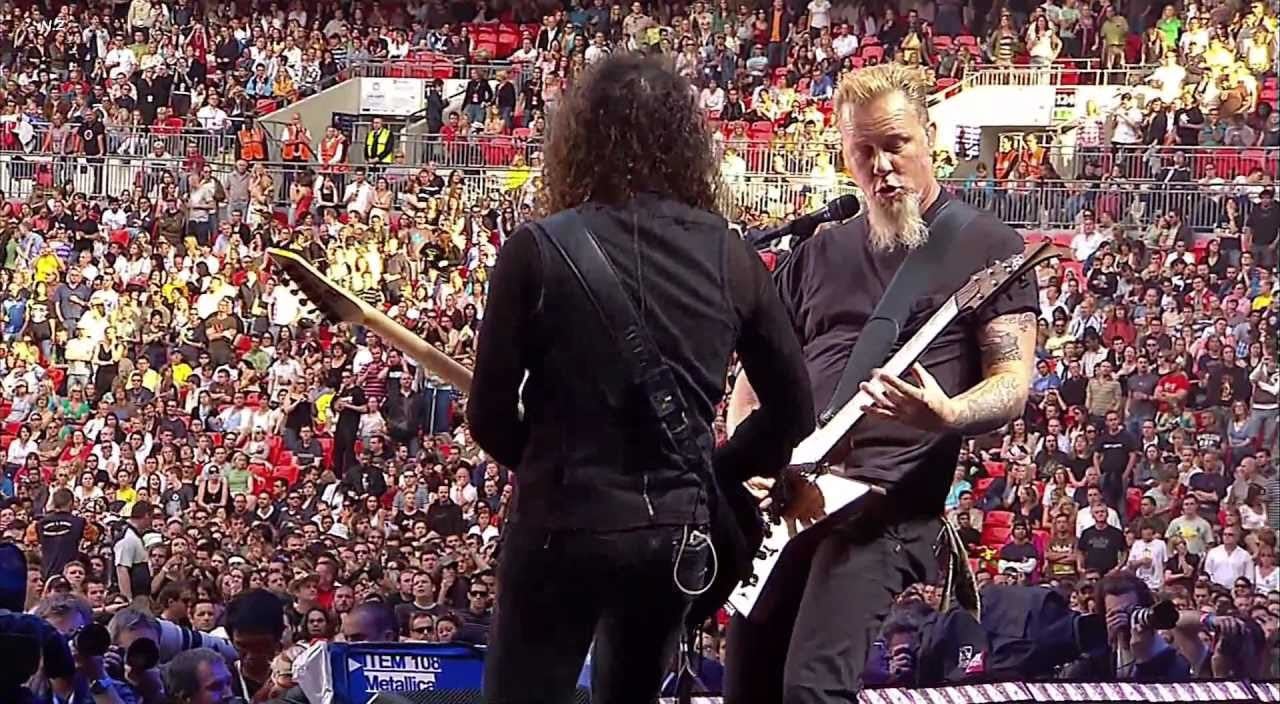
Metallica is an American heavy metal band formed in 1981 in Los Angeles, California. The band’s current lineup consists of James Hetfield (lead vocals, rhythm guitar), Lars Ulrich (drums), Kirk Hammett (lead guitar, backing vocals), and Robert Trujillo (bass, backing vocals). Metallica is considered one of the “Big Four” bands of thrash metal alongside Slayer, Megadeth, and Anthrax.
Metallica gained prominence in the 1980s and early 1990s for their aggressive musical style, fast tempos, and intricate guitar solos. They released groundbreaking albums such as “Master of Puppets” (1986), “…And Justice for All” (1988), and their self-titled album, commonly known as the “Black Album” (1991), which featured hits like “Enter Sandman” and “Nothing Else Matters.”
Throughout their career, Metallica has explored various musical styles, blending heavy metal with elements of classical music, blues, and hard rock. They are known for their technical proficiency, intense live performances, and socially conscious lyrics addressing themes such as war, injustice, and personal struggle.
Metallica’s influence on the heavy metal genre is immense, and they are credited with bringing thrash metal to mainstream audiences while maintaining their credibility among metal purists. With numerous Grammy Awards, induction into the Rock and Roll Hall of Fame, and over 125 million records sold worldwide, Metallica remains one of the most iconic and enduring bands in rock music history.
1. Orion
“Orion” is an instrumental track by Metallica, featured on their 1986 album “Master of Puppets.” It is renowned for its complex structure, intricate guitar work, and progressive musical elements, showcasing the band’s technical prowess and musical innovation.
Composed primarily by bassist Cliff Burton, “Orion” serves as a showcase for his musical vision and bass guitar skills. The song begins with a melodic bass intro before evolving into a dynamic piece that blends heavy metal with elements of classical music and progressive rock. Kirk Hammett and James Hetfield’s guitar harmonies add depth and intensity to the composition, while Lars Ulrich’s drumming provides a driving rhythm throughout.
Lyrically absent, “Orion” is a thematic departure from Metallica’s usual narrative-driven songs, instead focusing on instrumental storytelling through its musical arrangement. The song’s title and atmospheric sound evoke a sense of cosmic exploration and introspection, reflecting its thematic depth and complexity.
“Orion” remains a fan favorite and a highlight of Metallica’s discography, revered for its musical intricacy, emotional depth, and lasting influence on the heavy metal genre. It is often performed live as a tribute to Cliff Burton, who tragically passed away in 1986, shortly after the release of “Master of Puppets.”
2. The Unforgiven
“The Unforgiven” is a song by Metallica, released in 1991 as the second single from their self-titled album, commonly known as the Black Album. It is the first of the “Unforgiven” trilogy, which includes “The Unforgiven II” from the album “Reload” (1997) and “The Unforgiven III” from “Death Magnetic” (2008).
Lyrically, “The Unforgiven” explores themes of introspection, regret, and personal struggle. The lyrics depict a narrative of someone who feels trapped by their circumstances and haunted by past mistakes, grappling with feelings of guilt and the desire for redemption. The chorus, “What I’ve felt, what I’ve known, never shined through in what I’ve shown,” reflects a sense of inner conflict and the search for identity.
Musically, “The Unforgiven” features a melodic yet heavy composition, blending Metallica’s trademark thrash metal sound with orchestral arrangements and acoustic guitar passages. The song showcases James Hetfield’s powerful vocals and lyrical delivery, alongside Kirk Hammett’s emotive guitar solos and the band’s tight rhythm section.
“The Unforgiven” was a commercial success, receiving significant airplay and becoming a fan favorite. Its introspective lyrics and dynamic musicality have made it one of Metallica’s most iconic songs, often performed live and celebrated for its emotional depth and thematic complexity. The song’s impact has solidified its place as a cornerstone of Metallica’s discography and a defining moment in their evolution as a band.
3. Nothing Else Matters
“Nothing Else Matters” is a song by Metallica, released in 1992 on their self-titled album, commonly known as the Black Album. It stands out as one of Metallica’s most iconic and widely recognized songs.
Lyrically, “Nothing Else Matters” explores themes of love, trust, and personal vulnerability. The lyrics were written by James Hetfield and convey a heartfelt message about staying true to oneself and one’s relationships, despite external pressures or challenges. The song’s chorus, “Nothing else matters, never cared for what they do, never cared for what they know,” emphasizes the importance of following one’s own path and priorities.
Musically, “Nothing Else Matters” is a departure from Metallica’s usual heavy metal sound, featuring acoustic guitars and a more introspective, melodic composition. The song begins with a gentle guitar intro, followed by Hetfield’s emotive vocals and gradually builds to include orchestral arrangements and electric guitars. The contrast between the softer verses and powerful chorus adds to the song’s emotional impact.
“Nothing Else Matters” became a commercial success and remains one of Metallica’s most beloved songs. Its universal themes and heartfelt lyrics have resonated with fans around the world, making it a staple in their live performances and a defining moment in their career. The song’s enduring popularity continues to cement its status as a classic in rock music history.
4. Master Of Puppets
“Master of Puppets” is the title track and one of the most iconic songs by Metallica, released in 1986 as the lead single from their album of the same name. It is considered a cornerstone of thrash metal and a defining song in Metallica’s discography.
Musically, “Master of Puppets” is known for its fast tempo, aggressive riffing, and intricate guitar solos by James Hetfield and Kirk Hammett. The song’s dynamic structure and powerful rhythm section, anchored by Lars Ulrich’s drumming and Cliff Burton’s bass lines, contribute to its intensity and impact.
Lyrically, “Master of Puppets” addresses themes of control, manipulation, and addiction, metaphorically likening someone or something to a puppeteer pulling strings. The lyrics explore the destructive power of external forces that exert control over individuals, reflecting deeper social commentary and personal introspection.
“Master of Puppets” is celebrated for its technical complexity, musical innovation, and powerful performance. It remains a staple of Metallica’s live performances and a fan favorite, revered for its influential role in shaping the thrash metal genre and solidifying Metallica’s status as one of the greatest heavy metal bands of all time.
5. One
“One” is a song by Metallica, released in 1988 on their fourth studio album, “…And Justice for All.” It is known for its powerful lyrics and intense musical composition, making it one of Metallica’s most iconic and critically acclaimed songs.
Lyrically, “One” is based on the novel “Johnny Got His Gun” by Dalton Trumbo, which depicts the harrowing experiences of a soldier who is severely wounded in World War I and left in a state of total physical incapacitation. The lyrics delve into themes of isolation, despair, and the horrors of war, capturing the protagonist’s inner turmoil and longing for death to end his suffering. The song’s chorus, “Darkness imprisoning me, all that I see, absolute horror,” vividly portrays the protagonist’s sense of helplessness and anguish.
Musically, “One” is characterized by its complex structure and dynamic shifts in tempo and intensity. The song opens with a haunting acoustic guitar passage, followed by heavy and aggressive guitar riffs, driving bass lines, and thunderous drumming. Kirk Hammett’s emotional guitar solo and James Hetfield’s raw vocals contribute to the song’s dramatic and atmospheric impact.
“One” was accompanied by a groundbreaking music video that incorporated scenes from the 1971 film adaptation of “Johnny Got His Gun.” The video’s powerful imagery and the song’s compelling narrative resonated with audiences, solidifying its reputation as a masterpiece in Metallica’s discography.
Overall, “One” remains a standout track in metal music, praised for its lyrical depth, musical complexity, and emotional intensity. It has become a fan favorite and a staple in Metallica’s live performances, showcasing the band’s ability to blend storytelling with powerful musical craftsmanship.
6. Spit Out The Bone
“Spit Out the Bone” is a song by Metallica, featured on their 2016 album “Hardwired… to Self-Destruct.” It is known for its fast-paced thrash metal sound and aggressive energy, reminiscent of Metallica’s earlier albums.
Musically, “Spit Out the Bone” showcases relentless guitar riffs by James Hetfield and Kirk Hammett, accompanied by Lars Ulrich’s powerful drumming and Robert Trujillo’s driving bass lines. The song’s dynamic shifts and intense tempo pay homage to Metallica’s thrash metal roots, delivering a high-energy and exhilarating listening experience.
Lyrically, “Spit Out the Bone” explores themes of dystopia, artificial intelligence, and technological control. The lyrics depict a futuristic scenario where humanity faces extinction due to machines taking over and eradicating human life. The song’s narrative and imagery reflect concerns about the consequences of technological advancement and its potential impact on society.
“Spit Out the Bone” has been praised for its aggressive musical style, lyrical depth, and powerful delivery. It has become a fan favorite and a standout track on “Hardwired… to Self-Destruct,” reaffirming Metallica’s ability to evolve while staying true to their thrash metal roots.
7. For Whom The Bell Tolls
“For Whom the Bell Tolls” is a song by Metallica, released in 1984 on their second studio album, “Ride the Lightning.” It is inspired by Ernest Hemingway’s novel of the same name, which portrays the struggles and sacrifices of individuals in the Spanish Civil War.
Lyrically, “For Whom the Bell Tolls” explores themes of mortality, war, and the inevitability of death. The lyrics reflect on the brutality and futility of conflict, with imagery of soldiers facing their demise and the tolling of bells marking their passing. The song’s chorus, “For whom the bell tolls, time marches on,” emphasizes the relentless passage of time and the consequences of one’s actions.
Musically, “For Whom the Bell Tolls” features a distinctive and heavy bass intro by Cliff Burton, followed by driving guitar riffs and thunderous drumming. The song’s mid-tempo pace and powerful instrumentation create a sense of impending doom and urgency, reflecting the song’s themes of struggle and defiance.
“For Whom the Bell Tolls” has become one of Metallica’s signature songs, praised for its lyrical depth, musical intensity, and Burton’s influential bass performance. It remains a favorite among fans and a staple in the band’s live shows, showcasing their ability to blend storytelling with aggressive thrash metal. The song’s impact has solidified its place as a classic in both metal music and literature-inspired rock songs.
8. Creeping Death
“Creeping Death” is a classic song by Metallica, featured on their 1984 album “Ride the Lightning.” It is known for its energetic thrash metal style and has become one of Metallica’s most iconic tracks.
Musically, “Creeping Death” is characterized by its fast-paced tempo, aggressive guitar riffs by James Hetfield and Kirk Hammett, and intense drumming by Lars Ulrich. The song’s dynamic shifts and powerful instrumentation contribute to its adrenaline-pumping energy and appeal.
Lyrically, “Creeping Death” recounts the biblical story of the Plagues of Egypt and the Exodus, focusing on the final plague where the Angel of Death passes over the Israelites but brings death to the firstborn sons of Egypt. The lyrics depict the epic struggle between Moses and Pharaoh, highlighting themes of liberation, divine intervention, and triumph over oppression.
“Creeping Death” has been a staple of Metallica’s live performances and remains a fan favorite, known for its powerful composition, memorable chorus, and intense storytelling. It has solidified its place as one of the definitive thrash metal anthems and a cornerstone of Metallica’s influential career.
9. The Memory Remains
“The Memory Remains” is a song by Metallica, released in 1997 on their album “Reload.” It features Marianne Faithfull on backing vocals and became one of the album’s notable tracks.
Lyrically, “The Memory Remains” explores themes of fame, legacy, and the passage of time. The lyrics depict the lingering effects of a person’s presence or influence even after they have departed, leaving behind memories that continue to resonate. The song’s chorus, “The memory remains,” reflects on the enduring impact of someone’s presence in the collective consciousness.
Musically, “The Memory Remains” is characterized by its catchy melody, driven by a distinctive guitar riff and atmospheric production. Marianne Faithfull’s haunting vocals add depth to the song, complementing James Hetfield’s powerful delivery. The song’s bridge features an eerie outro with Faithfull’s repeating “na-na-na” vocals, adding to its memorable and atmospheric quality.
“The Memory Remains” received positive reviews for its musicality and lyrical depth, showcasing Metallica’s ability to evolve their sound while maintaining their signature style. The song’s commercial success and enduring popularity have solidified its place as a standout track in Metallica’s later discography, appreciated for its haunting melody and introspective themes.
10. Enter Sandman
“Enter Sandman” is one of Metallica’s most famous songs, released in 1991 as the first single from their self-titled album, commonly known as the “Black Album.” It became a massive commercial success and is considered one of the band’s signature tracks.
Musically, “Enter Sandman” is characterized by its heavy guitar riff, composed by Kirk Hammett, which opens the song and drives its powerful sound. James Hetfield’s distinctive vocals and the song’s rhythmic structure, anchored by Lars Ulrich’s drumming and Jason Newsted’s bass lines, contribute to its intense and memorable composition.
Lyrically, “Enter Sandman” explores themes of nightmares and childhood fears, depicting a narrative about a child’s unsettling dreams and the desire for protection from them. The lyrics blend dark imagery with a sense of urgency, creating an atmosphere of suspense and unease.
“Enter Sandman” achieved mainstream success, reaching high chart positions worldwide and becoming a staple of rock radio. Its music video, featuring striking visuals and memorable scenes, further propelled its popularity. The song’s accessibility and powerful appeal helped Metallica reach new audiences while maintaining their core fan base.
“Enter Sandman” remains a timeless classic in rock music, recognized for its iconic guitar riff, powerful lyrics, and enduring influence on the heavy metal genre.

Edward Tomlin is a frequent contributor to Singers Room. Since 2005, Singersroom has been the voice of R&B around the world. Connect with us via social media below.









