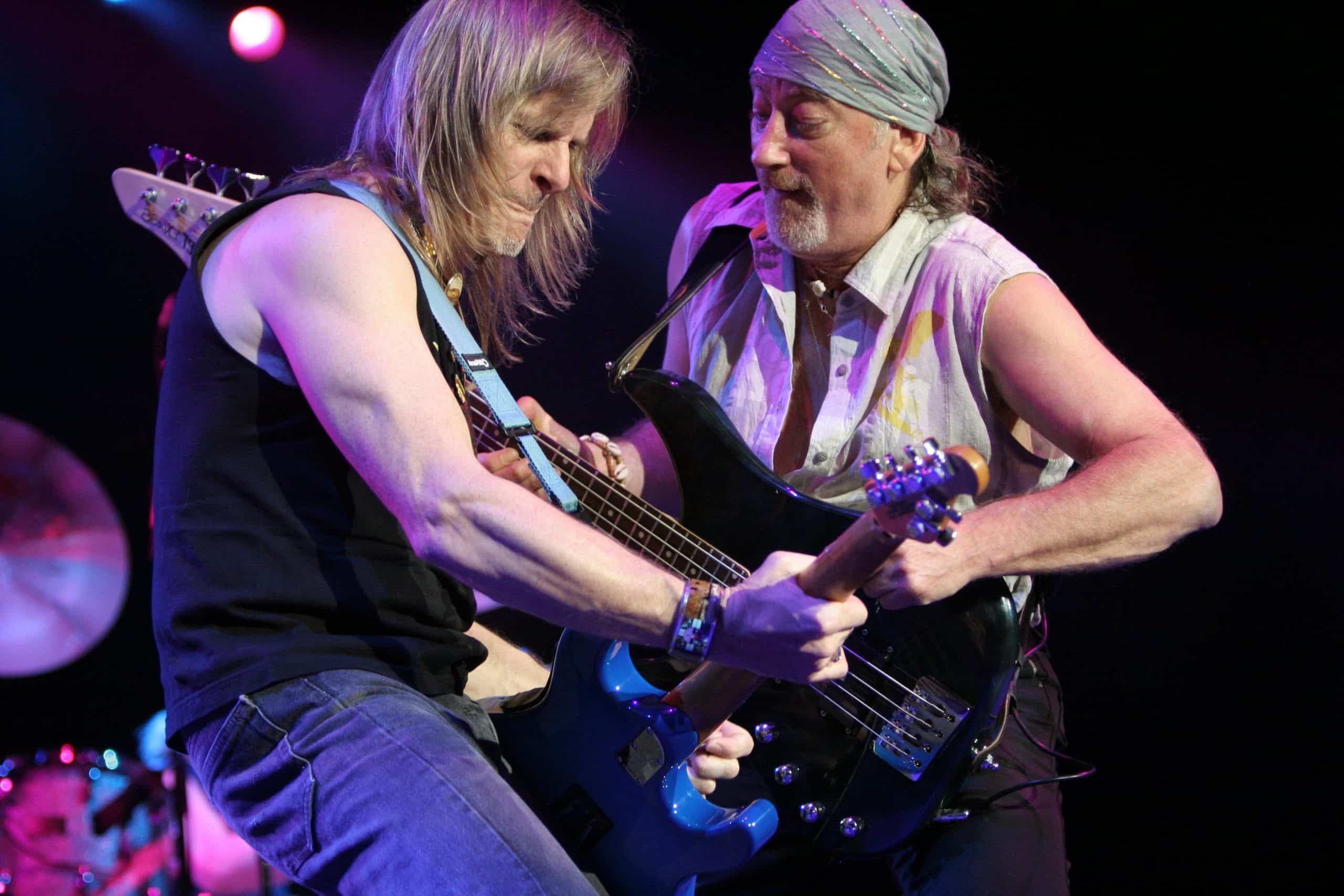
Deep Purple is a legendary rock band that emerged in the late 1960s and is considered one of the pioneers of hard rock and heavy metal music. Formed in Hertford, England, in 1968, the band has undergone numerous lineup changes throughout its career but has maintained a significant impact on the rock music landscape.
Deep Purple’s classic lineup, known as the Mark II lineup, included Ian Gillan (vocals), Ritchie Blackmore (guitar), Jon Lord (keyboards), Roger Glover (bass), and Ian Paice (drums). This lineup produced some of the band’s most iconic albums, including “Machine Head” (1972), which featured the smash hit “Smoke on the Water,” a song recognized for its iconic guitar riff.
Over the years, Deep Purple has released numerous acclaimed albums and singles, experimenting with various musical styles ranging from hard rock and heavy metal to progressive rock and blues. Their virtuosic musicianship, innovative songwriting, and electrifying live performances have earned them a dedicated fan base and a lasting legacy in the world of rock music.
1. Woman From Tokyo
“Woman from Tokyo” is a classic rock song by Deep Purple, featured on their 1973 album “Who Do We Think We Are.” The track is known for its infectious groove, driven by Ian Paice’s distinctive drumming and Ritchie Blackmore’s iconic guitar riff. Lyrically, “Woman from Tokyo” tells the story of the band’s experiences while touring in Japan, with references to the country’s culture and nightlife.
The song’s upbeat tempo, catchy melody, and memorable chorus make it a fan favorite and a staple of Deep Purple’s live performances. “Woman from Tokyo” showcases the band’s trademark blend of hard rock and blues influences, with Ian Gillan’s powerful vocals adding to the song’s dynamic energy. Over the years, it has become one of Deep Purple’s most enduring and beloved tracks, continuing to captivate audiences with its infectious rhythm and irresistible charm.
2. Black Night
“Black Night” is a classic rock song by Deep Purple, released as a single in 1970. It’s known for its infectious riff and driving rhythm, which became instantly recognizable and a staple of the band’s live performances. The song features Ian Gillan’s powerful vocals, Ritchie Blackmore’s fiery guitar work, and Jon Lord’s signature Hammond organ sound.
Lyrically, “Black Night” captures a sense of frustration and restlessness, with themes of longing and yearning for escape. The song’s energy and groove have made it a fan favorite and a timeless classic in the rock genre.
“Black Night” remains one of Deep Purple’s most popular and enduring songs, demonstrating their ability to craft memorable hooks and deliver electrifying performances that have stood the test of time.
3. Hush
“Hush” is a song originally recorded by American artist Billy Joe Royal in 1967, written by Joe South. However, it gained widespread popularity when British rock band Deep Purple covered it for their debut album “Shades of Deep Purple” in 1968.
Deep Purple’s version of “Hush” features a dynamic blend of rock, psychedelic, and blues elements. Ian Gillan’s vocals, Ritchie Blackmore’s guitar work, Jon Lord’s keyboards, Roger Glover’s bass, and Ian Paice’s drums all contribute to the song’s energetic and vibrant sound.
The song’s catchy melody and driving rhythm made it a hit, reaching high chart positions in both the United States and the United Kingdom. “Hush” remains one of Deep Purple’s most recognizable songs and a classic in the rock genre.
4. Highway Star
“Highway Star” is a quintessential rock anthem by Deep Purple, featured on their 1972 album “Machine Head.” Known for its blistering guitar riffs, frenetic organ solos, and driving rhythm, the song is a showcase of the band’s virtuosic musicianship and electrifying energy.
Ritchie Blackmore’s iconic guitar riff opens the track, setting the tone for Ian Gillan’s powerhouse vocals and Jon Lord’s mesmerizing Hammond organ solos. The lyrics of “Highway Star” capture the adrenaline rush of driving fast on the open road, with references to speed, power, and the thrill of the journey.
The song’s dynamic shifts and instrumental prowess make it a standout track in Deep Purple’s discography and a staple of their live performances. “Highway Star” has earned a place as one of the greatest rock songs of all time, revered by fans and critics alike for its timeless appeal and infectious energy.
5. Lazy
“Lazy” is a dynamic and bluesy track by Deep Purple, featured on their 1972 album “Machine Head.” Clocking in at over seven minutes long, “Lazy” is a showcase of the band’s improvisational skills and musical prowess.
The song begins with a moody and atmospheric Hammond organ intro by Jon Lord, setting the stage for the rest of the band to join in with a slow and heavy groove. Ritchie Blackmore’s guitar work is characterized by soulful blues licks and fiery solos, while Ian Gillan’s vocals add a gritty and expressive layer to the track.
Lyrically, “Lazy” reflects on the lethargy and ennui that can come with the rock ‘n’ roll lifestyle, with lines like “I’m burning, I’m burning, I’m burning for you” capturing the intensity of passion and desire.
“Lazy” is renowned for its extended instrumental sections, allowing each band member to showcase their musical talents through improvised solos and dynamic interplay. The song’s bluesy vibe and epic length have made it a fan favorite and a standout track in Deep Purple’s catalog.
6. Perfect Strangers
“Perfect Strangers” is a powerful rock anthem by Deep Purple, released in 1984 as the title track of their eleventh studio album. The song marks the reunion of the classic Mark II lineup after an eight-year hiatus, featuring Ian Gillan on vocals, Ritchie Blackmore on guitar, Jon Lord on keyboards, Roger Glover on bass, and Ian Paice on drums.
“Perfect Strangers” is characterized by its driving rhythm, infectious melody, and soaring vocals. The song’s lyrics touch on themes of reunion, nostalgia, and the passage of time, with lines like “Can you remember, remember my name?” evoking a sense of longing and introspection.
Ritchie Blackmore’s iconic guitar riff and Jon Lord’s majestic keyboard work elevate the song to new heights, while Ian Gillan’s powerful vocals deliver an emotive performance that captures the essence of the band’s reunion.
“Perfect Strangers” became one of Deep Purple’s most successful singles, reaching high chart positions around the world and solidifying their status as rock legends. The song remains a fan favorite and a staple of the band’s live performances, showcasing their enduring talent and musical chemistry.
7. Space Truckin’
“Space Truckin'” is an iconic rock song by Deep Purple, featured on their 1972 album “Machine Head.” The track is known for its high-energy performance, driving rhythm, and electrifying instrumental solos.
“Space Truckin'” opens with a thunderous drum intro by Ian Paice, followed by a relentless guitar riff from Ritchie Blackmore. Ian Gillan’s powerful vocals soar over the frenetic pace of the song, while Jon Lord’s Hammond organ adds a dynamic layer to the sonic landscape.
Lyrically, “Space Truckin'” explores themes of space travel and escapism, with vivid imagery and imaginative storytelling. The song’s fast tempo and infectious groove create a sense of exhilaration and adventure, inviting listeners to join in the journey through the cosmos.
“Space Truckin'” has become one of Deep Purple’s most beloved and enduring tracks, celebrated for its dynamic performance and timeless appeal. It remains a staple of the band’s live shows and a fan favorite among rock enthusiasts around the world.
8. Rat Bat Blue
“Rat Bat Blue” is a deep cut by Deep Purple, featured on their 1971 album “Fireball.” The song is characterized by its bluesy guitar riffs, dynamic rhythm, and atmospheric mood.
“Rat Bat Blue” opens with Ritchie Blackmore’s distinctive guitar riff, setting the tone for the rest of the track. Ian Gillan’s vocals exude a sense of mystery and intrigue, with lyrics that paint a vivid picture of a nocturnal encounter.
The song’s title and lyrics evoke a sense of darkness and unease, with references to nocturnal creatures and ominous imagery. Despite its darker themes, “Rat Bat Blue” features moments of musical brilliance, including Blackmore’s soulful guitar solos and Jon Lord’s haunting keyboard melodies.
While not as well-known as some of Deep Purple’s other hits, “Rat Bat Blue” showcases the band’s versatility and creativity, offering a glimpse into their experimental side. It remains a favorite among fans of the band’s early work and a testament to their enduring influence in the world of rock music.
9. Smoke on the Water
“Smoke on the Water” is one of the most iconic rock songs of all time, released by Deep Purple in 1972 as part of their album “Machine Head.” It’s instantly recognizable for its legendary guitar riff, composed by Ritchie Blackmore.
The song was inspired by a real-life event when Deep Purple’s recording session in Montreux, Switzerland, was interrupted by a fire at the Montreux Casino. The lyrics vividly recount the incident, with references to “smoke on the water” and “fire in the sky.” Despite the chaos, the band managed to salvage their recording sessions, resulting in the creation of this timeless classic.
“Smoke on the Water” became Deep Purple’s most famous song, topping charts around the world and solidifying their status as rock legends. Its simple yet unforgettable riff has made it a favorite among aspiring guitarists, while its anthemic chorus and driving rhythm continue to captivate audiences decades after its release. “Smoke on the Water” remains a staple of classic rock radio and a defining moment in the history of rock music.
10. Fireball
“Fireball” is a high-energy rock song by Deep Purple, released as the title track of their fifth studio album in 1971. The song is characterized by its fast tempo, relentless rhythm, and explosive guitar and keyboard solos.
“Fireball” opens with a blistering guitar riff from Ritchie Blackmore, setting the tone for the rest of the track. Ian Gillan’s powerful vocals soar over the driving rhythm section, while Jon Lord’s Hammond organ adds a dynamic and melodic layer to the sound.
Lyrically, “Fireball” captures the excitement and intensity of a racing car, with vivid imagery and metaphorical language. The song’s energetic performance and catchy melody make it a favorite among fans of Deep Purple’s early work.
“Fireball” showcases the band’s virtuosic musicianship and ability to create memorable and exhilarating rock anthems. It remains a classic in Deep Purple’s discography and a highlight of their live performances.

Edward Tomlin is a frequent contributor to Singers Room. Since 2005, Singersroom has been the voice of R&B around the world. Connect with us via social media below.









