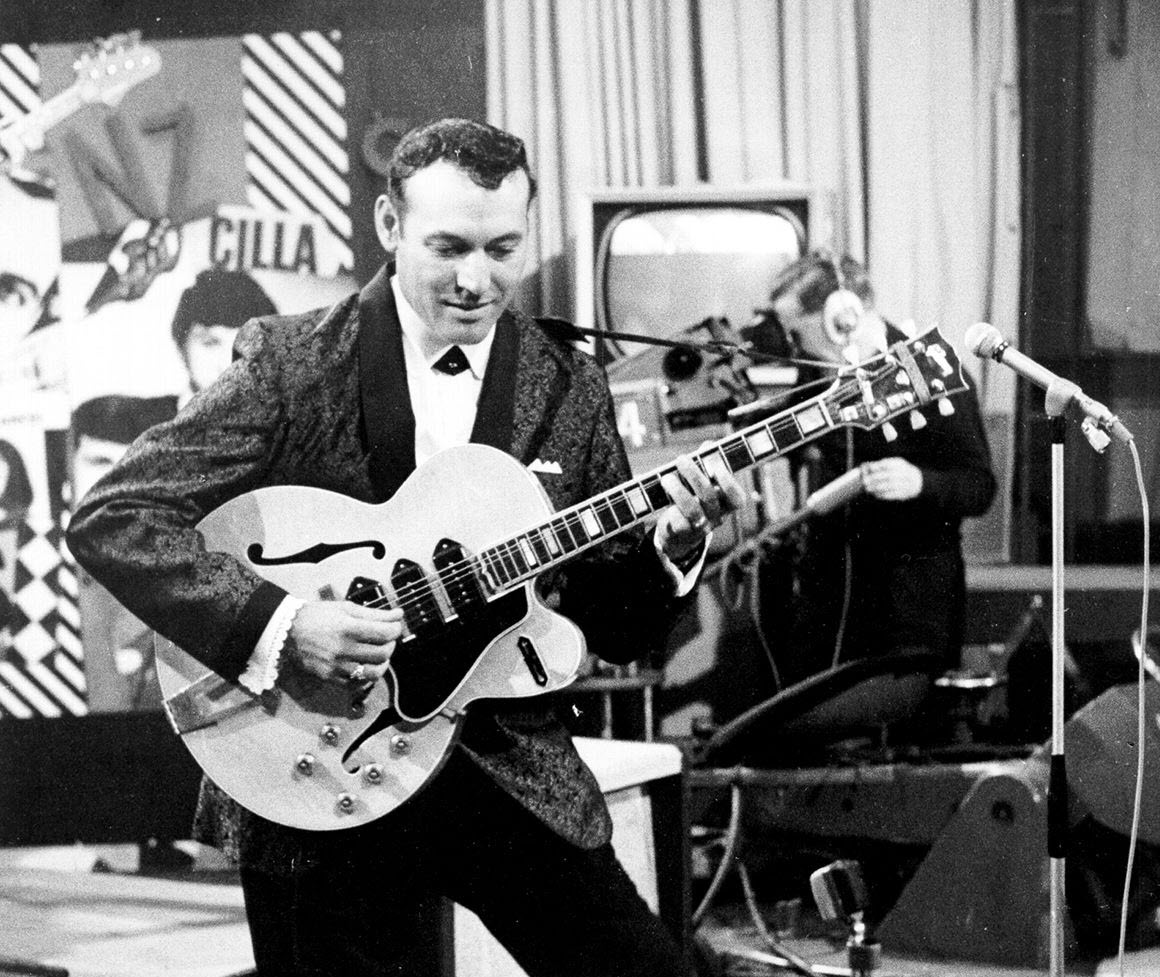
Carl Perkins was an American singer, songwriter, and guitarist, best known for his pioneering work in rockabilly music. He was born on April 9, 1932, in Tiptonville, Tennessee, and passed away on January 19, 1998.
Perkins rose to fame in the 1950s with his hit song “Blue Suede Shoes,” which became a rock and roll standard and helped establish him as one of the early stars of the genre. Perkins’ distinctive guitar playing, characterized by his use of fingerstyle picking and innovative use of guitar effects, influenced generations of musicians.
In addition to “Blue Suede Shoes,” Perkins released a number of other successful singles in the 1950s and 1960s, including “Matchbox,” “Boppin’ the Blues,” and “Honey Don’t.” He continued to perform and record music throughout his career, earning a reputation as one of the greatest guitarists in rock and roll history.
Perkins was inducted into the Rock and Roll Hall of Fame in 1987 and is remembered as a true pioneer of rockabilly music. His songs have been covered by numerous artists over the years, and his influence on rock and roll continues to be felt to this day.
1. Matchbox
“Matchbox” is a song written by Carl Perkins and released as a single in 1957. It became one of Perkins’ most famous songs and was later covered by The Beatles, among others.
Perkins’ original version of “Matchbox” features his signature rockabilly style, with lively guitar riffs and energetic vocals. The song’s lyrics tell the story of a man who is down on his luck and is forced to move out of his home, using a matchbox as a metaphor for his meager possessions.
The Beatles recorded a cover of “Matchbox” for their 1964 album “Something New.” The Beatles’ version features Ringo Starr on lead vocals and showcases the band’s early rock and roll influences. The song was a hit for The Beatles and became a staple of their live performances.
“Matchbox” has since been covered by many artists across various genres and remains a classic of rock and roll music. It showcases Perkins’ songwriting talent and his influence on the development of rock music in the 1950s and beyond.
2. Dixie Fried
“Dixie Fried” is a song by Carl Perkins, released in 1956 as a single on Sun Records. It was also included on his album “Dance Album of Carl Perkins” released the same year.
“Dixie Fried” is a rockabilly song with a catchy rhythm and upbeat tempo. The lyrics celebrate the joys of Southern living, with references to Southern cuisine, culture, and lifestyle. Perkins sings about enjoying fried chicken, cornbread, and sweet potato pie, while also boasting about his romantic conquests and carefree attitude.
Musically, “Dixie Fried” features Perkins’ distinctive guitar playing style, characterized by its driving rhythm and twangy sound. The song’s energetic performance and lively instrumentation helped solidify Perkins’ reputation as one of the pioneers of rock and roll.
“Dixie Fried” remains a classic in Perkins’ catalog, celebrated for its infectious groove, playful lyrics, and rollicking vibe. It has been covered by various artists over the years and continues to be a favorite among fans of rockabilly and early rock and roll music.
3. Your True Love
“Your True Love” is a song written and originally recorded by Carl Perkins. It was released as a single in 1957 on Sun Records, and later included on his album “Dance Album of Carl Perkins.”
The song is a classic example of rockabilly music, characterized by its driving rhythm, energetic guitar work, and upbeat tempo. Lyrically, “Your True Love” is a love song in which the singer expresses his devotion and affection for his partner. The lyrics convey feelings of admiration and longing, with the singer declaring that his true love is the most beautiful and cherished person in his life.
“Your True Love” features Perkins’ distinctive guitar playing style, characterized by its fast-paced strumming and catchy melodies. The song’s lively instrumentation and spirited performance helped solidify Perkins’ reputation as one of the pioneers of rock and roll.
Over the years, “Your True Love” has been covered by various artists, including Johnny Cash, Elvis Presley, and Buddy Holly. It remains a beloved classic in the rockabilly genre, celebrated for its infectious energy, heartfelt lyrics, and timeless appeal.
4. Honey Don’t
“Honey Don’t” is a song written by Carl Perkins, originally released as the B-side to his hit single “Blue Suede Shoes” in 1956. The song features Perkins’ distinctive rockabilly style, with catchy guitar riffs and upbeat vocals.
“Honey Don’t” has since been covered by many artists, including The Beatles, who included a version of the song on their 1964 album “Beatles for Sale.” The Beatles’ version features Ringo Starr on lead vocals and reflects the band’s early rock and roll influences.
The song’s lyrics humorously depict the narrator’s frustration with his partner’s behavior, with the repeated refrain of “Honey, don’t” serving as a playful admonition. “Honey Don’t” has become a popular rockabilly standard and is often included in Perkins’ live performances and tribute albums.
5. Movie Magg
“Movie Magg” is a song by Carl Perkins, released in 1955 as his debut single on the Sun Records label. It is one of his earliest recordings and showcases his signature rockabilly sound.
The song “Movie Magg” tells the story of a young man’s infatuation with a girl named Maggie. He is captivated by her beauty and charm, comparing her to a movie star. The lyrics express his desire to take her out dancing and to the movies, hoping to win her affection.
Musically, “Movie Magg” features Perkins’ distinctive guitar playing style, characterized by its fast-paced rhythm and twangy sound. The song’s catchy melody and upbeat tempo reflect the optimism and enthusiasm of young love.
“Movie Magg” helped establish Carl Perkins as a rising star in the rockabilly scene. Its infectious energy and memorable lyrics made it a favorite among fans of early rock and roll. While not as well-known as some of Perkins’ later hits, “Movie Magg” remains an important part of his early catalog and a testament to his talent as a songwriter and performer.
6. That’s Right
“That’s Right” is a song by Carl Perkins, released in 1957 as the B-side to his single “Gone, Gone, Gone.” The song features Perkins’ signature rockabilly sound, with upbeat guitar riffs and energetic vocals.
“That’s Right” showcases Perkins’ songwriting and guitar skills, with a catchy melody and lyrics that celebrate life and good times. The song’s driving rhythm and infectious groove make it a favorite among fans of rockabilly music.
While “That’s Right” was not as commercially successful as some of Perkins’ other songs, it remains a testament to his talent and influence on rock and roll music. The song is a reminder of Perkins’ contributions to the genre and his place in rockabilly history.
7. Let the Jukebox Keep On Playing
“Let the Jukebox Keep On Playing” is a song by Carl Perkins, released in 1955. It was one of Perkins’ early singles and showcases his rockabilly style, with lively guitar work and upbeat vocals.
The song’s lyrics celebrate the joy of dancing and listening to music, with the narrator encouraging the jukebox to keep playing so the party can continue. “Let the Jukebox Keep On Playing” captures the spirit of rock and roll’s early days, when jukeboxes were a popular way to listen to music in diners, bars, and clubs.
While not as well-known as some of Perkins’ other songs, “Let the Jukebox Keep On Playing” is a fun and lively track that highlights his talent as a songwriter and musician. It remains a favorite among fans of rockabilly music and is a reminder of Perkins’ contributions to the genre.
8. Boppin’ the Blues
“Boppin’ the Blues” is a song written by Carl Perkins and Howard “Curley” Griffin. It was originally recorded by Perkins in 1956 and released as the B-side to his single “Dixie Fried.”
The song “Boppin’ the Blues” is a classic example of rockabilly music, characterized by its infectious rhythm, lively guitar work, and upbeat tempo. Lyrically, the song celebrates the joy of dancing and having a good time. The lyrics describe the excitement of bopping to the rhythm of the blues, with the singer declaring, “Well, bop, bop, bop, bop, bop, in the blues.”
Musically, “Boppin’ the Blues” features Perkins’ signature guitar playing style, which blends country, blues, and rock influences. The song’s catchy melody and energetic performance helped solidify Perkins’ reputation as one of the pioneers of rock and roll.
Over the years, “Boppin’ the Blues” has been covered by various artists and remains a beloved classic in the rockabilly genre. Its timeless appeal, infectious rhythm, and spirited lyrics continue to resonate with fans of early rock and roll music.
9. Everybody’s Trying To Be My Baby
“Everybody’s Trying to Be My Baby” is a song written by Carl Perkins and originally released as a B-side to his 1957 single “Gone, Gone, Gone.” The song has since become a rockabilly standard and has been covered by many artists, including The Beatles.
The Beatles recorded a version of “Everybody’s Trying to Be My Baby” for their 1964 album “Beatles for Sale.” The song features George Harrison on lead vocals and reflects the band’s early rock and roll influences. The Beatles’ version of the song helped introduce Perkins’ music to a new generation of listeners.
“Everybody’s Trying to Be My Baby” is an upbeat rockabilly song with catchy guitar riffs and playful lyrics. It showcases Perkins’ songwriting talent and his influence on the development of rock music in the 1950s and beyond. The song remains a classic of the genre and is often included in Perkins’ greatest hits compilations.
10. Blue Suede Shoes
“Blue Suede Shoes” is a rock and roll song written and originally recorded by Carl Perkins. It was released as a single on Sun Records in 1955.
The song’s lyrics tell the story of a man who warns his love interest not to step on his blue suede shoes, which are his prized possession. The shoes symbolize his identity and individuality, and he is protective of them. The phrase “don’t step on my blue suede shoes” became iconic and entered popular culture.
“Blue Suede Shoes” is characterized by its driving rhythm, catchy guitar riff, and Perkins’ distinctive vocal delivery. The song is considered one of the earliest rockabilly hits and has been covered by numerous artists, including Elvis Presley, who had a hit version in 1956.
The success of “Blue Suede Shoes” helped establish Carl Perkins as a significant figure in the early rock and roll scene. The song remains one of his most enduring and well-known recordings, celebrated for its infectious energy and timeless appeal.

Edward Tomlin is a frequent contributor to Singers Room. Since 2005, Singersroom has been the voice of R&B around the world. Connect with us via social media below.









