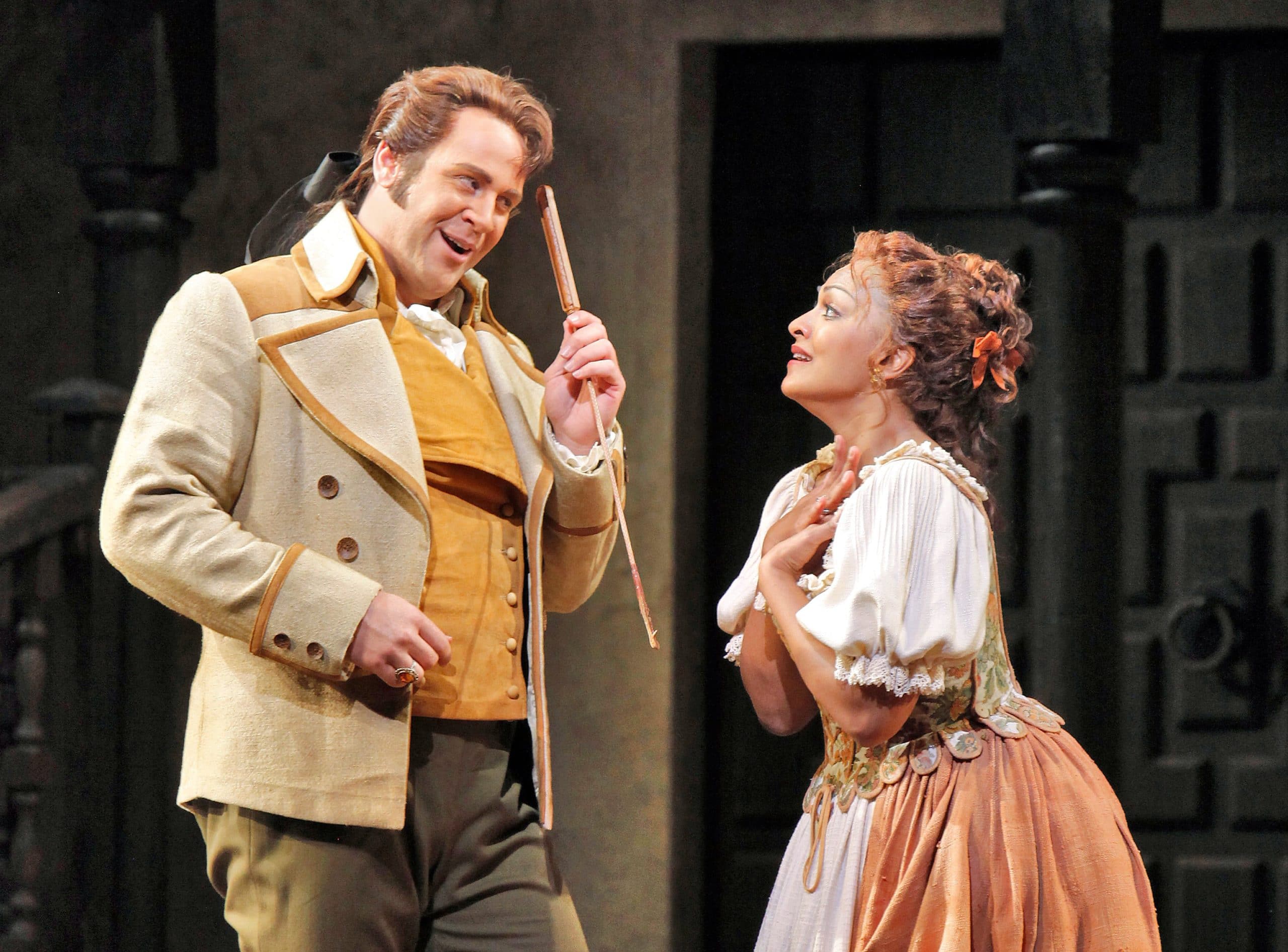
Opera singers are the virtuosos of the vocal world, possessing exceptional talent, rigorous training, and a deep passion for their craft. These performers command the stage with their powerful voices, effortlessly filling grand opera houses with rich, emotive sound.
Trained in classical technique, opera singers undergo years of intensive study to master the intricacies of breath control, vocal projection, and dynamic expression. They learn to navigate the demanding repertoire of opera, spanning centuries of music and encompassing a wide range of languages and styles.
Opera singers possess remarkable vocal versatility, able to transition seamlessly between soaring arias, delicate lieder, and dramatic recitative. Their performances are marked by exquisite phrasing, impeccable diction, and an ability to convey the deepest emotions through their singing.
Beyond their vocal prowess, opera singers are also skilled actors, adept at inhabiting the complex characters of opera’s dramatic narratives. They bring these characters to life through nuanced interpretation, conveying their joys, sorrows, and conflicts with visceral intensity.
Opera singers command the respect and admiration of audiences worldwide, captivating listeners with their artistry, dedication, and sheer vocal brilliance. They continue to enchant and inspire, ensuring that the timeless beauty of opera will endure for generations to come.
1. Maria Callas
Maria Callas, often referred to as “La Divina,” was one of the most legendary and influential opera singers of the 20th century. Born in New York City in 1923 to Greek immigrant parents, Callas rose to prominence in the 1950s and 1960s, captivating audiences with her extraordinary vocal abilities, dramatic intensity, and unparalleled artistry.
Callas possessed a remarkable vocal range, characterized by its agility, power, and expressiveness. Her voice, with its distinctive timbre and emotional depth, allowed her to inhabit a wide range of operatic roles, from tragic heroines to femme fatales. She was particularly renowned for her interpretations of the bel canto repertoire, including the works of Bellini, Donizetti, and Rossini.
Beyond her vocal talents, Callas was also a consummate actress, bringing a dramatic intensity and emotional truth to her performances. She infused each role with a sense of authenticity and vulnerability, captivating audiences with her magnetic stage presence and compelling characterizations.
Callas’s career was not without its challenges, and she faced criticism for aspects of her vocal technique and personal life. However, her artistic legacy remains unparalleled, and she is celebrated as one of the greatest opera singers of all time. Her recordings continue to inspire generations of singers, and her influence on the world of opera endures to this day. Maria Callas’s contributions to the art form are a testament to the transformative power of music and the enduring legacy of a true diva.
2. Luciano Pavarotti
Luciano Pavarotti was an iconic Italian operatic tenor who is widely regarded as one of the greatest singers in the history of opera. Born in Modena, Italy, in 1935, Pavarotti’s remarkable vocal talent was evident from a young age. He made his professional debut in 1961 and quickly rose to fame, captivating audiences around the world with his powerful voice, impeccable technique, and charismatic stage presence.
Pavarotti’s voice was renowned for its exceptional beauty, warmth, and clarity. He possessed a rare combination of vocal power and agility, allowing him to effortlessly navigate the demanding repertoire of the operatic stage. Whether performing the soaring arias of Verdi, the delicate melodies of Puccini, or the lyrical works of Donizetti, Pavarotti’s performances were marked by their emotional depth, technical mastery, and sheer vocal brilliance.
In addition to his operatic career, Pavarotti achieved widespread fame as a concert and recording artist. He performed in sold-out concerts at some of the world’s most prestigious venues, including the Metropolitan Opera, La Scala, and the Royal Opera House. His recordings, including numerous solo albums and collaborations with other artists, sold millions of copies and earned him multiple Grammy Awards.
Beyond his musical talents, Pavarotti was beloved for his warmth, generosity, and larger-than-life personality. He used his fame to support charitable causes around the world, including humanitarian efforts and music education initiatives.
Luciano Pavarotti’s contributions to the world of opera are immeasurable, and his legacy continues to inspire and enchant audiences worldwide. He remains a towering figure in the history of music, celebrated for his extraordinary voice, his passion for opera, and his enduring impact on the world of classical music.
3. Renée Fleming
Renée Fleming is a renowned American soprano singer, celebrated for her exceptional vocal talent and versatility across various genres of music, including opera, classical, and contemporary. Born on February 14, 1959, in Indiana, Pennsylvania, Fleming has established herself as one of the leading opera singers of her generation.
Fleming’s career has seen her perform on the world’s most prestigious stages, including the Metropolitan Opera, Royal Opera House, and La Scala. She is particularly acclaimed for her interpretations of roles in operas by composers such as Mozart, Strauss, Verdi, and Puccini. Her voice is known for its rich, velvety timbre, impeccable technique, and expressive phrasing.
Beyond the opera stage, Fleming has also ventured into crossover projects, collaborating with artists from diverse musical backgrounds. She has performed with symphony orchestras, jazz musicians, and popular artists, showcasing her versatility and adaptability as a performer.
Throughout her career, Fleming has received numerous awards and honors, including multiple Grammy Awards, the National Medal of Arts, and the Swedish Polar Music Prize. She has also been appointed as a United Nations Messenger of Peace, using her platform to advocate for causes such as education and the arts.
Overall, Renée Fleming’s extraordinary talent, artistry, and contributions to the world of music have solidified her legacy as one of the greatest sopranos of her time.
4. Plácido Domingo
Plácido Domingo is a world-renowned Spanish opera singer, conductor, and impresario, widely regarded as one of the greatest and most versatile tenors of all time. Born on January 21, 1941, in Madrid, Spain, Domingo’s career has spanned over six decades, during which he has made significant contributions to the world of opera and classical music.
Domingo’s vocal prowess, dramatic intensity, and remarkable range have made him a celebrated performer in a wide range of operatic roles, from Verdi and Puccini to Wagner and Mozart. He has graced the stages of leading opera houses around the globe, including the Metropolitan Opera in New York, the Royal Opera House in London, and the Vienna State Opera.
In addition to his achievements as a singer, Domingo has also demonstrated his talents as a conductor and a champion of opera. He has conducted numerous operatic productions and symphonic concerts, showcasing his musical leadership and interpretation skills.
Throughout his illustrious career, Domingo has received countless awards and honors, including multiple Grammy Awards, the Presidential Medal of Freedom, and the Kennedy Center Honors. He has also been recognized for his humanitarian efforts, such as his support for young opera singers through initiatives like the Operalia competition.
Despite facing controversies and allegations in recent years, Domingo’s legacy as one of the most influential and accomplished figures in the world of opera remains firmly established. His contributions to the art form have left an indelible mark on the history of classical music, and his performances continue to inspire audiences worldwide.
5. Joan Sutherland
Dame Joan Sutherland, often referred to as “La Stupenda,” was an Australian operatic soprano renowned for her extraordinary vocal range, agility, and purity of tone. Born in Sydney, Australia, in 1926, Sutherland’s talent was evident from a young age, and she began her professional singing career in the 1940s.
Sutherland’s voice was characterized by its remarkable flexibility, precision, and power. She possessed a rare ability to effortlessly navigate the demanding coloratura repertoire, tackling the intricate vocal ornamentation and high notes with ease. Her voice was equally impressive in its lower and middle registers, allowing her to excel in a wide range of operatic roles.
Sutherland rose to international prominence in the 1950s and 1960s, captivating audiences with her performances in leading opera houses around the world. She became particularly associated with the bel canto repertoire, including the works of composers such as Bellini, Donizetti, and Rossini. Her interpretations of iconic roles such as Lucia di Lammermoor, Norma, and Violetta in La Traviata were celebrated for their vocal brilliance and dramatic intensity.
In addition to her operatic career, Sutherland was also acclaimed as a concert and recital artist. She performed in sold-out concerts at major venues worldwide and recorded numerous solo albums and collaborations with other artists.
Throughout her career, Sutherland received numerous accolades and awards, including the Order of Merit from Queen Elizabeth II and the Companion of the Order of Australia. She retired from the stage in the 1980s but remained active as a mentor and teacher until her passing in 2010.
Dame Joan Sutherland’s contributions to the world of opera are immeasurable, and her legacy continues to inspire generations of singers. She is remembered not only for her extraordinary vocal talents but also for her dedication to the art form and her lasting impact on the world of classical music.
6. José Carreras
José Carreras is a Spanish operatic tenor, born on December 5, 1946, in Barcelona, Spain. He is renowned for his rich lyric voice, expressive performances, and wide-ranging repertoire, which encompassed both the bel canto style and the dramatic verismo roles.
Carreras rose to international prominence in the 1970s and 1980s, becoming one of the celebrated “Three Tenors” alongside Luciano Pavarotti and Plácido Domingo. Together, they performed in numerous concerts and recordings, bringing opera to a wider audience and achieving immense popularity worldwide.
Carreras’ career includes performances at leading opera houses such as the Metropolitan Opera in New York, La Scala in Milan, and the Royal Opera House in London. He is particularly acclaimed for his interpretations of roles in operas by Verdi, Puccini, Donizetti, and Massenet, among others.
In addition to his operatic career, Carreras has also pursued crossover projects, collaborating with pop and classical artists and releasing albums that blend various musical genres. He is known for his philanthropic efforts, including his work with the José Carreras International Leukemia Foundation, which he established after overcoming leukemia himself in the late 1980s.
Throughout his career, Carreras has received numerous awards and honors, including the Prince of Asturias Award for the Arts, the Grammy Lifetime Achievement Award, and the Order of the British Empire. He remains one of the most beloved and respected tenors of his generation, admired for his exceptional talent, dedication to his craft, and contributions to the world of opera and classical music.
7. Montserrat Caballé
Montserrat Caballé was a Spanish operatic soprano known for her exquisite voice, remarkable vocal control, and interpretative depth. Born in Barcelona in 1933, Caballé began her musical training at a young age and made her professional debut in the early 1950s.
Caballé’s voice was celebrated for its purity, richness, and versatility. She possessed a wide vocal range, with a distinctive timbre that allowed her to excel in both lyric and dramatic soprano roles. Her performances were characterized by their emotional depth, technical precision, and effortless vocal agility.
Caballé rose to international prominence in the 1960s and 1970s, captivating audiences with her performances in leading opera houses around the world. She became particularly associated with the bel canto repertoire, including the works of composers such as Bellini, Donizetti, and Rossini. Her interpretations of iconic roles such as Norma, Lucia di Lammermoor, and Violetta in La Traviata were celebrated for their vocal brilliance and dramatic intensity.
In addition to her operatic career, Caballé was also acclaimed as a concert artist, performing in recitals and concerts at major venues worldwide. She collaborated with numerous conductors, composers, and fellow singers, leaving behind a rich legacy of recordings that showcase her extraordinary talent and artistry.
Throughout her career, Caballé received numerous accolades and awards, including the Prince of Asturias Award for the Arts and the Grammy Lifetime Achievement Award. She retired from the stage in the early 2000s but remained active as a teacher and mentor until her passing in 2018.
Montserrat Caballé’s contributions to the world of opera are immeasurable, and her legacy continues to inspire generations of singers. She is remembered as one of the greatest sopranos of the 20th century, celebrated for her unparalleled vocal gifts and her profound artistic sensitivity.
8. Birgit Nilsson
Birgit Nilsson was a Swedish dramatic soprano, born on May 17, 1918, in Västra Karup, Sweden, and passed away on December 25, 2005. She is widely regarded as one of the greatest operatic sopranos of the 20th century, known for her powerful voice, extraordinary vocal range, and remarkable stamina.
Nilsson’s career spanned more than four decades, during which she performed at the world’s leading opera houses, including the Metropolitan Opera in New York, La Scala in Milan, and the Royal Opera House in London. She was particularly acclaimed for her interpretations of the dramatic soprano repertoire, excelling in roles by composers such as Richard Wagner, Giuseppe Verdi, and Richard Strauss.
Nilsson’s voice was characterized by its bright, penetrating quality, as well as its ability to soar effortlessly over large orchestras in the most demanding roles. She was especially renowned for her portrayals of Wagnerian heroines such as Brünnhilde in “Der Ring des Nibelungen,” Isolde in “Tristan und Isolde,” and Elektra in Strauss’s opera of the same name.
In addition to her vocal prowess, Nilsson was admired for her professionalism, stage presence, and dedication to her craft. She was known for her rigorous preparation and meticulous attention to detail in her performances, earning her the respect and admiration of audiences and critics alike.
Throughout her illustrious career, Nilsson received numerous awards and honors, including the prestigious Birgit Nilsson Prize, established in her honor in 2008 to recognize outstanding achievements in opera and concert performance. Her recordings and live performances continue to be cherished by opera enthusiasts, and her legacy as one of the greatest sopranos in history remains firmly established.
9. Franco Corelli
Franco Corelli was an Italian operatic tenor celebrated for his powerful voice, passionate performances, and charismatic stage presence. Born in 1921 in Ancona, Italy, Corelli began his musical studies at a young age and made his professional debut in the 1950s.
Corelli’s voice was renowned for its brilliance, richness, and ringing top notes. He possessed a rare combination of vocal power and lyrical beauty, allowing him to excel in a wide range of operatic roles. His performances were marked by their emotional intensity, technical virtuosity, and thrilling vocal fireworks.
Corelli rose to international prominence in the 1950s and 1960s, captivating audiences with his performances in leading opera houses around the world. He became particularly associated with the dramatic tenor repertoire, including the works of composers such as Verdi, Puccini, and Giordano. His interpretations of iconic roles such as Radamès in Aida, Calaf in Turandot, and Don José in Carmen were celebrated for their vocal brilliance and dramatic power.
In addition to his operatic career, Corelli was also acclaimed as a concert artist, performing in recitals and concerts at major venues worldwide. He collaborated with numerous conductors, composers, and fellow singers, leaving behind a rich legacy of recordings that showcase his extraordinary talent and artistry.
Throughout his career, Corelli received numerous accolades and awards, including the Grand Cross of the Order of Merit of the Italian Republic and the Kennedy Center Honors. He retired from the stage in the 1970s but remained active as a teacher and mentor until his passing in 2003.
Franco Corelli’s contributions to the world of opera are immeasurable, and his legacy continues to inspire generations of singers. He is remembered as one of the greatest tenors of the 20th century, celebrated for his unparalleled vocal gifts and his profound impact on the world of classical music.
10. Mirella Freni
Mirella Freni was an Italian soprano renowned for her exceptional talent, captivating stage presence, and profound musicality. Born on February 27, 1935, in Modena, Italy, Freni rose to prominence in the 1960s and became one of the most beloved and respected opera singers of her time.
Freni’s career spanned over five decades, during which she performed at leading opera houses around the world, including La Scala in Milan, the Metropolitan Opera in New York, and the Royal Opera House in London. She was celebrated for her interpretations of a wide range of roles, particularly those from the Italian and French repertoire.
Freni possessed a lyrical soprano voice known for its warmth, purity, and emotional depth. She excelled in portraying vulnerable and emotionally complex characters, bringing them to life with her exquisite vocal phrasing and nuanced acting.
Some of Freni’s most acclaimed roles include Mimi in Puccini’s “La Bohème,” Mimì in Leoncavallo’s “Pagliacci,” and Desdemona in Verdi’s “Otello.” She also garnered praise for her interpretations of Mozart heroines, such as Susanna in “Le Nozze di Figaro” and Pamina in “Die Zauberflöte.”
In addition to her operatic career, Freni was admired for her collaborations with renowned conductors and musicians in recitals and concert performances. She was known for her dedication to preserving the tradition of Italian bel canto singing while also embracing new challenges and repertoire.
Freni received numerous awards and honors throughout her career, including the Grammy Lifetime Achievement Award and the Italian Order of Merit. Even after her retirement from the stage, she remained a respected figure in the opera world, mentoring young singers and sharing her wealth of knowledge and experience.
Mirella Freni passed away on February 9, 2020, leaving behind a legacy as one of the greatest sopranos of the 20th century and a beloved icon of the operatic world. Her recordings and performances continue to inspire and enchant audiences worldwide.
11. Leontyne Price
Leontyne Price is an American operatic soprano who rose to international acclaim for her extraordinary vocal talent, stunning stage presence, and profound artistry. Born in 1927 in Laurel, Mississippi, Price began singing in church at a young age and went on to pursue formal vocal training at the Juilliard School in New York City.
Price’s voice was celebrated for its rich, velvety timbre, impeccable technique, and remarkable range. She possessed a rare combination of vocal power and lyrical beauty, allowing her to excel in a diverse repertoire that encompassed both the dramatic and lyric soprano roles. Her performances were marked by their emotional depth, technical precision, and expressive interpretation.
Price made her operatic debut in the 1950s and quickly gained recognition for her performances in leading opera houses around the world. She became particularly associated with the works of composers such as Verdi, Puccini, and Mozart, and her interpretations of iconic roles such as Aida, Tosca, and the Countess in The Marriage of Figaro were celebrated for their vocal brilliance and dramatic intensity.
In addition to her operatic career, Price was also acclaimed as a concert artist, performing in recitals and concerts at major venues worldwide. She collaborated with numerous conductors, composers, and fellow singers, leaving behind a rich legacy of recordings that showcase her extraordinary talent and artistry.
Throughout her career, Price received numerous accolades and awards, including the Presidential Medal of Freedom and the Kennedy Center Honors. She retired from the stage in the 1980s but remained active as a mentor and advocate for the arts.
Leontyne Price’s contributions to the world of opera are immeasurable, and her legacy continues to inspire generations of singers. She is remembered as one of the greatest sopranos of the 20th century, celebrated for her unparalleled vocal gifts, her groundbreaking achievements as an African American artist, and her enduring impact on the world of classical music.
12. Renata Tebaldi
Renata Tebaldi was an Italian operatic soprano hailed as one of the greatest singers of the 20th century. Born in Pesaro, Italy, in 1922, Tebaldi began her vocal training at a young age and made her operatic debut in 1944 at the Teatro Municipale in her hometown.
Tebaldi’s voice was characterized by its luscious, velvety timbre, extraordinary range, and expressive power. She possessed a warm and lyrical quality that lent itself perfectly to the romantic repertoire, particularly the works of composers such as Verdi, Puccini, and Giordano. Her performances were marked by their emotional depth, musical sensitivity, and impeccable technique.
Tebaldi rose to international prominence in the 1950s and 1960s, captivating audiences with her performances in leading opera houses around the world. She became particularly associated with the dramatic soprano roles, including iconic heroines such as Tosca, Aida, and Leonora in Il Trovatore. Her interpretations were celebrated for their vocal beauty, dramatic intensity, and emotional authenticity.
In addition to her operatic career, Tebaldi was also acclaimed as a concert artist, performing in recitals and concerts at major venues worldwide. She collaborated with renowned conductors, composers, and fellow singers, leaving behind a rich legacy of recordings that showcase her extraordinary talent and artistry.
Throughout her career, Tebaldi received numerous accolades and awards, including the Kennedy Center Honors and the Italian Order of Merit. She retired from the stage in the 1970s but remained active as a teacher and mentor until her passing in 2004.
Renata Tebaldi’s contributions to the world of opera are immeasurable, and her legacy continues to inspire generations of singers. She is remembered as one of the greatest sopranos of all time, celebrated for her unparalleled vocal gifts, her profound artistry, and her enduring impact on the world of classical music.
13. Jussi Björling
Jussi Björling was a Swedish tenor celebrated as one of the greatest operatic voices of the 20th century. Born on February 5, 1911, in Borlänge, Sweden, Björling’s career spanned from the 1930s to the 1960s, during which he became known for his remarkable vocal prowess, artistic sensitivity, and expressive performances.
Björling’s voice was characterized by its warm, lyric quality, combined with remarkable power and agility. He possessed a seamless vocal technique that allowed him to effortlessly navigate the demanding roles of the operatic repertoire, particularly those by composers such as Verdi, Puccini, and Wagner.
Björling’s artistry and versatility made him equally admired in both dramatic and lyric roles. He excelled in portraying characters with emotional depth and nuance, captivating audiences with his expressive phrasing and heartfelt interpretations.
Some of Björling’s most acclaimed roles include Rodolfo in Puccini’s “La Bohème,” the Duke of Mantua in Verdi’s “Rigoletto,” and Radamès in Verdi’s “Aida.” He was also renowned for his performances in the operas of Giacomo Puccini, singing the roles of Cavaradossi in “Tosca” and Pinkerton in “Madama Butterfly” with great success.
In addition to his operatic career, Björling was known for his recitals and concert performances, where he showcased his mastery of lieder, art songs, and oratorio. He collaborated with renowned conductors and musicians, leaving behind a rich legacy of recordings and live performances that continue to be cherished by opera enthusiasts and music lovers worldwide.
Björling’s premature death at the age of 49 in 1960 was a great loss to the world of opera, but his recordings and performances remain a testament to his extraordinary talent and enduring influence. He is remembered as one of the finest tenors of his generation, leaving behind a legacy that continues to inspire generations of singers and music enthusiasts.
14. Cecilia Bartoli
Cecilia Bartoli is an acclaimed Italian mezzo-soprano renowned for her exceptional vocal agility, expressive interpretation, and adventurous approach to repertoire. Born in Rome in 1966 into a musical family, Bartoli began her vocal training at a young age and made her professional debut at the age of 19.
Bartoli’s voice is characterized by its warm, velvety timbre, remarkable flexibility, and extraordinary range. She possesses a rare ability to navigate the intricacies of coloratura passages with ease, while also imbuing her performances with emotional depth and nuance. Her interpretations are marked by their musical intelligence, technical precision, and passionate commitment to the characters she portrays.
Bartoli has achieved international acclaim for her performances in both opera and concert repertoire. She has appeared on the stages of the world’s leading opera houses, including the Metropolitan Opera, La Scala, and the Royal Opera House, and has collaborated with renowned conductors and directors. She is particularly celebrated for her interpretations of Baroque and bel canto repertoire, including works by composers such as Handel, Mozart, and Rossini.
In addition to her operatic career, Bartoli is also acclaimed as a concert artist and recording artist. She has released numerous award-winning albums that showcase her versatility and adventurous spirit, exploring a wide range of musical styles and repertoire.
Throughout her career, Bartoli has received numerous accolades and awards, including several Grammy Awards and the Polar Music Prize. She is also known for her advocacy of lesser-known composers and works, as well as her efforts to revive forgotten masterpieces from the Baroque and Classical eras.
Cecilia Bartoli’s contributions to the world of opera and classical music are immeasurable, and her artistry continues to inspire audiences around the world. She is celebrated not only for her exceptional vocal talent but also for her creativity, passion, and dedication to the art form.
15. Bryn Terfel
Bryn Terfel is a Welsh bass-baritone known for his powerful voice, charismatic stage presence, and versatility across a wide range of musical genres. Born on November 9, 1965, in Pant Glas, North Wales, Terfel rose to international prominence in the 1990s and has since become one of the most celebrated opera singers of his generation.
Terfel’s voice is characterized by its rich, resonant timbre and exceptional vocal control. He is equally at home in the operatic repertoire, performing roles in works by composers such as Mozart, Wagner, Verdi, and Britten, as well as in the realm of Welsh and English folk songs, art songs, and musical theater.
Terfel’s interpretations of characters such as Figaro in Mozart’s “Le Nozze di Figaro,” Leporello in Mozart’s “Don Giovanni,” and Wotan in Wagner’s “Der Ring des Nibelungen” have garnered critical acclaim for their depth and nuance. He is known for his ability to inhabit roles with a combination of vocal prowess and dramatic intensity, bringing characters to life on the operatic stage.
In addition to his operatic career, Terfel has also achieved success in concert performances and recordings, collaborating with leading orchestras and conductors around the world. He has appeared at prestigious venues such as the Metropolitan Opera, Royal Opera House, and Salzburg Festival, earning accolades for his performances and recordings.
Terfel’s contributions to the world of music have been recognized with numerous awards and honors, including Grammy Awards, Olivier Awards, and the Queen’s Medal for Music. He is also known for his advocacy of Welsh culture and music, promoting the works of Welsh composers and participating in events celebrating Welsh heritage.
Throughout his career, Terfel has remained committed to nurturing the next generation of opera singers, serving as a mentor and teacher to young artists. His performances continue to captivate audiences worldwide, and his recordings serve as a testament to his exceptional talent and enduring legacy in the world of opera and classical music.

Edward Tomlin is a frequent contributor to Singers Room. Since 2005, Singersroom has been the voice of R&B around the world. Connect with us via social media below.