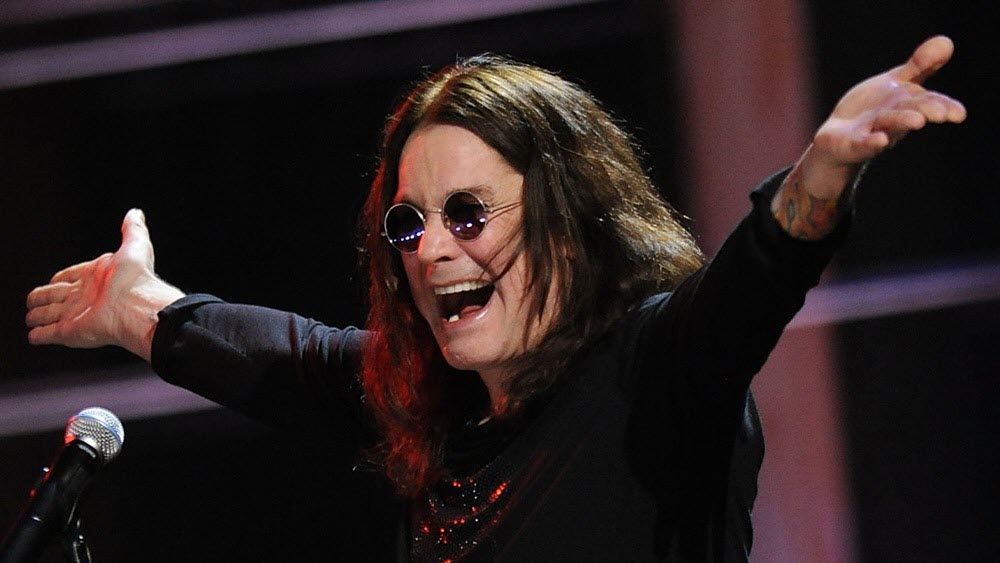
Ozzy Osbourne, born John Michael Osbourne on December 3, 1948, in Birmingham, England, is a legendary figure in the world of heavy metal music. Best known as the lead vocalist of the pioneering band Black Sabbath, Osbourne’s distinctive voice and dark, theatrical persona helped to define the genre and pave the way for countless bands that followed. With Black Sabbath, Osbourne contributed to the creation of seminal albums like “Paranoid” and “Master of Reality,” which featured heavy, doom-laden riffs, complex compositions, and themes that delved into the occult, social instability, and personal turmoil.
After departing from Black Sabbath in 1979, Osbourne embarked on a highly successful solo career, marked by hits such as “Crazy Train” and “Mr. Crowley.” His solo work continued to push the boundaries of heavy metal, incorporating elements of classical music, and featuring his signature blend of power and melody. Osbourne’s larger-than-life personality, notorious antics, and battles with addiction have made him a figure of fascination, contributing to his status as a cultural icon.
Despite facing numerous personal and professional challenges, Osbourne has shown remarkable resilience. His contributions to music have been recognized with multiple awards, including induction into the Rock and Roll Hall of Fame with Black Sabbath. Osbourne’s influence extends beyond music; he became a reality TV star with “The Osbournes,” endearing him to a new generation of fans. Throughout his decades-long career, Ozzy Osbourne has remained an indomitable spirit in the music world, embodying the essence of heavy metal’s rebellious ethos.
1. Crazy Train
“Crazy Train” is one of Ozzy Osbourne’s most iconic songs, released as the first single from his debut solo album, “Blizzard of Ozz,” in 1980. Following his departure from Black Sabbath, Osbourne embarked on a solo career that would further cement his status as a rock and heavy metal legend. “Crazy Train” showcases Osbourne’s dynamic vocal range and charismatic presence, set against a backdrop of Randy Rhoads’ masterful guitar riffs and solos, which have become legendary in their own right.
The song’s lyrics delve into the theme of mental health and the state of the world, reflecting Osbourne’s introspective and often critical outlook on life. The memorable opening riff, combined with its catchy chorus, has ensured “Crazy Train” a place in rock history, resonating with fans and musicians alike for its powerful message and musical prowess.
“Crazy Train” has been widely praised for its composition and influence, marking a defining moment in Osbourne’s solo career and becoming an anthem in the rock and heavy metal genres. Its enduring popularity is evidenced by its frequent airplay, use in sporting events, and cover versions by various artists. The song not only highlights Osbourne’s talent as a vocalist but also showcases Rhoads’ innovative guitar work, contributing to its status as a timeless classic.
2. Mr. Crowley
“Mr. Crowley” is a standout track from Ozzy Osbourne’s debut solo album, “Blizzard of Ozz,” released in 1980. This song is particularly noted for its darkly atmospheric sound and complex lyrics that delve into the life and practices of Aleister Crowley, a controversial figure known for his involvement in occultism and ceremonial magic. The song’s haunting melody, powered by Ozzy’s distinctive vocal delivery, is complemented by the virtuosic guitar work of Randy Rhoads, whose solos in “Mr. Crowley” are often cited among the greatest in rock music history.
The song begins with a moody, gothic organ intro played by Don Airey, setting a sinister tone that perfectly suits the thematic exploration of mysticism and the occult. The lyrics interrogate Crowley’s legacy, questioning the impact and morality of his life’s work. “Mr. Crowley” showcases Osbourne’s fascination with the darker aspects of human nature and spirituality, themes that would recur throughout his solo career.
“Mr. Crowley” quickly became a fan favorite and a staple of Osbourne’s live performances, celebrated for its blending of heavy metal with a more melodic, classical sensibility. The track’s enduring popularity underscores not only Osbourne’s skills as a vocalist and performer but also the extraordinary musical synergy between him and Randy Rhoads. Together, they created a song that remains a powerful and evocative piece of heavy metal history.
3. Mama, I’m Coming Home
“Mama, I’m Coming Home” is one of Ozzy Osbourne’s most heartfelt and popular songs, featured on his 1991 album “No More Tears.” The song marked a departure from Osbourne’s traditional heavy metal sound, showcasing a softer, more introspective side of the artist. Co-written by Osbourne, his guitarist Zakk Wylde, and professional songwriter Lemmy Kilmister of Motörhead, the track is dedicated to Osbourne’s wife, Sharon, reflecting on his time on the road and his desire to return home to her.
The song combines a memorable melody with acoustic and electric guitar sections, creating a powerful yet emotional ballad. Its lyrics convey a sense of repentance and longing for reconciliation, resonating with many listeners and making it one of Osbourne’s most enduring hits. “Mama, I’m Coming Home” became one of Osbourne’s few solo singles to achieve significant chart success, especially in the United States, where it reached the top 40 on the Billboard Hot 100. Its universal theme of returning home and seeking forgiveness has allowed it to remain a beloved classic in rock music.
4. No More Tears
“No More Tears” is the title track from Ozzy Osbourne’s 1991 album, showcasing a mature period in his solo career. The song represents a fusion of heavy metal with a more refined, melodic rock sound, evidencing Osbourne’s ability to evolve musically. “No More Tears” features some of Osbourne’s most introspective and poignant lyrics, exploring themes of loneliness, despair, and the quest for redemption. The song’s narrative is complemented by its powerful musical composition, characterized by Zakk Wylde’s distinctive guitar work, with its heavy riffs and soulful solos, and an unforgettable bass line that introduces the track.
The production of “No More Tears” is notable for its clarity and depth, allowing each element of the song to shine, from its haunting vocal melodies to its intricate instrumental sections. The song builds from a somber beginning to a dramatic climax, reflecting the emotional journey described in the lyrics.
“No More Tears” became one of Osbourne’s most successful singles, receiving widespread radio play and critical acclaim. The song’s memorable music video further cemented its place in rock history. It stands as a testament to Osbourne’s enduring talent and his ability to connect with listeners through both the power of his music and the depth of his storytelling. Over the years, “No More Tears” has remained a beloved piece of Osbourne’s discography, showcasing the depth and diversity of his musical legacy.
5. Bark at the Moon
“Bark at the Moon” is a classic heavy metal song by British vocalist Ozzy Osbourne, serving as the title track to his 1983 album of the same name. The song is notable for its high-energy riffing, courtesy of guitarist Jake E. Lee, who made his debut with Osbourne on this album. “Bark at the Moon” showcases Osbourne’s distinctive voice and penchant for themes of fantasy and horror, with lyrics that tell the story of a creature that terrorizes a town, only to be killed and then mysteriously return.
The music video for “Bark at the Moon,” one of the early examples of Osbourne’s interest in theatricality and storytelling in his music videos, features Osbourne dressed as the werewolf-like creature described in the song, adding a visual element to the song’s narrative.
This track marked Osbourne’s return to the music scene after the death of his previous guitarist, Randy Rhoads, and demonstrated his ability to continue producing hit songs despite personal and professional challenges. “Bark at the Moon” became one of Osbourne’s signature songs, often featured in his live performances and celebrated by fans for its driving melody, memorable guitar solo, and Osbourne’s iconic vocals. The song remains a staple of heavy metal and a testament to Osbourne’s enduring influence in the genre.
6. Shot in the Dark
“Shot in the Dark” is a standout track from Ozzy Osbourne’s 1986 album “The Ultimate Sin.” The song marked a significant moment in Osbourne’s solo career, showcasing his ability to blend catchy hard rock hooks with the darker, brooding themes that had become his trademark. “Shot in the Dark” is distinguished by its melodic approach, combining accessible rock sensibilities with Osbourne’s distinctive vocal style, which delves into themes of isolation, uncertainty, and the quest for redemption amidst darkness.
The song was one of Osbourne’s biggest hits in the 1980s, thanks to its memorable melody, engaging guitar work, and a chorus that sticks with listeners long after the song ends. The guitar riff and solo in “Shot in the Dark” are particularly noteworthy, providing a perfect complement to Osbourne’s vocal performance and the song’s lyrical content.
“Shot in the Dark” also benefited from heavy rotation on music television channels and radio, further solidifying Ozzy Osbourne’s status as a rock icon. The song’s success demonstrated Osbourne’s ability to adapt to the evolving rock landscape of the 1980s while maintaining the unique edge that had defined his music since his days with Black Sabbath. Over the years, “Shot in the Dark” has remained a favorite among fans, embodying the blend of hard rock energy and introspective lyrics that characterize much of Osbourne’s work.
7. Paranoid
“Paranoid” is a seminal track by the British heavy metal band Black Sabbath, featured on their second studio album of the same name released in 1970. This song is one of the band’s most famous and widely recognized tracks, encapsulating the essence of early heavy metal with its raw power, driving guitar riffs, and dark lyrical themes. Written by Tony Iommi, Geezer Butler, Bill Ward, and Ozzy Osbourne, the song was initially intended as a filler, but it quickly became a defining anthem of the heavy metal genre.
The lyrics of “Paranoid” speak to themes of anxiety, alienation, and depression, with Ozzy Osbourne’s distinctive vocal delivery amplifying the song’s intense emotional resonance. The track’s concise structure, marked by Iommi’s memorable riff and the rhythm section’s tight, propulsive backing, helped to make it a commercial success, reaching high chart positions in multiple countries.
“Paranoid” has been widely covered and referenced in popular culture, contributing to Black Sabbath’s reputation as pioneers of heavy metal. Its influence extends beyond music, impacting the development of subsequent genres and inspiring countless musicians. The song remains a staple in Black Sabbath’s discography, a timeless classic that continues to captivate audiences with its enduring power and raw emotion.
8. Flying High Again
“Flying High Again” is a standout track from Ozzy Osbourne’s 1981 album “Diary of a Madman,” his second solo release following the departure from Black Sabbath. This song captures the quintessential Osbourne sound that blends heavy metal’s intensity with melodic hooks, showcasing his ability to craft songs that are both hard-hitting and catchy. The lyrics, co-written by Osbourne, guitarist Randy Rhoads, bassist Bob Daisley, and drummer Lee Kerslake, touch on themes of rebellion and the exhilarating, often perilous, nature of living on the edge, which resonated with Osbourne’s personal life and public persona at the time.
Randy Rhoads’ guitar work on “Flying High Again” is particularly notable for its innovative riffs and solos, blending classical music influences with hard rock and heavy metal, creating a distinctive sound that became a hallmark of Osbourne’s early solo work. Rhoads’ playing on this track, and the album as a whole, has been widely praised for its technical skill and creativity, influencing generations of guitarists.
“Flying High Again” became one of Osbourne’s most popular songs, a favorite among fans for its energetic pace and memorable melody. It also did well commercially, reflecting Osbourne’s successful transition from Black Sabbath’s frontman to a solo artist capable of hitting the charts on his own. The song remains a staple in Osbourne’s live performances and is celebrated as a classic in the rock and heavy metal genres, encapsulating the spirit of an era and the essence of Osbourne’s enduring appeal.
9. War Pigs
“War Pigs” is a seminal track by the British heavy metal band Black Sabbath, featured as the opening song on their 1970 album “Paranoid.” Often hailed as one of the greatest heavy metal songs of all time, “War Pigs” is a powerful condemnation of war and those who profit from it, specifically targeting military leaders and politicians who manipulate the public into supporting conflicts. The song’s lyrics, written primarily by bassist Geezer Butler, evoke vivid imagery of destruction and the senseless nature of war, challenging the glorification of conflict and the moral integrity of its architects.
Musically, “War Pigs” showcases Black Sabbath’s signature sound: Tony Iommi’s heavy, doom-laden guitar riffs, Geezer Butler’s dense basslines, Bill Ward’s thunderous drumming, and Ozzy Osbourne’s distinctive vocal delivery. The song begins with a slow, ominous intro that builds into a series of powerful, riff-driven movements, punctuated by Iommi’s masterful guitar solos and Osbourne’s haunting lyrics.
Originally titled “Walpurgis,” the song’s focus shifted from black magic to political commentary, reflecting the band’s disdain for the Vietnam War and the broader socio-political climate of the late 1960s and early 1970s. “War Pigs” has since become an anthem of anti-war sentiment and a highlight of Black Sabbath’s live performances, cementing its place in the pantheon of classic rock. Its influence extends beyond music, resonating with generations of fans and musicians as a timeless critique of the horrors and hypocrisy of war.
10. Dreamer
“Dreamer” is a standout ballad by Ozzy Osbourne, featured on his 2001 album “Down to Earth.” This song showcases a softer, more introspective side of Osbourne, differing significantly from the heavy metal sound that characterized much of his earlier work. The lyrics of “Dreamer” reflect Osbourne’s thoughts on environmental conservation, peace, and his hopes for a better world, presenting a vulnerable and thoughtful perspective that resonates with listeners on a deep level.
The melody of “Dreamer” is both poignant and uplifting, featuring a piano-driven arrangement that complements Osbourne’s vocals, highlighting his ability to convey emotion through music. The song’s production values ensure that every note and lyric delivers its message clearly and powerfully, making “Dreamer” one of Osbourne’s most memorable and meaningful songs.
“Dreamer” received widespread acclaim for its lyrical depth and musical quality, appealing to a broad audience beyond Osbourne’s traditional heavy metal fan base. It stands as a testament to his versatility as an artist and his capacity to evolve musically and personally throughout his career. The song remains a favorite among fans, often cited for its beautiful melody and the hopefulness of its message, showcasing a different aspect of Osbourne’s talent and the breadth of his musical legacy.

Edward Tomlin is a frequent contributor to Singers Room. Since 2005, Singersroom has been the voice of R&B around the world. Connect with us via social media below.









