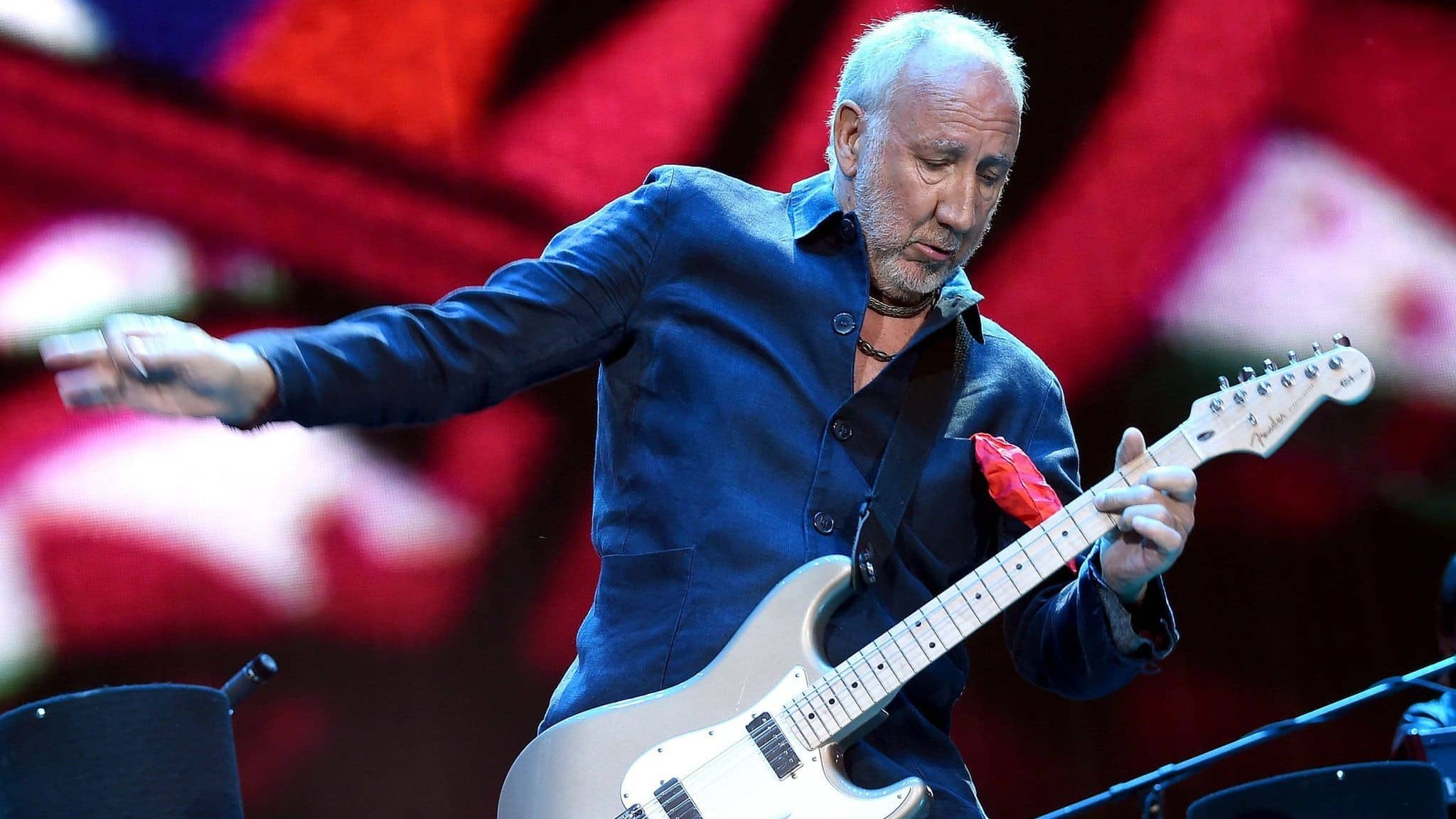
Pete Townshend, the legendary guitarist, songwriter, and co-founder of The Who, has created an extensive catalog of memorable songs throughout his illustrious career. Known for his innovative guitar techniques, thought-provoking lyrics, and dynamic stage presence, Townshend has left an indelible mark on the world of rock music. His solo work and contributions to The Who have earned him a place among the most influential and respected musicians of all time. In this article, we will explore the top 10 most popular Pete Townshend songs, showcasing the breadth and depth of his musical genius.
1. Baba O’Riley
“Baba O’Riley,” often mistakenly referred to as “Teenage Wasteland,” is an iconic rock anthem that perfectly encapsulates Pete Townshend’s songwriting prowess and The Who’s dynamic musical style. The song features a mesmerizing synthesizer intro, courtesy of Townshend’s experimentation with the Lowrey Berkshire Deluxe TBO-1 organ, which gives way to a powerful, driving rhythm section and Roger Daltrey’s impassioned vocals. The lyrics, inspired by Townshend’s experiences at the Woodstock festival and his admiration for Indian spiritual leader Meher Baba, touch on themes of youthful rebellion, disillusionment, and the search for meaning in a chaotic world. The song’s anthemic quality, punctuated by Daltrey’s famous “Don’t cry, don’t raise your eye” refrain and Townshend’s explosive guitar work, has made it a staple of rock radio and a fan favorite at live shows. “Baba O’Riley” showcases Townshend’s ability to craft complex, multilayered compositions that combine innovative instrumentation, poignant lyrics, and an infectious, fist-pumping energy. The song’s enduring popularity and its influence on countless artists across genres cement its status as one of the most iconic and beloved rock songs of all time.
2. Won’t Get Fooled Again
“Won’t Get Fooled Again,” the closing track from The Who’s seminal album “Who’s Next,” is a powerful, politically charged rock epic that showcases Pete Townshend’s songwriting genius and the band’s unparalleled musical prowess. The song features a memorable synthesizer intro, courtesy of Townshend’s experimentation with the ARP 2500 synthesizer, which sets the stage for the track’s explosive, hard-hitting sound. Roger Daltrey’s commanding vocals, punctuated by his iconic scream, deliver Townshend’s biting, satirical lyrics, which skewer the hypocrisy and corruption of political leaders and revolutionaries alike. The song’s extended instrumental breaks, featuring Townshend’s searing guitar work and Keith Moon’s frenetic drumming, create a sense of urgency and chaos that perfectly complements the track’s themes of disillusionment and the cyclical nature of power. “Won’t Get Fooled Again” has become an anthem for generations of listeners, its message of skepticism and resistance to authority resonating with audiences across the political spectrum. The song’s influence can be heard in the work of countless rock and punk bands, and its inclusion in numerous films, television shows, and commercials has cemented its status as a cultural touchstone.
3. Behind Blue Eyes
“Behind Blue Eyes,” originally featured on The Who’s 1971 album “Who’s Next,” is a hauntingly beautiful ballad that showcases Pete Townshend’s introspective lyrics and emotive songwriting. The song begins with a gentle acoustic guitar melody and Townshend’s vulnerable vocals, which convey a sense of loneliness, alienation, and inner turmoil. As the track progresses, the instrumentation builds, with lush harmonies, piano, and a sweeping string arrangement adding depth and complexity to the song’s emotional landscape. The lyrics, written from the perspective of a villain or antihero, explore themes of duality, regret, and the struggle to maintain a facade of strength and invincibility while grappling with inner pain and insecurity. Townshend’s ability to create a sympathetic portrait of a complex, flawed character is a testament to his skill as a storyteller and his willingness to delve into the darker aspects of the human psyche. “Behind Blue Eyes” has become one of The Who’s most beloved and enduring tracks, its poignant melody and introspective lyrics resonating with listeners across generations. The song has been covered by numerous artists, including Limp Bizkit and Bryan Adams, further cementing its status as a classic rock staple.
4. Pinball Wizard
“Pinball Wizard,” a standout track from The Who’s groundbreaking rock opera “Tommy,” is a high-energy, infectiously catchy song that showcases Pete Townshend’s storytelling abilities and the band’s dynamic musical style. The song features a driving rhythm section, punctuated by John Entwistle’s distinctive bass lines and Keith Moon’s explosive drumming, and Townshend’s iconic guitar riffs, which perfectly capture the frenetic energy and excitement of a pinball game. Roger Daltrey’s powerful vocals bring to life the story of Tommy, the titular “deaf, dumb, and blind kid” who becomes a pinball champion and a messianic figure. Townshend’s lyrics, filled with vivid imagery and clever wordplay, paint a picture of Tommy’s unlikely rise to fame and the sense of wonder and admiration he inspires in his followers. “Pinball Wizard” has become one of The Who’s most recognizable and beloved tracks, its memorable melody and sing-along chorus making it a staple of classic rock radio and a fan favorite at live shows. The song’s influence can be heard in the work of countless rock and punk bands, and its inclusion in the film adaptation of “Tommy” has further cemented its status as a cultural touchstone.
5. My Generation
“My Generation,” the title track from The Who’s 1965 debut album, is a groundbreaking, proto-punk anthem that encapsulates the youthful rebellion and anti-establishment spirit of the 1960s. The song features a driving, stuttering bass line, courtesy of John Entwistle, and Keith Moon’s frenetic, explosive drumming, which perfectly complement Pete Townshend’s aggressive, distorted guitar work and Roger Daltrey’s sneering, defiant vocals. Townshend’s lyrics, with their famous “hope I die before I get old” refrain, capture the sense of alienation, frustration, and disillusionment felt by many young people of the era, who were grappling with the social and political upheavals of the time. “My Generation” has become an enduring symbol of youth culture and a rallying cry for generations of rebels and outsiders, its raw, unpolished sound and confrontational attitude paving the way for the development of punk rock and other alternative music genres. The song’s influence can be heard in the work of countless artists, from the Sex Pistols to Green Day, and its inclusion in numerous films, television shows, and commercials has cemented its status as a cultural touchstone. “My Generation” remains a testament to The Who’s innovative spirit and Pete Townshend’s songwriting genius, a timeless classic that continues to inspire and resonate with audiences of all ages.
6. Who Are You
“Who Are You,” the title track from The Who’s 1978 album, is a powerful, introspective rock song that showcases Pete Townshend’s songwriting prowess and the band’s musical versatility. The song features a driving, midtempo rhythm section, punctuated by Roger Daltrey’s commanding vocals and Townshend’s muscular guitar work, which alternates between crunchy power chords and melodic, arpeggiated passages. The lyrics, written by Townshend, explore themes of identity, self-doubt, and the search for meaning in a world that can often feel chaotic and uncertain. The song’s famous refrain, “Who are you, who, who, who, who?” has become an iconic catchphrase, its existential questioning resonating with listeners across generations. “Who Are You” also features a memorable synthesizer part, courtesy of Townshend’s experimentation with the Yamaha CS-80, which adds an ethereal, atmospheric quality to the track’s sonic landscape. The song’s powerful, anthemic quality and its exploration of deep, universal themes have made it a staple of classic rock radio and a fan favorite at live shows. “Who Are You” serves as a testament to Townshend’s enduring songwriting genius and The Who’s ability to create music that is both musically compelling and emotionally resonant.
7. I Can See for Miles
“I Can See for Miles,” a standout track from The Who’s 1967 album “The Who Sell Out,” is a psychedelic rock masterpiece that showcases Pete Townshend’s innovative songwriting and the band’s unparalleled musical chemistry. The song features a hypnotic, circular guitar riff, courtesy of Townshend’s deft fretwork, and a driving, insistent rhythm section, propelled by Keith Moon’s explosive drumming and John Entwistle’s melodic bass lines. Roger Daltrey’s powerful, soaring vocals bring to life Townshend’s cryptic, metaphysical lyrics, which touch on themes of perception, reality, and the limitless power of the human mind. The song’s trippy, kaleidoscopic sound, punctuated by Townshend’s inventive use of feedback and distortion, perfectly captures the psychedelic zeitgeist of the late 1960s, while also pushing the boundaries of what was possible in rock music at the time. “I Can See for Miles” has become one of The Who’s most beloved and enduring tracks, its mind-bending sonic experimentation and philosophical lyrics cementing its status as a classic of the psychedelic rock genre. The song’s influence can be heard in the work of countless artists, from the Beatles to the Flaming Lips, and its inclusion in numerous films and television shows has further cemented its place in the annals of rock history.
8. Love, Reign O’er Me
“Love, Reign O’er Me,” the closing track from The Who’s seminal 1973 rock opera “Quadrophenia,” is a stunningly beautiful, emotionally charged ballad that showcases Pete Townshend’s songwriting genius and Roger Daltrey’s vocal prowess. The song begins with a gentle, melancholic piano melody, which sets the stage for Daltrey’s tender, vulnerable vocals, conveying the pain and longing of the story’s protagonist, Jimmy. As the track progresses, the instrumentation builds, with Townshend’s soaring guitar lines and Keith Moon’s thunderous drumming creating a sense of catharsis and release. The lyrics, written by Townshend, explore themes of love, loss, and the search for meaning in a world that can often feel cold and unforgiving, with the refrain “Love, reign o’er me” serving as a desperate plea for connection and redemption. The song’s raw, emotional power and its seamless integration into the larger narrative of “Quadrophenia” have made it a fan favorite and a testament to The Who’s unparalleled ability to create music that is both deeply personal and universally resonant. “Love, Reign O’er Me” has been covered by numerous artists, including Pearl Jam and Bettye LaVette, further cementing its status as a classic rock staple.
9. The Seeker
“The Seeker,” released as a single by The Who in 1970, is a hard-hitting, introspective rock song that showcases Pete Townshend’s songwriting prowess and the band’s raw, uncompromising sound. The song features a driving, urgent rhythm section, propelled by Keith Moon’s frenetic drumming and John Entwistle’s pulsating bass lines, and Townshend’s gritty, distorted guitar work, which perfectly complements Roger Daltrey’s impassioned, scorching vocals. The lyrics, written by Townshend, explore themes of spiritual yearning, disillusionment, and the search for truth in a world that can often feel false and superficial. The song’s famous refrain, “I’m looking for me, you’re looking for you,” encapsulates the sense of existential angst and self-discovery that pervades the track, with Daltrey’s vocals conveying a sense of desperate, almost manic intensity. “The Seeker” has become one of The Who’s most beloved and enduring tracks, its raw, unpolished sound and philosophical lyrics capturing the essence of the band’s rebellious, anti-establishment ethos. The song’s influence can be heard in the work of countless punk and alternative rock bands, and its inclusion in numerous films and television shows has further cemented its status as a classic rock staple.
10. Let My Love Open the Door
“Let My Love Open the Door,” released as a single from Pete Townshend’s 1980 solo album “Empty Glass,” is a joyful, uplifting pop rock song that showcases Townshend’s versatility as a songwriter and his ability to craft infectious, radio-friendly hooks. The song features a bouncy, melodic piano riff, a catchy, sing-along chorus, and Townshend’s warm, inviting vocals, which convey a sense of optimism, love, and unity. The lyrics, written by Townshend, offer a message of hope and connection, with the refrain “Let my love open the door to your heart” serving as a gentle invitation to let go of fear and embrace the power of human connection. The song’s upbeat, cheerful vibe and its universal themes of love and positivity have made it a beloved classic, with its popularity extending beyond Townshend’s usual rock audience. “Let My Love Open the Door” has been featured in numerous films, television shows, and commercials, its timeless melody and heartfelt sentiment resonating with listeners across generations. The song stands as a testament to Townshend’s songwriting versatility and his ability to create music that is both deeply personal and widely accessible, cementing his status as one of the most gifted and influential songwriters of his generation.

Edward Tomlin is a frequent contributor to Singers Room. Since 2005, Singersroom has been the voice of R&B around the world. Connect with us via social media below.









